Homily for 5th Sunday of Easter (Year C), April 28, 2013

Living In The New Dispensation of Love

Readings: (1st: Acts 14, 21-27; Ps: 144, 8-13; 2nd: Rev 21, 1-5; Gos: Jn 13, 31-35) 

This brief reflection was written by Rev. Fr. Njoku Canice Chukwuemeka, C.S.Sp. He is a Catholic Priest and a member of the Congregation Holy Ghost Fathers and Brothers, Province of Nigeria South East. He is currently the parochial vicar of Our Lady of Fatima Catholic Church Woliwo Onitsha, Anambra State, Nigeria. For more details contact him on:canice_c_njoku@yahoo.com, canicechukwuemeka@gmail.com or +23408063767512

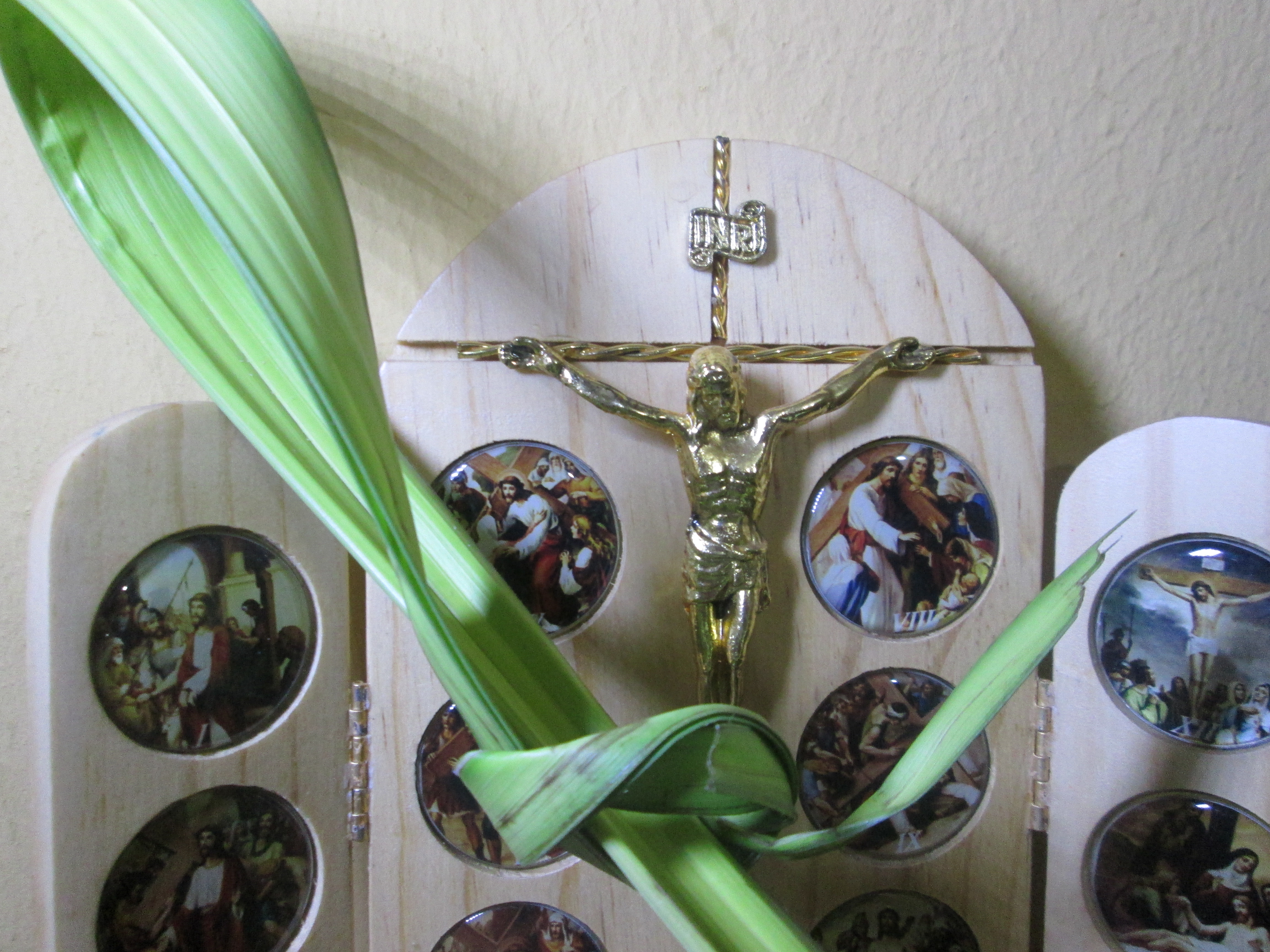
This fifth Sunday of Easter, Jesus takes us a step further. As he gradually approaches his Ascension and final departure, he hands us a new promise and commandment of love, which is very important in our witness for Him. In today’s first reading, Paul affirmed a truth which many of us shy away from and vehemently deny: “We all have to experience many hardships before we enter the kingdom of God.” We should note carefully, that Paul leaves no exception when he says “We all.” However, it is unfortunate that many so called “men/women of God” these days preach a Crossless Christianity, which is a contradiction of what the apostles of Jesus Christ preached and experienced. It suffices to note that it is the love for the word of God, the kingdom of God, and of course of our neighbours or of one another that motivates one to endure sufferings and hardships. Without this love whatever one does becomes an empty sacrifice or for selfish interest. Love is out going and so reaches out to others irrespective of the difficulty one has to go through in order to accomplish it. Hence, love for others must propel us to seriously look out for them wherever they are in order to share with them the joys of being Disciples of Christ.

In the second reading of today God promises to make all things new: “I am making the whole of creation new.” What a promise! But how are we expected to live in this new dispensation that God has brought about by the rising of Jesus from the dead unto glory? We find this answer in the gospel of today from Jesus himself who gives us a new commandment necessary for us to live in this new dispensation instituted by God. Jesus says: “I give you a new commandment, LOVE one another; …, you MUST love one another…” Here Jesus lays down the rules, the principles and the commands that will guide us to live safely in this new dispensation. “Another” here does not in any way refer only to the Disciples of Christ but it is all encompassing irrespective of religious inclination, race, or background. Of course this is not neglecting the fact that “charity begins at home”. The early Christian community lived this very well and so attracted such comments from their admirers: “see how they love one another” (as Tertullian noted in Apology [39.7] in the 3rd Century).

Indeed only those who possess this quality and actually live them out sincerely can truly enjoy life in the New Jerusalem that God has prepared for us all. It is only in the hearts and among the faithful who have love for the other that God will dwell as he promises to do. In talking about love here therefore, it is not to be construed in the way our society and world understand it because, the word itself means different things to different people. This is ranging from positive to negative passions, from real to fake expression of emotions, and from altruistic intentions to ego centric intentions. Instead, the love that we need in this new dispensation is that which bears the character that Paul describes in I Cor 13. The love that cares without exploiting the other, that forgives, that empathizes, and that is garnished with humility. This love as many of us may wish to say may be blind yet, very sensible, reasonable and godly. The love that Christ talks about here is an Identification Mark or Code. He says: “…by this love everyone will know that you are my disciples.” In other words, it is what defines a true disciple of Christ. The love of Christians for one another should be the distinguishing mark by which the world recognizes them as followers of Jesus. This kind of sacrificial love is what F. A. Schaeffer has referred to as “the final apologetic” (Francis A. Schaeffer, The Church at the End of the Twentieth Century (Downers Grove, IL: IVP, 1970), 138.This love is a mark of the newness of life that Christ brings to his people this Easter season.

Finally, it is important to note that what Christ gives us is a command, i.e. an Imperative, and so it must be obeyed to the latter. Therefore as true Disciples of Christ we must obey Christ’s command to the latter even in difficult situations. We can truly bless the Lord’s name forever only when we love another as Christ commanded us to do.

Peace be with you!

Maranatha!!
Homily for 4th Sunday of Easter (Year C), April 21, 2013

Jesus Christ: The Good Shepherd Of All Nations


This brief reflection was written by Rev. Fr. Njoku Canice Chukwuemeka, C.S.Sp. He is a Catholic Priest and a member of the Congregation Holy Ghost Fathers and Brothers, Province of Nigeria South East. He is currently the parochial vicar of Our Lady of Fatima Catholic Church Woliwo Onitsha, Anambra State, Nigeria. For more details contact him on:canice_c_njoku@yahoo.com, canicechukwuemeka@gmail.com or +23408063767512

Readings: (1st: Acts 13, 14. 43-52; Ps: 99,1-3. 5; 2nd: Rev 7, 9. 14-17; Gos: Jn 10, 27-30)

Today is Good Shepherd Sunday. So, dominant in almost all the readings of this fourth Sunday of Easter include themes like: Hope, God’s protection, the elect or chosen ones, Salvation for all nations, God’s divine favour, etcetera. Once, a poor widow decided to buy three pairs of trousers for her triplet boys. Because of her poverty she decided to shop for the trousers in a second hand cloths (popularly called “okirika” or “bend-down-select”) market. On returning home with the trousers, a little fracas broke out among two of the triplets as to who chooses what and first. Meanwhile, the third boy remained unperturbed and was ready to take anyone of the three trousers. When the other two have made their choices, the humble boy quietly took the one they both rejected and went into his room. During the course of trying to wash their cloths, the humble boy discovered right inside the back pocket of the rejected trouser a squeezed hundred Dollar note. In amazement he screamed: Mummy Dollar! Mummy Dollar, Hundred Dollar note in my trouser!!! How did the Dollar find its way there? The answer is simply: It is the Lords doing and divine favour!

Today’s readings point to the facts of God’s favour upon us all, and to the fact that God favoured us, and came to us upon rejection by his “first elect” to whom the good news was initially preached. The “gentiles” or people of other nations who received the gospel cheerfully represent this humble son, the highly favoured ones who through no merits of theirs enjoy God’s special favour. The rejection of the good news by God’s first elect and its acceptance by others is a clear case of one taking advantage of the opportunity missed by the other. When God decides to favour his people he does so without any prejudice. The rest of the nations therefore became God’s elect not by merit but due to the ignorance and the stubbornness of the “first elect.” Today we lean therefore that there are possible ways we like the first elect, can reject the mercy and salvation God. The first reading mentions just few of these ways, jealousy, blasphemies and contradictions. Ours may not fall within any of these categories, but we must examine and ask ourselves: Is there any way I have rejected God in my life?” Indeed one important point to note here is that any form of stubbornness, or disobedience is tantamount to rejecting God. This could be for instance by not trusting God enough, despairing against God, mocking God by returning to the same sin again and again, and even by our failure to recognize Jesus in other people.

The second reading is a sure manifestation and assurance that God willed to save not just his first elect but all who believe in his Son. In order words, God’s salvation and kingdom is inclusive especially to all who humbly and cheerfully embrace him. His mercy, love and salvation does not discriminate, neither is it the sole prerogative of any single nation. Everyone who welcomes the good news is a share holder in the kingdom of God. However, there is a saying that “you can take a horse to the river but you cannot force it to drink”. So, in as much as salvation is free, it does not in any way preclude one’s effort to achieve it. One can also lose it through carelessness, laziness, and sinful living. That is why Paul tells us: “work out you salvation with fear and trembling” (Phil 2, 12). God’s salvation is like a public spring flowing freely, only those who wish can draw life from it. So as the sheep of God’s flock let us heed his call as he says: “behold I stand at the door of your heart and knock if you open the door I will come in…” (Rev 3, 20)  Yes, Jesus the good Shepherd of all nations stands there patiently and endlessly knocking and, it is our choice to welcome or lock him out of the castle of our lives that will make the difference. “Oh that today you will listen to his voice harden not your hearts” (Ps 95, 8). May the Almighty God grant us the wisdom and grace we need to make the right choice of accepting Jesus each day into our lives.

Peace be with you.

Maranatha!


Homily for 3rd Sunday of Easter (Year C), 14th April, 2013

Obedience, Commitment and Faithfulness to the LordImage

This brief reflection was written by Rev. Fr. Njoku Canice Chukwuemeka, C.S.Sp. He is a Catholic Priest and a member of the Congregation Holy Ghost Fathers and Brothers, Province of Nigeria South East. He is currently the parochial vicar of Our Lady of Fatima Catholic Church Woliwo Onitsha, Anambra State, Nigeria. For more details contact him on:canice_c_njoku@yahoo.com, canicechukwuemeka@gmail.com or +23408063767512

(Readings: 1st: Acts 5, 27-32; Ps: 29, 2. 4-4. 11-13; 2nd: Rev 5,11-14; Gos: Jn 2, 1-19)

Both the first (Act 5, 12-16) and the second (Rev 1, 9ff) readings of today are a firm and resolute testimony by both mortals (the followers of Jesus) and immortals (the angels and saints) that all power, glory and honour are due and belongs to Jesus the worthy Lamb of God. The God we serve is an awesome God and so does mighty things. Our situations, what we think, or feel about him does not diminish this greatness. So he delights in the obedience and praises of his people. Obedience to God manifests itself in faithfulness to our vocations. It also manifests itself through the kind of witness we bear for him. Hence, we can share in the glory of God only if we are docile to the spirit of God, and if we are obedient to His will rather than to men’s.

In today’s gospel (John 20, 19-31), we find Jesus asking Peter for three times: “do you love me”? This reminds me of what usually happens in my cultural setting where an elderly person calls a younger person (during the course of an advice) thrice by his/her real name, and still poses this question to the younger person: “how many times did I call you”? Then, the younger person’s response will definitely be, thrice! This triple and intense calling of name immediately sends a signal that what follows is a serious advice or warning. In a similar way, the emphasis Christ lays in his question to Peter shows how serious the work he was being called to do is. This seriousness is further demonstrated by the fact that rather than call him “Peter”, Jesus calls and asks him: Simon son of John do you love me” This is a way of indicating that for Peter to succeed, he needs serious commitment to Jesus and his call in the form of agape-bond. In the Greek text, one finds that during the first two calls, Jesus used the word Agapas me (v15-16), whereas in the last he used the word Fileis me (v17). There is no agreement among biblical scholars as to what difference these words make. However, what is important here is that Christ demands from Peter, as well as from us, a very strong commitment and obedience to his call and mission. It is a way of letting us know that: “to whom much is given, much is expected.”

Jesus’ triple question could be due to the fact that Peter and some of his colleagues in spite of having heard and seen that He has risen from the dead, displayed some kind of laxity and unbelief by returning to their old ways / profession. Worst still, Peter who was supposed to strengthen others was the initiator of this idea. So, what Jesus appears to be saying to him as he says to us too is: You are to show good examples to your brethrens. Rather than leading them astray, you are to take good care of them, show them the right way and protect them from backsliding! Although one could excuse them by saying they were trying to keep themselves busy. But, busy doing what? Busy in whose work or vocation?

The lesson we must learn from this is that, if we return to our old ways or become busy in the wrong place or job we may end up achieving nothing and being frustrated as these disciples of Jesus were in spite of their experience. Often times, we go out of our way to change our call or vocation, or even do our will rather than the will of God for us because, we are bored and have waited for too long for God to act. So we shift our base to a supposedly “more interesting vocation or place”. Unfortunately, instead of progressing we find ourselves stagnated and unprogressive. The Psalmist tells us: “be still and know that I am God” (Ps.46, 10).

Peace be with you.

Maranatha!

Homily for 2nd Sunday of Easter (Year C), 7th April, 2013

Witnessing to the Resurrection Power of Jesus Christ

This brief reflection was written by Rev. Fr. Njoku Canice Chukwuemeka, C.S.Sp. He is a Catholic Priest and a member of the Congregation Holy Ghost Fathers and Brothers, Province of Nigeria South East. He is currently the parochial vicar of Our Lady of Fatima Catholic Church Woliwo Onitsha, Anambra State, Nigeria. For more details contact him on:canice_c_njoku@yahoo.com, canicechukwuemeka@gmail.com or +23408063767512

On August 3rd, 1997, Olukoye Ransome-Kuti, a prominent AIDS activist and former Minister of Health, stunned the nation by announcing the death of his younger brother Fela Anikulapo Kuti from Kaposi’s sarcoma which was brought about by AIDS. A night before, Fela’s burial I witnessed a parade of commercial motorcycle riders who displayed different forms of acrobatics on their bikes. What really struck me was the song they were singing. It was our own very popular Christian song that they have converted in honour of their master and afro beat legend: “He is alive, Amen! He is alive!! Fela is alive forever he is alive, Amen!!! At first, I laughed, but on reflecting over what Fela’s disciples sang, I came to the conclusion that indeed Fela is still alive even though he was dead at least in the annals of history and in the memory of his followers. Indeed “Fela lives on”, as most of his posters today bear.

The question we must ask ourselves is: If the disciples of a mere mortal (Fela) strongly believe he is still alive or lives on, and so, were proud to witness to what they believed, what of us Christians whose Lord and Master – Jesus Christ, tell us: I am the Living One. I was dead and now I am to live forever and ever, and I hold the keys of death and of the underworld…”? (Rev 1, 9ff) As we see from today’s first reading, the resurrection power is at work in the life and works of believers and the apostles of Jesus Christ. Through this power many are coming to believe and miracles are worked. Jesus himself is manifesting his ever-living presence through his apostles and among people of all nations. Thus, bringing to fulfillment what Paul tells us that: “… If the Spirit of him who raised Jesus from the dead is living in you, he who raised Christ from the dead will also give life to your mortal bodies…”(Rom 8, 11). In the gospel of today, Jesus showed himself to his timid disciples who for the fear of the Jews locked themselves up in the upper room. This visit is very significant first of all in order to convince them that he is real. In order words, he did this to dispel their doubts. Second, he understood quite well that they were afraid and needed to restore their confidence. Hence, he came in and said “peace be with you” and breathed into them the resurrection power in order to empower them for the work ahead. Once Jesus accomplished this mission of showing himself to the disciples and empowering them, they became courageous again and the cloud of fear and doubt disappeared.

Today therefore, Jesus reassures us of his ever living presence with us, this time around, in a more substantial, powerful and glorified manner. We therefore need to tap from his resurrection power in order to live as he lives. However, before we can experience this power and begin to witness to it as the apostles did we must first of all cast away all fears and doubts within us. Doubt and fear are twin brothers and limit the greatest effort and power in the world. We must therefore expel all “thomistic tendencies” that make it difficult for us to believe in the resurrection power of Christ. We must allow the peace that the resurrected Christ brings to us permeate our lives and so cast away every doubt and fear of the unknown in our lives. This power brings us healing of body and mind and restores us to life which is God’s purpose for us. Beloved, as we witness to the resurrection power of Christ let us give thanks to God whose love and mercy endures forever, and who counted us worthy of sharing in this power.

Peace be with you.

Maranatha!

Easter Reflection

Living And Walking In The Spirit of Easter

Image

This brief reflection was written by Rev. Fr. Njoku Canice Chukwuemeka, C.S.Sp. He is a Catholic Priest and a member of the Congregation Holy Ghost Fathers and Brothers, Province of Nigeria South East. He is currently the parochial vicar of Our Lady of Fatima Catholic Church Woliwo Onitsha, Anambra State, Nigeria. For more details contact him on:canice_c_njoku@yahoo.com, canicechukwuemeka@gmail.com or +23408063767512

In this octave and season of Easter, we have to key-in to the right spirit for us to really get the proper sounding the resurrection of Jesus Christ echoes. The spirit of Easter is the spirit of peace, it is the spirit of Glory, it is the spirit of joy and the spirit of fulfilled expectation. In this season therefore, every true Christian MUST radiate the glory of God. In the next couple of weeks and days, we continue in the Easter season. Hence, we shall remain in the alleluia domain for this period of time. Therefore, this season we are to be fearless, joyful and be renewed in order to truly live the spirit of this Easter season. This season which commenced with Easter Sunday and spans for fifty days presents us yet another beautiful and great opportunity to prove that we are faithful Christians. The very pertinent question we must contend with this period is: What does it mean to us to live in the spirit of Easter Season, and what is expected of us Christians during this wonderful and soul – refreshing season? Living in the spirit of Easter entails among other things:

Living Joyfully: What is joy? It is a down-to-earth gladness that cannot be taken away. Even the presence of sorrow is not enough to quench its radiating and refreshing effect. The Paschal Mystery (i.e. Passion, Death and Resurrection) of Christ teaches us that our sorrows and pains are transformed through faith in our glorified Lord Jesus Christ. This faith therefore sustains us irrespective of the perilous moments and difficulties we have to contend with in life.  It keeps us poised in spite of our inability to attain the heights we aspire to in life. It is the joy of the Risen Lord that should keep us going. It is our hope raiser!

Living without Fear: The Resurrection teaches us that God can overcome anything, even death. When the Risen Christ appeared to the women at the tomb and later to his disciples, his first words are “Do not be afraid!” (Mt 28:5, 10) These words speak volumes to our hearts, helping us cope with the fear from the loss of a job, a serious illness, childlessnesss, oppression, injustice, depression, unwholesome habits and even a crumbling relationship. Our faith allows us to trust that God can overcome our most serious problems.

Living in Peace: One of the most important gifts that we receive from the Risen Lord during this season is the gift of peace. Jesus Christ knows very well that our hearts are troubled and that is while during his appearance to his disciples at the upper room his first greeting was “peace be with you” (John 20, 19). In order to buttress that he understood their serious lack of peace he reiterated and repeated it again as the evangelist John writes: “Again Jesus said, Peace be with you! As the father has sent me, I am sending you.” So this season, not only that we must live in, and enjoy the peace that Jesus brings us, we are to be also disseminators of peace.

Living with New Minds: Living in the spirit of Easter means to live with a sense of newness. Just as the return of rains lifts our spirits and make us feel like the whole world is new, the Resurrection of Jesus makes “all things new.” (Rev. 21:5) The Easter spirit is a spirit of renewal that enables us to show up at work, or school, with a positive attitude, to renew relationships that have been taken for granted, and to express appreciation and affection to those closest to us. It means to see the world through new lens’ of God.

Peace be with you.

Maranatha!

Holy Thursday, 28th March, 2013 – Institution of the Holy Eucharist and Priesthood

Happy Birth/Feast day to all My Brother Priests !

Image

This brief reflection was written by Rev. Fr. Njoku Canice Chukwuemeka, C.S.Sp. He is a Catholic Priest and a member of the Congregation Holy Ghost Fathers and Brothers, Province of Nigeria South East. He is currently the parochial vicar of Our Lady of Fatima Catholic Church Woliwo Onitsha, Anambra State, Nigeria. For more details contact him on:canice_c_njoku@yahoo.com, canicechukwuemeka@gmail.com or +23408063767512

As I was about to begin this brief reflection on priesthood on this eve of Holy Thursday, the birth/feast day of all priests of the holy mother church and the commemoration of the institution of the Holy Eucharist, one voice appeared to have echoed into my ear saying: “but you are still too young in this institution to talk, say or write anything about it, why not wait until you are perhaps five to ten years old in it!” At first, I almost accepted and caved in to this seemingly good advice from an unknown destination and being. However, as it is characteristic of me, I decided to reflect over the whole issue before taking a final decision on the issue. So while my reflection lasted, another but more convincing and prophetic voice came crashing into my ear, reminding me thus: My dear you are a priest forever in the order of Melchizedek of old, there is no small priest and finally, remember you are the oracle of the most high God. So, you are not bared by time and age in this ministry.” Immediately, I woke up as though I were David Hume who was woken up from his dogmatic slumber by Immanuel Kant.

Humbly, I admit that, I will not be able to write much here, because honestly speaking, I lack enough experience. Yet, it will not stop me from expressing myself at least, based on the little moment I have been into it. This is also not a thesis on priesthood, but rather, a way of appreciating who God called me and my brother priests to be. So, I will only speak briefly on two aspects of this institution that intrigues me.

The Priesthood is God’s gift. Gifts are usually free offers made to one who is also at will to accept or reject them. However, this offer is not extended to all classes of people as in the case of say for example, when a company decides to give out writing materials to primary school pupils. Automatically, all university graduates are not qualified to appear at the venue of the distribution. Yet not all, primary school students for whom the offer is made will appear for the free offer on the day of distribution for various reasons best known to them. Thus, in describing priesthood as a gift, it is simply to say that God is the one who freely calls and decides to whom he gives it. It is not merited by virtue of any action one has performed or because one worked for it. Of course, that is not neglecting the fact that the one to whom this gift is offered must strive strongly in order to take care of it. This is simply what both initial and ongoing formation is all about.

Another dimension to the priesthood which I have realized is that, it is a mystery. This mystical nature of priesthood derives first, from the fact that the life of the one in whose order the priest shares today (Melchizedek) still remains a mystery going by the account giving in the scriptures about this man (Gen 14, 1ff).  Melchizedek was one of those puzzling people in the Bible who appeared only briefly but was mentioned again as an example of holiness and right living (Hebrews 5:8-10). The Bible does not shed any light on Melchizedek’s religious rituals either, except to mention that he presented bread and wine to Abram. This act and Melchizedek’s holiness makes him a type of Christ. He is one of those bible personalities who show the same qualities as Jesus Christ, the Savior of the World. With no record of father or mother, and no genealogical background in Scripture, this description is fitting. Some scholars go a step further, theorizing that Melchizedek may have been a theophany of Christ or a manifestation of deity in temporary form. He and his order is a bundle of mystery and it is into this order that the Catholic Priest is ordained. Second, this mystical nature comes to its full manifestation in what happened at the Last/Lord’s Supper. The action of Christ, i.e. the consecration of bread and wine which transforms into his body and blood that the priest performs also as an Alta Christus is a great mystery. The institution of the Holy Eucharist by Christ on Holy Thursday equally marks the institution of the priesthood. Personally, I have tried to understand this mystery, but I am yet to fathom it. May be, experience will help me unravel this mystery soon. However, if it is a matter of experience in unraveling the mystery behind this sacred institution, I am sure assure that most of my elder brother priests would have helped me. May be someone has done that somewhere, but I am yet to get a gist about it.

In my short period as a priest, so far it has been so good and there is nothing to regret not even the fact that I do not know what the future holds. Whatever it holds, I strongly believe that it is in the hands of God. He is the one who instituted this ministry and provides the spiritual energy and moral fibre with which it has been sustained for ages. God made it a noble call ab initio and it still remains so. However, I must admit here that it is not a bed of roses. It is not at all an escape route for any one fleeing from marriage responsibilities, neither is it a platform for enjoying the goodies of life. It has its own ups and downs as some events of the past years have shown and proved. There are lots of thorns in it, but these can be turned into luxury beds by the power of the Holy Spirit the “general overseer” of this sacred institution of Priesthood. It has lots of thorns that must be endured patiently and courageously. It is in fact a celebration of courage.

On this note therefore, I congratulate and salute all the authentic priests of the Holy Mother Church on this wonderful occasion of their birth / feast day. I equally, encourage all to be faithful and steadfast in preserving this gift, call and mystery of God as St. Peter the Vicar of Christ admonishes us: So then, my friends try even harder to make God’s call and his choice of you a permanent experience; if you do so, you will never abandon your faith” (2 Peter 1, 10).

Once again, congratulations to all brother priests! Congratulations to all the Faithful of God who love Jesus in the Holy Eucharist and who still love and hold their priests in high esteem!! Congratulations the Holy Catholic Church!!!

Peace be with you all.

Maranatha!

Homily For Easter Sunday

Alleluia! Alleluia!! The Lord is Risen!!!

Readings: (1st: Acts 10: 34. 37-43; Ps 117: 1-2. 16-23; 2nd: Col 3:1-4; Gos Jh 20: 1-9)

Image

 This brief reflection was written by Rev. Fr. Njoku Canice Chukwuemeka, C.S.Sp. He is a Catholic Priest and a Member of the Congregation of the Holy Ghost Fathers and Brothers (Spiritans). He is currently working at the Sanctuario del Espiritu Santo, en Dorado, Puerto Rico, del Internacional Grupo Espiritano De Puerto Rico – Republica Dominicana. For more details and comments contact him on: canice_c_njoku@yahoo.com, canicechukwuemeka@gmail.com.

As a young boy, I longed for Easter season because I loved to sing and hear this traditional Easter hymn (Vic­tim­ae Pasch­a­li): “Christ the Lord is risen today, Alleluia! Christians, haste your vows to pay, Alleluia! …” (Composed by an Un­known au­thor, between the 11th or 12th     but trans­lat­ed from La­tin to Eng­lish by Lane E Leesen in Ca­tho­lic Hymns, 1853). I was simply interested in this song without actually reflecting on the import of Easter. However, as I grew up, I realized that Easter is more than this, because I came to understand the full meaning of the Paschal Mystery.

Once, I was passing by a neighbor’s house and was attracted by his little son who was sitting expectantly in their small flower garden as if he was waiting for someone. I called out to him, Chuka! What are you doing there? His quick response was, “Father, I have just planted my seed here, and I am waiting for it to grow now, so that I can have my seed back.” I smiled at him and said to him, Chuka, but before you get your seed back it must remain there for some days, rot, germinate, grow and bear fruits. This will take some weeks okay? The poor boy looked at me in disappointment and said, “If that is the case let me take my seed back.” Of course, he dug up his seed and off he went.

Today we sing and shout Alleluia because unlike Chuka, our patience, hope and faith has not failed us. Chika was not ready for the ordeal, for his seed to rot, and “resurrect” in order to bear him more and better fruits. Today is the greatest of all Sundays in the Christian calendar because of the newness and renewal of life that it brings. Not only is it the beginning of the new life of the glorified Christ, it is equally the beginning of the new life of all true Christians. We celebrate today the triumph of good over evil, of light over darkness, and of peace over chaos. We celebrate also hope, patience and the fulfillment of God’s Promise to his people. We also celebrate today what makes the Christian religion unique amongst other world religions, the resurrection of our Lord. This Easter day as Paul succinctly puts it: “We bless God the Father of Our Lord Jesus Christ who in his great mercy has given us a new birth as his sons, by raising Jesus Christ from the dead” (Act 2: 42-43). What this means is that the death of Christ was ours. So, his resurrection and new life is equally ours now.

Today’s gospel tells us that Jesus left the linen cloths with which he was buried in the grave when he resurrected. In order words, he did not cling to any “worldly” thing or allowed them to pull him down. There are two questions we need ask ourselves this Easter. The first is: Did I resurrect with Christ this Easter? The second question is: What have I left in “my grave” this Easter? If we must rise like Christ, we must be equally ready to detach ourselves from all unnecessary mundane things that we are strongly and madly attached to. Jesus understood and obeyed the natural law which holds that for one to rise up he/she must leave something behind. If we fail to do this, the law of gravity which Jesus himself understood and obeyed might prevail against us. God forbid!

The core message of Easter therefore, is that today, day we like Christ have risen above all the obstacles that pined us down in the grave. It is a message that, even though death and the grave were parts of God’s salvific plan, they will not linger for eternity (Ps. 30, 5). It is a blessed assurance that God is faithful to his promises, and will deliver us from all the perilous situations. It is an assurance that our day of glory will surely come. Today is indeed, “a day that the Lord God Himself has made, let us rejoice and be extremely glad in it (Ps118, 22).” Alleluia, Alleluia, Alleluia!

Peace be with you!!

Maranatha!!!

Homily For Holy Good Friday

What Is Good About Good Friday?

Rdgs: (1st: Is 52, 13- 53, 12; Ps 30; 2nd: He 4, 4-16, 5-9: Gos: Jn 18, 1-19, 42)

Image

   This brief reflection was written by Rev. Fr. Njoku Canice Chukwuemeka, C.S.Sp. He is a Catholic Priest and a Member of the Congregation of the Holy Ghost Fathers and Brothers (Spiritans). He is currently working at the Sanctuario del Espiritu Santo, en Dorado, Puerto Rico, del Internacional Grupo Espiritano De Puerto Rico – Republica Dominicana. For more details and comments contact him on: canice_c_njoku@yahoo.com, canicechukwuemeka@gmail.com.

There are certain expressions that can present lots of difficulties at times. This is most especially when they sound or look ironical. In order words, saying one thing and meaning the other. Hence, we hear expressions like “beautiful nonsense”, “shameless boldness” and the likes. Also, I am reminded of one of my lecturer who some of us believed to be melancholic. If you encounter this man in the morning and innocently greet him “good morning sir!” The most probable answer you might get as his response and of course, with a very harsh and scaring tune is: “What is good about this morning?” As a result of this, most students used to pray not to meet him in the morning.

Like this lecturer of mine, most of us have asked this question: “What is good about this Good Friday? What is good about a day that someone was innocently condemned to death and crucified? A day that we are not to celebrate; a day we are asked to abstain from all the goodies of life; a day when God was crucified; a day when the hopes of those who looked up to Jesus as the Christ and Messiah were shattered; a day that everyone is expected to leave the church mournful and silent; and a day when the altar of the Almighty God is reaped of its beautiful decorations and laid bare. This question also reminds me of an inscription I once saw on the body of a rickety vehicle which reads: “do not mind what is written on me, just enter and you will be fine!”  This brings us at least few inches close to the answer to this question. Good Friday is the Friday within Holy Week. The first shot at the question is that without this day (not doubting the power or the ability of God the Father to use any other means to accomplish his mission) perhaps, there would have been no salvation for humanity. This is because, had Christ not died, there would not have been washing away of our sins (John 16, 3; Rom 5, 8). So it is good because, it is a blessing in disguise. It is actually on this day that the devil was put to shame and the power of death was defeated. Hence, Paul asked: “death where is your sting, death where is your power?” (I Cor 15, 55). According to the Catholic Catechism: “Justification has been merited for us by the Passion of Christ who offered himself on the cross as a living victim, holy and pleasing to God, and whose blood has become the instrument of atonement for the sins of all men” (CCC 1992).

Secondly, it is on this day that the barriers preventing all the saints of the church from entering the holy of holies is torn apart (Mt 27, 51). Thirdly, it is on this day that the journey of salvation is actually instituted. In fact some scholars consider this day more important than Easter Sunday, for they feel that without this day, the Christ event of Easter Sunday would not have been feasible. The term Good Friday and the activities that surround it could be likened to one of the lines in the Exultet song during the Easter Vigil Mass which describes the fall of Adam and Eve as:  “Oh, what a happy fall.” So, just as the fall of Adam and Eve helped in fulfilling the salvific plan of God, so also does the sacrifice and death of Jesu Christ on Good Friday not only help in fulfilling the salvific plan of God, but is, in itself the fullness and the highest point in this plan. It is a day when the “drama script” written by God is fully “directed and acted out” by Christ his Son. Even though on this day there appeared to be the absence of God by human reckoning, instead, God was fully present and somewhere beaming with smiles as his son accomplished his mission for the salvation of humanity. Indeed, it is a Good Friday!

Peace be with you!

Maranatha!!

My prayer/ letter to you my friends this blessed Palm/ Passion Sunday

Image

Royalty and the Cross!

Beloved in Christ Jesus, 

this special sunday as we celebrate: Humility in Suffering and Service; Royalty and the Cross, may you find this day, the strenght to remain faithful in the journey ahead. Humbly, I also employ these words of St. Ambrose (CCC 2852) to bless you thus:

“May the Lord who has taken away your sins and pardoned your faults also protect you and keep you from the wiles of your adversary the devil, so that the enemy who is accustomed to leading into sin, may not suprise you.”

As we Journey with Christ this holiest of all weeks let us bear in mind that any one who entrusts himself / herself to God does not dread the devil, for, “If God is for us, who can be against us?”

Yours in Christ Jesus,

Fr. Canice Chukwuemeka Njoku, C.S.Sp

Homily for Palm/Passion Sunday, March 24, 2013

Humility in Suffering and Service

Image

(1st Reading – Ish 50:4-7; 2nd Reading- Phil 2:6-11: Ps.22, 8-9ff; Gospel-Lk 22:14-23:56)

This brief reflection was written by Rev. Fr. Njoku Canice Chukwuemeka, C.S.Sp. He is a Catholic Priest and a member of the Congregation Holy Ghost Fathers and Brothers, Province of Nigeria South East. He is currently the parochial vicar of Our Lady of Fatima Catholic Church Woliwo Onitsha, Anambra State, Nigeria. For more details contact him on:canice_c_njoku@yahoo.com, canicechukwuemeka@gmail.com or +23408063767512

The Church today celebrates Palm/Passion Sunday which is the last Sunday before Easter. While Palm Sunday signifies royalty and triumph, Passion Sunday signifies both suffering and love. Both of these however, portray humility in action. Hence today’s celebration has a double barreled-phase and also bears a dual meaning. While reflecting on the nature of today’s celebration one scenario came to my mind. I was quick to remember the activities of a particular specie of tiny rats in my village. These tiny creatures operate in the night and specialize in chopping or eating off part of someone’s toes or fingers. The remarkable thing about these creatures and their activities is that they play dual role. While they are biting and eating off part of one’s toe, they at the same time blow a gently breeze over the area, such that the victim rather than feel pain and wake up to chase them away, feels a soothing sensation that keeps him/her sleeping while they comfortably carry out their mission.

On this day in the church’s liturgical calendar, the Christian community begins the re-enacting of another phase of the Paschal Mystery of Jesus Christ (his Death, Burial and Resurrection) upon which the salvation of humanity is anchored. We re-enact the triumphant entry of Christ into Jerusalem as well as his passion. Hence it reminds us of the double-aged nature of our Christian lives and journey. We are celebrated today and persecuted tomorrow; loved today and hated tomorrow; praised today and castigated tomorrow. A very important lesson we are to learn from all these, is that life presents us with its different dimensions as it unfolds. The same people who cheer us up in good times shouting: “Hosanna! Hosanna!! Hosanna!!!” might equally be the same later on in life, to shout: “Crucify him! Crucify him!! Crucify!!!” This is the mystery and dialectics of life. Mystery because, at times understanding it is beyond our reach and imagination, and dialectical because these two aspects of life certainly help us to know truly who we really are and what we mean to people.

A look at today’s readings portrays the humility with which Christ approached these situations. In the first reading (Ish 50:4-7) taken from one of the “ebed Yahweh” (servant of Yahweh’s) songs, one finds the prefigured Christ humbly bearing his suffering without any resistance. Also in Paul’s letter to the Philippians (2:6-11), we see humility at its apogee. This is the kenosis or self-emptying of Christ: “though he was in the form of men he did not regard equality with God.” In the gospel (Lk 22:14-23:56), at supper he humbled himself to the point of accepting to eat at the same table with the one about to betray him. “…And yet behold the hand of the one who is to betray me is with me on table.” In spite of all these, he taught his disciples to humble themselves as he humbled himself before Pilate and the chief priests even till death.

In all of these we learn humility in all circumstances of life both in good and bad times. Christ was strong but humbly, he became weak. He taught us as Pope Francis I said during his installation Mass on Tuesday, March 19, 2013 that: “True power lies in service” and humility. During his triumphant entry he rode on a colt which symbolizes humility. In his suffering he abandoned himself to his enemies without resistance or striking back. Let us therefore pray at this Mass that the Almighty God may grant us the humility with which to follow Christ during this Holy Week. So that in the days beyond we might find the strength we need to live truly as Christ lived without losing our faith in God who truly cares and never abandons those who put their trust in him.

Peace be with you!

Maranatha!!