Homily For Good Friday, Year A

What a great lesson on Love and Generosity!

Readings: 1st: Is 52:13—53:12; Ps 31; 2nd: Heb 4:14-16; 5:7-9: Gos: Jn 18:1—19:42

This brief reflection was written by Fr. Njoku Canice Chukwuemeka, C.S.Sp. He is a Catholic Priest and a member of the Congregation of the Holy Spirit (Spiritans). He is a missionary in Puerto Rico. He is the Parish Priest of Parroquia la Resurrección del Senor, Canóvanas, and the Major Superior of the Congregation of the Holy Spirit (Spiritans), Circumscription of Puerto Rico and the Dominican Republic. He was the chancellor of the Diocese of Fajardo Humacao, Puerto Rico. Fr. Canice is a member of the Academy of Homiletics. For more details and comments contact him at: canice_c_njoku@yahoo.com, or canicechukwuemeka@gmail.com.

(https://orcid.org/0000-0002-8452-8392)

Today’s celebration of the passion of our Lord Jesus Christ brings us to a very important point in the Journey we began about six weeks ago. Today, of all Fridays in the entire year is the only one designated as “Good or Holy Friday.
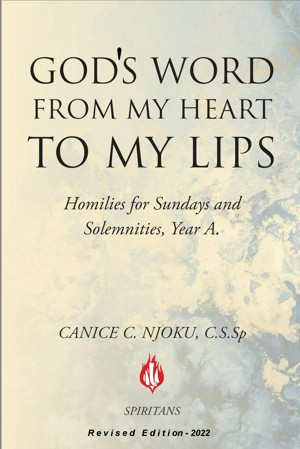
Available now on

Smashwords: https://www.smashwords.com/books/view/1179451

Amazon: https://www.amazon.com/dp/B094YSGTZF

There must be something intriguing and interesting about this, given the fact that someone had to be unjustly assassinated or executed on a day like this. By all standards, what is it, that makes this Friday unique, good, or holy, this is a valid question.

The full answer to this question will manifest on Easter Sunday. However, without leaving us completely in the dark or in suspense, a very short reason will suffice. Today, Christ paid a costly price for our salvation by offering his own life as a sacrifice.

They took Jesus to Calvary and crucified him there. It looked like a brutal act, but splendor was shining through it. Today, the cross stands as a symbol of power in weakness. It stands as a symbol of salvation rather than a symbol of curse or evil.

Good Friday puts the cross before us and challenges us not to look away where ever there is suffering. If we follow the footsteps of Christ to Calvary, we do not have to fear, because, like him, we confide in God’s divine presence and protection.

So, in his passion, Christ gives us a great lesson on love and generosity. This must awaken in us a response of gratitude and serious commitment both to God and to one another. The way of the Cross is the way of our lives, which we must walk supported by Jesus, who will give us victory at the end of our journey.

Finally, today let us ask God to strengthen us through the passion of Christ, so that, wherever there is suffering or pain, we might see the face of Jesus. Let us also ask Him for the strength we need to be a sign of hope wherever there is despair, and a sign of love wherever love is needed.

Peace be with you all!

Maranatha!

https://www.youtube.com/watch?v=H88jnoBbPmY

Homilía del Viernes Santo, Año A

¡Qué gran lección sobre Amor y generosidad!

Lectura:1raIs 52:13-53:12; Sal 31; 2daHeb 4:14-16; 5:7-9; Ev: Jn 18:1-19:42

Esta breve reflexión fue escrita por el Padre Canice Chukwuemeka Njoku, C.S.Sp. Es un sacerdote católico y  miembro de la Congregación del Espíritu Santo (Espirítanos). Es un misionero en Puerto Rico. Es el Párroco de la Parroquia la Resurrección del Señor, Canóvanas y el Superior Mayor la Congregación del Espíritu Santo (Espirítanos), Circunscripción de Puerto Rico y Republica Dominicana. El Padre Canice es miembro de la academia de homilética (Academy of Homiletics). Para más detalles y comentarios se puede contactarlo alcanice_c_njoku@yahoo.com, cancilleriadfh@gmail.com, canicechukwuemeka@gmail.com

(https://orcid.org/0000-0002-8452-8392)

Hoy, la celebración de la pasión de nuestro Señor Jesucristo nos lleva a un punto muy importante en el Viaje que comenzamos hace unas seis semanas. De de todos los viernes de todo el año, este es el único designado como “Viernes Santo.”

Disponible Ahora al:

Smashwords: https://www.smashwords.com/books/view/1179509

Amazon: https://www.amazon.com/dp/B094YTH1YX?

Debe haber algo intrigante y interesante acerca de esto. Esto es dado el hecho de que alguien tuvo que ser injustamente asesinado o ejecutado en un día como este. De acuerdo a todos los estándares, una pregunta válida es, ¿que hace que este viernes único, bueno o santo?

La plena respuesta a esta pregunta se manifestará el día de la Resurrección. Sin embargo, sin dejarnos completamente en la oscuridad o en suspenso, por ahora, una sencilla razón bastará. Hoy, Cristo pagó un precio costoso por nuestra salvación. Ofreció su propia vida como un sacrificio.

Llevaron a Cristo al Calvario y lo crucificaron allí. Parecía un acto brutal, pero el esplendor brillaba a través de ello. Hoy, la cruz se queda como un símbolo de poder en la debilidad, y un símbolo de salvación, en lugar de un símbolo de maldición.

El Viernes Santo pone la cruz delante de nosotros, y nos desafía a no mirar hacia otro lado dondequiera que haya sufrimiento. Si seguimos los pasos de Cristo hasta el Calvario, no tenemos que temer nada o a nadie porque, como él, confiamos en la divina presencia, y protección de Dios.

Así que, en su pasión, Cristo nos da una gran lección sobre el amor y la generosidad. Esto debe despertar en nosotros una respuesta de gratitud y compromiso serio tanto a Dios, como a los demás. El camino de la Cruz es el camino de nuestra vida, que debemos caminar apoyados por Jesús quien nos dará la victoria al final de nuestro viaje.

Finalmente, hoy pidamos a Dios, que nos fortalezca a través de la pasión de Cristo, para que, dondequiera que haya sufrimiento o dolor, podamos ver el rostro de Jesús. También, le pidamos la fuerza que necesitamos para ser un signo de esperanza dondequiera que haya desesperación, y un signo de amor, dondequiera que se necesite el amor.

¡La paz sea con ustedes ¡

¡Maranatha!

https://www.youtube.com/watch?v=OGOX6elzL2k

Homily For Holy Thursday – Year A

Celebrating Christ In The Holy Eucharist

Readings: 1st: Ex 12, 1-8; Ps 115; 2nd: 1 Cor 11, 23-26: Gos: Jn 13, 1-15

This brief reflection was written by Fr. Njoku Canice Chukwuemeka, C.S.Sp. He is a Catholic Priest and a member of the Congregation of the Holy Spirit (Spiritans). He is a missionary in Puerto Rico. He is the Parish Priest of Parroquia la Resurrección del Senor, Canóvanas, and the Major Superior of the Congregation of the Holy Spirit (Spiritans), Circumscription of Puerto Rico and the Dominican Republic. He was the chancellor of the Diocese of Fajardo Humacao, Puerto Rico. Fr. Canice is a member of the Academy of Homiletics. For more details and comments contact him at: canice_c_njoku@yahoo.com, or canicechukwuemeka@gmail.com.

(https://orcid.org/0000-0002-8452-8392)

Holy Thursday commemorates the institution of the Holy Eucharist and the Priesthood. It is a day of rededicating ourselves to Christ’s mission through a total donation of oneself and the willingness to serve others.

Available now on

Smashwords: https://www.smashwords.com/books/view/1179451

Amazon: https://www.amazon.com/dp/B094YSGTZF

Today, the Church celebrates God’s beautiful gift to her and the entire world – the institution of the Holy Eucharist. The Eucharist is the food that God has generously made available to nourish us on our spiritual journey. According to Pope Francis, “The Eucharist is not just a weekly way of celebrating our faith but radically affects our relationship with others. Especially with those most in need.”

The Eucharist gives us the Grace to feel forgiven and be ready to forgive others. We go to Mass, not because we are worthy or want to appear better than others. Instead, it is because we know that we are always in need of God’s mercy, love, and Grace. These come to us through the body and blood of Christ. The Eucharist affects the life of our Christian communities. So, the Church receives her mission and identity from the Eucharist.

The institution of the Holy Eucharist by Christ on Holy Thursday equally marks the ministerial priesthood’s institution. So, the priesthood is also God’s gift to his Church. This means that it is God who freely calls. The priesthood’s mystical nature derives from, first, the lives of Melchizedek and, second from Christ.

This mystical nature reaches its fullness at the Lord’s Supper on Holy Thursday and every Mass. That is the consecration of bread and wine, which transforms into Christ’s real body and blood. Therefore, the priest is the defender of the truth. He stands with the angels to give glory to God. He causes sacrifices to rise to God. He shares in Christ’s priesthood refashions creation and restores it in God’s image.

Finally, at the base of all these is the humility of Christ. In today’s Gospel, Christ chose to wash his disciples’ feet, instead of them washing his. The feet are the humblest part of our body. They endure the weight of the body and gather the dust of our journey. Hence, to wash and kiss the feet is a gesture of great humility and love that any person can realize. 

Christ also fed his disciples. Today’s celebration reminds us that Christ first offered himself in the Eucharist, before offering himself on the cross. So, the final and total donation of God to humanity summarizes the mystery of Holy Thursday.

Today, the Eucharist, the priesthood, the commandment of love (made palpable in the washing of the feet), and the Mass (the eternal memory of self-donation), sprouted from the heart of Christ.

There is a vital lesson for us in all of these. The joy of working in the vineyard of the Lord comes mostly from self-donation and serving others. However, this is possible only through a humble heart prepared for service. So, instead of struggling to be served all the time, let us emulate Christ by aspiring to serve others.

Peace be with you all!

Maranatha!

https://www.youtube.com/watch?v=H88jnoBbPmY

Homilía del Jueves Santo (Cena del Señor), Año A

Celebrando A Cristo En La Santa Eucaristía

Lecturas: 1ra: Ex 12, 1-8; Sal 115; 2da: 1Co, 11, 23-26; Ev: Jn 13, 1-15

Esta breve reflexión fue escrita por el Padre Canice Chukwuemeka Njoku, C.S.Sp. Es un sacerdote católico y  miembro de la Congregación del Espíritu Santo (Espirítanos). Es un misionero en Puerto Rico. Es el Párroco de la Parroquia la Resurrección del Señor, Canóvanas y el Superior Mayor la Congregación del Espíritu Santo (Espirítanos), Circunscripción de Puerto Rico y Republica Dominicana. El Padre Canice es miembro de la academia de homilética (Academy of Homiletics). Para más detalles y comentarios se puede contactarlo al: canice_c_njoku@yahoo.com, cancilleriadfh@gmail.com, canicechukwuemeka@gmail.com

(https://orcid.org/0000-0002-8452-8392)

El Jueves Santo conmemora la institución de la Santa Eucaristía, y el sacerdocio. Es un día de reconsagrarnos a la misión de Cristo, a través de la donación total de uno mismo, y la voluntad de servir a los demás.

Disponible Ahora al:

Smashwords: https://www.smashwords.com/books/view/1179509

Amazon: https://www.amazon.com/dp/B094YTH1YX?

Hoy, la Iglesia celebra el maravilloso don de Dios a ella y al mundo entero – la institución de la Santa Eucaristía. La Eucaristía es la comida que Dios generosamente ha hecho disponible para nutrirnos en nuestro viaje espiritual. Según el Papa Francisco, “La Eucaristía no es sólo una forma semanal de celebrar nuestra fe, sino que afecta radicalmente nuestra relación con los demás. Especialmente, con los más necesitados.”

La Eucaristía nos da la gracia de sentirnos perdonados y estar dispuestos a perdonar a los demás. Vamos a Misa, no porque somos dignos, o queremos parecer mejores que otros. Más bien, es porque sabemos que siempre estamos en necesidad de la misericordia de Dios, el amor y la gracia. Estos vienen a nosotros a través del cuerpo y la sangre de Cristo. La Eucaristía afecta la vida de nuestras comunidades cristianas. Así que, la iglesia recibe su misión e identidad de la Eucaristía.

La institución de la Santa Eucaristía por Cristo en el Jueves Santo, igualmente, marca la institución del sacerdocio ministerial. Por lo tanto, el sacerdocio es también un don de Dios a su iglesia. Esto significa que, es Dios quien llama libremente. La naturaleza mística del sacerdocio deriva primero, de las vidas de Melquisedec y, segundo de Cristo.

Esta naturaleza mística alcanza su plenitud en la cena del Señor el Jueves Santo, y en cada Misa. Es la consagración del pan y del vino, que se transforma en el cuerpo y la sangre reales de Cristo. Por lo tanto, el sacerdote es el defensor de la verdad. Está con los Ángeles para dar gloria a Dios. Hace que los sacrificios suban a Dios. Él comparte en el sacerdocio de Cristo, remodela la creación, y la restaura a la imagen de Dios.

Finalmente, en la base de todo esto está la humildad de Cristo. En el Evangelio de hoy, Cristo escogió lavar los pies de sus discípulos, en vez de ellos lavarle los pies a él. Los pies son la parte más humilde de nuestro cuerpo. Soportan el peso del cuerpo. Recogen el polvo de nuestro viaje. Por lo tanto, lavar y besar los pies es un gesto de gran humildad y amor que cualquier persona puede realizar.

Cristo también alimentó a sus discípulos. La celebración de hoy nos recuerda que Cristo se ofreció primero a sí mismo en la Eucaristía, antes de ofrecerse en la Cruz. Así que, el misterio del Jueves Santo se resume en la donación final y total de Dios a la humanidad.

En este día, la Eucaristía, el sacerdocio, el mandamiento del amor (hecho palpable en el lavado de los pies), y la Misa (la memoria eterna de la auto donación), brotaron del corazón de Cristo.

Hay una lección muy importante para nosotros en todos estos. Es esta, que la alegría de trabajar en el viñedo del Señor viene, sobre todo, de la autodonación de uno mismo, y de servir a otros. Sin embargo, esto es posible sólo a través de un corazón humildemente preparado para el servicio. Por lo tanto, en lugar de luchar para ser servidos todo el tiempo, vamos a emular a Cristo, al aspirar a servir a los demás.

¡La paz sea con ustedes!

¡Maranatha!

https://www.youtube.com/watch?v=OGOX6elzL2k


