Homily For The 26th Sunday Of Ordinary Time, Year C

Be Just and Work for Eternal Life!

Readings: 1st: Am 6:1. 4-7; Ps: 145:6-10; 2nd: I Tim 6:11-16; Gos: Lk 16:19-31

This brief reflection was written by Fr. Njoku Canice Chukwuemeka, C.S.Sp., DMin, a Catholic Priest and a member of the Congregation of the Holy Spirit (Spiritans). He is a missionary in Puerto Rico. He is Director of Santuario del Espiritu Santo, Dorado, and the Major Superior of the Congregation of the Holy Spirit (Spiritans), Circumscription of Puerto Rico and the Dominican Republic. Fr. Canice is a member of the Academy of Homiletics. For more details and comments, contact him atcanice_c_njoku@yahoo.com, canicechukwuemeka@gmail.com.

Find other books @: https://www.smashwords.com/books/view/893122

(Donate @ATH Móvil: Canice Njoku-7873146309)

(https://orcid.org/0000-0002-8452-8392

On this twenty-sixth Sunday of ordinary time, the church calls us to be just and work for eternal life. Hence, she encourages us to be dedicated and active in the “good fight of faith until the appearing of the Lord.”

https://ppeditoresebooks.com/products/homilies-c-god-s-word-from-my-heart-to-my-lips-ebook?_pos=3&_sid=de180b38d&_ss=r

All the readings of this Sunday are continuations of the readings of last Sunday. They center on the day of God’s judgment. Most importantly, they point to the end of the unjust, the triumph and comfort of the poor and just.

In today’s first reading, the prophet Amos continues his treaty against the rich and influential of the society who oppress the weak and the poor. He pronounces God’s judgment on those who derive their joy and comfort from the miseries of the poor and the vulnerable.

This comfort will soon disappear as the snow disappears. In order words, their time would soon be up, and their evil comes to light because “Tempus omnia revelat” (time reveals all things).  Indeed, this would be the triumph and comfort of the poor.

Today’s gospel is unique because it touches a vital aspect of our Christian life and belief. That is eschatology or the theology of the end of time. First, it concerns the three last things: Death, judgment, and reward – heaven or hell (Heb 9:27). Second, it involves and reassures us of the comfort of those who mourn now on earth as Christ promised: “Blessed are those who mourn for they shall be comforted (Mt 5: 4).

This famous adage, “Make hay while the sun shines,” captures the crucial lesson from today’s gospel. In order words, we must pay heed to the instructions of the good news of salvation while there is still ample opportunity for us to do so. Extreme comfort, and display of affluence here on earth that does not positively impact others, especially the poor, will not profit us much at the end of time. They will not guarantee our ticket into the “bosom of Abraham.”

Therefore, we need to pay attention to the word of God we hear every day. It calls us to use our earthly possession to help the poor and weak. The true and wise disciple of Christ is the one who understands this Latin adage, “Cotidiana vilescunt” (every day, things lose their appeal or value). This is hundred percent true and sure. Things retain their value only by serving and helping the society from which they come.

So, being mindful of the fact that this world shall pass away helps us a lot to prepare for the eternal kingdom. Only those who are focused and not distracted by the extreme comfort of this world will quickly notice and attend to the Christ in the “Lazarus” around them.

Finally, through the second reading of this Sunday, Paul advises us: “As a man dedicated to God, fight a good fight of faith to win for your selves the eternal life to which you are being called” This call to eternal life is for all.

One-Time
Monthly
Yearly

Please make a donation to sustain this blog

Make a monthly donation

Make a yearly donation

Choose an amount

$5.00
$15.00
$100.00
$5.00
$15.00
$100.00
$5.00
$15.00
$100.00

Or enter a custom amount

$

Your contribution is appreciated.

Your contribution is appreciated.

Your contribution is appreciated.

DonateDonate monthlyDonate yearly

However, only those who work for it with faith, patience, love, gentility, and reverence for God and others will get there. Only those who show mercy to the poor, tweak, and just would be accepted into the bosom of Abraham. That is the eternal kingdom, where we can hope for better things.

Peace be with you all!

Maranatha!
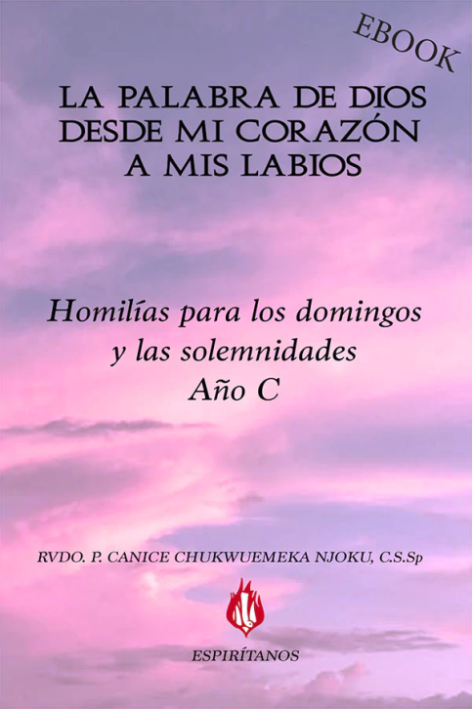
Homilía del Vigésimo Sexto Domingo del tiempo Ordinario, Año C

¡Sean justos y trabajen por la vida eterna! 
Lecturas: 1ra: Am 6, 1. 4-7; Sal: 145, 6-10; 2da: I Tim 6, 11-16; Ev: Lc 16,19-31

Esta breve reflexión fue escrita por el Padre Canice Chukwuemeka Njoku, C.S.Sp., DMin., un sacerdote católico y miembro de la Congregación del Espíritu Santo (Espirítanos). Es un misionero en Puerto Rico. Es director del Santuario del Espíritu Santo, Dorado y el Superior Mayor de la Congregación del Espíritu Santo (Espirítanos), Circunscripción de Puerto Rico y República Dominicana. El Padre Canice es miembro de la academia de homilética (The Academy of Homiletics). Para más detalles y comentarios se puede contactarlo al: canice_c_njoku@yahoo.com, canicechukwuemeka@gmail.com.

Encuentra otros libros en: https://www.smashwords.com/books/view/904854

(Donar @ATH Móvil: Canice Njoku – 7873146309)

(https://orcid.org/0000-0002-8452-8392)

En este vigésimo sexto domingo del tiempo ordinario, la Iglesia nos llama a ser justos y trabajar para la vida eterna. Por lo tanto, ella nos anima a ser dedicados y activos en la “buena batalla de la fe hasta la aparición del Señor.”

https://ppeditoresebooks.com/products/homilias-c-palabra-de-dios-ebook?_pos=8&_sid=1ef404b62&_ss=r

Todas las lecturas de este domingo son continuaciones de las lecturas del domingo pasado. Ellas se centran en el día del juicio de Dios. Lo más importante, señalan el destino de los injustos y el triunfo y la comodidad de los pobres y justos.

En la primera lectura, el profeta Amós continúa su tratado contra los ricos y los afluentes de la sociedad que oprimen a los débiles y los pobres. Él pronuncia el juicio de Dios sobre aquellos que derivan de su gozo y comodidad de las miserias de los pobres y los débiles.

Esta comodidad pronto desaparecerá como la nieve desaparece. En palabras de orden, su tiempo terminará pronto. Sus maldades finalmente serán reveladas y expuestas porque, el tiempo revela todas las cosas (“tempus omnia revelat). De hecho, esto sería el triunfo y la comodidad de los pobres.

El Evangelio de hoy es único, en el sentido que se toca un aspecto muy importante de nuestra vida cristiana y creencia. Es decir, escatología, teología del fin del tiempo o de los últimos días. Primero se refiere a las tres últimas cosas muy importantes: muerte, juicio y recompensa – cielo o infierno (Heb 9:27). En segundo lugar, se refiere y reafirma a nosotros de la comodidad de los que lloran ahora en la tierra como Cristo prometió: “Bienaventurados los que lloran porque serán confortados (Mt 5:4).

Una lección muy importante del evangelio de hoy podría ser capturada en este dicho popular: “Hacer heno mientras que el sol brilla.” En palabras de orden, debemos prestar atención a las instrucciones de la buena nueva de la salvación mientras que todavía hay una gran oportunidad para nosotros.

Comodidad excesiva y visualización de la prosperidad aquí en la tierra que no imparte positivamente en la vida de los demás, especialmente de los pobres, no nos beneficiará mucho al final de los tiempos. No garantizaran nuestro boleto en el seno de Abraham.

Por lo tanto, necesitamos que prestar atención a la palabra de Dios que oímos todos los días. Nos llama a usar nuestro poder terrenal para ayudar a los pobres y débiles. El verdadero discípulo sabio de Cristo es el que entiende este adagio latino: “cotidiana vilescunt” (las cosas cotidianas pierden su valor, no se aprecian). Esto es cien por ciento cierto y seguro. Las cosas conservan su valor sólo por servir y ayudar a la sociedad de la que se derivan.

Así, siendo consciente de que este mundo pasará nos ayuda mucho a prepararnos para el reino eterno. Sólo aquellos que están enfocados y no distraídos por la excesiva comodidad de este mundo fácilmente notarán y atenderán al Cristo en el “Lázaro” alrededor de ellos.

Por último, a través de la segunda lectura de este domingo, Pablo nos aconseja: “Hermano, tú como hombre de Dios, lleva una vida de rectitud, piedad, fe, amor, paciencia y mansedumbre. Lucha en el noble combate de la fe, conquista la vida eterna a la que has sido llamado…” Esta llamada a la vida eterna es para todos.

One-Time
Monthly
Yearly

Por favor haga una donación para mantener este blog

Make a monthly donation

Make a yearly donation

Choose an amount

$5.00
$15.00
$100.00
$5.00
$15.00
$100.00
$5.00
$15.00
$100.00

Or enter a custom amount

$

Your contribution is appreciated.

Your contribution is appreciated.

Your contribution is appreciated.

DonateDonate monthlyDonate yearly

Sin embargo, sólo aquellos que trabajan para ella con fe, amor, paciencia, ternura, reverencia para Dios y para otros, la alcanzarán. Sólo aquellos que muestran misericordia a los pobres, los débiles y los justos serían aceptados en el seno de Abraham. Es decir, el reino eterno, donde “mejores cosas se pueden esperar.”

¡La paz sea con ustedes!

¡Maranatha!

Homilía del Vigésimo Quinto Domingo del Tiempo Ordinario, Año C

Cristo Defiende a Los Pobres y los Oprimidos 
Lecturas: (1ra: Am 8, 4-7; Sal: 112, 1-2. 4-8; 2da: I Tim 2, 1-8; Ev: Lc 16, 1-13)

Esta breve reflexión fue escrita por el Padre Canice Chukwuemeka Njoku, C.S.Sp., DMin., un sacerdote católico y miembro de la Congregación del Espíritu Santo (Espirítanos). Es un misionero en Puerto Rico. Es director del Santuario del Espiritu Santo, Dorado y el Superior Mayor de la Congregación del Espíritu Santo (Espirítanos), Circunscripción de Puerto Rico y Republica Dominicana. El Padre Canice es miembro de la academia de homilética (The Academy of Homiletics). Para más detalles y comentarios se puede contactarlo al: canice_c_njoku@yahoo.com, canicechukwuemeka@gmail.com.

Encuentra otros libros en: https://www.smashwords.com/books/view/904854

(Donar @ATH Móvil: Canice Njoku – 7873146309)

(https://orcid.org/0000-0002-8452-8392)

En este vigésimo quinto domingo del tiempo ordinario, la Iglesia nos insta a reflexionar sobre nuestra actitud hacia el dinero, las cosas materiales y especialmente, nuestra actitud hacia los pobres. Injusticia, avaricia, y opresión son entre los principales factores que han perpetuado la pobreza en nuestro mundo.

https://ppeditoresebooks.com/products/homilias-c-palabra-de-dios-ebook?_pos=8&_sid=1ef404b62&_ss=r

En la primera lectura, el profeta Amós condena la injusticia y la opresión contra los pobres. Escribió en un momento cuando los ricos tomaron posesión de todo terreno y “esclavizaron” a los pobres. Se exportaron alimentos para ganar más dinero para ellos mismos, mientras que los pobres sufrieron y murieron de hambre. 

Hoy, nos enfrentamos a una situación similar en nuestro mundo. Mientras que algunos no pueden conseguir una comida al día, otros malgastan dinero en proyectos inútiles. A veces, la excusa es que los pobres son perezosos, o que siempre habría los pobres en el mundo. Estas son excusas débiles. La verdad es que hay mucha codicia, injusticia y corrupción en nuestro mundo.

Hoy, Pablo nos llama a orar por gobernantes, líderes y autoridades. Esta oración es muy necesaria para su conversión y para que Dios los llena con su sabiduría. Si son convertidos y sabios, ayudarán a detener corrupción e injusticia en nuestros mundo y sistema. Esto es muy importante porque, como Pablo lo pone: “Dios quiere que todos sean salvos y alcancen el pleno conocimiento de la verdad.”  Esta “verdad” es que, hay un solo Dios y todos somos sus hijos. Dios ama a todos, y desea que todos, prosperamos tanto en salud y en nuestras almas.

Una vez que entendamos esto, desaparecerá el egoísmo. Comenzaremos a tener en cuenta el interés y el bien de los demás. Es la voluntad de Dios que todos seamos salvos. Esto incluye ser salvado del hambre, injusticia, codicia y la corrupción que ha destruido nuestro mundo y dejado a muchos pobres.

En el Evangelio, Jesús nos recuerda el hecho de que las cosas materiales no duran para siempre. Por lo tanto, nos aconseja sobre cómo usarlos sin perder nuestra salvación. Hay un refrán que dice que: “La mejor manera de invertir es invertir en los pobres.” Por lo tanto, debemos aprender como invertir en los pobres para mejorar sus condiciones. La acumulación de riqueza solo para nosotros mismos sin utilizarlas para ayudar a los necesitados equivale a la avaricia y el egoísmo.

Dinero y la riqueza sólo tienen valor cuando se utilizan sabiamente para ayudar a los necesitados. Sólo los insensatos prestan más atención al dinero y a la riqueza que al Dios, y en detrimento de los pobres. Esto es porque son como “el insensato que dice que no hay Dios” (Sal 14:1). Por el contrario, el sabio usa su riqueza para ayudar a los necesitados.

Por lo tanto, es importante saber que cuando somos bendecidos por Dios con riquezas, somos sólo su administrador. La riqueza es dada a nosotros para ayudar y mejorar las vidas de los necesitados. No es sólo para nosotros y nuestras familias. Así que, debemos ser caritativos con nuestra riqueza. 

One-Time
Monthly
Yearly

Por favor haga una donación para mantener este blog

Make a monthly donation

Make a yearly donation

Choose an amount

$5.00
$15.00
$100.00
$5.00
$15.00
$100.00
$5.00
$15.00
$100.00

Or enter a custom amount

$

Your contribution is appreciated.

Your contribution is appreciated.

Your contribution is appreciated.

DonateDonate monthlyDonate yearly

Por último, no debamos manipular a los pobres y los necesitados por ganancias económicas. Cualquier forma de injusticia y opresión contra los pobres clama de la tierra hacia a Dios como hizo la sangre de Abel (Gen 4:10). Cristo es el defensor de los pobres y los marginados. Como el salmista dice. ” Dios levanta del polvo al pobre y saca del muladar al necesitado.”

¡La paz sea con ustedes!

¡Maranatha!

Homily For The 25th Sunday Of Ordinary Time, Year C

Christ Defends the Poor and the Oppressed

Readings: 1st: Am 8:4-7; Ps: 112:1-2. 4-8; 2nd: I Tim 2:1-8; Gos: Lk 16:1-13

This brief reflection was written by Fr. Njoku Canice Chukwuemeka, C.S.Sp., DMin, a Catholic Priest and a member of the Congregation of the Holy Spirit (Spiritans). He is a missionary in Puerto Rico. He is Director of Santuario del Espiritu Santo, Dorado, and the Major Superior of the Congregation of the Holy Spirit (Spiritans), Circumscription of Puerto Rico and the Dominican Republic. Fr. Canice is a member of the Academy of Homiletics. For more details and comments, contact him atcanice_c_njoku@yahoo.com, canicechukwuemeka@gmail.com.

Find other books @: https://www.smashwords.com/books/view/893122

(Donate @ATH Móvil: Canice Njoku-7873146309)

(https://orcid.org/0000-0002-8452-8392

On this twenty-fifth Sunday of ordinary time, the Church urges us to reflect on our attitude towards money, material things, and especially, our attitude towards the poor and the marginalized. Injustice, greed, and oppression are among the greatest factors that have perpetuated poverty in our society.

https://ppeditoresebooks.com/products/homilies-c-god-s-word-from-my-heart-to-my-lips-ebook?_pos=3&_sid=de180b38d&_ss=r

In today’s first reading, the prophet Amos condemns injustice and oppression against the poor. He wrote about when the rich took all the land and “enslaved” the poor in their farmlands. They exported food to make more money for themselves, while the poor starved and died of hunger.

Today, we face similar situations all over the world. While some cannot afford one meal per day, others waste money on useless projects. Sometimes, the excuse we give is that the poor are lazy or that there would always be poor people in the world. These are weak excuses. The truth is that there is much greed, injustice, and corruption in our world.

Today, Paul implores us to pray for everyone especially, kings, rulers, and government leaders. This prayer is necessary for conversion and wisdom. If our leaders are converted and become wise, they will help to stop corruption, injustice, and oppression in our land and systems.

This is very important because, as Paul puts it: “God wants everyone to be saved and reach the full knowledge of the truth.” This truth is that there is only one God and that we all are His children. He loves us all equally and wishes that we all prosper and be in health, even as our soul prospers.

Once we understand this, selfishness will disappear, and we shall begin to consider the interest and good of others. It is God’s will to save all. This includes salvation from starvation, injustice, greed, and corruption that has destroyed our world and left many poor.

In the gospel, Jesus reminds us of the fact that money and material things do not last forever. Hence, he advises us on how to make use of them without losing our salvation. There is a saying that “The best way to invest is to invest in the poor.” We should therefore learn to invest in the poor to improve their conditions. Amassing wealth for ourselves without using them to help those in need only amounts to greed and selfishness.

Money and wealth have value only when used wisely to help those around us. Only fools hold tenaciously to money and wealth above God and to the detriment of the poor. Also, only the ungodly use their wealth to oppress the poor and the weak. This is because they are like “the fool who says there is no God” (Ps 14:1).

On the contrary, the wise use his wealth to help those in need and store wealth for himself in heaven. Therefore, it is important to know that we are only it’s managers when God blesses us with wealth. God gives us wealth to help and improve the lives of those in need. It is not meant only for our families and us. So, we must be charitable with it.

One-Time
Monthly
Yearly

Please make a donation to sustain this blog

Make a monthly donation

Make a yearly donation

Choose an amount

$5.00
$15.00
$100.00
$5.00
$15.00
$100.00
$5.00
$15.00
$100.00

Or enter a custom amount

$

Your contribution is appreciated.

Your contribution is appreciated.

Your contribution is appreciated.

DonateDonate monthlyDonate yearly

Finally, we must not manipulate the poor and the needy for economic gains. This is because any form of injustice or oppression against the poor and weak cry’s out to God for vengeance as the blood of Abel did (Gen 4:10). Christ is the defender of the poor and the marginalized. As the psalmist says: “He raises the poor and lifts the lowly from the dust.”

Peace be with you all!

Maranatha!

Feast of the Exaltation of the Holy Cross (On The 24th Sunday Of Ordinary Time, Year C)

The Cross of Christ: The Everlasting Symbol of Victory!

Readings: 1st: Num 21, 4-9; Ps 71-2.34-38; 2nd: Phil 2, 6-11; Gos: Jh 3, 13-17

This brief reflection was written by Fr. Njoku Canice Chukwuemeka, C.S.Sp., DMin, a Catholic Priest and a member of the Congregation of the Holy Spirit (Spiritans). He is a missionary in Puerto Rico. He is Director of Santuario del Espiritu Santo, Dorado, and the Major Superior of the Congregation of the Holy Spirit (Spiritans), Circumscription of Puerto Rico and the Dominican Republic. Fr. Canice is a member of the Academy of Homiletics. For more details and comments, contact him atcanice_c_njoku@yahoo.com, canicechukwuemeka@gmail.com.

Find other books @: https://www.smashwords.com/books/view/893122

(Donate @ATH Móvil: Canice Njoku-7873146309)

(https://orcid.org/0000-0002-8452-8392

“But by becoming a curse for us Christ has redeemed us from the curse…for the scripture says, anyone who is hanged on a cross is under God’s curse. Christ did this in order that the blessing which God promised Abraham might be given to the Gentiles…” (Gal 3: 13-14).

Today, 14 September, of the twenty-fourth Sunday of ordinary time, the Church celebrates the feast of the exaltation of the cross. It is an immovable feast. It is also known as the Feast of the Triumph of the Holy Cross. The readings for this feast were carefully selected.

https://ppeditoresebooks.com/products/homilies-c-god-s-word-from-my-heart-to-my-lips-ebook?_pos=3&_sid=de180b38d&_ss=r

The first reading presents the communal disobedience and rebellion of the people of God. Their rebellion was rewarded with immediate punishment. “The Lord sent among the people serpents, which bit the people so that many of them died.”When Moses pleaded, God healed them with the symbol of the same creature with which he afflicted them, a bronze serpent: “Anyone who was bitten by a serpent, looked at a bronze serpent and lived.”

This symbol of healing prefigures Christ as John presents it in today’s gospel: “As Moses lifted the serpent in the desert, so must the Son of Man be lifted, so that everyone who believes in him may have eternal life.”It was due to his love that God sent Israel a bronze serpent as the symbol of healing in the desert. This same love reached its climax when he offered his only son on the cross for the salvation of the world enslaved by sin.

Hence, through today’s feast, the Church reminds us that the cross is now a symbol of victory over the powers of evil (Col 2:15). What used to be a symbol of shame and disgrace has now been transformed. Paul captures this vividly: “By becoming a curse for us, Christ has redeemed us from the curse. For the scripture says, anyone hanged on a cross is under God’s curse. Christ did this so that the blessing which God promised Abraham might be given to the Gentiles.” (Gal 3:13-14).

The Cross is about a God who loves us so much, He willingly suffered a painful, ignominious death. It is about suffering, something the world tells us to avoid. It is about redemption, something few people believe they really need.

So, the cross is a symbol of salvation and victory. It is no longer a symbol of a curse, shame, or disgrace. It is now a symbol of humility because on it, Christ “humbled himself” (Phil 2:6-11). It is a symbol of patience, hope, and contrast to our world, where everything must come easily and fast, and where “suffering” is always considered a curse.

One-Time
Monthly
Yearly

Please make a donation to sustain this blog

Make a monthly donation

Make a yearly donation

Choose an amount

$5.00
$15.00
$100.00
$5.00
$15.00
$100.00
$5.00
$15.00
$100.00

Or enter a custom amount

$

Your contribution is appreciated.

Your contribution is appreciated.

Your contribution is appreciated.

DonateDonate monthlyDonate yearly

Today, let ask God for the grace to continue to identify with this holy symbol as we acclaim: “We adore you, O Christ, because, by your holy cross, you have redeemed the world.”

Peace be with you all.

Maranatha!

Fiesta de la Exaltación de la Santa Cruz (en el Vigésimo Cuarto Domingo del Tiempo Ordinario, Año C)

La cruz de Cristo: ¡El símbolo eterno de la victoria!

Lecturas: 1ra: Num 21: 4-9; Sal: 77; 2da: Flp 2:6-1; Ev: Jn 3:13-17

Esta breve reflexión fue escrita por el Padre Canice Chukwuemeka Njoku, C.S.Sp., DMin., un sacerdote católico y miembro de la Congregación del Espíritu Santo (Espirítanos). Es un misionero en Puerto Rico. Es director del Santuario del Espiritu Santo, Dorado y el Superior Mayor de la Congregación del Espíritu Santo (Espirítanos), Circunscripción de Puerto Rico y Republica Dominicana. El Padre Canice es miembro de la academia de homilética (The Academy of Homiletics). Para más detalles y comentarios se puede contactarlo al: canice_c_njoku@yahoo.com, canicechukwuemeka@gmail.com.

Encuentra otros libros en: https://www.smashwords.com/books/view/904854

(Donar @ATH Móvil: Canice Njoku – 7873146309)

(https://orcid.org/0000-0002-8452-8392

Cristo nos redimió de la maldición de la ley, habiéndose hecho maldición por nosotros (porque escrito está: Maldito todo el que cuelga de un madero[a]), 14 a fin de que en Cristo Jesús la bendición de Abraham viniera a los gentiles (Gal 3, 13-14).

Hoy, 14 de septiembre, del vigésimo cuarto domingo del tiempo ordinario, la Iglesia celebra la fiesta de la exaltación de la cruz. Es una fiesta inmovible. También conocida como la fiesta del triunfo de la Santa Cruz. Las lecturas de esta fiesta fueron cuidadosamente seleccionadas.

https://ppeditoresebooks.com/products/homilias-c-palabra-de-dios-ebook?_pos=8&_sid=1ef404b62&_ss=r

La primera lectura presenta la desobediencia y rebelión comunitaria del pueblo de Dios. Su rebelión fue recompensada con castigo inmediato. “Dios envió contra el pueblo serpientes venenosas, que los mordían, y murieron muchos israelitas.” Cuando Moisés suplicó, Dios los sanó con el símbolo de la misma criatura con la que los afligió, una serpiente de bronce: “El que haya sido mordido por las serpientes y mire la que tú hagas, vivirá”.

Este símbolo de sanación prefigura a Cristo, como Juan lo presenta en el evangelio de hoy: “Así, como Moisés levantó la serpiente en el desierto, así tiene que ser levantado el Hijo del hombre, para que todo el que crea en él tenga vida eterna.”

Fue debido a su amor que Dios envió a Israel una serpiente de bronce como símbolo de sanación en el desierto. Este mismo amor alcanzó su clímax cuando Dios ofreció a su hijo único en la cruz para la salvación del mundo esclavizado por el pecado.

Por lo tanto, a través de la fiesta de hoy, la Iglesia nos recuerda que la cruz es ahora un símbolo de victoria sobre los poderes del mal (Col 2:15). Lo que solía ser un símbolo de vergüenza y desgracia ha sido transformado.

Pablo captura esto vívidamente: “Al convertirse en una maldición para nosotros, Cristo nos ha redimido de la maldición. Porque dice la escritura, cualquiera que esté colgado de una cruz está bajo la maldición de Dios. Cristo hizo esto para que la bendición que Dios prometió a Abraham se diera a los gentiles.” (Gal 3:13-14).

La cruz se trata de un Dios que nos ama tanto, y que voluntariamente sufrió una muerte dolorosa e ignominiosa. Se trata del sufrimiento, algo que el mundo nos dice que hay que evitar. Se trata de la redención, algo que pocos creen necesitar realmente. Y se trata de la gracia, algo que pocos comprendemos

Así que, la cruz es un símbolo de salvación y victoria. Ya, no es un símbolo de maldición o vergüenza. Ahora es un símbolo de humildad porque en ella, Cristo se humilló a sí mismo (Flp 2:6-11). Es un símbolo de paciencia, esperanza y contraste a nuestro mundo donde “el sufrimiento” siempre se considera como una maldición.

One-Time
Monthly
Yearly

Por favor haga una donación para mantener este blog

Make a monthly donation

Make a yearly donation

Choose an amount

$5.00
$15.00
$100.00
$5.00
$15.00
$100.00
$5.00
$15.00
$100.00

Or enter a custom amount

$

Your contribution is appreciated.

Your contribution is appreciated.

Your contribution is appreciated.

DonateDonate monthlyDonate yearly

Hoy pidamos a Dios la gracia para seguir identificándonos con este símbolo santo como aclamamos: “¡Te adoramos, oh Cristo, porque, por tu santa cruz, has redimido al mundo!”

La paz sea con ustedes.

¡Maranatha!

Homily For The 23rd Sunday Of Ordinary Time, Year C

Commitment And Self-Sacrifice

Readings: 1st: Wis 9, 13-18; Ps: 89, 3-6. 12-14; 2nd: Phlm 9, 10. 12-17; Gos: Lk 14, 25-33

This brief reflection was written by Fr. Njoku Canice Chukwuemeka, C.S.Sp., DMin, a Catholic Priest and a member of the Congregation of the Holy Spirit (Spiritans). He is a missionary in Puerto Rico. He is Director of Santuario del Espiritu Santo, Dorado, and the Major Superior of the Congregation of the Holy Spirit (Spiritans), Circumscription of Puerto Rico and the Dominican Republic. Fr. Canice is a member of the Academy of Homiletics. For more details and comments, contact him atcanice_c_njoku@yahoo.com, canicechukwuemeka@gmail.com.

Find other books @: https://www.smashwords.com/books/view/893122

(Donate @ATH Móvil: Canice Njoku-7873146309)

(https://orcid.org/0000-0002-8452-8392

On this twenty-third Sunday of ordinary time, the church celebrates the spirit of commitment and self-sacrifice of Christ. The spirit of self-sacrifice motivates one to do the unimaginable. This spirit made Jesus give up everything, including his own life, for our sake. So, through this same spirit, we can become true disciples of Christ.

https://ppeditoresebooks.com/products/homilies-c-god-s-word-from-my-heart-to-my-lips-ebook?_pos=3&_sid=de180b38d&_ss=r

Today’s first reading draws our attention to the depth of the wisdom of God. He alone knows his intentions for humanity. However, God has fully revealed this intention in Christ, who sacrificed himself willingly to save us. So, it is the spirit of wisdom that helps us to penetrate the mystery of God’s intention revealed in Christ. In this way, this mystery becomes spirit and life for us.

In the second reading, Paul sent back Onesimus to Philemon in the spirit of sacrifice. Although Paul needed Onesimus and had every right to retain him, he returned to his former master Philemon who equally needed him. Philemon also had to sacrifice something. He has to drop all his misgiving against Onesimus. So, Paul encouraged him to receive Onesimus as a brother rather than as a slave.

Hence, Paul teaches us that we can equally sacrifice our comfort in order to restore that of others. Also, we must be ready to make some sacrifices to repair and restore relationships. There is nothing we cannot sacrifice for the sake of God and humanity.

In today’s gospel, Jesus invites us to imbibe his spirit of commitment and sacrifice in order to be his true disciples. He says, “If any man comes to me without hating his father, mother, wife…and his own life too, he cannot be my disciple.” What does Christ mean by “hating”? He teaches and calls us to make a sacrifice and commit to our missions and calls.

Christ is not literarily calling us to hate the members of our family to be his disciples. He loved and obeyed his parents. Also, his mother, Mary, was one of His first and best disciples. So, we too must love members of our family. He is not in any way preaching the gospel of hatred. Instead, he wants us to be more committed to his ministry. He wants us to be willing to sacrifice our comfort whenever duty calls.

Maximilian Kolbe did this in the Auschwitz concentration camp in 1941 by offering his life for a fellow prisoner so that he might live to take care of his family. Christ wants us to imbibe Paul’s spirit of sacrifice and commitment.

To be Christ’s disciple means being ready to make sacrifices. Carrying our cross and following Christ also means subduing our own will in order to do his. That is, to be prepared to give up anything. Without commitment and sacrifice, we remain attached to our will and cannot be faithful disciples of Christ. Without it, we cannot see the needs of others.

One-Time
Monthly
Yearly

Please make a donation to sustain this blog

Make a monthly donation

Make a yearly donation

Choose an amount

$5.00
$15.00
$100.00
$5.00
$15.00
$100.00
$5.00
$15.00
$100.00

Or enter a custom amount

$

Your contribution is appreciated.

Your contribution is appreciated.

Your contribution is appreciated.

DonateDonate monthlyDonate yearly

Finally, commitment and sacrifice help us to give up anything to gain all. It disposes us to be better disciples of Christ. It helps us to be better husbands, wives, parents, and children. It helps us to be better leaders and even servants. In the spirit of commitment and sacrifice, the wisdom of God becomes fully alive and active in us. It also helps us deepen our trust in God’s divine providence and protection. Hence, we can confidently proclaim: “O Lord, you have been my refuge from one generation to the next.”

Peace be with you all!

Maranatha!

Homilía del Vigésimo Tercer Domingo del Tiempo Ordinario, Año C

Lecturas: (1ra: Sab 9, 13-18; Sal: 89, 3-6. 12-14; 2daFil 9, 10 -17; Ev: Lc 14, 25-33)

Esta breve reflexión fue escrita por el Padre Canice Chukwuemeka Njoku, C.S.Sp., DMin., un sacerdote católico y miembro de la Congregación del Espíritu Santo (Espirítanos). Es un misionero en Puerto Rico. Es director del Santuario del Espiritu Santo, Dorado y el Superior Mayor de la Congregación del Espíritu Santo (Espirítanos), Circunscripción de Puerto Rico y Republica Dominicana. El Padre Canice es miembro de la academia de homilética (The Academy of Homiletics). Para más detalles y comentarios se puede contactarlo al: canice_c_njoku@yahoo.com, canicechukwuemeka@gmail.com.

Encuentra otros libros en: https://www.smashwords.com/books/view/904854

(Donar @ATH Móvil: Canice Njoku – 7873146309)

(https://orcid.org/0000-0002-8452-8392

En este vigésimo tercer domingo del tiempo ordinario, la Iglesia celebra el espíritu de compromiso y sacrificio de Cristo. El espíritu de auto sacrificio motiva a hacer lo inimaginable. Este era el espíritu que hizo que Jesús renunciara a todo, incluso a su propia vida para nuestro bien. Así, a través de este mismo espíritu, podemos llegar a ser verdaderos discípulos de Cristo.

https://ppeditoresebooks.com/products/homilias-c-palabra-de-dios-ebook?_pos=8&_sid=1ef404b62&_ss=r

La primera lectura de hoy llama la atención sobre la profundidad de la sabiduría de Dios. Sólo Él sabe sus intenciones para la humanidad. Sin embargo, esta intención ha sido plenamente revelada en Cristo, que voluntariamente se sacrificó para salvarnos. Por lo tanto, es el espíritu de la sabiduría que nos ayuda a penetrar en el misterio de la intención de Dios revelado en Cristo. De esta manera, se convierte en espíritu y vida para nosotros.

En la segunda lectura, Pablo envió a Onésimo hacia Filemón en el espíritu de sacrificio. Aunque Pablo necesitaba a Onésimo y tenía todo el derecho a retenerlo, le permitió Filemón volver a su antiguo amo, que igualmente le necesitaba. Filemón también tenía que sacrificar algo. Él tiene que soltar todo su recelo contra Onésimo. Por lo tanto, se amonestó para recibir a Onésimo como un hermano, más que como un esclavo.

Por lo tanto, Pablo nos enseña que igualmente, podemos sacrificar nuestra comodidad para restaurar a los demás. También, debemos estar dispuestos a hacer algunos sacrificios para reparar y restaurar las relaciones.

En el Evangelio de hoy, Jesús nos invita a emular su espíritu de compromiso y sacrificio con el fin de ser sus verdaderos discípulos. Él dice: “Si alguno viene a mí sin odiar a su padre, madre, esposa… y su propia vida también, él no puede ser mi discípulo.” ¿Qué quería decir Cristo con “odiar”? Él simplemente nos enseña y nos llama a aprender a hacer sacrificios y para estar comprometidos con nuestras misiones y llamadas.

Cristo no nos está llamando literalmente a odiar a los miembros de nuestra familia para ser sus discípulos. Él amaba y obedecía a sus propios padres. Además, su madre María era una de sus primeras y mejores discípulos. Por lo tanto, debemos amar a los miembros de nuestra familia. No está de ninguna manera predicando el evangelio del odio. Más bien, quiere que seamos más comprometidos con su ministerio. Quiere que estemos dispuestos a sacrificar nuestra propia comodidad cuando el deber llama.

Maximiliano Kolbe hizo esto en el campo de concentración de Auschwitz en 1941, ofreciendo su vida por un compañero de prisión, para que él pudiera vivir para cuidar de su familia. Cristo quiere que imitemos el espíritu de sacrificio y compromiso de Pablo.

Para ser discípulos de Cristo, significa estar dispuestos a hacer sacrificios. Llevar nuestra cruz y seguirle a Cristo significa someter nuestra voluntad para hacer su voluntad. Es decir, estar dispuestos a dejarlo todo. Sin compromiso y sacrificio, nos mantendremos apegados a nuestra voluntad y, por lo tanto, no podemos ser verdaderos discípulos de Cristo. Sin compromiso y sacrificio, no podemos ver las necesidades de los demás.

One-Time
Monthly
Yearly

Por favor haga una donación para mantener este blog

Make a monthly donation

Make a yearly donation

Choose an amount

$5.00
$15.00
$100.00
$5.00
$15.00
$100.00
$5.00
$15.00
$100.00

Or enter a custom amount

$

Your contribution is appreciated.

Your contribution is appreciated.

Your contribution is appreciated.

DonateDonate monthlyDonate yearly

Finalmente, el compromiso y el sacrificio nos ayudan a renunciar a cualquier cosa para ganarlo todo. Nos ayudan para ser mejores discípulos de Cristo. Nos ayudan a ser mejores esposos, esposas, padres, e hijos. Nos ayuda a ser mejores líderes e incluso servidores. En el espíritu de compromiso y sacrificio, la sabiduría de Dios se convierte totalmente viva y activa en nosotros. También, nos ayuda a profundizar nuestra confianza en la divina providencia y protección de Dios. Por lo tanto, con confianza podemos proclamar: “Oh, Señor has sido mi refugio de generación en generación.”

¡La paz sea con ustedes! 

¡Maranatha!