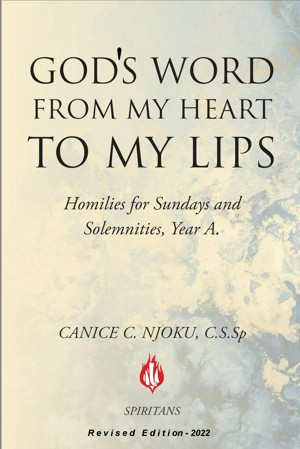
Homilía del Quinto Domingo del Tiempo Ordinario, Año A

¡Nuestro Mundo Necesita Nuestra Luz Y Dulzura Ahora!

Lecturas: 1ra: Is 58:7-10; Sal: 111:4-9; 2da: I Co 2:1-5; Ev: Mt 5:13-16

Esta breve reflexión fue escrita por el Padre Canice Chukwuemeka Njoku, C.S.Sp., DMin., un sacerdote católico y miembro de la Congregación del Espíritu Santo (Espirítanos). Es un misionero en Puerto Rico. Es director del Santuario del Espíritu Santo, Dorado, y el Superior Mayor de la Congregación del Espíritu Santo (Espirítanos), Circunscripción de Puerto Rico y República Dominicana. El padre Canice es miembro de la Academia de Homilética (The Academy of Homiletics). Para más detalles y comentarios se puede contactarlo al: canice_c_njoku@yahoo.com, canicechukwuemeka@gmail.com.

Encuentra otros libros en: https://www.smashwords.com/books/view/904854

(Donar @ATH Móvil: Canice Njoku – 7873146309)

En este quinto domingo del tiempo ordinario, la Santa Madre Iglesia nos recuerda que somos una luz en la oscuridad. Por eso, recuerda a sus hijos que la luz será más brillante si todos los cristianos son como Cristo.

Disponible Ahora al:

Smashwords: https://www.smashwords.com/books/view/1179509

Amazon: https://www.amazon.com/dp/B094YTH1YX?

En nuestra primera lectura, el profeta Isaías nos dice lo que debemos hacer para que nuestra luz brillar: “comparte tu pan con el hambriento, abre tu casa al pobre sin techo, viste al desnudo…” Estas forman las obras corporales y misericordias de la iglesia. Las Naciones Unidas las declaró como los derechos fundamentales humanos en 1948. Son las necesidades básicas de la vida. Así que, su depravación roba la humanidad de su dignidad y la deja en la oscuridad perpetua. Ello equivaldría a la injusticia estructural, así como un pecado contra la caridad. Por lo tanto, debemos ser “el justo que brilla como una luz en las tinieblas.”

En la segunda lectura, Pablo testificó que él era “luz” a los Corintios. Su presencia ilumina su oscuridad. También, como “sal”, los ayudó a preservar su salvación. Lo hizo no sólo con sus palabras sino a través de sus obras. Él dijo: “Hermanos, cuando vine a ustedes, no fue con oratoria o filosofía, sino simplemente para decirles lo que Dios había concedido.” Pablo hizo esto de una manera muy sencilla, a través de sus palabras y buenas obras.

De hecho, demostró que, de verdad, es la luz a través la cual los paganos Corintios vieron la luz de Cristo. Fue la sal que endulza y conserva su vida. Por lo tanto, nuestro encuentro con la gente debe dejarlos mejor de lo que los conocimos. Debe limpiar el polvo de preocupación, vergüenza, desesperación y decepción. Se debe liberar de la ignorancia y los ayuda a apreciar la verdad por acercarse a Dios.

En el Evangelio de hoy Jesús nos llama “sal.” En el Antiguo Testamento, sal fue utilizada para sazonar las ofrendas de sacrificios por los pecados y alianza con Dios: “sazonan todas sus ofrendas de grano con sal; no se dejen que la sal de la alianza con su Dios falta de su ofrenda de grano…” (Lev 2,13). Además, acuerdos de tierras fueron sellados con un regalo de sal como una prueba de la fuerza y la permanencia del contrato. Sal era también un símbolo de la actividad de Dios en la vida de una persona. Esto es porque, penetra, conserva y ayuda en la curación. Es lo que Dios hace en nuestras vidas. Por lo tanto, cuando Cristo nos llama “sal”, él quiere que nos hacemos una diferencia en nuestro mundo. Debemos penetrar y conservar nuestro mundo de decadencia moral, espiritual y físico o ambiental. Como sales, hay que añadir sabor a la vida de a los demás.

Otra vez, Cristo nos llama “luz.” De hecho, nos da una orden: “Su luz debe brillar ante los ojos de los hombres…!” La luz no brilla por sí mismo. Por lo tanto, Cristo nos dice por qué nosotros debemos brillar: “Para que los hombres vean sus buenas obras y den gloria a Dios.” Buenas obras aquí significan obras corporales y espirituales de la misericordia como los vimos en nuestra primera lectura. Para glorificar a Dios significa reconocerle y sean movidos. Significa sea afectado positivamente por nuestra luz. Como la luz, debemos representar: “Lo que es bueno, puro, verdadero, santo y confiable” (Phil 4, 8).

One-Time
Monthly
Yearly

Make a one-time donation

Make a monthly donation

Make a yearly donation

Choose an amount

$5.00
$15.00
$100.00
$5.00
$15.00
$100.00
$5.00
$15.00
$100.00

Or enter a custom amount

$

Your contribution is appreciated.

Your contribution is appreciated.

Your contribution is appreciated.

DonateDonate monthlyDonate yearly

Por último, no debemos ocultar el don de Dios. Puesto que “la caridad comienza en casa”, por lo tanto, debemos primero, ser luz y sal en nuestros hogares y comunidades. También, nuestro mundo debe sentir los efectos positivos de nuestra luz. No debemos dejarlo pasar hambre de la dulzura de nuestros testimonios y buenas obras.

¡La paz con ustedes!

¡Maranatha!

https://www.youtube.com/watch?v=OGOX6elzL2k

Homily For The 5th Sunday Of Ordinary Time, Year A

Our World Needs our Light and Sweetness Now!       

Readings: 1st: Is 58:7-10; Ps 111:4-9; 2nd: Heb 2: 1-5; Gos: Mat:5 13-16 

Esta breve reflexión fue escrita por el Padre Canice Chukwuemeka Njoku, C.S.Sp., DMin., un sacerdote católico y miembro de la Congregación del Espíritu Santo (Espirítanos). Es un misionero en Puerto Rico. Es director del Santuario del Espíritu Santo, Dorado, y el Superior Mayor de la Congregación del Espíritu Santo (Espirítanos), Circunscripción de Puerto Rico y República Dominicana. El padre Canice es miembro de la Academia de Homilética (The Academy of Homiletics). Para más detalles y comentarios se puede contactarlo al: canice_c_njoku@yahoo.com, canicechukwuemeka@gmail.com.

Encuentra otros libros en: https://www.smashwords.com/books/view/904854

(Donar @ATH Móvil: Canice Njoku – 7873146309)

On this fifth Sunday of ordinary time, the Holy Mother Church reminds us that we are a light in the dark. Hence, she reminds her children that the light will be brighter if all Christians are like Christ.

Available now on

Smashwords: https://www.smashwords.com/books/view/1179451

Amazon: https://www.amazon.com/dp/B094YSGTZF

In our first reading, the prophet Isaiah tells us what we must do for our light to shine: “Share your bread with the hungry, shelter the homeless, and cloth the naked.” These are what the Church calls corporal works of mercy. The United Nations declared them as Fundamental Human Rights in 1948. They are the necessities of life. So, their depravation rubs humanity of dignity and leaves her in perpetual darkness. This would amount to structural injustice and a sin against Charity. Therefore, we must be “that good man, who is light in the dark for the upright.”

In the second reading, Paul testified that he was “light” to the Corinthians. His presence illuminated their darkness. Also, as “salt,” he helped in preserving their salvation. He did this not only through his words but through his actions. He recalled thus: “When I came to you, brothers, it was not with any show of oratory or philosophy, but simply to tell you what God had granted.” Paul effortlessly did this through his words and good works.

He proved to be the light through which the pagan Corinthians saw the light of Christ. He was the salt that sweetened and preserved their lives. Therefore, our encounter with people must leave them better than we met them. It must wipe off the dust of worry, shame, despair, and disappointment. It must liberate them from ignorance and help them to appreciate the truth by drawing close to God.

In today’s gospel, Jesus calls us “salt.” In the Old Testament, salt was used to season the sacrificial offerings for sins and covenant with God. “Season all your grain offerings with salt; you shall not let the salt of the covenant with your God be lacking from your cereal offering.” (Lev 2:13). Also, land agreements were sealed with a gift of salt as proof of the strength and permanence of the contract. Salt was also a symbol of God’s activity in a person’s life. This is because it penetrates, preserves, and aids in healing. That is how God becomes active in our lives. So, when Christ calls us “salt,” he wants us to make a difference in our world. We must penetrate and preserve our world from moral, spiritual, physical, or environmental decay.  As salts, we must add taste and flavor to people’s lives. 

Again, Christ calls us “light.” He gives us a command: “Your light must shine in the sight of men!” Light does not shine for itself. Hence, Christ tells us why we must shine: “So that men may see your good works and give praise to God.” Good works here mean corporal and spiritual works of mercy, as we saw in our first reading.

To give praise means to acknowledge and to be moved. It means to be affected positively by our light. As light, we must represent: “What is good, pure, true, holy, and reliable” (Phil 4: 8). 

One-Time
Monthly
Yearly

Make a one-time donation

Make a monthly donation

Make a yearly donation

Choose an amount

$5.00
$15.00
$100.00
$5.00
$15.00
$100.00
$5.00
$15.00
$100.00

Or enter a custom amount

$

Your contribution is appreciated.

Your contribution is appreciated.

Your contribution is appreciated.

DonateDonate monthlyDonate yearly

Finally, we must not conceal God’s gift. Since “charity begins at home,”  we must first be light and salt in our homes and communities. Also, our world must feel the positive effects of our light. We must not starve it of the sweetness of our testimonies and good works.

Peace be with you!

Maranatha!

https://www.youtube.com/watch?v=H88jnoBbPmY