Homily for the 34th Sunday of Ordinary Time, Year B

Christ, King of the Universe Reigns!

Readings: 1st: Dan 7, 13-14; Ps: 15; 2nd: Rev 1, 5-8; Gos: Jn 18, 33-37

This brief reflection was written by Fr. Njoku Canice Chukwuemeka, C.S.Sp. He is a Catholic Priest and a member of the Congregation of the Holy Spirit (Spiritans). He is a missionary in Puerto Rico. He is the Parish Priest of Parroquia la Resurrección del Senor, Canóvanas, and the Major Superior of the Congregation of the Holy Spirit (Spiritans), Circumscription of Puerto Rico and the Dominican Republic. He was the chancellor of the Diocese of Fajardo Humacao, Puerto Rico. Fr. Canice is a member of the Academy of Homiletics. For more details and comments contact him at: canice_c_njoku@yahoo.com, canicechukwuemeka@gmail.com

(https://orcid.org/0000-0002-8452-8392)

The solemnity of Christ the King marks the definitive end of the church’s ordinary time. Of course, the entire liturgical calendar year B. Today, we acknowledge and adore Christ as the King of kings, the Lord of lords, and the beginning and the end.

Pope Pius XI instituted this feast in 1925 in response to growing nationalism and secularism. It was also instituted to promote the worship of Christ in the privacy of our hearts and publicly. The title of the feast was “Jesu Christi Regis” (Jesus Christ the King).

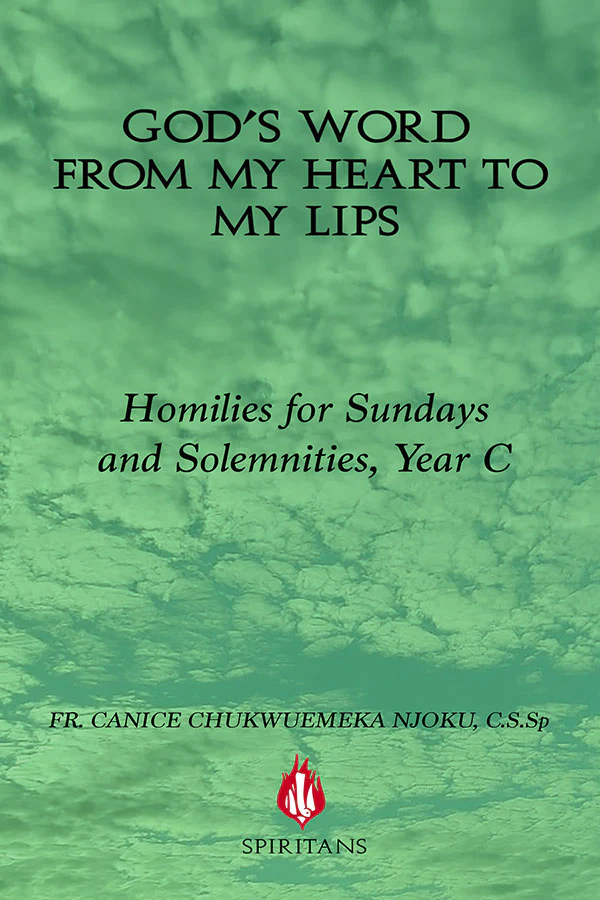
https://ppeditoresebooks.myshopify.com/products/god-s-word-from-my-heart-to-my-lips-ebook?_pos=1&_sid=1cb31260b&_ss=r

In his “motu proprio Mysterii Paschalis” of 1969, Pope Paul VI gave the celebration a new title: “Iesu Christi universorum Regis” (Jesus Christ, King of the Universe). He also moved the fest to the last Sunday in the liturgical calendar and transformed it from a feast to a “Solemnity.”

Both our first and second readings bear witness to the lordship of Christ. Daniel prophesied about Christ’s eternal and peaceful reign. He identified Christ as the “Son of Man.” While John called Him: “the firstborn of all creation…the Alpha and the Omega.” Both readings also remind us that Christ’s reign shall be that of peace, justice, love, and truth.

In today’s gospel, Pilate and the Jews ignorantly castigated and crucified Christ their King. They did not accept the truth that Christ preached about his kingdom. Instead, they hardened their hearts, thinking that everything ends here on earth.

Like Pilate and his collaborators, some of us are deceived by what we see in this world. That is, by believing that everything ends here on earth. However, the truth is that the kingdom of this world will pass away, but the kingdom of Christ will last forever.

One of today’s celebration’s most important goals is to acknowledge and worship Christ as the king of the universe. We must allow Him to reign in our lives. If He reigns in every heart, our families, society, and our entire world would be a better place.

So, today’s celebration challenges us to ask ourselves this fundamental question: “Is Christ reigning in my life? Today’s fest will be of no use if we have not given Christ a chance to reign in our lives, in our families, businesses, and our entire world.

One-Time
Monthly
Yearly

Make a one-time donation

Make a monthly donation

Make a yearly donation

Choose an amount

$5.00
$15.00
$100.00
$5.00
$15.00
$100.00
$5.00
$15.00
$100.00

Or enter a custom amount

$

Your contribution is appreciated.

Your contribution is appreciated.

Your contribution is appreciated.

DonateDonate monthlyDonate yearly

Also, today’s celebration calls us to ensure that Christ, the king, is our role model. He should be a model to all kings, rulers, and leaders. He cares, loves, and lives in peace with his people. He does not rule with military might or financial strength. Instead, he is a Good Shepherd.

As the King of Kings, Christ is a just judge, a compassionate and merciful king. He is a king who treats his subjects as brothers and friends. He is close, and we do not need any special protocol to reach him. Today, let us join the psalmist in proclaiming: “The Lord is king, with majesty enrobed.”

Peace be with you!

Maranatha!

Homilía del Trigésimo Cuarto Domingo del Tiempo Ordinario, Año B

Cristo, Rey del Universo Reina

Lectura: 1ra: Da 7, 13-14; Sal 92; 2da: Ap 1, 5-8; Ev: Jn 18, 33-37

Esta breve reflexión fue escrita por el Padre Canice Chukwuemeka Njoku, C.S.Sp. Es un sacerdote católico y  miembro de la Congregación del Espíritu Santo (Espirítanos). Es un misionero en Puerto Rico. Es el Párroco de la Parroquia la Resurrección del Señor, Canóvanas y el Superior Mayor la Congregación del Espíritu Santo (Espirítanos), Circunscripción de Puerto Rico y Republica Dominicana. Fue el Canciller de la Diócesis de Fajardo Humacao, Puerto Rico. El Padre Canice es miembro de la academia de homilética (The Academy of Homiletics). Para más detalles y comentarios se puede contactarlo al:canice_c_njoku@yahoo.com, canicechukwuemeka@gmail.com.

(Donar @ATH Móvil: Canice Njoku)

(https://orcid.org/0000-0002-8452-8392)

La solemnidad de Cristo el rey marca el final definitivo del tiempo ordinario de la iglesia, y por supuesto, todo el año calendario litúrgico B. Hoy, reconocemos y adoramos a Cristo como el Rey de reyes, el Señor de señores, y el principio y el fin.

https://ppeditoresebooks.myshopify.com/collections/venta-digital/products/palabra-de-dios-desde-mi-corazon-1

Esta fiesta fue instituida por el Papa Pío XI en 1925 en respuesta al crecimiento de nacionalismo y secularismo. También, fue instituido para promover la adoración de Cristo tanto en la intimidad de nuestros corazones, como en el público. El título de la fiesta era “Jesu Christi Regis” (Jesús Cristo, el Rey).

En su “motu proprio Mysterii Pascualis” de 1969, el Papa Pablo VI dio a la celebración un nuevo título: “Iesu Christi universorum Regis” (Jesucristo, rey del universo). También trasladó la celebración al último domingo en el calendario litúrgico y la transformó de una fiesta a una “solemnidad”.

Nuestra primera y segunda lectura testimonian el señorío de Cristo. Daniel profetizó sobre el reinado eterno y pacífico de Cristo. Identificó a Cristo como el “hijo del hombre”. Mientras que Juan lo llamaba: “El primogénito de toda la creación… el Alfa y el Omega.” Ambas lecturas también nos recuerdan que el reino de Cristo será el de la paz, la justicia, el amor y la verdad.

En el Evangelio de hoy, ignorantemente, Pilato y los judíos castigaron y crucificaron a Cristo su rey. Ellos no aceptaron la verdad que Cristo predicó sobre su reino. Más bien, endurecieron su corazón, pensando que todo termina aquí en la tierra.

Como Pilato y sus colaboradores, algunos de nosotros nos engañamos a nosotros mismos por lo que vemos en este mundo. Esto es, al creer que todo termina aquí en la tierra. Sin embargo, la verdad es que, el reino de este mundo pasará, pero el reino de Cristo durar para siempre.

Uno de los objetivos más importantes de la celebración de hoy es reconocer y adorar a Cristo como el rey del universo. Debemos permitirle reinar en nuestras vidas. Si reina en cada corazón, nuestras familias, la sociedad y nuestro mundo serían un lugar mejor.

Así que, la celebración de hoy nos desafía a hacernos esta pregunta tan importante: “¿está Cristo reinando en mi vida? La celebración de hoy no hará ningún sentido, si no hemos dado a Cristo la oportunidad de reinar en nuestras vidas, en nuestras familias, negocios, y en nuestro mundo entero.

One-Time
Monthly
Yearly

Make a one-time donation

Make a monthly donation

Make a yearly donation

Choose an amount

$5.00
$15.00
$100.00
$5.00
$15.00
$100.00
$5.00
$15.00
$100.00

Or enter a custom amount

$

Your contribution is appreciated.

Your contribution is appreciated.

Your contribution is appreciated.

DonateDonate monthlyDonate yearly

También, la celebración de hoy nos llama a ver a Cristo, el rey como nuestro modelo a seguir. Debería ser un modelo para todos los reyes, gobernantes y líderes. Él se preocupa, ama y vive en paz con su pueblo. No gobierna con poderío militar, ni con fuerza financiera. En cambio, es un buen pastor.

Como rey de reyes, Cristo es un juez justo, un rey compasivo y misericordioso. Es un rey que trata a sus súbditos como hermanos y amigos. Él está cerca, y no necesitamos ningún protocolo especial para llegar a él. Hoy, con el salmista vamos a proclamar: “El Señor es rey, está vestido de Majestad.”

¡La paz sea con ustedes!

¡Maranatha!

Homily for the 33rd Sunday of Ordinary Time Year B

Eternal Perfection In Christ

Readings: 1st: Dan 12, 1-3; Ps 15; 2nd: Heb 10, 11-14.18; Gos: Mk 3, 24-32

This brief reflection was written by Fr. Njoku Canice Chukwuemeka, C.S.Sp. He is a Catholic Priest and a member of the Congregation of the Holy Spirit (Spiritans). He is a missionary in Puerto Rico. He is the Parish Priest of Parroquia la Resurrección del Senor, Canóvanas, and the Major Superior of the Congregation of the Holy Spirit (Spiritans), Circumscription of Puerto Rico and the Dominican Republic. He was the chancellor of the Diocese of Fajardo Humacao, Puerto Rico. Fr. Canice is a member of the Academy of Homiletics. For more details and comments contact him at: canice_c_njoku@yahoo.com, canicechukwuemeka@gmail.com

(Donate @ATH Móvil: Canice Njoku)

(https://orcid.org/0000-0002-8452-8392)

On this thirty-third Sunday, we celebrate the final consummation at the end of time. The readings of this Sunday are set in a prophetic tone. In order words, they point to God’s people’s future deliverance through Christ’s redemptive work.

The readings also remind us of the glorious seasons that are ahead of us. Most importantly, this Sunday, the holy mother church raises our hope of salvation by reminding us of our future and eternal perfection through Christ’s single sacrifice.

https://ppeditoresebooks.myshopify.com/products/god-s-word-from-my-heart-to-my-lips-ebook?_pos=1&_sid=1cb31260b&_ss=r

In our first reading, the Archangel Michael is the divine figure who protects our dignity. He is the great prince who mounts guard over us. There are two points to note here. The first is the crucial role of Archangel Michael. However, this role must not be confused with the role of Christ as the savior. Archangel Michael is simply a faithful Guard.

Second, “all those whose names are found written in the book shall be saved.” In other words, they are the ones marked for eternal perfection through the sacrifice and blood of Christ. The good news is that there is still time to inscribe our names in this book. This is because Christ, our eternal high priest, has already made it possible for us to do so.

Our second reading from the letters to the Hebrews highlights the efficacy of Christ’s sacrifice for our salvation. It is a sacrifice that marks all believers with a bold sign of “forgiven, acquitted, and sealed for salvation.”

As the old covenant’s fulfillment, Christ, the new covenant’s high priest, has offered this sacrifice once and for all. So, all we need to do is simply approach the throne of his mercy to draw strength from Him. His sacrifice has purified and saved us.

In today’s gospel, Jesus employed different natural causes in order to remind us of the need to be on guard for his great coming. The tone of his message moves from the prophecy of the great tribulation to the prophecy of the coming of the Son of man.

Hence, Christ’s message’s central point is that no one knows when this time or moment will be. This reading equally reminds us that Christ is a prophet, as well as our savior. By saying that: “Heaven and earth will pass away, but my word will not pass away unfulfilled,” Christ wishes to remind us that his coming and our salvation is sure.

One-Time
Monthly
Yearly

Make a one-time donation

Make a monthly donation

Make a yearly donation

Choose an amount

$5.00
$15.00
$100.00
$5.00
$15.00
$100.00
$5.00
$15.00
$100.00

Or enter a custom amount

$

Your contribution is appreciated.

Your contribution is appreciated.

Your contribution is appreciated.

DonateDonate monthlyDonate yearly

Also, by asserting that chaos will precede his coming, it is simple to say that nothing will be able to stop what God has destined to happen. Its primary purpose is to set all the tragedies of life, warfare, destruction, and persecution in the context of the establishment of God’s kingdom.

However, after all, peace will return to the children of God, whose names are written in the book. He invites us to be prepared for the new kingdom that He wishes to establish. So, with confidence in the Lord who is to come, let us joyfully proclaim with the Psalmist: “You are my inheritance, O Lord.”

Peace be with you!

Maranatha!

Homilia del Trigésimo Tercer Domingo del Tiempo Ordinario, Año B

Perfección Eterna En Cristo

Readings: 1st: Dan 12, 1-3; Ps 15; 2nd: Heb 10, 11-14.18; Gos: Mk 3, 24-32

Esta breve reflexión fue escrita por el Padre Canice Chukwuemeka Njoku, C.S.Sp. Es un sacerdote católico y  miembro de la Congregación del Espíritu Santo (Espirítanos). Es un misionero en Puerto Rico. Es el Párroco de la Parroquia la Resurrección del Señor, Canóvanas y el Superior Mayor la Congregación del Espíritu Santo (Espirítanos), Circunscripción de Puerto Rico y Republica Dominicana. Fue el Canciller de la Diócesis de Fajardo Humacao, Puerto Rico. El Padre Canice es miembro de la academia de homilética (The Academy of Homiletics). Para más detalles y comentarios se puede contactarlo al: canice_c_njoku@yahoo.com, canicechukwuemeka@gmail.com.

(Donar @ATH Móvil: Canice Njoku)

(https://orcid.org/0000-0002-8452-8392)

En este trigésimo tercer domingo, celebramos la consumación última al final de tiempo. Las lecturas de este domingo se establecen en un tono profético. En otras palabras, señalan la liberación futura del pueblo de Dios a través de la obra redentora de Cristo.

https://ppeditoresebooks.myshopify.com/collections/venta-digital/products/palabra-de-dios-desde-mi-corazon-1

Las lecturas también nos recuerdan de las temporadas gloriosas que están delante de nosotros. Lo más importante, este domingo la Santa Madre Iglesia levanta nuestra esperanza de salvación, recordándonos nuestro futuro y perfección eterna a través del sacrificio único de Cristo.

En nuestra primera lectura, el Arcángel Miguel es la figura divina que protege nuestra dignidad. Él es el gran príncipe que nos guarda. Hay dos puntos a tener en cuenta aquí. El primero es el papel importante del Arcángel Miguel. Sin embargo, este papel no debe confundirse con el papel de Cristo como Salvador. El Arcángel Miguel es simplemente un guardia fiel.

Segundo, “todos aquellos cuyos nombres se encuentran escritos en el libro serán salvados.” En otras palabras, son los que están marcados para la perfección eterna a través del sacrificio y la sangre de Cristo. La buena noticia es que todavía hay tiempo para inscribir nuestros nombres en este libro. Esto es porque, Cristo nuestro sumo sacerdote eterno ya lo ha hecho posible para que lo logramos.

Nuestra segunda lectura de la carta a los hebreos sigue destacando la eficacia del sacrificio de Cristo para nuestra salvación. Es un sacrificio que marca a todos los creyentes con un signo audaz de: “perdonado, absuelto y sellado para salvación”.

Como el cumplimiento de la antigua alianza, Cristo el sumo sacerdote de la nueva alianza ha ofrecido este sacrificio por una vez para todas. Por lo tanto, lo que tenemos que hacer es simplemente acercarnos al trono de su misericordia para conseguir fuerza de él. Su sacrificio nos ha purificado, y salvado.

En el Evangelio de hoy, Jesús empleó diferentes causas naturales para recordarnos la necesidad de estar alertos para su gran venida. El tono de su mensaje se mueve de la profecía de la gran tribulación, a la profecía de la venida del hijo del hombre.

Por lo tanto, el punto central del mensaje de Cristo es que, nadie sabe cuándo sería este tiempo o momento. Esta lectura nos recuerda que Cristo es un profeta, así como nuestro salvador. Al decir que: “El cielo y la tierra pasarán, pero mi palabra no pasará sin cumplirse,” Cristo desea recordarnos que su venida y nuestra salvación está segura.

One-Time
Monthly
Yearly

Make a one-time donation

Make a monthly donation

Make a yearly donation

Choose an amount

$5.00
$15.00
$100.00
$5.00
$15.00
$100.00
$5.00
$15.00
$100.00

Or enter a custom amount

$

Your contribution is appreciated.

Your contribution is appreciated.

Your contribution is appreciated.

DonateDonate monthlyDonate yearly

También, al afirmar que el caos precederá a su venida, es simplemente decir que nada será capaz de detener lo que Dios ha destinado a suceder. Su propósito primordial es establecer todas las tragedias de la vida, la guerra, la destrucción y la persecución en el contexto del establecimiento del reino de Dios.

Sin embargo, después de todo, el tiempo de paz volverá a los hijos de Dios cuyos nombres están escritos en el libro. Nos invita a estar preparados para el nuevo reino que desea establecer. Así que, con confianza en el Señor que está de venir, proclamemos con gozo con el salmista: “Tú eres mi herencia, oh Señor.”

¡La paz sea con ustedes!

¡Maranatha!

Homilía del Trigésimo Segundo Domingo del Tiempo Ordinario, Año B

Generosidad y Confianza en la Divina Providencia

Lectura: 1ra: 1 Re 17, 8-16; Sal 145; 2da He 9, 24-28; Ev: Mc 12, 38-44

Esta breve reflexión fue escrita por el Padre Canice Chukwuemeka Njoku, C.S.Sp. Es un sacerdote católico y  miembro de la Congregación del Espíritu Santo (Espirítanos). Es un misionero en Puerto Rico. Es el Párroco de la Parroquia la Resurrección del Señor, Canóvanas y el Superior Mayor la Congregación del Espíritu Santo (Espirítanos), Circunscripción de Puerto Rico y Republica Dominicana. Fue el Canciller de la Diócesis de Fajardo Humacao, Puerto Rico. El Padre Canice es miembro de la academia de homilética (The Academy of Homiletics). Para más detalles y comentarios se puede contactarlo al:canice_c_njoku@yahoo.com, canicechukwuemeka@gmail.com

(Donar @ATH Móvil: Canice Njoku)

(https://orcid.org/0000-0002-8452-8392)

Hoy, el trigésimo segundo domingo del tiempo ordinario, la Iglesia nos alienta a aprender, y apreciar las virtudes de la generosidad y la hospitalidad. Ella nos recuerda que, como Cristo se ofreció generosamente para nuestra salvación, nosotros también debemos ser generosos con los demás. Un tema común a las lecturas de este domingo es: La generosidad, y confianza en la Divina Providencia.

https://ppeditoresebooks.myshopify.com/collections/venta-digital/products/palabra-de-dios-desde-mi-corazon-1

En nuestra primera lectura, Elías el Profeta de Dios probó la generosidad y la fe de la viuda de Sarepta. Como Oliver Twist (de la novela popular de Charles Dickens, de 1838), Elías siguió pidiendo más. Sin embargo, a pesar de su pobreza la viuda, era generosa a él.

El miedo del futuro es uno de los mayores enemigos de la generosidad y la prosperidad. Elías sabía lo asustado que estaba la viuda. De hecho, su miedo era genuino. Esto es, dado las circunstancias fuera de su control en ese momento. Por lo tanto, Elías comenzó de calmar su miedo: “No tengas miedo!” Entonces, se profetizó a ella: “Así dice el Señor de Israel: ‘La tinaja de harina no se vaciará, la vasija de aceite no se agotará.’”

De hecho, esta profecía se cumplió en la vida de la viuda y no le faltó nada después. Su fe y confianza en la palabra de Dios, y por supuesto, en la Divina Providencia nunca le defraudó. Más bien, su situación cambió y mejoró más allá de la expectativa. Su vida se transformó de penuria a la abundancia, de miseria a lujo, y de pobreza a la prosperidad.

Nuestra segunda lectura también destaca la generosidad de Cristo. Con su confianza en su padre, él se ofreció generosamente como “un sacrificio vivo y santo” (Rom 12:1). Lo que ofreció o perdió generosamente a través de su sufrimiento y muerte, ganó victoriosamente a través de su resurrección y ascensión. Esta fue la recompensa suprema de Dios a Cristo por su generosidad suprema.

El Evangelio es similar a la primera lectura. También, confiando en la Divina Providencia para su supervivencia, la viuda ofreció todo lo que tenía. Ella ofreció generosamente porque, ella confió, y conoció el Dios que servía. Al colocar toda su confianza y su futuro en las manos de Dios, conquistó su miedo del futuro, y el instinto de la auto preservación.

Hay muchas lecciones para nosotros en las lecturas de hoy. Primero, todas las figuras de nuestras lecturas eran generosas. Segundo, todos confiaron en la Divina Providencia. Nos enseñan, o nos recuerdan estos simples principios de la generosidad y la prosperidad que: “Los que dan, nunca carecen”, y “Bendito es la mano que da, y la mano que recibe”.

One-Time
Monthly
Yearly

Make a one-time donation

Make a monthly donation

Make a yearly donation

Choose an amount

$5.00
$15.00
$100.00
$5.00
$15.00
$100.00
$5.00
$15.00
$100.00

Or enter a custom amount

$

Your contribution is appreciated.

Your contribution is appreciated.

Your contribution is appreciated.

DonateDonate monthlyDonate yearly

En la vida, momentos de escasez, son momentos de pruebas. Son momentos de confianza en la Divina Providencia. Son momentos de grandes bendiciones. Así, Tobit nos aconseja que: “Es mejor dar limosnas que atesorar oro…. Aquellos que realizan actos de caridad y justicia (generosidad) tendrán la plenitud de vida “(12, 8-9).

Finalmente, como nuestro gran proveedor (Gen 22:14), “Dios proveerá de todo lo que necesitamos, conforme a las gloriosas riquezas que tiene en Cristo Jesús.” (Phil 4, 19). El conoce nuestras necesidades y sabe cómo ayudarnos. Todo lo que tenemos que hacer es, confiar en su Divina Providencia. Así que, pidámosle a Cristo que nos conceda un corazón generoso, para que podamos sembrar generosamente: “Porque, Dios ama al que da con alegría” (Co 9:7).

¡La paz sea con ustedes!

¡Maranatha!

Homily for the 32nd Sunday of Ordinary Time, Year B

Generosity and Trust in Divine Providence

Readings: 1st: Kg, 17, 10-16; Ps 145; 2nd: Heb 9, 24-28; Gos: Mk 12, 38-44

This brief reflection was written by Fr. Njoku Canice Chukwuemeka, C.S.Sp. He is a Catholic Priest and a member of the Congregation of the Holy Spirit (Spiritans). He is a missionary in Puerto Rico. He is the Parish Priest of Parroquia la Resurrección del Senor, Canóvanas, and the Major Superior of the Congregation of the Holy Spirit (Spiritans), Circumscription of Puerto Rico and the Dominican Republic. He was the chancellor of the Diocese of Fajardo Humacao, Puerto Rico. Fr. Canice is a member of the Academy of Homiletics. For more details and comments contact him at: canice_c_njoku@yahoo.com; canicechukwuemeka@gmail.com

(Donate @ATH Móvil: Canice Njoku)

(https://orcid.org/0000-0002-8452-8392)

Today, the thirty-second Sunday of ordinary time, the church encourages us to learn and appreciate the virtues of generosity and hospitality. As Christ generously offered himself for our salvation, she reminds us that we, too, must be generous to others. One theme common to the readings of this Sunday is generosity and trust in Divine Providence.

In our first reading, Elijah, the prophet of God, tested the widow of Zarephath’s generosity and faith. Like Oliver Twist (of Charles Dickens’ 1838 famous novel), Elijah kept asking for more. However, despite the widow’s poverty, she was generous to him.

https://ppeditoresebooks.myshopify.com/products/god-s-word-from-my-heart-to-my-lips-ebook?_pos=1&_sid=1cb31260b&_ss=r

Fear of the future is one of the greatest enemies of generosity and prosperity. Elijah knew how afraid the widow was. Indeed, her fear was genuine. That is, given the circumstances beyond her control at that moment. So, Elijah started by addressing and calming her anxiety: “Do not be afraid! Then, he prophesied to her: “For the Lord, the God of Israel, says: ‘The jar of flour shall not go empty, nor the jug of oil run dry…’”

Indeed, this prophecy was fulfilled in the widow’s life, and she lacked nothing afterward. Her faith and trust in God’s word, and of course, in Divine Providence never failed her. Instead, her situation changed and improved beyond here expectations. Her life was transformed from penury to plenty, from misery to luxury, and from poverty to prosperity.

The second reading also highlights Christ’s generosity. With trust in His Father, He generously offered himself as “a holy and living sacrifice” (Rom 12:1). What he offered or lost generously through his suffering and death, He victoriously gained through his Resurrection and Ascension. This was God’s supreme reward to Christ for His supreme generosity.

The gospel is similar to the first reading. Also, trusting in Divine Providence for her survival, the widow offered everything she had. She was generous because she knew and trusted the God she served. By placing her entire trust and future in God’s hands, she conquered her fear of the future and the instinct of self-preservation.

There are many lessons for us in today’s readings. First, all the figures in our readings were generous. Second, they all trusted in Divine Providence. They teach or remind us of these simple principles of generosity and prosperity: “Givers, never lack” and “Blessed is the hand that gives, and a hand that receives.”

One-Time
Monthly
Yearly

Make a one-time donation

Make a monthly donation

Make a yearly donation

Choose an amount

$5.00
$15.00
$100.00
$5.00
$15.00
$100.00
$5.00
$15.00
$100.00

Or enter a custom amount

$

Your contribution is appreciated.

Your contribution is appreciated.

Your contribution is appreciated.

DonateDonate monthlyDonate yearly

In life, moments of scarcity are moments of tests. They are moments to trust in Divine Providence. They are moments of great blessings. So, Tobit advises us that: “It is better to give alms than to treasure up gold. Those who perform acts of charity and righteousness (generosity) will have the fullness of life” (12, 8-9).

Finally, as our great provider (Gen 22:14), “God is ready to supply all our needs according to his riches in glory, through Christ” (Phil 4, 19). He knows our needs and how to meet them. All we need to do is to trust in His Divine Providence. So, let us ask Christ to grant us a very generous heart, so that we can sow with joy because: “God loves a cheerful and generous] giver” (2 Cor 9:7).

Peace be with you!

Maranatha!

Homily For The 31st Sunday Of Ordinary Time, Year B

Love: The Sacrifice of the New Covenant

Readings: 1st: Dt 6, 2-6; Ps 17; 2nd: Heb 7, 23-28; Gos: Mk 12, 28-34

This brief reflection was written by Fr. Njoku Canice Chukwuemeka, C.S.Sp. He is a Catholic Priest and a member of the Congregation of the Holy Spirit (Spiritans). He is a missionary in Puerto Rico. He is the Parish Priest of Parroquia la Resurrección del Senor, Canóvanas, and the Major Superior of the Congregation of the Holy Spirit (Spiritans), Circumscription of Puerto Rico and the Dominican Republic. He was the chancellor of the Diocese of Fajardo Humacao, Puerto Rico. Fr. Canice is a member of the Academy of Homiletics. For more details and comments contact him at; canice_c_njoku@yahoo.com, canicechukwuemeka@gmail.com.

(Donate @ATH Móvil: Canice Njoku)

(https://orcid.org/0000-0002-8452-8392)

Today, the thirty-first Sunday of ordinary time, the church continues to lead us to Christ, the eternal high priest of the new covenant. The basis of this new covenant is the sacrifice of love. Christ offered this sacrifice, which gave perfect glory to the Father. So, as His followers (Christians), He calls and expects us to provide this same sacrifice.

As a Jew, Christ himself prayed this same prayer. So, he uses these exact words in today’s gospel. It is both a call and a reminder of the unity and greatness of our God. Hence, it is a call to be faithful to God through the sacrifice of love. To obey God is to love Him!

https://ppeditoresebooks.myshopify.com/products/god-s-word-from-my-heart-to-my-lips-ebook?_pos=1&_sid=1cb31260b&_ss=r

The second reading is a continuation of the discourse on the eternal priesthood of Christ. The letter to the Hebrews contrasts the priesthood of Christ with that of the Old Testament. In obedience to his Father’s will, Christ offered the greatest sacrifice of love with his own life. It was necessary for Him to die, to save us (1 John 2:2; Heb 10: 10.14).

However, the significant difference is that the old covenant’s priesthood was terminated and conquered by death. On the contrary, Christ defeated and conquered death through his resurrection and ascension into heaven. There, he remains our eternal high priest.

By obeying the father’s will, Christ remained holy and innocent. He not only loved the father, but he loved us. “Greater love has no one than this: To lay down one’s life for one’s friends” (Jn 15:13). “God demonstrates his love for us in this: While we were still sinners, Christ died for us” (Rom 5:8).

In today’s gospel, Christ summarized the Ten Commandments into two. With the same words used by Moses, He repeated the same call in our first reading: “Hear, O Israel! You shall love the Lord your God with all your heart, with all your soul.” Then, he amplified it by adding: “You shall love your neighbor as yourself.” Very important!

Without downplaying or denying the first commandment’s priority, I think that the second is more challenging to fulfill humanly speaking. If we can obey the second, then we can, and have indeed observed the first. This is because God lives in our neighbor. We cannot hate or harm our neighbor for any reason, and still claim we love God or his commandments.

Unfortunately, due to the natural human instinct of self-preservation, pride, and selfishness (the “ego” or “I”), it seems practically impossible to love neither God nor our neighbor. However, Christ is not asking us to do what He could not do. He overcame all these enemies of love. Any Christian who overcomes these enemies will love sincerely.

Please kindly make a free donation here to help me pay for the subscription to this blog and keep it alive. Your token will go a long way in sustaining this blog – Thanks

One-Time
Monthly
Yearly

Make a one-time donation

Make a monthly donation

Make a yearly donation

Choose an amount

$5.00
$15.00
$100.00
$5.00
$15.00
$100.00
$5.00
$15.00
$100.00

Or enter a custom amount

$

Your contribution is appreciated.

Your contribution is appreciated.

Your contribution is appreciated.

DonateDonate monthlyDonate yearly

The good news is that Christ knows it is possible. If it were not so, He would not have commanded us to love. So, to love God and our neighbor as ourselves is a “debt,” we owe and must pay (Rom 13: 8). It is the sacrifice of the new covenant, which the new people of God, and indeed, every “born again” child of God must offer.

Finally, this may not necessarily mean dying on the cross as Christ did, but it is possible to demonstrate it through small, but concrete gestures like a sincere smile, good words, and charity. It may not only mean doing something extraordinary but also doing something simple. So, like Christ, our eternal high priest, when we offer this sacrifice and debt of love that gives perfect glory to God, we can sing with the psalmist: “I love you, Lord, my strength.”

Peace be with you!

Maranatha

Homilía del Trigésimo Primer Domingo del Tiempo Ordinario, Año B

Amor: El sacrificio de la nueva alianza

Lectura: 1ra: Dt 6, 2-6; Sal 23; 2da: Heb 7, 23-28; Ev: Mc 12, 28-34

Esta breve reflexión fue escrita por el Padre Canice Chukwuemeka Njoku, C.S.Sp. Es un sacerdote católico y  miembro de la Congregación del Espíritu Santo (Espirítanos). Es un misionero en Puerto Rico. Es el Párroco de la Parroquia la Resurrección del Señor, Canóvanas y el Superior Mayor la Congregación del Espíritu Santo (Espirítanos), Circunscripción de Puerto Rico y Republica Dominicana. Fue el Canciller de la Diócesis de Fajardo Humacao, Puerto Rico. El Padre Canice es miembro de la academia de homilética (The Academy of Homiletics). Para más detalles y comentarios se puede contactarlo al:canice_c_njoku@yahoo.com, canicechukwuemeka@gmail.com

(Donar @ATH Móvil: Canice Njoku)

(https://orcid.org/0000-0002-8452-8392)

Hoy, el trigésimo primer domingo del tiempo ordinario, la Iglesia nos sigue guiando hacia Cristo, el sumo sacerdote eterno de la nueva alianza. La base de esta nueva alianza es el sacrificio del amor. Cristo ofreció este sacrificio que le dio la gloria perfecta al padre. Así que, como sus seguidores (cristianos), nos llama y espera a ofrecer este mismo sacrificio.

En nuestra primera lectura, Moisés, nos recuerda que ser fieles a Dios y sus mandamientos es la mejor manera de alcanzar la prosperidad y la vida eterna. Concluye con la famosa llamada conocida en hebreo como Shema Yisrael (¡Escucha, Israel!) Es la pieza central de la oración judía de la mañana y de la tarde. Además, forma parte de algunas oraciones cristianas.

https://ppeditoresebooks.myshopify.com/collections/venta-digital/products/palabra-de-dios-desde-mi-corazon-1

Como judío, Cristo mismo oró esta misma oración. Así que, usa estas mismas palabras en el evangelio de hoy. Es a la vez una llamada y un recordatorio de la unidad y la grandeza de nuestro Dios. Por lo tanto, es un llamado a ser fieles a Dios a través del sacrificio del amor. ¡Obedecer a Dios es amarlo!

La segunda lectura es una continuación del discurso sobre el sacerdocio eterno de Cristo. La carta a los hebreos contrasta el sacerdocio de Cristo con del antiguo testamento. En obediencia a la voluntad de su padre, Cristo ofreció el mayor sacrificio de amor con su propia vida. Era necesario que muriera, para salvarnos (1 Juan 2:2; Heb 10:10,14).

Sin embargo, la mayor diferencia es que, el sacerdocio de la antigua alianza fue terminado y conquistado por la muerte. Al contrario, Cristo derrotó y conquistó la muerte a través de su resurrección y ascensión al cielo. Allí, sigue siendo nuestro sumo sacerdote eterno.

Al obedecer la voluntad del padre, Cristo permaneció santo e inocente. No sólo amaba al padre, sino que nos amó. “Nadie tiene amor más grande que el dar la vida por sus amigos” (Jn 15:13). “Dios demuestra su amor por nosotros en esto: en que cuando todavía éramos pecadores, Cristo murió por nosotros.” (Rom 5:8).

En el Evangelio de hoy, Cristo resumió los diez mandamientos en dos. Con las mismas palabras de Moisés, repitió la misma llamada en la primera lectura: “Escucha, Israel: El Señor, nuestro Dios, es el único Señor; amarás al Señor, tu Dios, con todo tu corazón, con toda tu alma…” Cristo añadió: “Amarás a tu prójimo como a ti mismo.” ¡Muy importante!

Sin negar la prioridad del primero de los dos mandamientos, humanamente hablando, creo que el segundo es muy difícil. Si podemos obedecer el segundo, entonces podemos, y de hecho hemos obedecido el primero. Esto es porque, Dios vive en nuestro prójimo. No podemos odiar o hacer daño a nuestro prójimo por ninguna razón, y todavía afirmamos que amamos a Dios, o su mandamiento.

Por desgracia, debido al instinto humano natural de autopreservación, orgullo y egoísmo, (el “ego” o “Yo”), parece prácticamente imposible amar ni a Dios, ni a nuestro prójimo. Sin embargo, Cristo no nos está pidiendo lo que él no pudo hacer. El venció todos estos enemigos de amor. Cualquier cristiano que vence estos enemigos, amará sinceramente.

Please kindly make a free donation here to help me pay for the subscription to this blog and keep it alive. Your token will go a long way in sustaining this blog – Thanks.

One-Time
Monthly
Yearly

Make a one-time donation

Make a monthly donation

Make a yearly donation

Choose an amount

$5.00
$15.00
$100.00
$5.00
$15.00
$100.00
$5.00
$15.00
$100.00

Or enter a custom amount

$

Your contribution is appreciated.

Your contribution is appreciated.

Your contribution is appreciated.

DonateDonate monthlyDonate yearly

La buena noticia es que, Cristo sabe que es posible. Si no fuera así, no nos habría mandado a amar. Entonces, amar a Dios y a nuestro prójimo, es una “deuda” que debemos, y lo debemos pagar (Rom 13:8). Es el sacrificio de la nueva alianza, que el nuevo pueblo de Dios, y, de hecho, todo “nacido de nuevo” hijos de Dios deben ofrecer.

Finalmente, esto puede no significar necesariamente de morir en la cruz como Cristo lo hizo, pero podría ser demostrado a través de los pequeños, pero concretos gestos como una sonrisa sincera, buenas palabras, y caridad. No sólo significar hacer algo extraordinario, sino también, de hacer algo simple. Así que, como Cristo nuestro sumo sacerdote eterno, cuando ofrecemos este sacrificio y pagar la deuda de amor que le da la gloria perfecta a Dios, podemos cantar con el salmista: “Yo te amo, Señor, tú eres mi fuerza”

¡La paz sea con ustedes!

¡Maranatha!

Homily For The 30th Sunday Of Ordinary Time, Year B

Christ, our high priest and mediator

Readings: 1st: Jer 31, 7-9; Ps 125; 2nd: Heb 5, 1-6; Gos: Mk 10, 46-52

This brief reflection was written by Fr. Njoku Canice Chukwuemeka, C.S.Sp. He is a Catholic Priest and a member of the Congregation of the Holy Spirit (Spiritans). He is a missionary in Puerto Rico. He is the Parish Priest of Parroquia la Resurrección del Senor, Canóvanas, and the Major Superior of the Congregation of the Holy Spirit (Spiritans), Circumscription of Puerto Rico and the Dominican Republic. He was the chancellor of the Diocese of Fajardo Humacao, Puerto Rico. Fr. Canice is a member of the Academy of Homiletics. For more details and comments contact him at canice_c_njoku@yahoo.com, canicechukwuemeka@gmail.com.

(Donate @ATH Móvil: Canice Njoku)

(https://orcid.org/0000-0002-8452-8392)

On this thirtieth Sunday of ordinary time, the church invites us to place our faith and hope in Christ, our high priest. As our high priest and mediator, Christ opens our eyes to see the marvels that He has done for us.

You may find and purchase it (print and eBook) at https://ppeditoresebooks.myshopify.com/products/god-s-word-from-my-heart-to-my-lips?

Our first reading this Sunday is a radical articulation of hope, as the basis for liberation and survival. Hence, we find images of restoration and renewal. Exiled, the Israelites were weak and helpless. However, redemption and peace came from God.

Our second reading reminds us of the role of the priest. Every true priest shares in the priesthood of Christ, the high priest. A priest mediates for the people and helps strengthen their faith. “Every high priest was chosen from among humans…so he can understand and sympathize with those who are ignorant and rejected.”

Hence, during the anniversary of his episcopal ordination, Saint Augustine wrote: “I am fearful of what I am for you, but I draw strength from what I am with you. For you, I am a priest, and with you, I am a Christian…Help me by your prayers and obedience to carry out these many serious, and varied duties…” (Sermon 350, 1).

So, as a human being “who lives within the limitations of weakness,” the priest must pray for himself. Most importantly, his community must always pray for him. As Christians, we all need God’s mercy, healing, and liberation from the limitations of life. So, we must constantly turn to Christ, our High Priest, for help.

Today’s gospel has a lot to teach us. We see the blind and poor Bartimaeus yearning for healing and liberation. He will not let this opportunity pass him by. So, like a drowning man, he cried out for help: “Jesus, Son of David have pity on me!”

The blind Bartimaeus represents our collective human situation that is constantly yearning for healing and liberation from weakness, sickness, poverty, and sin. Our blindness might not necessarily be the physical loss of vision. However, it could be whatever limits and prevents us from reaching or maximizing our potential in life.

To be free from these limitations, first, we must humbly acknowledge that they exist. Second, it is interesting to note that, Bartimaeus did not believe because he was cured. Rather, he was cured because he believed, and humbly cried out for help. So, seeing his faith, Christ said to him: “Your faith has cured you.”

There is a simple saying: “If you are not tired of praying, God is not tired of listening to you.” The good news today is that Christ, our high priest, is always ready to hear, heal, and liberate us from whatever is limiting us in life. He wants us to see again. To see again is to have a living faith in Christ, our high priest who mediates for us before the Father.

One-Time
Monthly
Yearly

Make a one-time donation

Make a monthly donation

Make a yearly donation

Choose an amount

$5.00
$15.00
$100.00
$5.00
$15.00
$100.00
$5.00
$15.00
$100.00

Or enter a custom amount

$

Your contribution is appreciated.

Your contribution is appreciated.

Your contribution is appreciated.

DonateDonate monthlyDonate yearly

However, like the blind Bartimaeus, we must humbly call out to him: “Jesus, Son of David have pity on me…Lord that I may see.” Also, like Bartimaeus, neither the crowd, nor pride can stop us from reaching Christ. As the psalmist tells us: “The poor man called and the Lord heard him” (Ps 36, 4).

Finally, if we sincerely call on Christ our high in faith, He will surely hear us“For, whoever calls on the name of the Lord, shall be saved” (Rom 10, 13). So, today filled with hope, let us sing: “What marvels the Lord has worked for us! Indeed, we were glad.”

Peace be with you!

Maranatha!

Homilía del Trigésimo Domingo del Tiempo Ordinario, Año B

Cristo, Nuestro Sumo Sacerdote Y Mediador

Lectura: 1ra: Jer 31, 7-9; Sal: 125; 2da: He 5, 1-6Ev: Mc 10, 46-52

Esta breve reflexión fue escrita por el Padre Canice Chukwuemeka Njoku, C.S.Sp. Es un sacerdote católico y  miembro de la Congregación del Espíritu Santo (Espirítanos). Es un misionero en Puerto Rico. Es el Párroco de la Parroquia la Resurrección del Señor, Canóvanas y el Superior Mayor la Congregación del Espíritu Santo (Espirítanos), Circunscripción de Puerto Rico y Republica Dominicana. Fue el Canciller de la Diócesis de Fajardo Humacao, Puerto Rico. El Padre Canice es miembro de la academia de homilética (The Academy of Homiletics). Para más detalles y comentarios se puede contactarlo al canice_c_njoku@yahoo.com, canicechukwuemeka@gmail.com

(Donar @ATH Móvil: Canice Njoku)

(https://orcid.org/0000-0002-8452-8392)

En este Trigésimo Domingo del tiempo ordinario, la Iglesia nos invita a poner nuestra fe y esperanza en Cristo, nuestro sumo sacerdote. Como nuestro sumo sacerdote y mediador, Cristo abre nuestros ojos para ver las maravillas que él ha hecho por nosotros.

Palabra de Dios desde mi corazón – Ebook

Nuestra primera lectura este domingo es una articulación radical de la esperanza, como la base para la liberación y la supervivencia. Por lo tanto, encontramos imágenes de restauración y renovación. Exiliados, los israelitas eran débiles e indefensos. Sin embargo, la redención y la paz procedían de Dios.

Nuestra segunda lectura nos recuerda el papel del sacerdote. Todo sacerdote verdadero comparte en el sacerdocio de Cristo, el sumo sacerdote. Un sacerdote media para el pueblo y le ayuda a fortalecer su fe. “Cada sumo sacerdote fue elegido de entre lo humanos… y está constituido para intervenir en favor de ellos ante Dios, para ofrecer dones y sacrificios por los pecados.” 

Por lo tanto, durante el aniversario de su ordenación episcopal, San Agustín escribió: “tengo miedo de lo que soy para ustedes, pero soy fuerte por lo que estoy contigo. Para ustedes, soy un sacerdote, y con ustedes, soy cristiano. Ayúdame por su oraciones y obediencia para llevar a cabo estos muchos varios y deberes serios… ” (Sermón 350, 1).

Entonces, como un ser humano “que vive en las limitaciones de la debilidad”, el sacerdote debe orar por sí mismo. Lo más importante es que, su comunidad siempre debe orar por él. Como cristianos, todos necesitamos la misericordia, la curación y la liberación de Dios de las limitaciones de la vida. Por lo tanto, debemos recurrir constantemente a Cristo, nuestro sumo sacerdote para que nos ayude.

El Evangelio de hoy, tiene mucho que enseñarnos. Vemos al ciego y pobre Bartimeo anhelando par la curación y la liberación. No permitirá que esta oportunidad lo pase. Así que, como un hombre ahogándose, gritó por ayuda: “¡Jesús, hijo de David, ten piedad de mí!”

El ciego Bartimeo, representa nuestra situación humana colectiva que está constantemente anhelando para curación y liberación de la debilidad, enfermedad, la pobreza y pecado. Nuestra ceguera puede, no ser necesariamente la pérdida física de la visión. Sin embargo, podría ser cualquier cosa que limite y nos impida alcanzar, o maximizar nuestro potencial en la vida.

Para estar libres de estas limitaciones, primero, debemos reconocer humildemente que existen. Segundo, es interesante notar que, Bartimeo no creyó porque fue curado. Más bien, se curó porque creyó, y humildemente clamaba por ayuda. Así que, al ver su fe, Cristo le dijo: “¡Tu fe, te ha curado!”

Hay un simple refrán que dice: “Si no estás cansado de orar, Dios no está cansado. oírte.” La buena noticia hoy es que, Cristo nuestro sumo sacerdote está siempre dispuesto a escuchar, sanar y liberarnos de lo que nos está limitando en la vida. Quiere que volvamos a vernos. Volver a ver, es tener una fe viva en Cristo, nuestro sumo sacerdote que media para nosotros ante el padre.

One-Time
Monthly
Yearly

Make a one-time donation

Make a monthly donation

Make a yearly donation

Choose an amount

$5.00
$15.00
$100.00
$5.00
$15.00
$100.00
$5.00
$15.00
$100.00

Or enter a custom amount

$

Your contribution is appreciated.

Your contribution is appreciated.

Your contribution is appreciated.

DonateDonate monthlyDonate yearly

Sin embargo, como Bartimeo, debemos humildemente llamarle: “Jesús, hijo de David, ten piedad de mí… Señor, que pueda ver. También, como Bartimeo, ni la multitud, ni el orgullo puede impedirnos llegar a Cristo. Como nos dice el salmista: “El pobre llamó y el Señor lo oyó” (Sal 36, 4).

Finalmente, si llamamos sinceramente a Cristo, nuestro sumo sacerdote en la fe, se nos oirá: ” Porque, todo el que invoque el nombre del Señor será salvo” (Ro 10, 13). Así que, hoy llenos de esperanza, cantemos: “¡Grandes cosas has hecho por nosotros Señor, estamos alegres!”

¡La paz sea con ustedes!

¡Maranatha!