Homily for 34th (Last) Sunday of Ordinary Time, Year C

Rejoice: Christ King Of The Universe Reigns!

Readings: (1st: 2Sam 5, 1-3; Ps: 121, 1-5; 2nd: Col 1, 12-20; Gos: Luke 22, 35-43)           

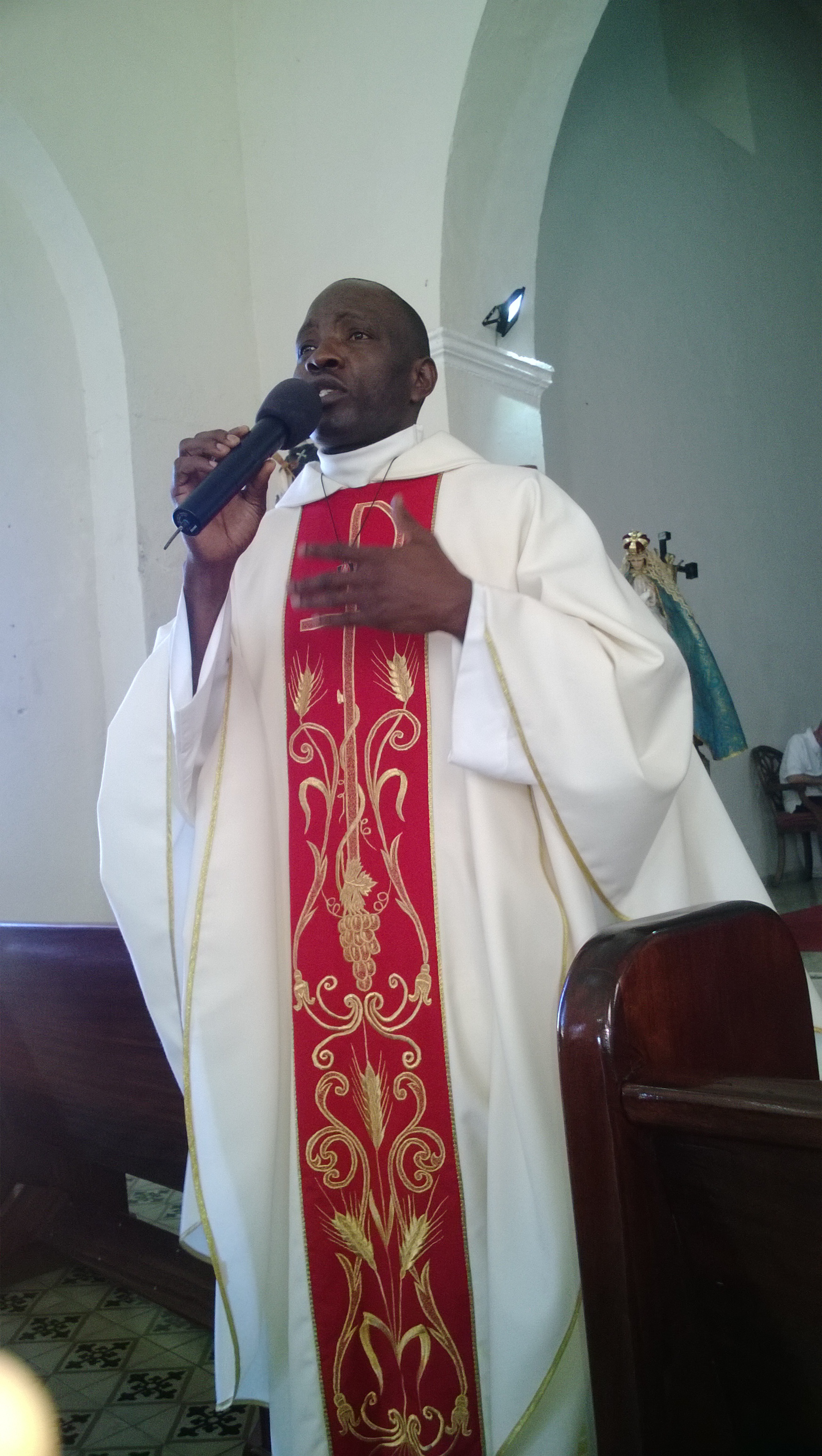
This brief reflection was written by Rev. Fr. Njoku Canice Chukwuemeka, C.S.Sp. He is a Catholic Priest and a Member of the Congregation of the Holy Ghost Fathers and Brothers (Spiritans), Province of Nigeria South East. He is currently the Parochial Vicar of Our Lady of Fatima Catholic Church Woliwo Onitsha, Anambra State, Nigeria. For more details and comments contact him on: canice_c_njoku@yahoo.com, canicechukwuemeka@gmail.com.

Today, the last Sunday of ordinary time the Church in a special way invites us to celebrate Jesus Christ our anointed king who overcame suffering and death, and so brought us out of darkness into his kingdom of light. On 7th July 2009, during the funeral of Michael Jackson, the presiding pastor said: “Behold the king of pop ready to face the King of the world.” Today (34th Sunday), the entire world stands still and bows to the King of kings and the Lord of lords (Rev 17, 14), and the Holy Mother Church celebrates the feast of Christ the King and Sovereign ruler of the Universe (Dan 7, 14). Pope Pius XI instituted the Feast of Christ the King in 1925 in response to growing nationalism and secularism. In initiating this feast, the Church wanted to take our worship of Jesus from the privacy of our hearts and to proudly proclaim his public reign as well. The title of the feast was “Jesu Christi Regis” (Our Lord Jesus Christ the King). Again, in his 1969 motu proprio Mysterii Paschalis, Pope Paul VI gave the celebration a new title: “Iesu Christi universorum Regis” (Our Lord Jesus Christ King of the Universe). He also gave it a new date: the last Sunday in the liturgical year and assigned to it the highest rank, that of “Solemnity.”

Many of us today will no doubt join the procession singing and jubilating without actually allowing Jesus Christ to rule over our lives or, knowing what the reason for the procession is all about. It would be an exercise in futility unless we understand what we celebrate and give Christ the chance to reign not only in our lives, families, businesses, and situations, but also in our entire world. Some students were protesting in a certain university shouting: “we no go gree o, we no go gree!”(Meaning, we will not agree) A lecturer driving past decided to find out what was happening. He called one of the protesters and asked: “what are you not agreeing about?” The first response was, “I do not know o!” He asked the 2nd, 3rd, 4th and 5th protester and got the same answer: “I do not know o!” What a pity and shame, they have joined the protesting crowd to protest for what they know nothing about. Today, let us not be like these ignorant fools staking their lives for nothing. Let us not just join the procession without making Christ the King of our lives, families, nation and our world at large. We must endeavor to know the meaning, and appreciate the importance of what we are celebrating today.

In the first reading of today, the entire Israelites united in making David King. The reason is simple. They saw in him the spark of God and a worthy servant-shepherd. We should note that he did not impose himself on them or buy them over with whatever it may cost, or rigged any one out in order to lord it over his people. Instead, he was genuinely and universally acclaimed their king as we acclaim Christ today. He did not take the honour upon himself, as we are told: “No one takes this honour unto himself”. If we humble ourselves God will exult us our people will bear the testimony joyfully. If we do otherwise, they will certainly reject us. In the second reading, Paul reminds us of a fact that should make us beam with joy and that is that God: “has created a place for us in the kingdom of the son that he loves.” What more do we need! Let us rejoice with our Lord this day because we have a share in both his reign and kingdom. This calls for jubilation. So as we march out today “to make known the glorious splendor of the Jesus’ reign”, let us know that we are proclaiming our own reign as well over the world, the devil and all that weighs us down.

In today’s gospel Pilate and the Jews, like these foolish students connived to castigate their King without knowing what they were doing. Rather than accepting the reality on ground they hardened their hearts towards their king’s call to share in his kingdom. Our marching out today is not mockery as the Jews did in the time of Christ or blasphemy as the unrepentant criminal did. Rather, it is to exalt the Lord our king and ask him like the “humble” and “repentant good thief” to remember us in his kingdom. Certainly he will say to us today: “I promise, today you will be with me in paradise.” Like the Jews most of us are blindfolded and carried away by what we see in this present world. These people are the modern day materialists who simply believe that everything ends here on earth. This is a grave mistake because, the kingdom of this world will pass away but that where Christ will reign eternally will not pass away. Although Christ is the King of the entire world, today we are reminded that when this world has passed away, he will continue to reign in his eternal kingdom in heaven. Christ is and should be a role model to all kings, rulers, decision makers and leaders. He cares, loves and lives in peace with his people. He does not rule with iron fists, military might, or financial strength, but is a good Shepherd. He is a just judge, a compassionate and forgiving King. He is the only king who treats us as his brothers and sisters, friends, relatives and allows us to share in his kingly nature (Rev 1, 6; ITh. 2, 12). He is ever ready, close, and no special protocols are required to reach him. What king, ruler or leader of our world can match our Lord Jesus Christ, the King of the Universe?  None! Brethren, let us therefore celebrate because: “The Lamb who was slain is worthy to receive strength and divinity, wisdom and power and honour, to him be glory.” Amen!

Peace be with you!!

Maranatha!!!

Homily for 33rd Sunday of Ordinary Time, Year C

The Triumph of God’s Elect: Endurance & Hard Work!

Readings: (1st: Mal 3, 19-20; Ps: 97, 5-7; 2nd: 2Thes 3, 7-12; Gos: Luke 21, 5-19)           

This brief reflection was written by Rev. Fr. Njoku Canice Chukwuemeka, C.S.Sp. He is a Catholic Priest and a Member of the Congregation of the Holy Ghost Fathers and Brothers (Spiritans), Province of Nigeria South East. He is currently the Parochial Vicar of Our Lady of Fatima Catholic Church Woliwo Onitsha, Anambra State, Nigeria. For more details and comments contact him on: canice_c_njoku@yahoo.com, canicechukwuemeka@gmail.com.

With just one week left to come to the end of the Church’s liturgical calendar, (Year C), and about six weeks to draw the curtains of 2013, the Holy Mother Church in her protective prowess encourages us to patiently hold on till the end. The weapons she places at our disposal to help us triumph include amongst others: Endurance and Hard Work! According to Gautama Siddhartha, (563-483 B.C.), Endurance is one of the most difficult disciplines, but it is to the one who endures that the final victory comes”. Therefore, we must not give up. Instead, we must continue to endure until we triumph over all the enemies and evil that afflicts us. The Church teaches us today that Christ will come to bring all that is evil to nothing. He continues to strengthen our ability to endure daily through the Eucharist. Hence, the She says to all of us today: Feras, non culpes, quod mutari non potest (you should endure, not blame, what cannot be changed)!

In 1912, a young man named Douglas Mawson got into trouble in the Antarctic, when a member of his three-man sledging team fell into a crevasse with most of their rations. He and the other man, Mertz, were forced to eat their dogs, ingesting toxic levels of vitamin A. Mertz went mad and died; only Mawson made it, driven on by the desire to propose to his girlfriend.  Also, during World War II a pilot named William Ash was shot down and sent to a Prisoners’ of War (POW) camp. This place was hell! But after months of agony he managed to escape, and was sheltered by nuns. However, he went mad with fever and walked straight into a Gestapo head quarter. He was skinned, soaked in brine, his fingernails were pulled off, but he still never spoke of, or betrayed the nuns who sheltered him. He knew full well that doing so will land the nuns into trouble and probably cost them their lives. These are true life stories of people who endured till the end.

In today’s first reading, Malachi announces the coming of the day of the Lord. He paints two pictures: the fate of the evil doer, and the triumph of the righteous who endures till the end. This short reading simply serves as an encouragement to us to continue our good work in patient righteousness and endurance. In order words, it teaches that to persist in good works till the end, one must endure all forms of trials and difficulties as the saints did because: “All these call for patience, endurance and faithfulness” (Rev 13, 10). Today’s first reading ends with a promise: “But for you who fear my name, the sun of righteousness will shine out with healing in its rays.” This should be our motivator! This healing that the prophet spoke of is the reward for our endurance. Endurance moves a child of God to continue to work hard without looking back. It eschews laziness, and helps us to overcome sloth. It is endurance that helps us persevere in doing good at all times. It keeps us going when physical strength fails us and, it perpetuates our quest for righteousness.

In the second reading, Paul encouraged us to work hard to earn both our earthly and heavenly living. Good work is a product of endurance; it yields good and enduring fruits as well. Good work makes a good Christian. Therefore one must persevere in it until it begins to yield good fruits. We recognize the fact that there is gross unemployment all over the world and the efforts young people are making to get jobs. Those making these efforts are not in any way lazy. The Church does not in any way encourage laziness of any sort (even though she recognizes Jesus Christ in the poor). This is why one of the seven capital sins according to the church is Sloth (reluctance to work or shear laziness). Thomas Aquinas said: “Sloth is “sluggishness of the mind which neglects to begin good…it is evil in its effect, if it so oppresses man as to draw him away entirely from good deeds” (Summa Theologae 2, 35, ad 1). It is quite unfortunate that some Christians have given up the hope of working hard and can no longer endure hard times which do not last. Instead, they have become “corporate beggars”, thieves, and habitual liars just to attract sympathy from people. Instead of making efforts to lay their hands on something that will keep them going till “the healing sun of God” shines on them, they prefer going begging. What a shame! This is what Paul decries in today’s reading: “Now we hear that some of you are living in idleness, doing no work themselves but interfering with anyone else’s.” A lazy Christian yields easily to all sorts of vices and does not believe in “working out one’s salvation with fear and trembling.” If we are to triumph over the devil, we must work hard and endure the pains of good work.

In the gospel, Jesus warns us of the imminent tough times ahead. One of the most important thing we must take hold of in this gospel is that none of; our beautiful cities, road networks, automobiles, houses, cloths and, in fact anything man-made will endure forever. Even human beings will one day perish and be gone. However, with endurance in our sufferings and persecutions, we shall win ourselves immortality before Christ as he says to us today: “Your endurance will win you your lives.” The Lord encourages us to persevere in righteousness and endure in hard work. Furthermore, in warning that in spite of the elegance of the temple that it will be destroyed, Jesus warns us not to hold on tenaciously to anything of this world to the detriment of forgetting God because the only things that will endure are faith, hope, and trust in God which are manifested through charity – the love of God, as well as the love of neighbor. So, rather than fix our gaze on the glory of this world, we must keep all our eyes on Jesus the author and finisher of our faith (Heb12, 2).

Finally, enduring spirit comes from God who knows what we go through all our life. It is a gift he bestows on those who love him in order to help them overcome the difficulties of life. This is why Paul tells us that “you are being strengthened with all powers according to His glorious might so that you may have great endurance and patience…” (Col 1, 11). The situation we are in, in this present world, in our offices, our homes, schools, etcetera, might be very tough, it might even question our faith in Jesus Christ, yet if we endure, we shall have every course to smile at the end as Jesus assures us today: “Your endurance will win you your lives.” As solders of Christ, what proves our capability is the extent to which we can endure for the sake of Christ. That is, our ability to say: I will not cheat, I will not steal, I will not kill, and I will not get involved in any wrong business or shady deal for the sake of Christ etcetera. In light of this, Paul urges us once again: “endure hardship like us, like a good soldier of Christ” (2Tim 2, 3), and Hebrew insists: “Endure hardship as discipline, God is treating you as a son” (Heb 12, 7). Like William Faulkner (18971962): I believe that man will not merely endure. He will prevail. He is immortal, not because he alone among creatures has an inexhaustible voice, but because he has a soul, a spirit capable of compassion, sacrifice and endurance.

Peace be with you all!

Maranatha!!


Homily for 32nd Sunday of Ordinary Time, Year C

Standing On The Promises of Christ: Our Hope Raiser!

Readings: (1st: Macc 7, 1-14; Ps: 16 1. 5-15; 2nd: 2Thes 2, 16-5, 3; Gos: Luke 20, 27-38)           

This brief reflection was written by Rev. Fr. Njoku Canice Chukwuemeka, C.S.Sp. He is a Catholic Priest and a Member of the Congregation of the Holy Ghost Fathers and Brothers (Spiritans), Province of Nigeria South East. He is currently the Parochial Vicar of Our Lady of Fatima Catholic Church Woliwo Onitsha, Anambra State, Nigeria. For more details and comments contact him on: canice_c_njoku@yahoo.com, canicechukwuemeka@gmail.com.

While reflecting on today’s readings, I remembered and sang this wonderful hymn composed by Russell K. Carter, in 1886: “Standing on the promises of Christ my King, through eternal ages let His praises ring. Glory in the highest, I will shout and sing, standing on the promises of God: Standing, standing… I’m standing on the promises of God!  A glance at the readings of this Sunday will certainly reveal to one that the Church in her wisdom wishes to admonish us and also strengthen our grip on this very important theological virtue – HOPE. She teaches that no matter how cruel the world may treat us, we can always rejoice in the glorious future promised us by Christ, when we will be filled with the vision of God’s glory. She says to us today: Tolerandum et sperandum (We must endure and hope)!

“Hope is the theological virtue by which we desire the kingdom of heaven and eternal life as our happiness, placing our trust in Christ’s promises and relying not on our own strength, but on the help of the grace of the Holy Spirit”(CCC1817, p.401). A saying goes thus: As long as there is life there is hope!” As true as this might possibly seem, it is rather sad, but suffices to note that though some are living physically, they have lost the hope of this earth as well as that of eternal glory. Therefore, it could better be said that: “As long as there is hope, there is both physical and spiritual life. This is because, it is hope that sustains and urges one to live on no matter how tough life is, as it is written. “…We have this hope as an encounter for the soul, firm and secure” (Heb 6, 19). What keeps us going is the hope that one day our lives would be better, that “we shall see God face to face” (Rev 22, 4), that our mortal natures would be transformed into immortality, and that the fullness of life itself is in the eternal kingdom of God.

Ikedi loved noodles so much that on Monday mornings his mother usually prepares it for him to take to school for his lunch. However, one Monday, it happened that none was available in the house because his mother forgot to buy some during her weekend shopping. Ikedi went to school refusing to take along with him any other type of food. So, his mother made him a promise that she would prepare noodles for him before he comes back from school. During lunch at school, some of Ikedi’s colleagues who noticed that he did not come with any food persuaded him to eat with them but he refused by telling them that: “Mummy has promised to prepare my noodles before I get home, and I know she will not disappoint me.” Even though he was greatly famished, he endured it until school was over around 4.00pm. The hope he had in the promise of his mother sustained him till he returned home. Of course, his mother kept to her promise. This is what hope does. It is a silent and constant prayer!

As pathetic as the story of the seven brothers in today’s first reading appears, it is a typical example of how hope can sustain us, both in this life and beyond. These seven brothers faced persecution courageously and resiliently because of the hope they had in God’s promise of Eternal Life. “It was heaven that gave me these limbs; for the sake of His law, I disdain them; from him I hope to receive them again”, one of them said courageously. Hope strengthens our fortitude, keeps us praying, and also, fortifies our faith in God. This is why the Church refers to it as a theological virtue because, it “adapts man’s faculties for participation in the divine nature” of God (CCC 1812 p.420). The lesson we must learn from this heroic act is that we must not be afraid of persecutions, hardships or even physical death. Rather, we should let the hope we have in the Eternal Kingdom sustain us in our difficulties, since we have a sure hope in the promises of Christ our Saviour. A couple of weeks ago an international news media broadcast a gory picture of some dead Syrian Christians who accepted the option of being hanged on a tree instead of renouncing their faith and becoming Muslims. They died because of the hope they had in eternal life just as the seven brothers who insisted that: “Ours is the better choice to meet our death at men’s hand, yet we rely on God’s promise that we shall be raised up by Him…” Due to fear of death some of us get ourselves involved in all manners of “rubbish” like: witchcraft, wearing of charms, divination, sorcery, cultism, gangsterism, apostasy, embezzlement, frauds, and devilish covenants just to sustain this mortal life. The fear of physical death has robbed many Christians of the hope of life eternal. Though some of us claim to be Christians but practically speaking, we are no better than “Hardcore Humanists” and Materialists. The church bids us today: “Let us hold on unswervingly to the hope we profess, for he who promised is faithful” (Heb 10, 23). The virtue of hope: “responds to happiness which God has placed in the heart of every man. It takes up the hope that inspires men’s activities and purifies them so as to order them to the kingdom of heaven. It keeps man from discouragement; it sustains him during times of abandonment …” (CCC 1818, p.401).

In the second reading of today, Paul prays God who equips with comfort and sure hope to strengthen us in everything that is good. Paul wrote to a people like us today, who due to sufferings, persecutions, and hardship of all sorts longed for the immediate return of the Lord. In order words, it was a Church like ours overwhelmed by their hardship and so got entrenched in the strong belief that the day of the Lord’s coming will release them from their present predicaments. So Paul writes to them as he does to us today pointing out that before Christ returns, evil and wickedness will reach its apogee under the leadership of the mysterious figure called the “The Wicked One.” This is why he prays that our hope does not fail us, rather, that it should sustain us till the end. Hence he reminds and prays for us that: “…But the Lord is faithful and will give you strength and guard you from the evil one…May the Lord turn your hearts towards the love and fortitude of Christ.”

Finally, today’s Gospel is equally a “Hope raiser” in that Jesus dislodged and flawed the plots of the crafty Sadducees who wished to destroy the foundation of our faith in Christ – The hope of resurrection! This is why Paul insisted that: “If our hope in Christ is good for this life only, and no more, then we deserve more pity than anyone else in the entire world (I Cor 15, 19). The concern and fictitious story told by the Sadducees in order to trap Jesus is as good as the ugly situations of life that deceive and lead us into despair, and finally into being afraid of death, thus leading us to seek protection in the things of this world alone rather than in God. It is the same lie that the “Wicked One” poses to us that everything is all about this life. Unfortunately, many of us are deceived into believing this by making pacts with the devil. Today, the Church beckons us to hold on tenaciously to the promises of God, in joyful hope for their fulfillment. Let us then pray to God as the Psalmist today: “Guard me Lord as the apple of your eye. Hide me in the shadow of your wings. As for me, in my justice I shall awake, with the sight of your glory!

Peace be with you all!!                    

Maranatha!!!


Homily for 31st Sunday of Ordinary Time, Year C

A Life Changing Encounter With Jesus Coming Our Way Today!

Readings: (1st: Wis 11, 22-12, 2; Ps: 144, 1-2. 11-14; 2nd: 2Thes 1, 11-2, 2; Gos: Lk 19, 1-10)

            This brief reflection was written by Rev. Fr. Njoku Canice Chukwuemeka, C.S.Sp. He is a Catholic Priest and a Member of the Congregation of the Holy Ghost Fathers and Brothers (Spiritans), Province of Nigeria South East. He is currently the Parochial Vicar of Our Lady of Fatima Catholic Church Woliwo Onitsha, Anambra State, Nigeria. For more details and comments contact him on: canice_c_njoku@yahoo.com, canicechukwuemeka@gmail.com.

With just three more Sundays to go in this liturgical year, today the 31st Sunday of ordinary time, year C, the Church reminds us that to the Lord and our God, the whole world is like a grain of dust. That is to say, tiny compared to his greatness. In spite of this, He loves all that exists and comes to dwell with us sinners. No matter how weak, sinful, or stubborn we are, the fact remains that Jesus our Lord is in our midst and is ever ready to ensure and secure our salvation just as he said to Zacchaeus today: “Today salvation has come to this house…” Because he is in our midst, Jesus keeps coming to us every day in other to seek us out. However, he says to us: “I stand at the door of your heart knocking, if you open I will come in and eat and dine with you” (Rev 3, 20).

In today’s first reading, the book of Wisdom eulogizes the mercy of God which extends to all his creatures irrespective of their state and status. Hence, in spite of our weaknesses and sins, God continues to be merciful as Wisdom puts it: “Yet you are merciful to all because you can do all things and over look men’s sins so that they can repent”. In order words, our merciful God gives us the opportunity to retrace our steps. This explains the reason he does not punish sinners immediately. This is the nature of God’s mercy! As a father who would not despise his own child, so will God not despise his creatures because he values each one of us. Even when we offend him, Wisdom says: “Little by little, therefore, you correct those who offend, and you admonish and remind them how they have sinned…” In the second reading, Paul prays for us to persevere in good deed and faith in Christ. He equally encourages us to continue without being carried away by false rumours of the Lord’s imminent coming. In order words, in as much as the Lord will come to be in our midst in fulfillment of his promise to us, we must go ahead living our lives. We must not just sit down with our arms “akimbo” Rather, we have to get ourselves busy with good deeds so that when he eventually comes, he will meet us in the right position.

While reflecting on the gospel of today, the song “Jesus is coming this way, this way, he is coming this way today” continued ringing bell in my heart and head. Every day Jesus keeps coming to us through various means. He comes our way through our neighbours, through the sacraments, through the whole of creation. The looming and important question is: Do we see him, do we even know that he comes our way, and above all how much effort do we make to have a glimpse of him, or a life changing encounter with him as Zacchaeus did? The story of Zacchaeus is a true indication that Jesus Christ the Son made Man comes to seek out and save not only the righteous but also those that are lost. Irrespective of the human obstacles that made it extremely difficult for Zacchaeus to see Jesus who was passing his way, his dexterity doggedness and courage paid off. Unlike most of us Christians, he refused to be limited by the crowd. He refused to accept his diminished height as a disadvantage. In life, there are so many things preventing us from a holistic encounter with Jesus Christ, things that dwarf our mentality, and things that hinder our success in life. What efforts do we make to overcome these? If we make frantic efforts as Zacchaeus did to catch a glimpse of Jesus, He himself will also see us. Therefore we must rise above all obstacles that prevent this necessary divine encounter. Paul advised Timothy thus: “Do not to allow any one look down on you because you are young” (I Tim 4, 12). Likewise, we must not allow any weakness or short coming of life ware us down or prevent us from getting where we want to get to. The physical shortness of our being does not matter. Rather, if we remain spiritually tall we shall overcome all physical obstacles of life. We must be positively desperate like Zacchaeus, increase our heights, and occupy our space firmly, physically, and spiritually. This is only possible by doubling our efforts towards reaching out to Jesus who comes our way every day of our life. Like the woman with issue of blood, we must think, “if only I can touch the helm of his garment I shall be healed”, we must move into action, and finally, we must believe that it will work for us (Luke 8, 43-48). This is the simple principle of life that Zacchaeus employed and it worked for him. An advice goes thus: “Do not hide that sickness or that sickness will hide you forever!” We must expose ourselves to Jesus so that He could see us and come quickly to our aid. My friend, timor omnis abesto (do away with all fears)!

Humility helps us to accept who we are and our short comings. However, it does not prevent us from trying to overcome our shortcomings. Instead, it spurs us to search for other godly means through which we can achieve success in life in spite of all the odds against us. Zacchaeus’ humility is worth emulating. He acknowledged the fact that he was too short, in fact, dwarfed by the crowd and so, could not contend with them for space. He did not go causing trouble or picking quarrel with anybody for blocking him like most of us would do even on Sunday’s communion line. He did not push anybody down in order to have his way. No! Rather, he decided to explore other avenues at his disposal. As difficult as it was, he decided to climb a thorny sycamore tree just to get what he wanted because he knew its value and how much it would benefit him. My dear, there are so many other options in life other than that one that has failed you and made your life miserable. It might be “that thorny sycamore tree” starring you in the face: It could be that rough road, that unpleasant job, that ugly woman/man that you detest so much, and it could be that bitter enemy or that teacher or student you never liked his/her face. Try them, and you may be surprise they will take you to the apex of your success in life. Only humility will help us bend down and see other options available to us in life without given up. So let us obey this adage which says: “Ora et labora, deus adest sine mora” (Work and pray; God will aid you without delay)!

Finally we must also avoid, and ignore distractions and detractors to our success. These come in form of complains from those around us as the crowd did to Zacchaeus: “They all complained when they saw what was happening. ‘He has gone to stay at a sinner’s house…” Sympathizers and gossips must play their roles in our lives but we must not cave in because of their negative comments, complaints, and castigations. Instead, we must stand our ground as Zacchaeus did, remain poised and unperturbed in our quest to achieved the life changing divine encounter we are looking for. Also, it is important to note that an encounter with Jesus will not leave us the same. It must cost us something! It must make us shade some weight and drop some heavy burdens that prevent us from having smooth movement along the journey of life. Therefore, like Zacchaeus, we must reassure the Lord of our willingness to turn a new leaf in life and say: “…If I have cheated anybody I will pay him back four times the amount…!” If we do this sincerely from our heart, then Jesus Christ in turn will say to us: “Today salvation has come to this house…!”

Peace be with you all!!                                                             

Maranatha!!!

Homily for 30th Sunday of Ordinary Time, Year C

The Judgment of Our God is True and Upright!

Readings: (1st: Sir 35:12. 16-19; Ps: 322-3. 17-19; 2nd: 2Tim 4, 6-8.16-19; Gos: Lk 18, 9-14)


This brief reflection was written by Rev. Fr. Njoku Canice Chukwuemeka, C.S.Sp. He is a Catholic Priest and a Member of the Congregation of the Holy Ghost Fathers and Brothers (Spiritans), Province of Nigeria South East. He is currently the Parochial Vicar of Our Lady of Fatima Catholic Church Woliwo Onitsha, Anambra State, Nigeria. For more details and comments contact him on: canice_c_njoku@yahoo.com, canicechukwuemeka@gmail.com.


Theodicy is the vindication of God’s Goodness and Justice in the face of the existent evil. It is from two Greek words; “theo”, god and “dike”, justice. Our God does not show favoritism, he is firm in his judgments and decisions; and he cannot be biased or bribed. Yet he is a compassionate and loving Judge who does not treat the offender with impunity or harshness of sentence. His judgment is true and right! On this 30th Sunday of Ordinary time, the Church draws our attention to the fact that the Lord is our Just Judge whose judgment we know for sure favours the humble.

One little novel that left a very positive impression on me during my early college days like George Orwell’s Animal Farm is that titled: The Incorruptible Judge by Olu D. Olagoke published by Evans brothers in 1972. It focused on the real-life value of a judge who portrayed exceptional type of honesty, fair play patriotism, bravery, truthfulness, purity of purpose and an excellent strength of character. It exposes the ills of a society where the script and the spirit of the law are no longer respected. In this novel, Ajala was considered a suitable candidate for a government advertised job. However, the recruiter insisted on being offered some “Kola” (bribe) before he would offer him the job. Aware of the lawlessness of such a demand, Ajala reported the issue to the police. On taking the case to the court, the accused having weight around, contacted the wife of the trial judge, his father in-law, the customary chief of the community and the judge himself with the aim and means of getting judgment perverted. But unfortunately for him, the judge would not oblige. Without fear, favour, ill-will or impoliteness, the judge warded off the ill-tenders.  In the court room the judge and the jury would not be swayed or confused into condoning or venializing crime by the rigmarole of the defense. Finally, the accused is sentenced as due. This is the way God operates and sees to the vindication of the upright and the correction of the sinner. But as a Father he does not apply capital punishment; rather, he gently corrects and wins us back. Such is our God and His justice. He knows full well as the Psalmist says: “If you O Lord mark our iniquities O Lord who will survive, but with you there is forgiveness…?” (Ps.130, 3-4).

In the first reading, Sirac exalts us on the justice of God towards the poor, injured, orphans, widows, and in fact the weak of our society. This is coming at the heels of a time when just judgment has become a thing of the past and the highest bidder wins the case, and when cases are decided over a bottle of cold bear in a joint with a briefcase of cash to smile home with. In the “Heavenly Court”, God the Just Judge remains resolute to ensure that justices is upheld, just as the incorruptible judge. When we are faced with such situations, what do we do? God expects us to borrow a leaf from him by being firm. We are called to be like God the Just Judge who acquits the virtuous by delivering just judgment. Also, Sirac assures us that in as much as we are humble, prayerful and persevere in doing good, God will surely be there to vindicate us because, as the psalmist says: “This poor man called and the Lord heard him” (Ps. 34, 6). Certainly, because he does not go to sleep, he will hear us.

In the second reading, Paul, having played his part perfectly well on the earthly stage, now confidently awaits good judgment from the hands of the Just Judge. He boldly asserts himself: “I have fought the good fight to the end, I have run the race to finish, I have kept the faith; all there is to come now is the crown of righteousness reserved for me, … on that Day.” Mark the confidence of Paul here! There is only one thing can give one such confidence – a life well-lived in humility, fear of God, and according to the holy will of God. This is the reason John tells us that: “Perfect love drives away all fears” (1Jn 3, 10). If we live a righteous life, a life that leaves no skeleton in our cupboards, towards the end of our life time we shall not be afraid of death, “hell fire”, or even consider a stopover at purgatory because, there will be no need for all these. Most importantly, we shall not be afraid of what the Just Judge will decide about us. We shall approach his throne of judgment with confidence as Paul did. We must mark the phrases with which Paul punctuated his confidence: “to the end!” and “to the finish!” My dear, it is not over until it is over! If we are already living good and humble lives, we must not diminish in it. Rather, we must struggle to the end and to the finish. When Paul was yet to accomplish the race, he wrote: “I do not claim that I have already arrived…I press on toward the goal to win the prize” (Phil 3, 12-14).

In the gospel, Jesus further buttressed the fact that, judgment belongs to “God who searches what searches the mind.” He is the one who knows all our intentions and actions. It is not for us to judge others because the judgment of mortals is biased, selfish, egocentric and easily confused. What transpired between the publican and the tax collector is typical of the type of scenario we find in our religious gatherings or organizations, where some brethren with their holier than thou attitude like the Pharisees sit on Moses’ seat (Mtt 23, 2), to judge others. Another facet of the problem is manifested here: religionizing of everything; invocation and the use of the name of God, and holy words in the doing or defense of unholy works and actions. The word “ God” or “Yahweh”, a title of the holiest, most upright, most just being in existence, supposed to elicit reverence from human mortals, is now the most used word by unrepentant thieves, hypocrites, sycophants and hypocrites. Self righteous people often judge people wrongly because of their own weakness of mind and ignorance of how God operates. Such people look at themselves as the role models others must imitate or as if they are the real, pious and holy ones. They are quick to condemn the dressing, make up, sitting position, hair style, and shape of hair tie of others. These are not the ways of God, the Just Judge.

Finally, we must not place ourselves where we do not belong and place others where we feel they should be like a certain proud and arrogant professor; who on encountering one for the first time addresses him/her thus: “I am Professor, Professor… and you are Mr.…? Fool, he has passed judgment by placing himself so high (Dual Professor) while assuming that the other must be a “Mere Mr.…” Rather, we must humbly acknowledge our nothingness, vulnerability and weakness like all mortals before the Just Judge. This is why Jesus the Just Judge who acquitted the humble tax collector says to us today: …“For everyone who exalts himself will be humbled, but the man who humbles himself will be exalted.”

Peace be with you all!!                                                             

Maranatha!!!

Homily for 29th Sunday, Year C – World Mission Sunday

Uphold Your Mission O Lord, and Bless Our Efforts!

Readings: (1st: Exodus 17, 8-13; Ps: 120; 2nd: 2Tim 3, 14-4, 2; Gos: Lk 18, 1-8)

           This brief reflection was written by Rev. Fr. Njoku Canice Chukwuemeka, C.S.Sp. He is a Catholic Priest and a Member of the Congregation of the Holy Ghost Fathers and Brothers (Spiritans), Province of Nigeria South East. He is currently the Parochial Vicar of Our Lady of Fatima Catholic Church Woliwo Onitsha, Anambra State, Nigeria. For more details and comments contact him on: canice_c_njoku@yahoo.com, canicechukwuemeka@gmail.com.

How beautiful are the feet of those who bring good news (Rom10, 15)! Today, the 29th Sunday of ordinary time (Year C), and 3rd Sunday of October is World Mission Sunday! It is a special Sunday set aside by the Church for the public and annual renewal of our commitment to missionary activities. Mission Sunday was instituted by Pope Pius XI in 1926 as the day of prayer and propaganda of mission. Therefore, Christ who opened wide his arms on the cross, and the Holy Mother Church, the visible sign of Christ on earth ask us to join our hands and hearts in continual prayer for the success of missionary activities. They encourage us never to lose heart in order that Missio dei (God’s mission) may be sustained, and all peoples come to know the salvation of our Lord and God.

In today’s first reading, God showed the Israelites that he is the one in charge of their lives and circumstances. As long as Moses’ hands were lifted up to God in prayers, the Israelites gained victory. This reading is indeed very suitable for today’s Mission Sunday celebration. This is because the Lord is our Rock in mission! He is the one like the stones that supported Moses’ arms for victory, who supplies the strength we need in His mission. “He is the one who trains our arms for battle” in mission (Ps 18, 34). Without him we cannot stand the heat, cutting and rough edges of mission. Therefore, as collaborators in God’s mission, we must continually remain steadfast in the Lord who strengthens us if we must remain afloat in the wide and at times, very turbulent sea of mission. We must ask him to continually supply us the strength to pray, and the wisdom that comes through his word which are the tools we need so much if we must succeed in mission. We must ask Him to supply us the strength to work and love those to whom we bring the good news in mission. Above all, we must constantly remind ourselves in mission that: “Cura omnia potest (careful effort, of course with the help of God, accomplishes everything).” Mission as Missio or Opus dei (Mission or Work of God), belongs to God and we ourselves are mere instruments. Therefore, for an absolute success in it, whether ad-extra or ad-intra, we must rely on the help that comes from God as the Psalmist encourages us to say today: “Our help comes from the Lord, who made heaven and earth.” Like Moses also, we must say to God: “If your Presence does not go with us, do not send us up from here” (Ex 33, 15).

In the second reading, Paul reminds us of the demands of our duty and the need to be dedicated to our call in the mission of Christ. Most importantly, he places before us one of the most important tools we require to successfully accomplish mission – The Word of God in the Sacred Scriptures. He reminds of the need to be steadfast in preaching the truth as it was handed over to us undiluted and uncompromised. Hence, as a very important instrument, and at the same time the core of mission, scriptures must be readily at hand. It must however, be used not for selfish objectives, not for scaring people away or for imparting fear, not for exploiting people, and not for enslaving them. Rather, it is must be employed in such a manner that it will make those who hear us holy and thus, liberated from all forms of slavery. This reading therefore says to us directly or indirectly: “Memento semper finis (always keep the goal in mind). Which goal? The goal in question here is that of mission and that of the Word of God in the Holy Scriptures. Thus, Paul reminds of this goal: “All scripture is inspired by God and can profitably be used for teaching, for refuting error, for guiding people’s lives and teaching them to be holy.” It is quite sad to note that some who parade themselves today as missionaries have lost sight of this very important purpose of the Word of God as an invaluable instrument for achieving success in mission. One therefore wonders what business a person who is completely ignorant of the scriptures or even a quack in the word of God has in the mission of God. The Word of God is, and should be our primary business in mission, and as such, must be well prepared and delivered, “ not simply for sordid money” as is common today, or for self aggrandizement, but for strengthening and guiding the people’s lives, and teaching them to be holy. It is only through it that we like Paul, can become all things to all those we encounter in mission. Without it, a missionary is reduced to a mere social worker or a representative of an NGO. It must be preached in and out of season and with our lifestyles especially, in Missions of Presence where we are prohibited to verbally proclaim it. The word of God is what makes the difference because it is the sword of the Spirit (Eph 4, 17). It is the “active ingredient” in mission, and that which keeps the “potency” of mission high and alive as the letter to the Hebrews tells us: “The word of God is living and active. Sharper than a double-edged sword, it penetrates even to dividing soul and spirit, joints and marrow; it judges the thoughts and attitudes of the heart” (4, 12).

In today’s gospel, Jesus casts a great light on another important tool and dimension of mission, upon which all our missionary exploits and endeavors must be anchored. Luke tells us that: “He (Jesus) taught them how to pray and never to lose heart.” Of what use is a missionary who cannot pray, how would such a person succeed if he is not connected to the Lord and Master of the mission Himself? A missionary’s life must be synonymous with prayers. He must pray and preach in and out of season. He must first conquer in his closet before stepping out to proclaim the word which he bears. This is why Paul asks us to: Pray in the spirit on all occasion with all kinds of prayers and request…pray also for me, that whenever I open my mouth, words may be given to me so that I will fearlessly make known the mystery of the gospel” (Eph 6, 17-19). The only way we can remain in touch with Jesus Christ, the Lord of the mission is through prayer. It is through it that we derive the strength we need for our daily exploits in mission.

This Sunday therefore, we must earnestly pray to the Lord of the mission for the strength to persevere in our mission activities. In a special way, we must commend into his hands our brothers and sisters who are engaged in extremely difficult missions all over the world and, most especially those involved in “Missions of Presence.” May they find the strength to carry on in spite of all odds. We also pray for Christians all over the world, that the Spirit of Jesus Christ and the Apostles, the first missionaries may spur and encourage us to succeed in our various missions. Amen!

Peace be with you all!!                                                             

Maranatha!!!


Homily For 28th Sunday of Ordinary Time (Year C)

I lift Up My Hands in Thanksgiving to You O Lord!

Readings: (1st: I King 5, 14-17; Ps: 97, 1-4. 6-9; 2nd: 2Tim 2, 8-13; Gos: Lk 17, 11-19)

           This brief reflection was written by Rev. Fr. Njoku Canice Chukwuemeka, C.S.Sp. He is a Catholic Priest and a member of the Congregation of the Holy Ghost Fathers and Brothers, Province of Nigeria South East. He is currently the Parochial Vicar of Our Lady of Fatima Catholic Church Woliwo Onitsha, Anambra State, Nigeria. For more details and comments contact him on: canice_c_njoku@yahoo.com, canicechukwuemeka@gmail.com, Phone: +23408063767512, +23408024942843

“Give thanks to the Lord, for he is good; his love endures forever. Let Israel say: His love endures forever… Let those who fear the Lord say, His love endures forever” (Ps. 118, 1-2). When was the last time you sincerely thanked God in appreciation of at least, the health and life he has given to you? As simple as this might seem yet, it is too heavy on our lips and hearts to say, “I thank you Lord Jesus”. The simple reason most times is that, we take lots of things for granted including the gift of life and indeed other mercies that God granted us through Jesus Christ. This Sunday therefore, just a couple weeks to draw the curtains of the Church’s (Year C) Liturgical Calendar and 2013, we are encouraged by the first reading and the gospel to give thanks to God; and to offer Him sacrifice for having made known to us his salvation, and for having cleansed us from our sins. During my office hours, I noticed that about seventy to eighty percent of those who visit start their discussions with either complaints or recounting of their woes, failures and disappointments. So, I usually ask people like this to be still and reflect for just a moment and then check if there is any reason for which they could thank God in their lives. Surprisingly, most of them end up recounting more reasons than they could have ever imagined for which they should thank God. Thus, they become more lively and positive before we begin to discuss their problems.

In today’s first reading, the story of Naaman the leper and Elisha is a typical example of how we should thank and express our profound gratitude to God. While Naaman did what simple courtesy demands of every one of us, to show appreciation and thank those who have been good to us, Elisha teaches us that in as much as he appreciates Naaman’s good gesture and effort, that the most important issue in thanking God is not how much of material possession we bring to Him. Also, this reading teaches us that God does not come to our help just because of how much material goods we are able to offer him in return, after all He says: “All the silver and gold in the whole world are mine” (Haggai 2, 8-9). This reading simply teaches us that, it is good to thank God, irrespective of what we can afford. It however, in no way condemns material offerings for the good of the Church in appreciation of what God has done for one. This is important because the Church is the visible sign of God on earth and so whatever we bring in thanksgiving to the Church is offered to God, and He will surely be happy for our generous donations.

Once a king was passing and noticed a poor beggar. He took him to his palace and assisted him very well. On his way home, the poor beggar was disturbed over how to return and thank the king for all he has done for him. So, he decided to wrap a stone-like but, beautiful and glittering object which he picked up somewhere around the palace sometime ago in order to offer it to the king as a token of his appreciation. Although the beggar did not know what this object was or its worth monetarily, yet he cherished it so much and would not allow any one take it away from him. However, he pondered over one problem. And that was whether the king would accept his gift or not. Eventually, he summoned the courage to go ahead with his plans to offer it to the king in thanksgiving for what he has done for him. When he presented his humble gift, the king accepted it. The beggar was surprised to see that after unwrapping the gift, the king jumped up from his stool and started screaming: “I have found it! This is it!! Here is it!!!” It was the king’s cherished ball of pure diamond that got missing some months ago. The king was so delighted and happy with the poor beggar that he gave him a job in the palace and placed him in charge of his valuable items. Like this poor man we must make the move to thank God, first and foremost with our hearts full of praises to him and then, with anything that we can afford. In today’s gospel, Jesus buttressed the importance of thanksgiving and gratitude to God for favours received from him. In this reading one would have noticed that, what pleased Jesus or what caught his admiration about the Samaritan who came back to thank Him was not whether he brought something or not, but simply, the fact that he: “turned back praising God at the top of his voice and threw himself at the feet of Jesus and thanked him.” My dear, when was the last time you said sincerely from your heart “Thank You Jesus!” To thank God is a firm expression of faith in the God who saves us.

Many of us hardly consider it necessary to show gratitude to God for what he has done for us. Even using the gift he has lavished on us to thank him at times could become a burden to us, and in some cases we even consider it a waste of exercise especially when we become entrapped by “negative rationalizations.” Some who make donations do so as though it were a gamble they have played with God. In order words, God must do something for me in return I because I have given to Him or, I give to God because he gives to me! This is the idea and mentality behind the slogan: “Offering time, blessing time!” instead of: “Prayer time blessing time!” The people of God must not be psyched to give. If they are converted they will learn the act of giving thanks to God, if they are healed and become sound spiritually, they will learn to give thanks to God freely.” Thanking God is important. However, it must not be seen as a burden or as “paying God back for what he has done for us.” The truth is that we cannot pay him pack! The willingness to thank God must flow from our hearts and from a good and pure conscience, rather than from coercion, psyching, or out of fear of what will happen if one did not do it.

Finally, in light of this, we must approach the Sacrament of the Holy Eucharist or Mass everyday because it is a sacrament of thanksgiving to God. Eucharist comes from the Greek word eucharistien, and means “thanksgiving or gratitude.” It is one whole sacrifice through which the Church gives thanks to God when she gathers her children as on big and united family of God. Therefore, when we gather, we are there to say as in the prayer after meal: “We give you thanks Almighty God for these and all your benefits (both spiritual and material) to us ….” This is the reason the Psalmist asked: “How can I repay the Lord for his goodness to me? And in answer to this question he posed he says: “I will raise the cup of salvation and call on God’s name” (Ps 116, 12-19). It is not all about material things or gifts to God alone, but most importantly, thanksgiving and gratitude that gushes forth from our innermost heart.

Peace be with you all!                                                              

Maranatha!!


Homily For 27th Sunday of Ordinary Time (Year C)

O Lord! Please, Increase Our Faith For Action!

Readings: (1st: Hab 1, 2-3. 2, 2-4; Ps: 94, 1-2. 6-9; 2nd: 2Tim 1, 6-8. 13-14; Gos: Lk 17, 5-19)

           This brief reflection was written by Rev. Fr. Njoku Canice Chukwuemeka, C.S.Sp. He is a Catholic Priest and a member of the Congregation Holy Ghost Fathers and Brothers, Province of Nigeria South East. He is currently the Parochial Vicar of Our Lady of Fatima Catholic Church Woliwo Onitsha, Anambra State, Nigeria. For more details and comments contact him on: canice_c_njoku@yahoo.com, canicechukwuemeka@gmail.com, Phone: +23408063767512, +23408024942843

As the Church draws closer to the end of The Year of Faith, declared by Emeritus Pope Benedict XVI with his Apostolic Letter of October 11, 2011, Porta Fidei, and which began on October 11, 2012, today in a special way we reflect on the theme Faith which is a core element of our Christian life. This rhymes well with the Catechetical week celebrations ahead. Faith gives us a new version of the world. Without it we see only the ugly and darker sides of life, and perhaps, still remain helpless and slaves to despair and hopelessness. It is faith which liberates us and makes us see the spirit of power and the love at work in our lives and those of our neighbors.

The readings of this 27th Sunday make a very important reference to faith and highlight the fundamental role this very important virtue should play in our lives as Christians. In the first reading, in response to the lamentation over his woes and persecution, Yahweh encourages prophet Habakkuk to be patient because it will not take time for his oppressors to be vanquished. However, on his path, the prophet and all true children of God must hold firmly to their faith because it is the true mark of the righteous one: “…But the upright man will live by his faithfulness.” In pronouncing this, God is simply admonishing us to remain faithful to him, faithful in good deeds and actions, faithful in keeping watch and faithful in joyful hope that in spite of the odds against us He will come quickly to help us. This faith in question is a strong trust in God that irrespective of what we face, He will not abandon us. It is a saving faith but should not however be understood in the context of the theological debate which tilts towards justification by faith alone (sola fidei). Indeed, God says that the Just shall live by faith, but who is the Just here and what qualifies one to be the Just, or what does living entail here? Am sure it is not folding our arms, sitting down all alone by ourselves and waiting for God to act. Instead the Just here is the one whose deeds and action are good enough to attract the saving power and attention of God. The justification involved here is that achieved through a living, and in fact a lived faith. It is justification that comes factis, non verbis (by means of deeds, not words).

In the second reading, Paul taps on the same string and strikes the same note by admonishing us thus: “Fan in to flame the gift that God gave you when I laid my hands on you…keep as your pattern the sound teaching you have heard from us, in the FAITH and LOVE that are in Christ Jesus.” Here we must note that Paul pointed out that we have to preserve the teaching first, in faith and secondly, in love. Love here is the expression of the faith in action and deeds because, this is one of the many ways we prove our faith in God and consequently, a good reason for our justification. Therefore, Paul further encourages us to guard by the help of the Holy Spirit that precious gift of faith which God entrusted to us.  In all of these, our journey is a journey of faith that must be lived out in our actions; good deeds, steadfastness, perseverance, and good will towards our neighbours and God our Creator. This faith must “indulge” in actions and good deeds for it to merit us the justification that is so much needed since: “As the body without the spirit is dead so faith without deeds is dead” (James 2, 26).

Some years ago, a young man who claimed to have faith in the power of Jesus to deliver him from the Lion’s den as God delivered Daniel, decided to dare a starving Lion in a zoo in the South Western part of my country. He claimed and boasted that as a Man of God he had the power to speak and command the Lion and it will obey him and shut its mouth. One morning, he picked up his bible after some weeks of “dry fasting, prayer and meditation on the word of God”, and headed straight to the zoo. Of course, he paid his ticked to gain entry into the zoo, but kept his intention secrete to himself without informing the zoo attendants. Suddenly, he clinched his Holy Bible with his left arm and began to climb into the cage of the Lion. Before anyone could stop him he landed inside the cage and was face to face with his host. As soon as he landed the fierce and hungry looking Lion charged him immediately, and the Man of God with “enormous faith” reached for his Holy Bible from his arm pit, raised it up to heaven and started shouting: “I decree and command you in the name of Jesus Christ of Nazareth, be still and shut your mouth there now!” He had barely completed pronouncing his decrees when the Lion bounced on him and devoured him. What a suicide he committed in the name of demonstrating his faith in action.

This is shear ignorance of what faith in action means, and am sure this is not what Jesus means in today’s gospel. What faith did the apostles ask for today? It is not faith to dare or tempt God. Rather, it is the faith to do good works, to remain steadfast in the face of difficulties, the faith that will enable them hold on to God irrespective of the turbulences in their lives and journey. It is equally, the faith that will help them to reasonably demonstrate the power of Jesus Christ when they are in difficult situations not faith to attempt suicide missions, it is the faith that will help them persist in doing good even when everyone around them seems to follow the wrong things in vogue. This is the faith they craved for when they pleaded: “Lord Increase our faith!” We must humble ourselves and acknowledge that we are weak in this important Christian virtue and then plead with Jesus: “Lord, increase our faith”, and when he generously does it for us, we must be ready to fan it into flame for our spiritual upliftment and eternal salvation.

A rusty shield once said to the sun, “dazzle me,” and the sun gave it a simple condition, “polish yourself and I will dazzle you.” This means that our God is ever ready to increase our faith, but we must first be ready to ask, take the steps and then make the necessary efforts. This calls for a stronger commitment in words, work and deeds. It calls for a wholesome expression of our love for God and for our neighbours. It also calls for being ready to follow faithfully and tenderly the precepts of the Lord our God. As we draw closer to November 24, 2013, the end of the Year of Faith, we must humbly continue to ask the Lord to increase our faith for action in the coming days, and years ahead of us in order to enable us remain faithful to him in a world that is decaying at the speed of light every day. The institution of the Year of Faith came at the right time, and I am sure that having prayed for faith this one whole year, God has strengthened His Church the more with abundant faith for actions and good works. All we need do now is to continue fanning it into flame by wisely demonstrating it through our actions and deeds for our good and for our eternal salvation.

Peace be with you all!          

Maranatha

Homily For 26th Sunday of Ordinary Time (Year C)

Winning Eternal Life for Ourselves in Heaven

Readings: (1st: Am 6, 1. 4-7; Ps: 145, 6-10; 2nd: ITim 6, 11-16; Gos: Lk 6, 11-16)

           This brief reflection was written by Rev. Fr. Njoku Canice Chukwuemeka, C.S.Sp. He is a Catholic Priest and a member of the Congregation Holy Ghost Fathers and Brothers, Province of Nigeria South East. He is currently the Parochial Vicar of Our Lady of Fatima Catholic Church Woliwo Onitsha, Anambra State, Nigeria. For more details and comments contact him on: canice_c_njoku@yahoo.com, canicechukwuemeka@gmail.com, Phone: +23408063767512, +23408024942843

Blessed are those who mourn for they shall be comforted (Matt 5, 4)! On this 26th Sunday, both the first reading and the gospel sound judgmental and point to the final end of the wicked while also, ensuring the comfort of the poor and those who are oppressed here and now. In a nutshell, today the church seems to say to us for the sake of posterity: “Disce quid es quid eris: memor esto, quod morieris” (learn what you are, and what you will be: remember that you will die!) In the first reading, the prophet Amos continues his treaty against the wicked, rich, wealthy and influential of the society who oppresses the weak and the poor. He vehemently pronounces the judgment of Yahweh on those who deceive themselves thinking that they are comfortable. This comfort is as good as the comfort of one lying on a bed with explosives beneath, or seating on a heap of gun powder while savoring the sweetness of a cup of honey. Amos’ judgment against such persons is “exile”, which depicts depravation of comfort itself. In order words, when their time is up, they will no longer be comfortable because, tempus omnia revelat (time reveals all things).

After her first stage of studies, Adaobi was offered a temporary IT-job in a fast food company where she was paid stipend which she valued so much at the end of each month. She saved it in order to help her complete her studies since she came from a very poor family. However, the company had a rule that whatever product damage that occurred during one’s shift, its cost would be partly deducted from the person’s monthly salary until the whole amount was fully paid. During one of Adaobi’s shift, she ran into trouble which resulted to the damage of some products. She was so distressed because it meant that she must work for about a year and six months before she could finish paying her debt. Fortunately, when she told her manager, Mrs. Obioma the whole truth about what happened, she had pity on her and cancelled the debt for her. After her IT, Adaobi went back to school and advanced her studies to Masters Level. Two years later she got married to a man who unknowing to her had purchased the same company where she had her IT few years back. The management board had decided to lay off all the old staff and employ new ones. When Adaobi knew about this she pleaded on behalf of Mrs. Obioma. Her plea was granted, and so she was retained. A year later, Adaobi herself became an executive board member of the company and saw to it that Mrs. Obioma was promoted to the post of the general manager of the company. Yes, she deserved it because, one good turn deserves another.

The gospel of today is unique in the sense that it touches very important aspects of Christian Theology, precisely Eschatology. First it concerns the comfort of those who mourn on earth and now (Matt 5, 4). Second, it concerns the Last Things: Death, Judgment, and Reward of the human person after the earthly sojourn with either Heaven or Hell (Heb 9, 27). Another important aspect of today’s gospel is that we must “make hay while the sun shines.” In order words, we must pay heed to the instructions of the good news in order to better ourselves now while there is still ample opportunity for us to do this rather than wait for Masses and intercession from our relatives when we must have died, which may or may not suffice. In all of this, the summary is that life of excessive comfort, display of affluence and luxury here on earth which does not impart positively on our neighbours and especially on the weak and the poor of our society will not profit us much at the end of time. They will not guarantee our ticket of being in the “bosom of Abraham.” We therefore need a rethink now by paying attention to the word of God and the clarion call it makes to us to use our earthly possession to help the poor and weak. Many thanks to one of the world’s richest man, Bill Gates who considered it important to plunge back into the society a sizable part of his wealth. (www.gatesfoundation.org/Media-Center/Press-Releases/2011/05/). He is indeed the true rich wise man of our time who is preparing a place for himself here on earth as well as in heaven. He is wise enough to understand this famous Latin adage which says: “cotidiana vilescunt”, (everyday things, especially money, lose their appeal or value). They retain their value only by serving and servicing the society from which they were derived.

Furthermore, being mindful of the fact that this world shall pass away will help us lot to prepare for the Eternal Kingdom which: “…shone with the glory of God, and its brilliance was like that of a very precious jewel like jasper…” (Rev 11-12), where there will be: “no longer any curse…. The throne of God and the Lamb will be in the City, and his servant (like Lazarus), will serve him… there will be no more night…” (Rev 22, 3-4). This is the reward of those who while on earth prepared a place for themselves in the bosom of Abraham. On the contrary, those who oppress and neglect others like the rich man of today’s gospel will suffer damnation. It is however important to mention here that not all those who are rich and wealthy will be damned, because not all wealth were accumulated by “exploiting” people, but some people got theirs through their genuine effort of creating values. It is only those who became rich by trampling on and exploiting others, those who live recklessly with their wealth, those who mal-treat the weak and the poor of our society with impunity, and those who made the comfort and pleasures of this world their final destination. On the day of reckoning, it is our purple and fine linen, our luxuriant life of ease, comfort and love of wealth over and above our neighbour’s need that Christ will mock.

This 26th Sunday, and as he will ever be, Christ is the center of our celebration, who in the presence of Pilate stood like Lazarus covered with sores and wounds, speaking up as the witness of the truth. Only those of us who are focused and are not blindfolded by the excessive comfort of this world will easily notice and identify him in the numerous Lazarus’ around us in order to attend to Him. In light of the forgoing, Paul there advices us: “As a man (woman) dedicated to God…Fight a good fight of faith to win for your selves the Eternal Life…” This call to eternal life is extended to the whole of humanity, but only those who will work towards it with faith, patience, love of neighbour society, gentility of heart and reverence for God will get there. Only those who showed mercy to the poor and weak of our society will have a share in the in the bosom of Abraham in the Eternal Kingdom where “meliora speranda” (better things can be hoped for), after our sojourn here on earth.

Peace be with you all!          

Maranatha!!


Homily For 25th Sunday of Ordinary Time (Year C)

Serving Jesus in the Poor and the Needy

Readings: (1st: Am 8, 4-7; Ps: 112, 1-2. 4-8; 2nd: ITim 2, 1-8; Gos: Lk 16, 1-13)

           This brief reflection was written by Rev. Fr. Njoku Canice Chukwuemeka, C.S.Sp. He is a Catholic Priest and a member of the Congregation Holy Ghost Fathers and Brothers, Province of Nigeria South East. He is currently the Parochial Vicar of Our Lady of Fatima Catholic Church Woliwo Onitsha, Anambra State, Nigeria. For more details and comments contact him on: canice_c_njoku@yahoo.com, canicechukwuemeka@gmail.com, Phone: +23408063767512, +23408024942843

As a Seminarian, during one of my pastoral experiences in the Garden and Oil-rich City of Port Harcourt Nigeria, I was shocked by the gory and dehumanizing state and sight of certain shanties surrounded by modern edifices and mansions just close to the church where I carried out my work. It was an ironical case of abject poverty embedded in affluence, and a case of a community being so rich and yet so poor. No matter how beautiful those mansions were, the site of the shanties made nonsense of their aesthetics. During my few weeks there, each time I passed by or through these shanties located very close to a swamp and heavily polluted river, I asked myself what crime the inmates of these batchers committed against God, the government, the rich and influential around them, with whom they shared the community? Are they less humans than the owners of those mansions or did God create them when there was no light and enough materials? Till I left the city I found no answers to these questions. To worsen my problem, when I returned to the same city a year later for a visit, I discovered that the shanties had been gutted by fire and, most of the poor living there lost all they had in life. How can we explain this than to say that there is too much inequality and injustice in our world? A missionary some weeks ago on EWTN, titled his documentary on one remote area of Philippines: “Life and Survival in the in the Refuse Dump.” Why should human beings live in the refuse dump? Injustice and man’s in humanity to man, greed, selfishness and oppression are the obvious  and handy answers!

This 25th Sunday, the Church enjoins us to reflect on our attitude towards money, material things and our relationship with the poor and marginalized. If there is anything that has perpetuated poverty all over the world, it is injustice and inequality in the social class. Hence, Amos in today’s first reading decries the injustices meted out against the poor of the land. He wrote at a time when the rich took all the land, enslaved the poor in their farm lands, and exported food that could have been used to feed the entire citizens because of their gains in foreign currencies. The same situation menaces us today. If we look around we see poverty and the poor all around us. Sometimes the excuse we give to exonerate ourselves from the injustice they suffer is that, “they are lazy and not hard working!” I do not buy this opinion in-toto. Rather, a majority of them are where they are because of our greed and selfishness. We capitalized on their weaknesses and carted away what belonged to us and them.  A certain fellow was chosen and sent by his people to go and represent them in a national house so that he could get their allocation of government contracts for infrastructural development in their community. They contributed money from their merger resources in order to pay for his flight to and fro, his accommodation and for his daily up keeps in the capital city. When the fellow got the allocations he sold them off to representatives of other communities who brandished huge sum of money before him. He opened a personal bank account right there in the city and “saved” the money. In order to prove to his people that things did not work out well as expected, he decided to board a public transport by road back home. Unfortunately, and perhaps because of his iniquity, the bus got involved in a ghastly accident and he was left half dead. Just before his death, he invited the elders of his community and confessed what he did, and asked them for forgiveness. What a shame! This is a true picture of the nature and shape of the injustice, greed and selfishness in our world.

This is why Paul implores us to pray for every one especially, Kings, Rulers, Leaders and all those In-charge. This prayer is necessary for conversion because, once we are converted we eschew corruption, injustice, greed and oppression of the poor from our system. This is very important because God as Paul puts it: “wants everyone to be saved and reach the full knowledge of the truth.” This truth is that there is only one God, and we all are children of this one God. Once we understand this then, selfishness and egocentrism will disappear. We shall no longer think of ourselves alone to the detriment of others. We shall begin to consider the common interest and good of all. It is the will of God that we should be happy here and have a share in the rich resources with which he endowed our world. This is what being saved means. It equally means being saved from starvation in the midst of plenty, and it means being saved from injustices, greed and corruption that perpetuates poverty.

In the gospel, Jesus brings to light the fact that money and material things do not last forever, and therefore advices us on how to make use of them without losing our salvation. “The best way to invest,” a saying goes, “is to invest in human beings, especially the poor”.  We should therefore learn from St Lawrence the martyr, patron of the poor and cooks, who presented to the Prefect of Rome fifteen hundred poor people he maintained as the Church’s treasure, instead of silver and gold. Amassing money and wealth for ourselves without using them to help those in need only amounts to shear greed and stupidity which profits nothing. It equally amounts to mere love of money and material things over and above God and our neighbours. This leads to idolatry because they become the only source of one’s happiness and joy. As long as they are there one remains happy, but when they are not there, one’s happiness fizzles out. That is why Paul warns us that: “The love of money is the root of all evil” (ITim 6, 10). Money and wealth only have value in so far as they are used judiciously to help oneself and the needy around us. Only fools hold tenaciously to money and wealth over and above God, and to the detriment of the poor. By doing this they indirectly, “say in their hearts there is no God” (Ps 14:1), because of the satisfaction they derive from their money and wealth. Only the ungodly use their wealth to oppress the poor and the weak, but the wise and the shrewd use them to help people. When we are blessed by God with wealth, it is important to realize that we are only but managers or stewards of it, for the purpose of its equitable distribution to those in need of it and not for our own selfish interest.

Finally, we are not to manipulate the poor and needy for economic gains. Jesus Christ who is their defender will surely fight their course because of the injustices meted out on them. He has sacrificed himself for humanity, the poor inclusive, and therefore any form of injustice or oppression of the poor or weak as Amos decries will cry out to Jesus for vengeance as the blood of Abel did from the earth against Cain. This is because He is the one who raises the poor from the dung heap and lifts the lowly from the dust.

Peace be with you all!

Maranatha!!