Homily For 34th Sunday of Ordinary Time, Year C

Exalt the Universal King of Glory!

Readings: 1st: 2 Sam 5:1-3; Ps: 121:1-5; 2nd: Col 1:12-20; Gos: Luke 22:35-43

This brief reflection was written by Fr. Njoku Canice Chukwuemeka, C.S.Sp., DMin, a Catholic Priest and a member of the Congregation of the Holy Spirit (Spiritans). He is a missionary in Puerto Rico. He is Director of Santuario del Espiritu Santo, Dorado, and the Major Superior of the Congregation of the Holy Spirit (Spiritans), Circumscription of Puerto Rico and the Dominican Republic. Fr. Canice is a member of the Academy of Homiletics. For more details and comments, contact him atcanice_c_njoku@yahoo.com, canicechukwuemeka@gmail.com.

Find other books @: https://www.smashwords.com/books/view/893122

(Donate @ATH Mobil: Canice Njoku-7873146309)

(https://orcid.org/0000-0002-8452-8392

On this thirty-fourth and last Sunday of ordinary time, year C, the holy mother church celebrates the solemnity of Our Lord Jesus Christ, the Universal King. Today we adore Him as the King of kings and the Lord of lords (Rev 17:1), and we exalt Him as the sovereign ruler of the universe (Dan 7:14).

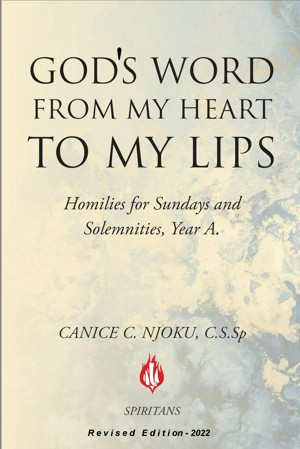
https://ppeditoresebooks.com/products/homilies-c-god-s-word-from-my-heart-to-my-lips-ebook?_pos=3&_sid=de180b38d&_ss=r

Pope Pius XI instituted the feast of Christ the King in 1925 in response to growing nationalism and secularism. Through this, the Church intends to upgrade our worship from the privacy of our hearts to a higher level. That is, to also proudly proclaim his public and universal reign as king. The title of the feast was “Jesu Christi Regis” (Our Lord Jesus Christ, the King). However, in 1969 Pope Paul VI gave the feast a new title, “Iesu Christi universorum regis.” (Our Lord Jesus Christ, King of the Universe). He elevated it to a solemnity and fixed its celebration on the last Sunday of each liturgical year.

In the first reading of today, the entire Israelites united in making David King. The reason is simple. They saw in him a worthy servant. He did not impose himself on them. He did not need to waste much money and resources to be chosen or elected. Instead, they genuinely and unanimously acclaimed him their king, as we praise Christ our king today. He did not take the honor upon himself because he knew that: “No one takes this honor unto himself” (Heb 5: 4). If we humble ourselves, God will exalt us. Our people will bear joyful testimony to our capability to lead them.

In the second reading, Paul reminds us that God “Has created a place for us in the kingdom of the son that he loves.” What more do we need! This calls for jubilation. So, as we celebrate today, let us know that as we “Make known the glorious splendor of Christ’s reign,” that we are proclaiming our reign over this world and its forces.

In today’s gospel, Pilate and the Jews ignorantly conspired to castigate Christ, their king. Rather than accept him, they hardened their hearts to God’s call to share in his kingdom and glory. Our celebration today is not a mockery as the Jews, and the unrepentant criminal did. Instead, it is a genuine celebration of the universal reign of our Lord Jesus Christ.

Like the Jews of Christ’s time, some of us are carried away by what we see in this present world. Some Jews of Christ’s time represent the modern-day materialists who believe that everything ends here on earth. This is a grave mistake because the kingdom of this world will pass away, but Christ’s reign and the kingdom are eternal.

Christ, the universal king, is a role model to all kings, rulers, presidents, decision-makers, and leaders. He cares, loves, and lives in peace with his people. He does not rule with iron fists, military might, or financial strength. He is a good Shepherd, a just judge, and a compassionate king. He is the only king who treats us as his brothers, sisters, and, friends.

One-Time
Monthly
Yearly

Please make a donation to sustain this blog

Make a monthly donation

Make a yearly donation

Choose an amount

$5.00
$15.00
$100.00
$5.00
$15.00
$100.00
$5.00
$15.00
$100.00

Or enter a custom amount

$

Your contribution is appreciated.

Your contribution is appreciated.

Your contribution is appreciated.

DonateDonate monthlyDonate yearly

Christ, our universal King, is divine, yet He shares in our humanity and allows us to share in His kingly and priestly nature (Rev 1:6; I Th 2:12). He is ever close, and no special protocols are required to reach Him. So, brethren, let us celebrate because the Lord comes to rule his people with fairness. He will reign forever and will give his people the gift of peace.

Peace be with you all!

Maranatha!

Homilía del Trigésimo Cuarto Domingo del Tiempo Ordinario, Año C

¡Exalten, al Rey Universal de la Gloria!
Lecturas: (1ra: 2Sam 5, 1-3; Sal: 121, 1-5; 2da: Col 1, 12-20; Ev: Lc 22, 35-43)

Esta breve reflexión fue escrita por el Padre Canice Chukwuemeka Njoku, C.S.Sp., DMin., un sacerdote católico y miembro de la Congregación del Espíritu Santo (Espirítanos). Es un misionero en Puerto Rico. Es director del Santuario del Espíritu Santo, Dorado y el Superior Mayor de la Congregación del Espíritu Santo (Espirítanos), Circunscripción de Puerto Rico y República Dominicana. El Padre Canice es miembro de la academia de homilética (The Academy of Homiletics). Para más detalles y comentarios se puede contactarlo al: canice_c_njoku@yahoo.com, canicechukwuemeka@gmail.com.

Encuentra otros libros en: https://www.smashwords.com/books/view/904854

(Donar @ATH Móvil: Canice Njoku – 7873146309)

(https://orcid.org/0000-0002-8452-8392)

En este trigésimo cuarto y último domingo del tiempo ordinario, del año C, la Santa Madre Iglesia celebra la solemnidad de nuestro Señor Jesucristo, Rey Universal. Hoy le adoramos como el Rey de reyes y el Señor de señores (Ap. 17:1), y lo exaltamos como el Señor soberano del universo (Da 7, 14).

https://ppeditoresebooks.com/products/homilias-c-palabra-de-dios?

El Papa Pío XI instituyó la fiesta de Cristo Rey en 1925 en respuesta al creciente nacionalismo y secularismo. A través de esto, la iglesia quería llevar nuestra adoración de Jesús, de la privacidad de nuestros corazones a un nivel superior. Es decir, a proclamar orgullosamente su reinado como rey universal. El título de la fiesta fue “Jesu Christi Regis” (Nuestro Señor Jesucristo, el rey). Sin embargo, en 1969 el Papa Pablo VI dio la fiesta un nuevo título: “Iesu Christi universorum regis.” (Nuestro Señor Jesucristo, rey del universo). Se elevó a una solemnidad y tiene su celebración en el último domingo del año litúrgico.

En la primera lectura, los israelitas se unieron para elegir a David como su rey. La razón es sencilla. Vieron en él un digno siervo que se impone sobre ellos. No era necesario gastar mucho dinero y recursos para ser elegido. Más bien, él fue unánimemente aclamado rey, como nosotros aclamamos a Cristo hoy. Él no tomó el honor por sí mismo porque, sabía que: “nadie se toma este honor a sí mismo” (Heb 5:4). Así que, si nos humillamos a nosotros mismos, Dios nos exaltará. Nuestro pueblo dará testimonio de nuestra capacidad para dirigir.

En la segunda lectura, Pablo nos recuerda que Dios: “ha creado un lugar para nosotros en el reino de su hijo amado.” ¡Qué más necesitamos! Esto requiere júbilo. Por lo tanto, al celebrar hoy, sepamos que, así como nos damos a conocer el glorioso esplendor del reinado de Cristo,” así mismo proclamamos nuestro reinado sobre este mundo y sus fuerzas.

En el Evangelio de hoy, Pilato y los judíos ignorantemente conspiraron para castigar a Cristo, su rey. En lugar de aceptarlo, endurecieron sus corazones la llamada de Dios a compartir y participar en su reino y gloria. Nuestra celebración hoy no es una burla como de los judíos hicieron. Por el contrario, es una verdadera celebración del reinado universal de nuestro Señor Jesucristo.

Como los judíos del tiempo de Cristo, algunos de nosotros realmente somos engañados por lo que vemos en este mundo. Algunos judíos del tiempo de Cristo creyeron que todo termina aquí en la tierra. Ellos representan los materialistas de hoy en día. Esto es un grave error porque el reino de este mundo pasará, pero el reinado de Cristo es eterno.

Cristo, Rey del Universo, es un modelo a seguir para todos los reyes, gobernantes, presidentes, y los líderes. Él cuida, ama y vive en paz con su pueblo. Él no gobierna con mano dura, poder militar o financiero. Es un buen pastor, un juez justo y un rey compasivo. Él es el único rey que nos trata como sus hermanos y amigos.

One-Time
Monthly
Yearly

Por favor haga una donación para mantener este blog

Make a monthly donation

Make a yearly donation

Choose an amount

$5.00
$15.00
$100.00
$5.00
$15.00
$100.00
$5.00
$15.00
$100.00

Or enter a custom amount

$

Your contribution is appreciated.

Your contribution is appreciated.

Your contribution is appreciated.

DonateDonate monthlyDonate yearly

Cristo, nuestro rey universal es divino, pero comparte nuestra humanidad, y nos permite compartir su naturaleza real y sacerdotal (Ap 1:6; I Tes. 2:12). Él está siempre cercano, y no hay protocolos especiales para llegar a Él. Por lo tanto, celebremos porque: “el Señor viene a su pueblo con justicia. Él reinará para siempre y nos dará un regalo de paz.”

¡La paz sea con ustedes!

¡Maranata!

Homilía del Trigésimo Tercer Domingo de Tiempo Ordinario, Año C

Triunfaremos a través de la Perseverancia Y Buen Trabajo 

Lecturas: 1ra: Mal 3, 19-20; Sal: 97, 5-7; 2da: 2Tes 3, 7-12; Ev: Lc 21, 5-19

Esta breve reflexión fue escrita por el Padre Canice Chukwuemeka Njoku, C.S.Sp., DMin., un sacerdote católico y miembro de la Congregación del Espíritu Santo (Espirítanos). Es un misionero en Puerto Rico. Es director del Santuario del Espíritu Santo, Dorado y el Superior Mayor de la Congregación del Espíritu Santo (Espirítanos), Circunscripción de Puerto Rico y República Dominicana. El Padre Canice es miembro de la academia de homilética (The Academy of Homiletics). Para más detalles y comentarios se puede contactarlo al: canice_c_njoku@yahoo.com, canicechukwuemeka@gmail.com.

Encuentra otros libros en: https://www.smashwords.com/books/view/904854

(Donar @ATH Móvil: Canice Njoku – 7873146309)

(https://orcid.org/0000-0002-8452-8392)

Hoy es el trigésimo tercer domingo del tiempo ordinario. Falta una sola semana para terminar este año litúrgico C. Por lo tanto, las lecturas de este domingo apuntan a “el fin del tiempo” y nuestra victoria en Cristo. Según Gautama Siddhartha, (563-483 A.C.): “La resistencia es una de las disciplinas más difíciles, pero la victoria final viene a quien aguanta.” Por lo tanto, debemos aguantar hasta que triunfemos sobre todas las fuerzas de este mundo.

https://ppeditoresebooks.com/products/homilias-c-palabra-de-dios?

En la primera lectura de hoy, Malaquías habla del día del Señor. Pinta dos imágenes. Primera, el destino del maligno. Segundo, el triunfo de los justos que perdurara hasta el final. Esta lectura sirve como un estímulo para nosotros a permanecer pacientemente en buenas obras. Se termina con una promesa de victoria: “Pero para ustedes los que temen mi nombre, el sol de justicia brillará trayendo la sanación en sus rayos.” Esta es nuestra esperanza y la recompensa

En la segunda lectura, Pablo nos anima a seguir trabajando duro. Esto es para ganar nuestra vida terrenal y celestial. La iglesia de ninguna manera apoya la pereza u ociosidad. Por lo tanto, ella nos enseña que la pereza, es decir, la renuencia o reticencia a trabajar, es uno de los siete pecados capitales.

Santo Tomás de Aquino escribió: “La pereza es lentitud de la mente que descuida para comenzar bien…es malvado en su efecto, se oprime el hombre en cuanto a señalar a lo lejos totalmente de buenas obras (Summa Theologiae 2, 35, arte. 1). Buen trabajo produce frutos buenos y duraderos. Es una marca de un buen cristiano. Se aborrece la pereza y la ociosidad.

Por desgracia, hoy en día muchos no aprecian duro trabajo. En cambio, dependen de otros directa o indirectamente. Para ganar el dinero rápido o fácilmente, algunos se meten con drogas, robo, fraude mientras que otros se han convertido en “mendigos corporativos.” Esto es lo que Pablo quiere decir: “Ahora escuchamos que algunos de ustedes viven ociosamente, no haciendo nada y entrometiéndose en todo. A estos les mandamos y exhortamos en el Señor Jesucristo que trabajen en paz para ganarse su pan.” Un cristiano perezoso rinde o cede fácilmente a todo tipo de vicios. 

En el Evangelio, Cristo profetizó el fin de una época en la historia de Israel. Esto culminó con la destrucción del templo alrededor de siglo 70 DC. También habló de las dificultades inminentes y persecución antes, durante y después de este tiempo. Sin embargo, concluyo con estas palabras de ánimo: “Gracias, a la perseverancia salvarán sus vidas.” 

Por lo tanto, el Señor nos anima a perseverar en la justicia y soportar momentos difíciles. Al advertir que el templo de Jerusalén sería destruido a pesar de su elegancia y grandeza, Cristo nos recuerda también que nada de este mundo va a durar para siempre no importa lo precioso que sea para nosotros. Lo único que perdurará es nuestra fe en Cristo.

One-Time
Monthly
Yearly

Por favor haga una donación para mantener este blog

Make a monthly donation

Make a yearly donation

Choose an amount

$5.00
$15.00
$100.00
$5.00
$15.00
$100.00
$5.00
$15.00
$100.00

Or enter a custom amount

$

Your contribution is appreciated.

Your contribution is appreciated.

Your contribution is appreciated.

DonateDonate monthlyDonate yearly

Por último, hoy en día en nuestras familias, oficinas, empresas, carreras profesionales y en nuestro mundo, en general, nos enfrentamos tantas dificultades que a veces cuestionan nuestra fe. Sin embargo, si soportamos todo esto pacientemente como Cristo nos dice, tendremos motivos suficientes para sonreír al final, y por supuesto, “el sol de justicia brillará sobre nosotros con curación en sus rayos.”

¡La paz sea con ustedes!

¡Maranata!

Homily For The 33rd Sunday Of Ordinary Time, Year C

We shall Triumph through Perseverance & Hard Work

Readings: 1st: Mal 3:19-20; Ps: 97, 5-7; 2nd: 2 Thes 3:7-12; Gos: Luke 21:5-19

This brief reflection was written by Fr. Njoku Canice Chukwuemeka, C.S.Sp., DMin, a Catholic Priest and a member of the Congregation of the Holy Spirit (Spiritans). He is a missionary in Puerto Rico. He is Director of Santuario del Espiritu Santo, Dorado, and the Major Superior of the Congregation of the Holy Spirit (Spiritans), Circumscription of Puerto Rico and the Dominican Republic. Fr. Canice is a member of the Academy of Homiletics. For more details and comments, contact him atcanice_c_njoku@yahoo.com, canicechukwuemeka@gmail.com.

Find other books @: https://www.smashwords.com/books/view/893122

(Donate @ATH Móvil: Canice Njoku-7873146309)

(https://orcid.org/0000-0002-8452-8392

Today is the thirty-third Sunday of ordinary time. A week from now, we shall come to the end of year C. Hence,  today’s readings point toward “The end of time” and our victory in Christ. According to Gautama Siddhartha (563-483 B.C), “Endurance is one of the most challenging disciplines, but final victory comes to the one who endures.” Therefore, let us endure until we triumph over all the forces of this world.

https://ppeditoresebooks.com/products/homilies-c-god-s-word-from-my-heart-to-my-lips-ebook?_pos=3&_sid=de180b38d&_ss=r

In today’s first reading, Malachi speaks of the day of the Lord. He paints two pictures. First, he speaks of the fate of the evil one. Second, the triumph of the righteous who endures till the end. This reading serves as an encouragement to help us continue patiently in good works. Malachi ends with a promise of victory: “But for you who fear my name, the sun of righteousness will shine out with healing in its rays.” This is our hope and the reward.

In the second reading, Paul encouraged us to keep working hard. This is in order to earn our earthly and heavenly living. The Church does not in any way promote laziness or idleness. Hence, she teaches us that sloth, the reluctance to work, is one of the seven capital sins.

Saint Thomas Aquinas wrote, “Sloth is the sluggishness of the mind which neglects to begin well. It is evil in its effect. It oppresses man to draw him away entirely from good deeds (Summa Theologiae 2, 35, art. 1). Hard work yields good and enduring fruits. Hard work makes a good Christian. It abhors laziness and idleness.

Sadly, many Christians no longer appreciate hard work. Instead, we perpetually depend on others directly or indirectly. In order to make fast and cheap money, some engage in all sorts of evils like drugs, armed robbery, fraud, and even “corporate begging.” This is what Paul means by: “Now we hear that some of you are living in idleness, doing no work themselves but interfering with anyone else’s.” A lazy Christian yields easily to all sorts of vices.

In the gospel, Christ prophesied the end of a time in the history of Israel. This culminated with the destruction of the temple around 70 AD. He also spoke of the imminent hardships and persecution before, during, and after this time. However, He concludes with these encouraging words: “Your endurance will win you your lives.”

Hence, the Lord encourages us to persevere in righteousness and endure difficult moments. By warning that the Temple of Jerusalem would be destroyed despite its elegance and greatness, Christ also reminds us that nothing in this world will last forever, no matter how precious they are to us. The only thing that will endure is our faith in Christ.

One-Time
Monthly
Yearly

Please make a donation to sustain this blog

Make a monthly donation

Make a yearly donation

Choose an amount

$5.00
$15.00
$100.00
$5.00
$15.00
$100.00
$5.00
$15.00
$100.00

Or enter a custom amount

$

Your contribution is appreciated.

Your contribution is appreciated.

Your contribution is appreciated.

DonateDonate monthlyDonate yearly

Finally, today in our families, offices, businesses, careers, and in our world at large, we face difficulties that at times question our faith. However, if we endure all these patiently as Christ tells us, we shall have enough reasons to smile at the end, and of course, “the sun of righteousness will shine on us with healing in its rays.”

Peace be with you all!

Maranatha!

Homilía para la Fiesta de la Dedicación de la Basílica de Letrán en Roma (Trigesimo Segundo Domingo Año, C)

La madre y la amante de todas las iglesias

Readings: 1st: Ezek 47, 1-2. 8-9.12; Ps 45, 2-9; 2nd: 1 Cor 3, 11. 16-17; Gos: Jh 2, 13-22

Esta breve reflexión fue escrita por el Padre Canice Chukwuemeka Njoku, C.S.Sp., DMin., un sacerdote católico y miembro de la Congregación del Espíritu Santo (Espirítanos). Es un misionero en Puerto Rico. Es director del Santuario del Espíritu Santo, Dorado y el Superior Mayor de la Congregación del Espíritu Santo (Espirítanos), Circunscripción de Puerto Rico y República Dominicana. El Padre Canice es miembro de la academia de homilética (The Academy of Homiletics). Para más detalles y comentarios se puede contactarlo al: canice_c_njoku@yahoo.com, canicechukwuemeka@gmail.com.

Encuentra otros libros en: https://www.smashwords.com/books/view/904854

(Donar @ATH Móvil: Canice Njoku – 7873146309)

(https://orcid.org/0000-0002-8452-8392)

En este trigesimo segundo Domingo del tiempo ordinario, la iglesia celebra la fiesta de la Dedicación de la Basílica Letrán, Roma.

https://ppeditoresebooks.com/products/homilias-c-palabra-de-dios?

Quisiera comenzar esta breve homilía con estas significativas e interesantes palabras del Papa Benedicto XVI: “La belleza y la armonía de las Iglesias, destinadas a alabar a Dios, nos invitan a nosotros, seres limitados y pecadores, a formar un ‘cosmos’, un edificio bien ordenado, en comunión con Jesús, que es el verdadero Santo de los Santos…“Por lo tanto, cada comunidad tiene el deber de cuidar especialmente sus propios edificios sagrados, que son un precioso patrimonio religioso e histórico”. (9 de noviembre de 2008, Fiesta de la Basílica de Letrán).

Esta Basílica fue construida por Constantino y consagrada por el Papa Silvestre en 324. Esta fiesta se observó por primera vez en Roma, pero más tarde se extendió a la Iglesia latina universal. Hay dos puntos importantes acerca la celebración de hoy. Primero, el edificio físico, así como nuestros cuerpos, son la morada de Dios. Segundo, tanto el edificio de la iglesia física, como nosotros somos evidencia y la manifestación de la presencia de Dios en la tierra. Por lo tanto, debemos mantenerlos santos y sagrados.

En lugar de la Basílica de San Pedro en Roma, la iglesia del Papa como obispo de la arquidiócesis de Roma es la Basílica de Letrán, que lleva en su fachada: “omnium urbis et orbis ecclesiarum mater et caput” (la madre y amante de todas las iglesias de Roma y del mundo).

En nuestra primera lectura, la visión del profeta Ezequiel sobre el templo de Jerusalén se nos presenta de manera más articulada y dramática. Esto nos recuerda la presencia siempre perdurable de Dios dentro de su templo.

Como signo de la presencia de Dios entre su pueblo, el Templo o “Iglesia” es un lugar desde donde fluye hacia nosotros el río de la alegría de Dios. Es decir, para alimentarnos y satisfacernos. Es un lugar de refugio donde encontramos la felicidad eterna. Es un lugar donde se satisfacen nuestra hambre y sed espirituales y, lo más importante, es un lugar de sanación donde encontramos a Jesús, nuestro bálsamo de Galaad (Jer 8:22) que sana nuestras almas heridas.

En la segunda lectura, Pablo nos lleva a la siguiente dimensión, muy importante, del templo de Dios, y esa somos nosotros: “Ustedes son el edificio de Dios… ¿No se han dado cuenta de que son el templo de Dios y que el Espíritu Santo de Dios habita entre ustedes? Esto es claro y conciso, y esto es lo que somos.

Somos la sede del gobierno de Dios porque nuestros corazones son los santuarios más íntimos del Espíritu Santo. Pablo nos recuerda la presencia especial de Dios en nosotros. Somos el templo viviente y móvil de Dios. Por lo tanto, hoy se nos hace un llamado especial a mantener este templo santo, puro y sagrado, porque Dios no habita en un templo profanado. Si nuestro templo permanece sagrado, su espíritu seguirá morando en él.

One-Time
Monthly
Yearly

Por favor haga una donación para mantener este blog

Make a monthly donation

Make a yearly donation

Choose an amount

$5.00
$15.00
$100.00
$5.00
$15.00
$100.00
$5.00
$15.00
$100.00

Or enter a custom amount

$

Your contribution is appreciated.

Your contribution is appreciated.

Your contribution is appreciated.

DonateDonate monthlyDonate yearly

En el evangelio, la acción de Jesús en el templo nos lleva al clímax y a la importancia de la celebración de hoy. Nos recuerda cómo debemos tratar y reverenciar el templo de Dios. Juan resume así la acción y las palabras de Jesús: «Destruid este santuario, y en tres días lo reconstruiré… pero hablaba del santuario que era su cuerpo».

Por lo tanto, la celebración de hoy nos recuerda que nuestros cuerpos, como templo de Dios, fueron comprados mediante el agua del bautismo y consagrados mediante el óleo sagrado del crisma y la presencia del Espíritu Santo, mientras que la iglesia física también es consagrada tanto por la presencia del Dios Trino como por la presencia del «pueblo sacerdotal, santo y escogido de Dios» (1 Pedro 2, 9).

Por lo tanto, al conmemorar la dedicación de la Basílica de Letrán, aclamemos con alegría al salmista: “El agua del río da alegría a la ciudad de Dios, lugar santo donde habita el Altísimo”.

La paz sea con ustedes.

¡Maranatha!

Homily for the Feast of the Dedication of the Lateran Basilica in Rome (32nd Sunday Of Ordinary Time, Year C)

The Mother and Mistress of all Churches

Readings: 1st: Ez 47:1-2. 8-12; Ps: 45; 2nd: 1 Cor 3, 11. 16-17; Gos: Jn 2:13-22

This brief reflection was written by Fr. Njoku Canice Chukwuemeka, C.S.Sp., DMin, a Catholic Priest and a member of the Congregation of the Holy Spirit (Spiritans). He is a missionary in Puerto Rico. He is Director of Santuario del Espiritu Santo, Dorado, and the Major Superior of the Congregation of the Holy Spirit (Spiritans), Circumscription of Puerto Rico and the Dominican Republic. Fr. Canice is a member of the Academy of Homiletics. For more details and comments, contact him atcanice_c_njoku@yahoo.com, canicechukwuemeka@gmail.com.

Find other books @: https://www.smashwords.com/books/view/893122

(Donate @ATH Móvil: Canice Njoku-7873146309)

(https://orcid.org/0000-0002-8452-8392

On this thirtieth Sunday of Ordinary Time, the Church celebrates the Feast of the Dedication of the Lateran Basilica in Rome.

https://ppeditoresebooks.com/products/homilies-c-god-s-word-from-my-heart-to-my-lips-ebook?_pos=3&_sid=de180b38d&_ss=r

I would like to begin this brief homily with these significant and interesting words of Pope Benedict XVI: “The beauty and harmony of Churches, destined to render praise to God, invites us, limited beings and sinners, to form a ‘cosmos,’ a well-ordered edifice, in communion with Jesus, who is the true Holy of Holies…Every community, therefore, has the duty to take special care of its own sacred buildings, which are a precious religious and historical patrimony.” (Nov 9, 2008, Feast of Lateran Basilica).

This Basilica was built by Constantine and was consecrated by Pope Sylvester in 324. This feast was first observed in Rome, but later, it was extended to the universal Latin Church. There are two important points about today’s celebration. First, the physical building, as well as our bodies, is God’s dwelling place. Second, both the physical church building and we are evidence and the manifestation of God’s presence on earth. So, we must keep them holy and sacred.

Rather than St. Peter’s Basilica in Rome, the Pope’s church as the Bishop of the archdiocese of Rome is the Lateran Basilica, which bears on its facade: “omnium urbis et orbis ecclesiarum mater et caput” (the mother and mistress of all churches of Rome and the world).

https://api.neonemails.com/emails/content/uhCdQs-DxLyWSwuFIvR7IHRFoOjmB1ujv8IGPCvRVmY

In our first reading, the vision of the prophet Ezekiel about the temple of Jerusalem is presented to us most articulately and dramatically. This reminds us of God’s ever-abiding presence within his temple.

As a sign of God’s presence among his people, the Temple or “Church” is a place from where the river of God’s joy flows towards us. That is, to nourish and satisfy us. It is a place of refuge where we find eternal bliss. It is a place where our spiritual hunger and thirst are satisfied, and most importantly, it is a place of healing where we find Jesus, our balm of Gilead (Jer 8:22) that heals our wounded souls.

In the second reading, Paul takes us to the next and very important dimension of the temple of God and that is us: “You are God’s building…did you not realize that you are God’s temple and the Holy Spirit of God was living among you?” This is straight and direct to the point, and this is what we are.

We are the seat of God’s government because our hearts are the innermost sanctuaries of the Holy Spirit. Paul reminds us of God’s special presence within us. We are God’s living and mobile temple. Therefore, there is a special call today to keep this temple holy, pure, and sacred, because God does not dwell in a flirty temple. If our temple remains sacred, his spirit will continue to dwell therein.

One-Time
Monthly
Yearly

Please make a donation to sustain this blog

Make a monthly donation

Make a yearly donation

Choose an amount

$5.00
$15.00
$100.00
$5.00
$15.00
$100.00
$5.00
$15.00
$100.00

Or enter a custom amount

$

Your contribution is appreciated.

Your contribution is appreciated.

Your contribution is appreciated.

DonateDonate monthlyDonate yearly

In the gospel, Jesus’ action in the temple brings us to the climax and significance of today’s celebration. He reminds us of how we ought to treat and reverence God’s temple. John summarizes Jesus’ action and words thus: “Destroy this sanctuary and in three days I will rebuild it…but he was speaking of the sanctuary that was his body.” 

Hence today’s celebration reminds us that our bodies as God’s temple were purchased through the water of baptism, and consecrated through the sacred oil of Chrism and the indwelling of the Holy Spirit, whereas the physical church is also consecrated by both the presence of the Trinitarian God and the presence of “God’s priestly, holy and chosen people” (1 Peter 2:9).

Therefore, as we commemorate the Dedication of the Lateran Basilica, let us joyfully acclaim with the psalmist: “The water of the river gives joy to God’s city, the holy place where the Most High dwells.”

Peace be with you all.

Maranatha!

Homily for the Commemoration of All Souls (2 Nov)- 31st Sunday of Ordinary Time, Year

Readings: 1st: Is 25:6.7-9; Ps: 129; 2nd: Tes 4:1-14.17-18; Gos: Jn 6,51-58

This brief reflection was written by Fr. Njoku Canice Chukwuemeka, C.S.Sp., DMin, a Catholic Priest and a member of the Congregation of the Holy Spirit (Spiritans). He is a missionary in Puerto Rico. He is Director of Santuario del Espiritu Santo, Dorado, and the Major Superior of the Congregation of the Holy Spirit (Spiritans), Circumscription of Puerto Rico and the Dominican Republic. Fr. Canice is a member of the Academy of Homiletics. For more details and comments, contact him atcanice_c_njoku@yahoo.com, canicechukwuemeka@gmail.com.

Find other books @: https://www.smashwords.com/books/view/893122

(Donate @ATH Mobil: Canice Njoku-7873146309)

(https://orcid.org/0000-0002-8452-8392

Today the Holy mother church all over the world commemorates all soul’s day. The Masses we celebrate today are prayers to ask God for forgiveness on behalf of our deceased brothers and sisters. This is mainly for those who are still in purgatory and need God’s mercy.

https://ppeditoresebooks.com/products/homilies-c-god-s-word-from-my-heart-to-my-lips-ebook?_pos=3&_sid=de180b38d&_ss=r

We must pause a moment to ask ourselves, why pray for the dead? When the letter to the Hebrews says: “After death comes judgment” (Heb 9: 27). When there is a saying: “There is no repentance in the grave.” Does this not mean that we are wasting our time here? No, we are not!

As Catholics, we believe in the communion of Saints. This communion or fellowship includes the triumphant church’s saints, the militant church, and the suffering Church. So, we are in a fellowship in which we could help each other through our prayers. The Church suffering in purgatory needs purification to reach their eternal destination.

The book of Maccabees attests that Judas Maccabeus, head of Israel, made a collection “so, they offered a sacrifice of atonement for the sins of those who had died in battle, to pray for the dead so that they are free from their sins, is a holy and suitable action” (Mac 12:46).

https://api.neonemails.com/emails/content/uhCdQs-DxLyWSwuFIvR7IHRFoOjmB1ujv8IGPCvRVmY

According to Catholic teaching, to pray for the living and the dead (especially, souls in purgatory) is the seventh spiritual work of mercy. However, while the doctrine on purgatory is well-founded and plausible, we should strive hard for holiness and perfection to enter straight into heaven at the end of our earthly life.

Does our life terminate in death? The book of Wisdom answers this question: “The souls of the righteous are in the hands of God, and no torment will reach them. Foolish people, who have no faith, thought that there is no hope for them. But the righteous are at peace.” While they were alive, they were victims of sins, selfishness, and injustice. They are now in God’s hands in the hands of a father who is love and willing to forgive them.

They are now in the hands of God, who protected them along the path of this earthly life. Now, they are where “there will be no torment, where there will be immense happiness, rest, light, peace, and immortality. There, God himself shall wipe away all their tears.  Over there, there will be no more weeping or death (Ap. 21, 3-4).

One-Time
Monthly
Yearly

Please make a donation to sustain this blog

Make a monthly donation

Make a yearly donation

Choose an amount

$5.00
$15.00
$100.00
$5.00
$15.00
$100.00
$5.00
$15.00
$100.00

Or enter a custom amount

$

Your contribution is appreciated.

Your contribution is appreciated.

Your contribution is appreciated.

DonateDonate monthlyDonate yearly

So, united in prayer, let us ask our Lord Jesus Christ, who died and resurrected, to lead them to his kingdom, where we shall all gather one day to live forever.

Peace be with you all!

Maranatha!

Homilia para Todos los Difuntos (2 de nov)- Domingo 31, Tiempo Ordinario, Año C

Lecturas: 1a: Is 25:6.7-9; Sal: 129; 2a: Tes 4:1-14.17-18; Ev: Jn 6,51-58

Esta breve reflexión fue escrita por el Padre Canice Chukwuemeka Njoku, C.S.Sp., DMin., un sacerdote católico y miembro de la Congregación del Espíritu Santo (Espirítanos). Es un misionero en Puerto Rico. Es director del Santuario del Espíritu Santo, Dorado y el Superior Mayor de la Congregación del Espíritu Santo (Espirítanos), Circunscripción de Puerto Rico y República Dominicana. El Padre Canice es miembro de la academia de homilética (The Academy of Homiletics). Para más detalles y comentarios se puede contactarlo al: canice_c_njoku@yahoo.com, canicechukwuemeka@gmail.com.

Encuentra otros libros en: https://www.smashwords.com/books/view/904854

(Donar @ATH Móvil: Canice Njoku – 7873146309)

(https://orcid.org/0000-0002-8452-8392)

Hoy la Santa Madre Iglesia de todo el mundo conmemora los fieles difuntos. Las Misas que celebramos hoy son oraciones para pedirle perdón a Dios en nombre de todos nuestros hermanos y hermanas difuntos. Esto es especialmente para aquellos que todavía están en el Purgatorio y necesitan la misericordia de Dios.

https://ppeditoresebooks.com/products/homilias-c-palabra-de-dios?

Debemos pausar un momento para preguntarnos, ¿por qué orar por los muertos, cuando la carta a los hebreos dice que: “Después de la muerte viene el juicio” (Heb 9:27). Cuando hay un refrán que dice: “No hay arrepentimiento en la tumba.” ¿Esto no significa que estamos perdiendo tiempo aquí? ¡No, no lo estamos perdiendo tiempo!

Como católicos, creemos en la comunión de los Santos. Esta comunión o compañerismo incluye a los Santos de la iglesia triunfante, la Iglesia militante y la Iglesia sufriente. Por lo tanto, estamos en una comunidad en la que podemos ayudarnos mutuamente a través de nuestras oraciones. La iglesia que sufre en el Purgatorio necesita purificación para finalmente alcanzar su destino eterno

El libro de Macabeos atestigua que Judas Macabeo, jefe de Israel, hizo una colección. “Así que, ofrecieron un sacrificio de expiación por los pecados de los que habían muerto en batalla. Orar por los muertos para que sean liberados de sus pecados, es una acción santa y adecuada “(Mac 12:46).

Según la enseñanza católica, orar por los vivos y los muertos (especialmente, las almas en el Purgatorio) es la séptima obra espiritual de la misericordia. Sin embargo, mientras que la doctrina del Purgatorio está bien fundamentada y plausible, debemos esforzarnos arduamente por la santidad y la perfección para entrar directamente al cielo al final de nuestra vida terrenal.

¿Nuestra vida termina en la muerte? El libro de la sabiduría responde a esta pregunta: “Las almas de los justos están en las manos de Dios, y ningún tormento les alcanzará. Las personas tontas, que no tienen fe, pensaron que todos se acabó para ellos. Pero los justos están en paz.” Mientras estaban vivos, eran víctimas de los pecados, el egoísmo y la injusticia. Ahora están en manos de Dios. En las manos de un padre que es amor y que está dispuesto a perdonarlos.

One-Time
Monthly
Yearly

Por favor haga una donación para mantener este blog

Make a monthly donation

Make a yearly donation

Choose an amount

$5.00
$15.00
$100.00
$5.00
$15.00
$100.00
$5.00
$15.00
$100.00

Or enter a custom amount

$

Your contribution is appreciated.

Your contribution is appreciated.

Your contribution is appreciated.

DonateDonate monthlyDonate yearly

Ahora están en las manos de Dios, quien los protegió a lo largo del camino de esta vida terrenal. Ahora, están donde, “no habrá tormento, donde habrá inmensa felicidad, descanso, luz, paz e inmortalidad. Allí, Dios mismo enjugará todas sus lágrimas. Allí no habrá más llanto o muerte (Ap. 21, 3-4).

Así que, unidos en la oración, pidamos a nuestro Señor Jesucristo, que murió y resucitó, que los lleva a su reino, donde todos reuniremos un día con ellos para vivir para siempre.

¡La paz sea con ustedes!

¡Maranata!

Homily For The 30th Sunday Of Ordinary Time, Year C

God is a Just Judge!

Readings: 1ra: Sir: 35:12-14.16-19; Sal: 32; 2da: 2Tim 4: 6-8.16-19; Ev: Lc 18: 9-14

This brief reflection was written by Fr. Njoku Canice Chukwuemeka, C.S.Sp., DMin, a Catholic Priest and a member of the Congregation of the Holy Spirit (Spiritans). He is a missionary in Puerto Rico. He is Director of Santuario del Espiritu Santo, Dorado, and the Major Superior of the Congregation of the Holy Spirit (Spiritans), Circumscription of Puerto Rico and the Dominican Republic. Fr. Canice is a member of the Academy of Homiletics. For more details and comments, contact him atcanice_c_njoku@yahoo.com, canicechukwuemeka@gmail.com.

Find other books @: https://www.smashwords.com/books/view/893122

(Donate @ATH Móvil: Canice Njoku-7873146309)

(https://orcid.org/0000-0002-8452-8392

On this thirtieth Sunday of Ordinary Time, the Church reminds us that the Lord is a Just Judge who favors the humble and the just.

https://ppeditoresebooks.com/products/homilies-c-god-s-word-from-my-heart-to-my-lips-ebook?_pos=3&_sid=de180b38d&_ss=r

In the first reading, Sirac exalts us on the justice of God towards the poor, orphans, widows, and the weak of our society. This comes when just judgment is a thing of the past, and the highest bidder takes it all. In the “Heavenly Court,” God the Just Judge remains resolute to ensure justice.

Sirac calls us to be like God, the Just Judge who acquits the virtuous by delivering just judgment. Also, Sirac assures us that in as much as we are humble, prayerful, and persevere in doing good, God will surely be there to vindicate us as the psalmist says: “The Lord hears the cry of the poor” (Ps. 34:6).

In the second reading, Paul, having played his part perfectly well, now confidently awaits good judgment from the Just Judge. He boldly asserts himself: “I have fought the good fight to the end, I have kept the faith; all there is to come now is the crown of righteousness reserved for me.”

There is only one thing that can give one such confidence. This is a life well-lived in humility and the fear of God. If we are already living a good and humble life, we must not stop. Instead, we must struggle to the end and the finish line. When Paul was yet to accomplish the race, he writes, “I do not claim that I have already arrived. I move on towards the goal to win the prize” (Phil 3:12-14).

https://api.neonemails.com/emails/content/uhCdQs-DxLyWSwuFIvR7IHRFoOjmB1ujv8IGPCvRVmY

In the gospel, Jesus reminds us that judgment belongs to “God who searches what searches the mind (Jer 17: 10).” He is the one who knows all our intentions and actions. So, it is not for us to judge others because human judgment can be biased at times. What transpired between the publican and the tax collector is typical of the scenario we see every day.

Self-righteous people often judge people wrongly because of their weakness of mind and ignorance of how God operates. Such people look at themselves as role models that others must imitate or as if they are the only holy ones. They always wear the “holier than thou attitude.” So, they are quick to condemn others. However, God judges differently.

One-Time
Monthly
Yearly

Please make a donation to sustain this blog

Make a monthly donation

Make a yearly donation

Choose an amount

$5.00
$15.00
$100.00
$5.00
$15.00
$100.00
$5.00
$15.00
$100.00

Or enter a custom amount

$

Your contribution is appreciated.

Your contribution is appreciated.

Your contribution is appreciated.

DonateDonate monthlyDonate yearly

Finally, we must not place ourselves where we do not belong and place others where we feel they should be. Instead, we must humbly acknowledge our nothingness, vulnerability, and weakness before God, the Just Judge. Christ, the Just Judge who acquitted the humble tax collector, says to us today: “Everyone who exalts himself will be humbled, but the man who humbles himself will be exalted.”

Peace be with you all!

Maranatha!

Homilía del Trigésimo Domingo de Tiempo Ordinario, Año C

¡Dios es un Juez Justo!

Lecturas: 1st: Sir 35:12-14.16-19; Ps: 32; 2nd: 2Tim 4:6-8.16-19; Gos: Lk 18:9-14

Esta breve reflexión fue escrita por el Padre Canice Chukwuemeka Njoku, C.S.Sp., DMin., un sacerdote católico y miembro de la Congregación del Espíritu Santo (Espirítanos). Es un misionero en Puerto Rico. Es director del Santuario del Espíritu Santo, Dorado y el Superior Mayor de la Congregación del Espíritu Santo (Espirítanos), Circunscripción de Puerto Rico y República Dominicana. El Padre Canice es miembro de la academia de homilética (The Academy of Homiletics). Para más detalles y comentarios se puede contactarlo al: canice_c_njoku@yahoo.com, canicechukwuemeka@gmail.com.

Encuentra otros libros en: https://www.smashwords.com/books/view/904854

(Donar @ATH Móvil: Canice Njoku – 7873146309)

(https://orcid.org/0000-0002-8452-8392)

En este trigésimo Domingo del tiempo ordinario, la Iglesia nos recuerda que el Señor es un justo juez que favorece a los humildes y justos.

https://ppeditoresebooks.com/products/homilias-c-palabra-de-dios?

Estamos llamados a ser como Dios el juez justo que absuelve a los virtuosos y los entrega justo juicio. Además, Sirac nos asegura que en la medida en que somos humildes, orantes y perseverantes en hacer el bien, Dios seguramente estará allí para vindicarnos como dice el salmista: “Este pobre hombre llamó y el Señor lo escuchó” (Sal. 34, 6).

En la primera lectura, Sirac nos exalta en la justicia de Dios hacia los pobres, los huérfanos, las viudas y los débiles de nuestra sociedad. Esto viene en un momento en que el juicio justo se ha convertido en una cosa del pasado y el mejor postor gana. En la “corte celestial”, Dios el justo juez sigue siendo resuelto para asegurar que los jueces son sostenidos

En la segunda lectura, Pablo, habiendo terminado su papel perfectamente bien, ahora espera con confianza el buen juicio de del juez justo. Él se afirma audazmente: “He luchado bien en el combate, he corrido hasta la meta, he perseverado en la fe. Ahora sólo espero la corona merecida, con la que el Señor, Justo Juez me premiará en aquel día, y no solamente a mí, sino a todos aquellos que esperan con amor su glorioso advenimiento.”

Sólo hay una cosa que puede dar uno tal confianza. Esto es, una vida bien vivida en la humildad, y el santo temor de Dios. Si ya estamos viviendo una vida buena y humilde, no debemos detenernos. Más bien, debemos luchar hasta al final. Cuando Pablo no ha cumplido su misión, escribió: “No es que ya lo haya conseguido todo, o que ya sea perfecto. Sin embargo, sigo adelante esperando alcanzar aquello para lo cual Cristo Jesús me alcanzó a mí” (Filp 3:12-14).

En el Evangelio, Jesús nos recuerda, que juicio pertenece a Dios que conoce todo. Él es el único que conoce todas nuestras intenciones y acciones. Por lo tanto, no es para nosotros a juzgar a los demás porque el juicio humano siempre se equivoca y falla. Lo que ocurrió entre el publicano y el recaudador de impuestos es típico del escenario que encontramos diariamente.

Las personas auto-justas a menudo juzgan a la gente erróneamente debido a su propia debilidad de la mente y la ignorancia de cómo Dios opera. Tales personas se ven a sí mismas como el modelo a seguir y que otros deben imitar o como si fueran los únicos santos. Se apresuran a condenar a otros. Sin embargo, Dios juzga de manera diferente.

One-Time
Monthly
Yearly

Por favor haga una donación para mantener este blog

Make a monthly donation

Make a yearly donation

Choose an amount

$5.00
$15.00
$100.00
$5.00
$15.00
$100.00
$5.00
$15.00
$100.00

Or enter a custom amount

$

Your contribution is appreciated.

Your contribution is appreciated.

Your contribution is appreciated.

DonateDonate monthlyDonate yearly

Por último, no debemos situarnos donde no pertenecemos y colocar a los demás donde sentimos que deberían estar. Más bien, debemos humildemente reconocer nuestra vulnerabilidad y debilidad ante Dios, el juez justo. Cristo, el justo juez que absolvió al humilde recaudador de impuestos nos dice hoy: “todo el que se exalta será humillado, pero el hombre que se humilla será exaltado”.

¡La paz sea con ustedes!

¡Maranata!