Homily For The 21st Sunday Of Ordinary Time Year, C

The Great Reunion At The Feast of God’s Kingdom

Readings: 1st: Is 66:18-21; Ps: 116:5-7. 11-12; 2nd: Heb 12:11-13; Gos: Lk 12:22-30

This brief reflection was written by Fr. Njoku Canice Chukwuemeka, C.S.Sp., DMin, a Catholic Priest and a member of the Congregation of the Holy Spirit (Spiritans). He is a missionary in Puerto Rico. He is Director of Santuario del Espiritu Santo, Dorado, and the Major Superior of the Congregation of the Holy Spirit (Spiritans), Circumscription of Puerto Rico and the Dominican Republic. Fr. Canice is a member of the Academy of Homiletics. For more details and comments, contact him atcanice_c_njoku@yahoo.com, canicechukwuemeka@gmail.com.

Find other books @: https://www.smashwords.com/books/view/893122

(Donate @ATH Móvil: Canice Njoku-7873146309)

(https://orcid.org/0000-0002-8452-8392

This Sunday, the church reminds us of the reunion of all God’s people at the feast of His kingdom. It is not only Jews and Christians that the Lord will gather unto himself. He will also gather people from all nations, all those willing to submit to his loving care. The readings of this Sunday, especially the first and the gospel, are closely related. Both bear a powerful message of hope. That is the reunion and restoration of the people of God.

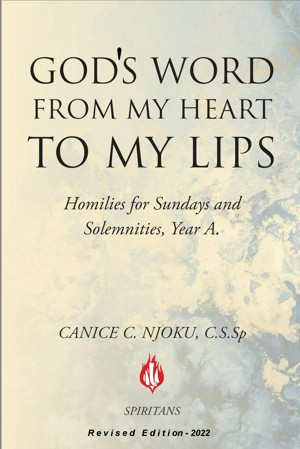
https://ppeditoresebooks.com/products/homilies-c-god-s-word-from-my-heart-to-my-lips-ebook?_pos=3&_sid=de180b38d&_ss=r

The first reading is a prophecy about the return of God’s People to Jerusalem. It is an assurance that God will fulfill his promises to us. Here, the prophet makes three essential points. The first is that God will soon fulfill his promise of restoring us to himself. He will surely do this to show his saving power.

The second is the fact that God has a purpose for this gathering. This is for the glory of his name. In order words, every work he does has the remote aim of giving glory to him. Third, in addition to gathering us unto Himself, God will also make us his ambassadors to other nations. Hence, he promises, “I will give them a sign and send some of their survivors to the nations…that have never heard of me or seen my glory.”

This also underscores the missionary nature of our call. God initiates it and then uses us to accomplish it. Hence, God commissions us to: “Go out to the whole world and proclaim the good news.” This good news is that God will restore our lost glory for the sake of his glory.

The second reading from Hebrews reminds us that obedience and discipline will help us respond and effectively return to the Lord. The path to this return will definitely not be an easy one. In it, we shall encounter thorns and pains. As a loving father, God will also reprimand and punish us. However, this is in order to correct and guide us through the right path.

Williams Shakespeare wrote in Hamlet, “Sometimes, I must be cruel to be kind.” As a loving father, this is the way God also handles us at times. He is the porter, and we are the clay. He crushes, treats us hard, and finally molds us into a beautiful shape (Jer 18: 1-17). So, we must learn to endure as Christ did through His suffering and death on the cross (Phil 2, 4). This is important if we must witness the glory of God. Success comes through hard work and hard work through discipline and obedience.

In today’s gospel, Jesus answers a challenging and tricky question: Sir, will there be only a few saved? His response was straightforward, clever, and of course, an intelligent one. He replies, “Try your best to enter by the narrow door!” So, rather than occupy oneself with arguments about the number of those to be saved, it is better to work hard for one’s salvation.

Through this, Christ reminds us that the invitation to His feast is open to all. However, each person must struggle to be there. We must do what we have to do by playing our roles well. This is the only way we can be guaranteed a place in the feast of the kingdom of God.

One-Time
Monthly
Yearly

Please make a donation to sustain this blog

Make a monthly donation

Make a yearly donation

Choose an amount

$5.00
$15.00
$100.00
$5.00
$15.00
$100.00
$5.00
$15.00
$100.00

Or enter a custom amount

$

Your contribution is appreciated.

Your contribution is appreciated.

Your contribution is appreciated.

DonateDonate monthlyDonate yearly

In order words, it behooves us as individuals to make an effort to be at the glorious gathering of the saints. Hence, Paul admonishes us to “Work out your salvation with fear and trembling” (Phil 2:12). Thus, we have to prepare ourselves by using the available opportunity present to us all the time. Therefore, God calls us to be focused and disciplined to be part of the great gathering of the saints.

Peace be with you all!

Maranatha!

Homilía del Vigésimo Primer Domingo del Tiempo Ordinario, Año C

La gran reunión al banquete del Reino de Dios

Lecturas: 1raIs 66, 18-21; Sal 116; 2daHe 12, 11-13; Ev: Lc 12, 22-30

Esta breve reflexión fue escrita por el Padre Canice Chukwuemeka Njoku, C.S.Sp., DMin., un sacerdote católico y miembro de la Congregación del Espíritu Santo (Espirítanos). Es un misionero en Puerto Rico. Es director del Santuario del Espiritu Santo, Dorado y el Superior Mayor de la Congregación del Espíritu Santo (Espirítanos), Circunscripción de Puerto Rico y Republica Dominicana. El Padre Canice es miembro de la academia de homilética (The Academy of Homiletics). Para más detalles y comentarios se puede contactarlo al: canice_c_njoku@yahoo.com, canicechukwuemeka@gmail.com.

Encuentra otros libros en: https://www.smashwords.com/books/view/904854

(Donar @ATH Móvil: Canice Njoku – 7873146309)

(https://orcid.org/0000-0002-8452-8392

Este domingo la Iglesia nos recuerda la reunión del pueblo de Dios en la fiesta de su reino. No es sólo los judíos y los cristianos que el Señor reunirá a sí mismos. También, reunirá la gente de todas las naciones. Todos aquellos que están dispuestos a someterse a su cuidado amoroso. Las lecturas de este domingo, especialmente, la primera y el Evangelio están estrechamente relacionadas. Llevan un mensaje muy fuerte de esperanza. Es decir, la reunión y restauración del pueblo de Dios.

https://ppeditoresebooks.com/products/homilias-c-palabra-de-dios-ebook?_pos=8&_sid=1ef404b62&_ss=r

La primera lectura es una profecía sobre el retorno del pueblo de Dios a Jerusalén. Es una garantía de que Dios cumplirá su promesa a nosotros. Aquí, el Profeta hace tres puntos importantes. La primera es que, pronto Dios cumplirá su promesa de restaurarnos. Seguramente lo hará para mostrar su poder Salvador.

El segundo es el hecho de que Dios tiene un propósito para esta reunión. Esto es para la gloria de su nombre. En palabras de orden, cada trabajo que Dios realiza tiene como objetivo remoto de darle gloria. Tercero, además de reunirnos a su mismo, también, Dios nos hará sus embajadores para otras naciones.

Por lo tanto, Él promete así: “Yo les daré una señal, y enviaré algunos de sus sobrevivientes a las naciones extranjeras… que nunca han oído hablar de mí o han visto mi gloria.” Esto pone de relieve la naturaleza misionera de nuestro llamado. Dios lo inicia y luego nos usa para lograrlo. Por lo tanto, Dios nos encarga: “Ir a todo el mundo y proclamen la buena nueva.” Esta buena nueva es que, Dios restaurará la gloria perdida, por su propia gloria.

La segunda lectura de la carta a los hebreos nos recuerda que la obediencia y la disciplina nos ayudará a responder, y efectivamente a regresar al Señor. El camino a este regreso definitivamente no será fácil. En ello, nos encontraremos espinas y dolores. Como un padre amoroso, Dios también nos reprenderá y castigará. Sin embargo, esto es con el fin de corregir y guiarnos por el camino correcto.

Williams Shakespeare escribió en su novela, Hamlet: “A veces, tengo que ser cruel, para ser amable.” Como un padre amoroso, este es el modo en que Dios también nos trata. Es el alfarero y somos el barro. Nos aplasta, trata con fuerza, y finalmente nos moldea en una forma hermosa (Jer 18, 1-17). De este modo, debemos aprender a ser fuertes como Cristo hizo a través de su sufrimiento y muerte en la cruz (Fil 2, 4). Esto es importante si debemos atestiguar la gloria de Dios. El éxito es conseguido a través del trabajo duro a través de la disciplina y obediencia.

En el Evangelio, Jesús responde a una pregunta muy difícil: “Señor, ¿serán pocos los salvados?” Su respuesta fue muy simple, y por supuesto, inteligente: “¡Intenta lo mejor para entrar por la puerta estrecha…!” En vez de ocuparse uno mismo con argumentos sobre el número de personas que serán salvados, es mejor a ser esfuerzo para ser salvo. 

A través de esto, Cristo nos recuerda que la invitación a su fiesta está abierta a todos. Sin embargo, cada persona debe luchar para estar ahí. Debemos hacer lo que debamos hacer, por jugar bien nuestros papeles. Esta es la única manera que podíamos garantizar un lugar en el banquete del reino de Dios.

One-Time
Monthly
Yearly

Por favor haga una donación para mantener este blog

Make a monthly donation

Make a yearly donation

Choose an amount

$5.00
$15.00
$100.00
$5.00
$15.00
$100.00
$5.00
$15.00
$100.00

Or enter a custom amount

$

Your contribution is appreciated.

Your contribution is appreciated.

Your contribution is appreciated.

DonateDonate monthlyDonate yearly

En las palabras de orden, nos corresponde como individuos hacer todo lo posible para estar en la reunión gloriosa de los Santos. Por lo tanto, Pablo nos amonesta: “Amadísimos míos…sigan procurando su salvación con temor y temblor”(Fil 2, 12). Esto significa que tenemos que estar juntos haciendo uso de la oportunidad para estar preparados en todo momento. Por lo tanto, debemos estar enfocados y disciplinados para ser parte de la gran reunión de los Santos.

¡La paz sea con ustedes!

¡Maranatha!

Homily Of The Twentieth Sunday Of Ordinary Time, Year C

With Christ, we are Victorious

Readings: 1st: Jer 38:4-6. 8-10; Ps: 39:2-4.18; 2nd: Heb 12:1-4; Gos: Lk 12:49-53

This brief reflection was written by Fr. Njoku Canice Chukwuemeka, C.S.Sp., DMin, a Catholic Priest and a member of the Congregation of the Holy Spirit (Spiritans). He is a missionary in Puerto Rico. He is Director of Santuario del Espiritu Santo, Dorado, and the Major Superior of the Congregation of the Holy Spirit (Spiritans), Circumscription of Puerto Rico and the Dominican Republic. Fr. Canice is a member of the Academy of Homiletics. For more details and comments, contact him atcanice_c_njoku@yahoo.com, canicechukwuemeka@gmail.com.

Find other books @: https://www.smashwords.com/books/view/893122

(Donate @ATH Móvil: Canice Njoku-7873146309)

(https://orcid.org/0000-0002-8452-8392

On this twentieth Sunday of Ordinary Time, the Church encourages us to fight against evil by following the footsteps of Christ, who came to bring “fire” upon the earth in order to purify, transform, and save us from the perils that afflict us.

https://ppeditoresebooks.com/products/homilies-c-god-s-word-from-my-heart-to-my-lips-ebook?_pos=3&_sid=de180b38d&_ss=r

In the first reading, the prophet Jeremiah suffered grave injustice for the sake of the message he preached. He became a man of dissension for all the land where he preached. This was because his message was so discomforting to the leaders. So, their best option was to conspire and get rid of him.

Although they succeeded for a while, God proved that he was a mighty Saviour. He did not allow him to perish. Instead, at his own time and in his way, God came to his aid. The Psalmist testifies: “I waited and waited for the Lord, and he heard my cry.” Our God is ever faithful and ready to deliver us in times of difficulty. This is especially when we just and innocent. Hence, we must not give up even if we are crushed. 

The second reading from the letter to the Hebrews encourages us to keep running steadily. We are to “focus on Jesus, the author of our faith.” This reading encourages us to emulate Christ’s zeal and courage during difficult moments in life. Hence, in the face of opposition, we must be firm. Indeed, Jesus Christ will supply the strength and energy we need to do all these.

The gospel of today has left many wondering what Jesus means by bringing “fire and division upon the earth.” This is because we call Him the Prince of peace and the one who unites. Unfortunately, some fundamentalist Christians have employed this passage in a very literal and negative manner. Christ’s message is indeed incisive. However, one needs the guidance of the Holy Spirit to understand what the Lord wishes to communicate to us.

Today’s gospel reminds us of some events in the old testament where the fire came into play. God used fire and brimstone to destroy Sodom and Gomorrah (Gen 19:24). God used fire and hailstorm to punish the Egyptians for their stubbornness (Ex 9:3). The prophet Elijah called down fire from heaven to consume fifty soldiers (2 Kings 1:9-17) and his sacrifice (1Kg 18, 38).

Does Jesus want to destroy us with this same fire? No, the fire that Jesus brings is different. It is the fire of the Holy Spirit, which purifies our souls from evil and saves us. Hence, Saint Cyril of Alexandria writes, “The fire which Christ brings is for men’s salvation and profits…The fire here is, the saving message of the Gospel, and the power of its commandments” (Commentary on Luke, 1859, Sermons 89-98).

One-Time
Monthly
Yearly

Please make a donation to sustain this blog

Make a monthly donation

Make a yearly donation

Choose an amount

$5.00
$15.00
$100.00
$5.00
$15.00
$100.00
$5.00
$15.00
$100.00

Or enter a custom amount

$

Your contribution is appreciated.

Your contribution is appreciated.

Your contribution is appreciated.

DonateDonate monthlyDonate yearly

Hence, this Sunday, Jesus reassures us of his willingness to continue the work of salvation which he started in us. He plans to achieve this through continuous purification. The fire he wishes to bring is that which is very positive and objective. It is for our purification and the consumption of the debris and fabrics of inordinate attachments, immorality, injustice, and corruption in our lives.

Finally, the good news is a cause of division because it contrasts to an unjust society and all that goes contrary to it. Hence, let us implore Christ: “Lord, come to my aid!”

Peace be with you!

Maranatha!

Homilía del Vigésimo Domingo del Tiempo Ordinario, Año C

Con Cristo, somos Victoriosos

Lecturas: 1ra: Jr 38:4-6. 8-10; Sal: 39:2-4.18; 2da: Heb 12:1-4; Ev: Lc 12:49-53

Esta breve reflexión fue escrita por el Padre Canice Chukwuemeka Njoku, C.S.Sp., DMin., un sacerdote católico y miembro de la Congregación del Espíritu Santo (Espirítanos). Es un misionero en Puerto Rico. Es director del Santuario del Espiritu Santo, Dorado y el Superior Mayor de la Congregación del Espíritu Santo (Espirítanos), Circunscripción de Puerto Rico y Republica Dominicana. El Padre Canice es miembro de la academia de homilética (The Academy of Homiletics). Para más detalles y comentarios se puede contactarlo al: canice_c_njoku@yahoo.com, canicechukwuemeka@gmail.com.

Encuentra otros libros en: https://www.smashwords.com/books/view/904854

(Donar @ATH Móvil: Canice Njoku – 7873146309)

(https://orcid.org/0000-0002-8452-8392

En este vigésimo domingo del tiempo ordinario, la Iglesia nos anima a luchar contra el mal siguiendo el ejemplo y los pasos de Cristo, que vino a traer “fuego” sobre la tierra para purificar, transformar y salvarnos de los peligros que nos afligen.

https://ppeditoresebooks.com/products/homilias-c-palabra-de-dios-ebook?_pos=8&_sid=1ef404b62&_ss=r

En la primera lectura, el profeta Jeremías sufrió grave injusticia, por el mensaje que predicaba. Se convirtió en un hombre de discordia para toda la tierra donde él predicó. Esto era porque su mensaje era muy incómodo para los líderes. Así que, la mejor opción era conspirar y matarlo.

Aunque lo lograron por un poco tiempo, Dios demostró que era un Salvador poderoso. Él no los permitió a destruir el profeta Jeremías. En cambio, en su propio tiempo y a su manera, Dios vino en su auxilio. El salmista testifica: “Esperé en el Señor con gran confianza; él se inclinó hacia mí y escuchó mis plegarias.” Nuestro Dios es siempre fiel y dispuesto a liberarnos en tiempos y momentos peligrosos. Sobre todo, cuando somos justos e inocentes. Por lo tanto, no debemos perder la confianza en Él incluso si estamos abatidos.

La segunda lectura de la carta a los hebreos nos anima a mantenernos enfocados constantemente: “fija la mirada en Jesús, autor y consumador de nuestra fe”. Esta lectura nos anima a emular el celo y el valor de Cristo aun en medio de la oposición. La fuerza y la energía que necesitamos para hacer todo esto, definitivamente serán proporcionada por el mismo Jesús Cristo.

El Evangelio de hoy ha dejado a muchos preguntándose: ¿Qué quiere decir a Jesús por “fuego y división sobre la tierra”? Esto es por el hecho de que le llaman el príncipe de paz. Por desgracia, algunos cristianos fundamentalistas han empleado este pasaje de forma muy literal y negativo. Es cierto que el mensaje de Cristo es incisivo. Sin embargo, uno necesita la luz y la guía del Espíritu Santo para entender verdaderamente lo que el Señor quiere comunicarnos.

El Evangelio de hoy nos recuerda algunos eventos en el antiguo testamento, donde el fuego jugó un papel importante. Dios usó el fuego y azufre para destruir a Sodoma y Gomorra (Gen 19:24). El fuego y el granizo se utilizaron para castigar a los egipcios por su obstinación (Ex 9:3). El profeta Elías hizo descender fuego del cielo para consumir a cincuenta soldados (2 Reyes 1:9-17) y su sacrificio (1Kg 18:38).

¿Jesús quiere destruirnos con este mismo fuego? No, el fuego que Jesús trae es diferente. Es el fuego del Espíritu Santo, que purifica nuestras almas del mal, y nos salva. Por lo tanto, San Cirilo de Alejandría escribió: “…El fuego que Cristo trae es para la salvación de los hombres y sus beneficios… El fuego aquí es el mensaje salvador del evangelio, y el poder de sus mandamientos” (Comentario sobre Lucas, sermones 89-98).

One-Time
Monthly
Yearly

Por favor haga una donación para mantener este blog

Make a monthly donation

Make a yearly donation

Choose an amount

$5.00
$15.00
$100.00
$5.00
$15.00
$100.00
$5.00
$15.00
$100.00

Or enter a custom amount

$

Your contribution is appreciated.

Your contribution is appreciated.

Your contribution is appreciated.

DonateDonate monthlyDonate yearly

Por lo tanto, este domingo Jesús nos asegura de su disposición a continuar la obra de salvación que ya comenzó en nosotros. Él planea lograrlo a través de una purificación continua. El fuego que él quiere traer es muy positivo y objetivo. Es para nuestro propio bienestar, purificación, y salvación. Está destinado a consumir la inmoralidad, la injusticia y la corrupción en nuestras vidas, en las comunidades y en el mundo en general.

Finalmente, la buena nueva es una causa de división porque es un contraste con una sociedad injusta y todo lo que va contra a la buena nueva. Por lo tanto, imploremos a Cristo: “¡Señor, date prisa en ayudarme!”

¡La paz sea con ustedes!

¡Maranatha!

Homily For The 19th Sunday Of Ordinary Time, Year C

We are the People of God

Readings: 1st: Wis 18, 6-9; Ps: 32, 1.12.18-22; 2nd: Heb 11, 1-2.8-19; Gos: Lk 12, 35-40

This brief reflection was written by Fr. Njoku Canice Chukwuemeka, C.S.Sp., DMin, a Catholic Priest and a member of the Congregation of the Holy Spirit (Spiritans). He is a missionary in Puerto Rico. He is Director of Santuario del Espiritu Santo, Dorado, and the Major Superior of the Congregation of the Holy Spirit (Spiritans), Circumscription of Puerto Rico and the Dominican Republic. Fr. Canice is a member of the Academy of Homiletics. For more details and comments, contact him atcanice_c_njoku@yahoo.com, canicechukwuemeka@gmail.com.

Find other books @: https://www.smashwords.com/books/view/893122

(Donate @ATH Móvil: Canice Njoku-7873146309)

(https://orcid.org/0000-0002-8452-8392

The concept of “God’s elect or God’s people” is very strong among the Jews. Biblically speaking, this is right. However, the coming of Christ broadened the scope of this concept to the baptized in Christ. This is because “Baptism makes one a new creature, an adopted son of God, and a partaker in the divine nature” (CCC 1265). According to Pope Francis, “God does not belong to any particular people because His mercy wills everyone saved.”

https://ppeditoresebooks.com/products/homilies-c-god-s-word-from-my-heart-to-my-lips-ebook?_pos=3&_sid=de180b38d&_ss=r

Therefore, on this 19th Sunday, the Church reminds us of our heritage as the people of God. She also reminds us of our firm root in Christ. As God’s people, we worship an awesome and caring God. Therefore, we dare to look forward to a glorious future in our Father’s kingdom.

Today’s first reading points out the nature of the covenant that establishes our citizenship as God’s people. This covenant is divine and firm. Therefore, the church admonishes us to be joyful and courageous because the foundation of our citizenship is solid. This covenant enables us to share in the blessings and heritage of God our father.

Today, the psalmist exalts us: “Happy the people the Lord has chosen as his own.” In order words, our God has extended his hands to all of us through Christ. Unfortunately, many of us have failed to realize our exalted position as God’s people. This failure has resulted in so many setbacks in our lives. This is why the church today reminds us of our rightful place before God. She encourages us to appreciate and take full advantage of this position.

The second reading presents Abraham to us as a model of faith. We became God’s adopted children through faith. Thus, we share the same heritage with Christ. Faith is like DNA that identifies people of the same ancestry. It is the proof of our heritage to the same Father. God revealed himself fully in Christ. Hence it is through our faith in Christ that we became God’s people.

In the gospel, Jesus assures us that as God’s people, we have a share in his heritage. This heritage is God’s kingdom. Christ alleged our fears by encouraging us not to be afraid and called us “little flock,” which means my beloved people. He did not stop at this but went further to bring us the good news from our Father: “…For it has pleased your Father to give you the Kingdom.” This is the climax of today’s message.

However, as the people of God, Christ warns us to be watchful. This is a necessary condition for us to obtain this kingdom which is our heritage. Therefore, as God’s people, we must live lives that bear good testimony to our Father.

One-Time
Monthly
Yearly

Please make a donation to sustain this blog

Make a monthly donation

Make a yearly donation

Choose an amount

$5.00
$15.00
$100.00
$5.00
$15.00
$100.00
$5.00
$15.00
$100.00

Or enter a custom amount

$

Your contribution is appreciated.

Your contribution is appreciated.

Your contribution is appreciated.

DonateDonate monthlyDonate yearly

This life is a life of watchfulness! Watchfulness here simply means being conscious of who we are. It means cherishing and safeguarding our heritage. The mark of this life is our faith! It is only through it that we can be that: “Happy people that the Lord has chosen as his own.”

Peace be with you all!

Maranatha!

Homilía del Décimo Noveno Domingo del Tiempo Ordinario, Año C

Somos el Pueblo de Dios 
Lecturas: 1ra: Sab 18:6-9; Sal: 32, 1.12.18-22; 2da: Heb 11:1-2.8-19; Gos: Lc 12:35-40

Esta breve reflexión fue escrita por el Padre Canice Chukwuemeka Njoku, C.S.Sp., DMin., un sacerdote católico y miembro de la Congregación del Espíritu Santo (Espirítanos). Es un misionero en Puerto Rico. Es director del Santuario del Espiritu Santo, Dorado y el Superior Mayor de la Congregación del Espíritu Santo (Espirítanos), Circunscripción de Puerto Rico y Republica Dominicana. El Padre Canice es miembro de la academia de homilética (The Academy of Homiletics). Para más detalles y comentarios se puede contactarlo al: canice_c_njoku@yahoo.com, canicechukwuemeka@gmail.com.

Encuentra otros libros en: https://www.smashwords.com/books/view/904854

(Donar @ATH Móvil: Canice Njoku – 7873146309)

(https://orcid.org/0000-0002-8452-8392

El concepto del “elegido o pueblo de Dios” es uno que es muy fuerte entre los judíos. Bíblicamente hablando, esto es justo. Sin embargo, la venida de Cristo amplió el alcance de este concepto a todos los bautizados en Cristo. Esto es porque: “El Bautismo nos hace una nueva criatura, hijos adoptados de Dios y partícipes de la naturaleza divina” (CIC 1265). Según el Papa Francisco: “Dios no pertenece a ningún pueblo en particular, porque su misericordia quiere que todos se salven.”

https://ppeditoresebooks.com/products/homilias-c-palabra-de-dios-ebook?_pos=8&_sid=1ef404b62&_ss=r

Por lo tanto, en este décimo noveno domingo, la Iglesia nos recuerda nuestra herencia como el pueblo de Dios. También, nos recuerda nuestra fuerte raíz en Cristo. Como el pueblo de Dios, adoramos a un Dios maravilloso y cariñoso. Por lo tanto, tenemos el ánimo de mirar hacia adelante de un futuro glorioso del reino de nuestro padre.

La primera lectura de hoy señala la calidad de la alianza a través de la cual se estableció la nuestra ciudadanía como el pueblo de Dios. Esta alianza es divina y firme. Por lo tanto, nos amonestó a ser alegres y valientes, porque nuestra ciudadanía está basada en una fundación sólida. Esta alianza nos permite compartir en la herencia de Cristo y las bendiciones de nuestro padre.

Hoy, el salmista nos exalta: “¡Feliz el pueblo que el Señor ha elegido como herencia!” En palabras de orden, nuestro Dios ha extendido sus manos a todos nosotros a través de Cristo. Por desgracia, muchos de nosotros no han podido darse cuenta de nuestra posición exaltada como el pueblo de Dios. Este fracaso ha resultado en tantos problemas en nuestra vida. Por esta razón, hoy la Iglesia nos recuerda nuestro lugar legítimo ante Dios. Ella nos alienta a apreciar y aprovechar al máximo esta posición.

La segunda lectura nos presenta a Abraham como modelo de la fe. Nos convertimos en hijos adoptivos de Dios a través la fe. Así que, compartimos la misma herencia con Cristo. La fe es como el “DNA” que identifica a las personas de la misma ascendencia. Es la prueba de nuestro patrimonio al mismo padre. Dios se reveló plenamente en Cristo. Por lo tanto, es a través de nuestra fe en Cristo, que nos convertimos en el pueblo de Dios.

En el Evangelio, Jesús nos asegura que como el pueblo de Dios compartimos en su patrimonio. Este patrimonio es su reino. Cristo aleja nuestros temores alentándonos a no tener miedo. Él nos llama: “Pequeño rebaño”, lo que significa, mi amado pueblo. Él no se detuvo en esto, pero fue más allá a traernos la buena nueva de nuestro padre: “…El padre de ustedes ha querido darles el reino.” Este es el punto culminante del mensaje de hoy.

Sin embargo, como el pueblo de Dios, Cristo nos advierte a estar vigilantes. Esto es una condición necesaria para poder obtener este reino que es nuestro patrimonio. Por lo tanto, como el pueblo de Dios, debemos vivir vidas que representa un buen testimonio a nuestros padre y patrimonio.

One-Time
Monthly
Yearly

Por favor haga una donación para mantener este blog

Make a monthly donation

Make a yearly donation

Choose an amount

$5.00
$15.00
$100.00
$5.00
$15.00
$100.00
$5.00
$15.00
$100.00

Or enter a custom amount

$

Your contribution is appreciated.

Your contribution is appreciated.

Your contribution is appreciated.

DonateDonate monthlyDonate yearly

Esta vida es una vida de vigilancia. Vigilancia aquí significa simplemente, ser consciente de quienes somos, el pueblo de Dios. Significa, valorar y guardar nuestro patrimonio. La marca de esta vida es nuestra fe. Es sólo a través de eso que podemos ser: “El pueblo feliz escogido por Dios”.

¡La paz sea con ustedes!

¡Maranatha!

Homilía del Décimo Octavo Domingo del Tiempo Ordinario, Año C

Enfoquemos en las realidades del Cielo

Lecturas: 1ra: Sir 1, 2. 2, 21-23; Sal: 89, 3-6.12-14; 2da: Col 3, 1-5.9-11; Ev: Lc 12, 13- 21

Esta breve reflexión fue escrita por el Padre Canice Chukwuemeka Njoku, C.S.Sp., DMin., un sacerdote católico y miembro de la Congregación del Espíritu Santo (Espirítanos). Es un misionero en Puerto Rico. Es director del Santuario del Espiritu Santo, Dorado y el Superior Mayor de la Congregación del Espíritu Santo (Espirítanos), Circunscripción de Puerto Rico y Republica Dominicana. El Padre Canice es miembro de la academia de homilética (The Academy of Homiletics). Para más detalles y comentarios se puede contactarlo al: canice_c_njoku@yahoo.com, canicechukwuemeka@gmail.com.

Encuentra otros libros en: https://www.smashwords.com/books/view/904854

(Donar @ATH Móvil: Canice Njoku – 7873146309)

En este décimo octavo domingo del tiempo ordinario, la Iglesia nos insta a permanecer enfocados en nuestro camino hacia el cielo. Es un llamado a vivir una vida centrada en Cristo. Se nos insta a centrar nuestra atención en las realidades celestiales más que en las sombras terrenales.

https://ppeditoresebooks.com/products/homilias-c-palabra-de-dios-ebook?_pos=8&_sid=1ef404b62&_ss=r

Hoy también, se nos recuerda que estamos en un mundo transitorio. Por lo tanto, es una llamada a hacer uso de las cosas de este mundo con prudencia sin perder nuestro objetivo final.  Es sólo cuando hacemos el cielo nuestro objetivo que el sentido pleno de la vida sería revelado y realizado.

La primera lectura de este domingo comienza con una advertencia: “¡Vanidad, vanidad, vanidad…, dice el predicador!” Parece una realidad que la mayoría de nosotros ha negado. Sin embargo, un día cada uno de nosotros llegará a términos con ella. El predicador nos llama a recordar a Dios en todo lo que hacemos. Nos recuerda que nada durará por siempre. También, nos recuerda que el objetivo final aquí en la tierra es seguir un camino recto.

La segunda lectura da en el clavo. Pablo distingue claramente entre la verdadera vida (la vida en Cristo), y la vida afuera de Cristo. En pocas palabras, nos recuerda que debemos buscar los bienes del cielo. Por lo tanto, Pablo nos dice: ” Den muerte, pues, a todo lo malo que hay en ustedes: la fornicación, la impureza, las pasiones desordenadas, los malos deseos y la avaricia, que es una forma de idolatría.”  Este llamado a “matar a todo lo malo” es simplemente una llamada para transformar nuestras vidas, una llamada a la pureza de la vida y a mantenerse firme.

Muchos cristianos están tan apegados a las cosas de este mundo que apenas reflexionan sobre el cielo. Esto es porque se han convertido en una historia antigua contada por los ignorantes y creído por los tontos. Lo que Pablo aboga aquí es una vida centrada en Cristo. Es decir, una vida bien vivida en la tierra. Una vida que nos calificará para el banquete celestial.

En el Evangelio, Jesús nos habla claramente: “Eviten toda clase de avaricia, porque la vida del hombre no depende de la abundancia de los bienes que posea”. La búsqueda de la riqueza y los placeres de este mundo nos han dejado ciegos a la realidad de que somos peregrinos aquí en la tierra. La avaricia es uno de los siete pecados capitales. Es un gran enemigo oculto de cada uno de nosotros. ¡Por lo tanto, debemos evitarlo porque es peligrosamente contagioso!

Sobre la avaricia, Santo Tomás Aquino, dice: “Los bienes temporales están sujetos al hombre que puede utilizarlos según sus necesidades, no que debe hacerlos su principal propósito, ni ser excesivamente ambicioso por ellos.” Lo más nos ponemos nuestras esperanzas en cosas de este mundo, lo más que perdemos el propósito de Dios aquí en la tierra. Esto es porque: “Donde está la riqueza de un hombre, ahí está su alma.” 

One-Time
Monthly
Yearly

Por favor haga una donación para mantener este blog

Make a monthly donation

Make a yearly donation

Choose an amount

$5.00
$15.00
$100.00
$5.00
$15.00
$100.00
$5.00
$15.00
$100.00

Or enter a custom amount

$

Your contribution is appreciated.

Your contribution is appreciated.

Your contribution is appreciated.

DonateDonate monthlyDonate yearly

Por último, fijemos nuestros ojos y nuestras mentes en las cosas celestiales y no sólo en las cosas de la tierra. Hay un refrán que dice: “¡Hombres y mujeres verdaderos aman a Jesús y no a las riquezas!” De hecho, las mujeres y hombres de verdad son aquellos que, a pesar de su fama, riqueza y logros, aman a Jesús sobre todas las cosas.

¡La paz sea con ustedes!

¡Maranatha!

Homily For The 18th Sunday Of Ordinary Time, Year C

Let us focus on the realities in Heaven

 Readings: 1st: Sir 1, 2. 2, 21-23; Ps: 89, 3-6.12-14; 2nd: Col 3, 1-5. 9-11; Gos: Lk 12, 13- 21

This brief reflection was written by Fr. Njoku Canice Chukwuemeka, C.S.Sp., DMin, a Catholic Priest and a member of the Congregation of the Holy Spirit (Spiritans). He is a missionary in Puerto Rico. He is Director of Santuario del Espiritu Santo, Dorado, and the Major Superior of the Congregation of the Holy Spirit (Spiritans), Circumscription of Puerto Rico and the Dominican Republic. Fr. Canice is a member of the Academy of Homiletics. For more details and comments, contact him atcanice_c_njoku@yahoo.com, canicechukwuemeka@gmail.com.

Find other books @: https://www.smashwords.com/books/view/893122

(Donate @ATH Móvil: Canice Njoku-7873146309)

(https://orcid.org/0000-0002-8452-8392

On this eighteenth Sunday of ordinary time, the church urges us to remain focused on our quest for heaven. It is a call to live a Christ-centered life. We are encouraged to focus our attention on the heavenly realities more than on the earthly shadows.

https://ppeditoresebooks.com/products/homilies-c-god-s-word-from-my-heart-to-my-lips-ebook?_pos=3&_sid=de180b38d&_ss=r

Today we are also reminded that we are in a transitory world. Hence, it is a call to make use of the things of this world prudently without losing our ultimate goal. Only when we make heaven our goal that the full meaning of life would be revealed and realized.

The first reading of this Sunday begins with a warning: “Vanity, vanity, the preacher says vanity…!” It strikes a reality that most of us have neglected. However, one day each one of us will come to terms with it. The Preacher calls us to remember God in all we do. He reminds us that there will be an ultimate end to all created things. He also reminds us that the ultimate goal here on earth is to walk our way straight to heaven.

The second reading hits the nail on its head. Paul succinctly differentiates true life, that is, a life lived in Christ, from a life lived outside Christ. Without mincing words, he reminds us that we must be heaven bound where Christ is everything. Hence, Paul tells us: “Kill everything in you that belongs to only earthly life, fornication, impurity, guilty passion, evil desires, greed, false gods, and never tell each other lies.” This call to “kill everything evil” is simply a call to transform our lives, a call to purity of life, and a call to remain steadfast.

Many Christians have become so attached to the things of this world that we hardly reflect on heaven anymore. This is because it has become an ancient tale told by the ignorant and believed by fools. What Paul advocates for here is a Christ-centered life. That is, a life well lived on earth will qualify us for the heavenly banquet.

In today’s gospel, Jesus speaks to us as he did to the man from the crowd: “Watch out and be on your guard against avarice of any kind, for a man’s life is not made more secured by what he owns.” The pursuit of wealth and the pleasures of this world have blinded us to the reality that we are pilgrims here on earth. Avarice is one of the seven capital sins. It is a sin that makes one become like the material good that one seeks. It is a hidden enemy of every child of God.  So, we must avoid it because it is dangerously contagious!

Concerning avarice, Thomas Aquinas says: “Temporal goods are subject to man, that he may use them according to his needs, not that he should make them his main purpose, or be overly anxious about them.” The more we place our hopes on things of this world, the more we lose sight of heaven. This is because: “Where a man’s wealth is, there is his soul.”

One-Time
Monthly
Yearly

Please make a donation to sustain this blog

Make a monthly donation

Make a yearly donation

Choose an amount

$5.00
$15.00
$100.00
$5.00
$15.00
$100.00
$5.00
$15.00
$100.00

Or enter a custom amount

$

Your contribution is appreciated.

Your contribution is appreciated.

Your contribution is appreciated.

DonateDonate monthlyDonate yearly

Finally, let us fix our eyes and minds on heavenly things, and not only on the vain things of this earth. There is a saying: “Real men and women love Jesus and not riches!” Indeed, real men and women are those, who despite their fame, wealth, achievements, etcetera, love Jesus above all things.

Peace be with you all!

Maranatha!

Homilía Para el Décimo Séptimo Domingo Del Tiempo Ordinario, Año C

¡Perseveremos En Oración!

Lecturas: 1ra: Ge 18, 20 -32; Sal: 137, 1-3. 6-8; 2da: Col 1, 12-14; Ev: Lc 11, 1-13

Esta breve reflexión fue escrita por el Padre Canice Chukwuemeka Njoku, C.S.Sp., DMin., un sacerdote católico y miembro de la Congregación del Espíritu Santo (Espirítanos). Es un misionero en Puerto Rico. Es director del Santuario del Espiritu Santo, Dorado y el Superior Mayor de la Congregación del Espíritu Santo (Espirítanos), Circunscripción de Puerto Rico y Republica Dominicana. El Padre Canice es miembro de la academia de homilética (The Academy of Homiletics). Para más detalles y comentarios se puede contactarlo al: canice_c_njoku@yahoo.com, canicechukwuemeka@gmail.com.

Encuentra otros libros en: https://www.smashwords.com/books/view/904854

(Donar @ATH Móvil: Canice Njoku – 7873146309)

En este décimo séptimo domingo del tiempo ordinario, la iglesia llama nuestra atención a la necesidad de recurrir siempre a Dios en oraciones en todas las circunstancias de la vida. Ella nos recuerda que la oración es la clave para llegar el corazón de Dios. Hoy, Cristo nos da esta clave para el éxito. Nos enseña a orar, así como nos anima a orar sin cesar.

https://ppeditoresebooks.com/products/homilias-c-palabra-de-dios-ebook?_pos=8&_sid=1ef404b62&_ss=r

En la primera lectura de hoy, Abraham nuestro padre en la fe demostró una gran confianza y valor. Sin miedo, se acercó a Dios y audazmente intercedió en nombre de Lot, su sobrino. Se demostró que él era un gran intercesor.

Abraham nos enseña que tenemos el deber de interceder por otros en oración. No debemos subestimar el poder de la oración de intercesión. Hay un refrán que dice: “Dios gobierna el mundo, mientras que la oración gobierna a Dios.” A través de nuestra intercesión, Dios puede salvar a los justos, sanar a los enfermos, y proteger a todos los que están en diferentes tipos de peligros. No importa tan lejos están ellos de nosotros, porque la distancia no es una barrera para que Dios nos escuche o actúe en nuestro favor.

En la segunda lectura, Pablo nos recuerda nuestra redención en Cristo Jesús. Nos recuerda que esto fue posible debido a nuestra fe en Dios que levantó a Jesús de entre los muertos. Por lo tanto, es a través de esta misma fe que constantemente hay que acercarnos a Dios nuestro padre en la oración. Es a través de esta misma fe que debemos interceder por nuestras familias, amigos y especialmente por nuestro mundo que ahora se encuentra en caos total.

El Evangelio de hoy es una llamada explícita a orar. El discípulo sabio humildemente imploró a Cristo: “Señor enséñanos a orar.” Es como el hombre que dice: “¡No me des pescado, enséñame cómo pescar!” Hoy Cristo oró y también nos enseñó como orar. El “Padre Nuestro” ha sido objeto de un debate innecesario. Esto es porque algunos han argumentado que no es una oración en sí mismo, sino un modelo de cómo orar. No hay necesidad de este argumento, porque a través de esta oración, las montañas han sido movidas, y muchas vidas han sido transformadas.

Hoy, Jesús nos enseña que la oración es una herramienta necesaria para nosotros. Todo lo que necesitamos es ser persistentes, pacientes y humildes. Por desgracia, la mayoría de nosotros no persevera en la oración, pero queremos que las montañas se muevan a nuestros favores. La razón es sencilla, hemos perdido la fe en la oración y, por consiguiente, en Dios.

Si vamos a lograr éxito en nuestra misión, nuestra vida de oración debe ser reanimada y debemos quemarnos con el afán de orar. Por lo tanto, como el discípulo en el Evangelio de hoy, debemos humildemente implorar a Jesús: “Señor enséñanos a orar.” La oración es un proyecto simple que logra mucho. También, es una cosa del espíritu. Por lo tanto, Pablo nos recuerda que: “No sabemos qué pedir, pero el espíritu mismo intercede por nosotros en gemidos indecibles” (Ro 8:26). Así que, debemos pedirle constantemente el espíritu de Jesús que nos ayude a orar. También, es importante que tenga en cuenta que, si oramos según la voluntad y mente de Dios, se nos oirá.

One-Time
Monthly
Yearly

Por favor haga una donación para mantener este blog

Make a monthly donation

Make a yearly donation

Choose an amount

$5.00
$15.00
$100.00
$5.00
$15.00
$100.00
$5.00
$15.00
$100.00

Or enter a custom amount

$

Your contribution is appreciated.

Your contribution is appreciated.

Your contribution is appreciated.

DonateDonate monthlyDonate yearly

Por último, nuestro Dios nunca duerme. Él sabe cuándo, dónde, y cómo responder y actuar. Por lo tanto, no debemos perder el hábito de orar e interceder por los demás. Esto es porque la oración abre el corazón de Dios. La oración rompe las barreras y trae el poder de Dios. Jesús comenzó su ministerio con oración y lo terminó con oración. Si perseveramos en oración, con mucho gusto declararemos: “¡Me escuchaste, Señor cuando te invoqué!”

¡La paz sea con ustedes!

¡Maranatha!

Homily For 17th Sunday of Ordinary Time, Year C

Let Us Persevere in Pray!

Readings: 1st: Gen 18:20 -32; Ps: 137:1-3. 6-8; 2nd: Col 1:12-14; Gos: Lk 11:1-13

This brief reflection was written by Fr. Njoku Canice Chukwuemeka, C.S.Sp., DMin, a Catholic Priest and a member of the Congregation of the Holy Spirit (Spiritans). He is a missionary in Puerto Rico. He is Director of Santuario del Espiritu Santo, Dorado, and the Major Superior of the Congregation of the Holy Spirit (Spiritans), Circumscription of Puerto Rico and the Dominican Republic. Fr. Canice is a member of the Academy of Homiletics. For more details and comments, contact him atcanice_c_njoku@yahoo.com, canicechukwuemeka@gmail.com.

Find other books @: https://www.smashwords.com/books/view/893122

(Donate @ATH Móvil: Canice Njoku-7873146309)

(https://orcid.org/0000-0002-8452-8392

On this seventeenth Sunday of ordinary time, the Church draws our attention to the need to always turn to God in prayers in all life circumstances. She reminds us that prayer is the key to unlocking and entering the heart of God. Today, Christ himself gives us this key to success. He teaches us how to pray, as well as encourages us to pray without ceasing.

https://ppeditoresebooks.com/products/homilies-c-god-s-word-from-my-heart-to-my-lips-ebook?_pos=3&_sid=de180b38d&_ss=r

In today’s first reading, Abraham, our father in faith, demonstrated extraordinary courage. Without fear, he approached God and boldly interceded on behalf of Lot, his nephew. He stood in the gap for Lot’s Family in Sodom and Gomorrah. Through this, he demonstrated that he was a great intercessor.

Abraham teaches us that we must intercede for others in prayers. We must not underestimate the power of the prayer of intercession. There is a saying that: “God governs the world, while prayer governs God.” Through our intercession, God can save the righteous, heal the sick, and deliver those in all types of danger. It does not matter how far they are from us because the distance is not a barrier for God to hear us or act on our behalf. 

In the second reading, Paul reminds us of our redemption in Christ. He reminds us that this was possible due to our faith in God, who raised Jesus from the dead. Therefore, it is through this same faith that we must constantly approach God our Father in prayer. Through this same faith, we must intercede for others, especially for our world in chaos.

https://api.neonemails.com/emails/content/uhCdQs-DxLyWSwuFIvR7IHRFoOjmB1ujv8IGPCvRVmY

Today’s gospel is an explicit call to pray. The wise disciple humbly implored Christ: “Lord teach us how to pray.” He is like the man who says: “Do not give me fish! Rather, teach me how to fish.” Today Christ prayed and also taught us how to pray. Our Lord’s Prayer has been the subject of unnecessary debate. Some have argued that it is not prayer itself but a model of how to pray. There is no need for this argument. This is because through this prayer, mountains have been moved, and lives have been transformed.

Today, Jesus taught us that prayer is a necessary tool for us. All we need is to be persistent, patient, and humble. Unfortunately, most of us do not tarry and travail in prayer, yet we want mountains to be moved on our behalf. The reason is simple, we have lost faith in prayer and consequently in God.

If we must achieve any success in our mission, we must revive our prayer life and burn with the zeal to pray. Therefore, like the disciple in today’s gospel, we must humbly implore Jesus: “Lord teach us how to pray.” Prayer is a “simple project” that accomplishes much. It is also a thing of the spirit. Hence, Paul reminds us: “We do not know what to pray for, but the Spirit intercedes for us in groans that words cannot express” (Rom 8:26). So, we must constantly ask the Spirit of Jesus to help us to pray. Also, it is important to note that if we pray according to the will and mind of God, He will hear us.

One-Time
Monthly
Yearly

Please make a donation to sustain this blog

Make a monthly donation

Make a yearly donation

Choose an amount

$5.00
$15.00
$100.00
$5.00
$15.00
$100.00
$5.00
$15.00
$100.00

Or enter a custom amount

$

Your contribution is appreciated.

Your contribution is appreciated.

Your contribution is appreciated.

DonateDonate monthlyDonate yearly

Finally, our God never goes to sleep. He knows when, where, and how to respond. Therefore, we must not give up the habit of praying and interceding for one another because prayer unlocks the heart of God. It breaks barriers and brings down the power of God. Jesus himself started his ministry with prayer and ended it with prayer. If we preserver in prayer, we shall gladly testify: “On the day I called, you answered me, O Lord!”

Peace be with you all!

Maranatha!