Homily for Easter Sunday, Year C

Christ has Risen: Alleluia!

Readings: 1st: Acts 10: 34. 37-43; Ps 117: 1-2. 16-23; 2nd: Col 3:1-4; Gos Jn 20: 1-9

This brief reflection was written by Fr. Njoku Canice Chukwuemeka, C.S.Sp., DMin. He is a Catholic Priest and a member of the Congregation of the Holy Spirit (Spiritans). He is a missionary in Puerto Rico. He is the Parish Priest of Parroquia la Resurrección del Senor, Canóvanas, and the Major Superior of the Congregation of the Holy Spirit (Spiritans), Circumscription of Puerto Rico and the Dominican Republic. Fr. Canice is a member of the Academy of Homiletics. For more details and comments contact him atcanice_c_njoku@yahoo.com, canicechukwuemeka@gmail.com.

(Donate @ATH Móvil: Canice Njoku-7873146309)

(https://orcid.org/0000-0002-8452-8392)

Christ the Lord has risen today! Alleluia! Christians haste you vows to pay Alleluia! A couple of weeks ago, we started what looked like a hopeless and endless journey. Today we have come to the end of that journey. Today is the greatest of all Sundays in the Christian calendar because of the newness of life that it brings. Today a new epoch has ultimately begun. This is because the historical Jesus, who suffered, was crucified, died, and was buried, has now been glorified.

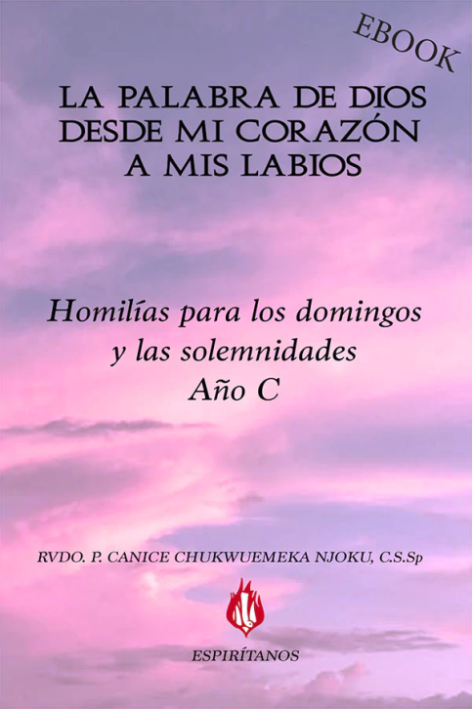
https://ppeditoresebooks.com/collections/venta-en-papel/products/homilies-c-god-s-word-from-my-heart-to-my-lips

The short story is that Christ has risen in fulfillment of his promise: “I will rise on the third day.” The battle is over. There is no controversy because Jesus is Lord! Today, we celebrate the triumph of good over evil, of light over darkness, and peace over chaos. We celebrate hope, patience, and the fulfillment of God’s Promise to his people. We also celebrate the uniqueness of our religion, the resurrection of our Lord. Through his resurrection, Jesus affirms that he is the Lord of the living and the dead.

We must ask ourselves this Easter Sunday: Did I resurrect with Christ this Easter? Today’s gospel tells us that Jesus left the linen cloths in the grave. In order words, he did not cling to any “worldly” thing or allowed them to pull him down. If we must rise with Christ, we must equally be ready to detach ourselves from unnecessary items that pull us down spiritually. Through our Lenten observances, we died with Christ. So let us rise with him through the power of the Holy Spirit.

Like Paul, today our song should be that of thanksgiving to God: “We bless God the Father of Our Lord Jesus Christ who in his great mercy has given us a new birth by raising Jesus Christ from the dead”. This is because Christ’s death was our death, and his resurrection is ours too. Therefore, his joy, glory, and triumph are equally ours.

https://ppeditoresebooks.com/products/homilies-c-god-s-word-from-my-heart-to-my-lips-ebook?_pos=3&_sid=de180b38d&_ss=r

As Christ’s disciples, our testimony from today shall be: “I saw Christ’s glory as he rose. Christ, my hope has risen! Like the apostles, our duty is to spread the good news of the Lord’s resurrection to the entire world. Like Peter in today’s first reading, we must say to all people: “Now we are those witnesses. We eat and drink with Him after his resurrection.”

Having been raised with Christ, we must act like the living and not the dead. We must seek the things of light, things that are noble, and things that glorify God. We must seek heavenly things by living like citizens of heaven rather than “earthbound spirits.” This is what Paul calls us to do today when he says: “Since you have been brought back to true life with Christ, you must look for the things that are in heaven, where Christ is.”

One-Time
Monthly
Yearly

Please make a donation to sustain this blog

Make a monthly donation

Make a yearly donation

Choose an amount

$5.00
$15.00
$100.00
$5.00
$15.00
$100.00
$5.00
$15.00
$100.00

Or enter a custom amount

$

Your contribution is appreciated.

Your contribution is appreciated.

Your contribution is appreciated.

DonateDonate monthlyDonate yearly

In order words, we must live the type of life worthy of one who has risen and reigns with Christ. Let us, therefore, sing with the Psalmist on this glorious day of Easter: “The Lord made this day; we rejoice and are glad.” Alleluia!

Peace be with you all!

Maranatha!

Homilía del Domingo de Pascua, Año C

Cristo ha resucitado !Aleluya!
Lecturas: 1ra: Hch 10: 34. 37-43; Sal: 117, 1-2. 16-23; 2da: Col 3:1-4; Ev: Jn 20, 1-9

Esta breve reflexión fue escrita por el Padre Canice Chukwuemeka Njoku, C.S.Sp., DMin., es un sacerdote católico y miembro de la Congregación del Espíritu Santo (Espirítanos). Es un misionero en Puerto Rico. Es el Párroco de la Parroquia la Resurrección del Señor, Canóvanas y el Superior Mayor la Congregación del Espíritu Santo (Espirítanos), Circunscripción de Puerto Rico y Republica Dominicana. Fue el Canciller de la Diócesis de Fajardo Humacao, Puerto Rico. El Padre Canice es miembro de la academia de homilética (The Academy of Homiletics). Para más detalles y comentarios se puede contactarlo al: canice_c_njoku@yahoo.com, canicechukwuemeka@gmail.com.

(Donar @ATH Móvil: Canice Njoku – 7873146309)

(https://orcid.org/0000-0002-8452-8392

¡Cristo el Señor ha resucitado! ¡Aleluya! Los cristianos se apresuran a darle homenaje ¡Aleluya! Hace un par de semanas que iniciamos lo que parecía, un viaje infinito y sin esperanza. Hoy hemos llegado al final de ese viaje. Hoy es el mayor de todos los domingos en el calendario cristiano debido a la novedad de la vida que se aporta. Hoy una nueva época ha comenzado totalmente. Esto es porque Jesús histórico, que sufrió, fue crucificado, murió y fue sepultado ha sido glorificado ahora.

https://ppeditoresebooks.com/products/homilias-c-palabra-de-dios?

El cuento corto es que Cristo ha resucitado en cumplimiento de su promesa: “Yo resucitaré en el tercer día.” La batalla ha terminado. No hay controversia porque Jesús es el Señor. Hoy celebramos el triunfo del bien sobre el mal, de la luz sobre las tinieblas, y de la paz sobre el caos. Celebramos la esperanza, la paciencia y el cumplimiento de la promesa de Dios a su pueblo. También celebramos la singularidad de nuestra religión, que es la resurrección de nuestro Señor. A través de su resurrección, Jesús afirma que Él es el Señor de los vivos y de los muertos.

Una pregunta que debemos preguntarnos este domingo de Pascua es: ¿Yo resucité con Cristo esta Pascua? El evangelio de hoy nos dice que Jesús dejó los lienzos en la tumba. En otras palabras, Cristo no permitió que cualquier cosa material le impidiera levantarse. Si debemos estar a la altura de Cristo, de la misma forma debemos estar dispuestos a desprendernos de las cosas innecesarias que nos tiran hacia abajo espiritualmente. A través de nuestra observancia cuaresmal hemos muerto con Cristo. Así que hemos resucitado con Él a través del poder del Espíritu Santo.

Como san Pablo, hoy nuestra canción debe ser dar gracias a Dios: “Te bendecimos Dios, Padre de nuestro Señor Jesucristo, que en su gran misericordia nos ha dado un nuevo nacimiento…por haber levantado a Jesús Cristo de los muertos”. Esto es porque, la muerte de Cristo fue nuestra muerte y su resurrección es también nuestra resurrección. Por lo tanto, su triunfo, su alegría y su gloria son igualmente nuestro.

https://ppeditoresebooks.com/products/homilias-c-palabra-de-dios-ebook?_pos=8&_sid=1ef404b62&_ss=r

Como discípulos de Cristo, nuestro testimonio a partir de hoy será: “He visto de la gloria de Cristo…Cristo mi esperanza ha resucitado…” Como los apóstoles, nuestro deber es para difundir la buena nueva de la resurrección del Señor a todo el mundo. Al igual que Pedro en la primera lectura de hoy, debemos decir a todas las personas: “Ahora somos los testigos…que comimos y bebimos con Él después de su resurrección…”

Habiendo sido resucitados con Cristo, debemos actuar como los vivos y no como los muertos. Debemos buscar las cosas de la luz, las cosas que son nobles y cosas que glorifican a Dios. Debemos buscar las cosas celestiales para vivir como ciudadanos del cielo en lugar de “enlazar el espíritu en la tierra.” Esto es lo que Pablo nos exhorta a hacer hoy cuando dice: “Ya que se han puesto de nuevo a la vida con Cristo, deben buscar las cosas que están en el cielo, donde está Cristo”.

One-Time
Monthly
Yearly

Por favor haga una donación para mantener este blog

Make a monthly donation

Make a yearly donation

Choose an amount

$5.00
$15.00
$100.00
$5.00
$15.00
$100.00
$5.00
$15.00
$100.00

Or enter a custom amount

$

Your contribution is appreciated.

Your contribution is appreciated.

Your contribution is appreciated.

DonateDonate monthlyDonate yearly

En otras palabras, debemos vivir el tipo de vida que es digno de una persona que ha resucitado y vive con Cristo. Por lo tanto, debemos cantar con el salmista en este glorioso día de Pascua: “Este es el día que hizo el Señor; nos regocijamos y alegramos.” ¡Aleluya!

¡La paz sea con ustedes

¡Maranatha¡

Homily For Easter Vigil, Year C

Do Not Be Afraid, Christ is Risen! Alleluia, Alleluia

Readings: 1st: Ex 14: 15. 15. 15,1; Ps 117; 2nd: Rom 6, 3-11: Gos: Lc 24:1-12

This brief reflection was written by Fr. Njoku Canice Chukwuemeka, C.S.Sp., DMin. He is a Catholic Priest and a member of the Congregation of the Holy Spirit (Spiritans). He is a missionary in Puerto Rico. He is the Parish Priest of Parroquia la Resurrección del Senor, Canóvanas, and the Major Superior of the Congregation of the Holy Spirit (Spiritans), Circumscription of Puerto Rico and the Dominican Republic. Fr. Canice is a member of the Academy of Homiletics. For more details and comments contact him atcanice_c_njoku@yahoo.com, canicechukwuemeka@gmail.com.

(Donate @ATH Móvil: Canice Njoku-7873146309)

(https://orcid.org/0000-0002-8452-8392)

At times, we usually associate nights with evil. However, we forget that God created everything good (Gen 1, 31). This night is the most important and jubilant night for all of us. It is unique among all other nights because it is a night of victory, liberation, and healing. It is the climax of the history of our salvation. It is the night of Easter. That night we have all been waiting for.

https://ppeditoresebooks.com/collections/venta-en-papel/products/homilies-c-god-s-word-from-my-heart-to-my-lips

The simplest way to summarize the event of this night is by reflecting deeply on the words of the Exultet that we heard this night. “…This is the night when the pillar of fire destroyed the darkness of sin. This is the night when Christians everywhere are washed clean of sin, freed from all defilement, are restored to grace, and, grow together in holiness. This is the night when Jesus Christ broke the chains of death and rose triumphant from the grave…”

Just as Moses led Israel out of Egypt into liberation after Passover in the third reading of this night, so through his resurrection, Christ inaugurates a new people of God who walk towards liberation. The old people were Israel. Both people had their Pascha. There was a Jewish Pascha and this night is the Christian Pascha.

In the first Pascha, the people were liberated from Egypt’s oppression and were placed on their way to the promised land. In our case, we the new people of God, have been liberated from darkness caused by sin. So, guided by the risen Christ, we have started living and walking in the light.

In tonight’s liturgy, there is an impressionable symbolism. That is the ritual of the Paschal Candle. The church remains in the dark. The paschal candle is lighted while the priest or Deacon acclaims: “Light of Christ!” it is easy to understand. Humanity was in darkness and confusion. Christ has made himself light that we may be able to see and walk.

The Church, we are the new people of God. Through his resurrection, Christ achieved the new Pascha. Therefore, the central message of this paschal night is liberation. Let us leave oppression behind and walk towards freedom. With all the joy of one who has left the prison walls or the hospital bed, let us begin to walk in order to build a new life, a new family, a new community, and a new nation.

https://ppeditoresebooks.com/products/homilies-c-god-s-word-from-my-heart-to-my-lips-ebook?_pos=3&_sid=de180b38d&_ss=r

As Paul tells us in the epistle of this night, we died with Christ, now we have also resurrected with him. This night through the renewal of our baptismal vows and promises, God in his mercy has called us to new life. So, our life is now the life of Christ. So, let us walk with him and live with him.

As the angels said to the women in the gospel, so he is saying to us this night: There is no need to be afraid or worry…He has risen from the dead, as he said he would do.” Therefore, this is a night made by the Lord. It is a night of a new life and a new hope.

One-Time
Monthly
Yearly

Please make a donation to sustain this blog

Make a monthly donation

Make a yearly donation

Choose an amount

$5.00
$15.00
$100.00
$5.00
$15.00
$100.00
$5.00
$15.00
$100.00

Or enter a custom amount

$

Your contribution is appreciated.

Your contribution is appreciated.

Your contribution is appreciated.

DonateDonate monthlyDonate yearly

The resurrected church of the Lord is alive because Christ our Lord has been resurrected. In the Holy Eucharist and in the union of believers the risen Christ is our strength and life. “So, let us give thanks to the Lord, for his love for his people endures forever.” Alleluia, Alleluia

Peace be with you all!

Maranatha!

Homilía para la Vigilia Pascual, Año C

¡No Teman, Cristo Resucitó! Aleluya, Aleluya.

Lecturas: 1ra: Ex 14, 15. 15,1; Sal 117; 2da Ro 6, 3-11; Ev: Lc 24:1-12

Esta breve reflexión fue escrita por el Padre Canice Chukwuemeka Njoku, C.S.Sp., DMin., es un sacerdote católico y miembro de la Congregación del Espíritu Santo (Espirítanos). Es un misionero en Puerto Rico. Es el Párroco de la Parroquia la Resurrección del Señor, Canóvanas y el Superior Mayor la Congregación del Espíritu Santo (Espirítanos), Circunscripción de Puerto Rico y Republica Dominicana. Fue el Canciller de la Diócesis de Fajardo Humacao, Puerto Rico. El Padre Canice es miembro de la academia de homilética (The Academy of Homiletics). Para más detalles y comentarios se puede contactarlo al: canice_c_njoku@yahoo.com, canicechukwuemeka@gmail.com.

(Donar @ATH Móvil: Canice Njoku – 7873146309)

(https://orcid.org/0000-0002-8452-8392

A veces, asociamos las noches con el mal. Sin embargo, nos olvidamos que Dios creó todo bueno” (Ge 1, 31). Esta noche es la más importante y jubilosa noche para todos nosotros. Es única entre las otras noches, porque es una noche de victoria, la liberación y la curación. Es el momento culminante de la historia de nuestra salvación. Es la noche de Pascua. Esa noche que todos hemos esperado.

https://ppeditoresebooks.com/products/homilias-c-palabra-de-dios?

La forma más sencilla de resumir el evento de esta noche es reflexionar profundamente sobre estas palabras del Pregón que hemos oído esta noche. “Esta es la noche cuando la columna de fuego destruyó la oscuridad del pecado. Esta es la noche cuando los cristianos en todas partes se limpian de sus pecados, libres de toda impureza, son restaurados a la gracia y, crecen en santidad. Esta es la noche cuando Jesucristo rompe las cadenas de la muerte y se levanta triunfante de la tumba.”

Igual que Moisés condujeron a Israel fuera de Egipto en liberación después de la Pascua en la tercera lectura de esta noche, así que, a través de su resurrección, Cristo inaugura un nuevo pueblo de Dios que camina hacia la liberación. El antiguo pueblo fue Israel. Ambos pueblos tuvieron su Pascua. Había una Pascua judía y esta noche es la Pascua cristiana.

En la primera Pascua, las personas fueron liberadas de la opresión de Egipto y fueron colocadas en su camino a la tierra prometida. En nuestro caso, el nuevo pueblo de Dios, nos hemos estado liberado de la oscuridad causada por el pecado. Así, guiados por Cristo resucitado, hemos empezado a vivir y caminar en la luz.

En la liturgia de esta noche, hay un simbolismo impresionante. Es el rito del cirio pascual. La iglesia permanece a oscuras. Se enciende el cirio pascual mientras el sacerdote o diácono aclama: “Luz de Cristo!” Es fácil entender. La humanidad estaba en tinieblas y confusión. Cristo se ha hecho luz para que podemos ver y caminar. Cristo se instala en medio de nosotros como una luz para guiarnos en el camino de nuestra liberación humana.

La iglesia, somos el nuevo pueblo de Dios. A través de su resurrección, Cristo consigue la nueva Pascua. Por lo tanto, el mensaje central de esta noche Pascual es liberación. Dejemos la opresión atrás y caminar hacia la libertad. Con toda la alegría de quien ha dejado las paredes de la prisión o la cama del hospital, empecemos a caminar con el fin de construir una nueva vida, una nueva familia, una comunidad nueva y una nueva nación.

https://ppeditoresebooks.com/products/homilias-c-palabra-de-dios-ebook?_pos=8&_sid=1ef404b62&_ss=r

Como Pablo nos dice en la epístola de esta noche, hemos muerto con Cristo, ahora nosotros también hemos resucitado con él. Esta noche a través de la renovación de nuestros votos bautismales y promesas, Dios en su misericordia nos ha llamado a una nueva vida. Así, nuestra vida es ahora la vida de Cristo. Por lo tanto, caminamos con él y vivemos con él.

Finalmente, también como el Ángel dijo a las mujeres en el Evangelio, así que él nos está diciendo esta noche: “No hay que tener miedo o preocuparse… Él ha resucitado de entre los muertos, como él dijo que iba a hacer. ” Por lo tanto, se trata de una noche hecha por el Señor. Es una noche de una nueva vida y esperanza.

One-Time
Monthly
Yearly

Por favor haga una donación para mantener este blog

Make a monthly donation

Make a yearly donation

Choose an amount

$5.00
$15.00
$100.00
$5.00
$15.00
$100.00
$5.00
$15.00
$100.00

Or enter a custom amount

$

Your contribution is appreciated.

Your contribution is appreciated.

Your contribution is appreciated.

DonateDonate monthlyDonate yearly

La iglesia del Señor está resucitada y viva, porque Cristo nuestro Señor ha resucitado. En la Sagrada Eucaristía y en esta unión de creyentes Cristo resucitado es nuestra fuerza y vida. “Así que, demos gracias al Señor, porque es bueno. Su amor dura para siempre y su misericordia es eterna.” Aleluya, Aleluya

¡La paz sea con ustedes!

¡Maranatha!

Homily for Good Friday, Year C

What is Good about Good Friday?

Readings: 1st: Is 52, 13- 53, 12; Ps 30; 2nd: He 4, 4-16, 5-9: Gos: Jn 18, 1-19, 42

This brief reflection was written by Fr. Njoku Canice Chukwuemeka, C.S.Sp., DMin. He is a Catholic Priest and a member of the Congregation of the Holy Spirit (Spiritans). He is a missionary in Puerto Rico. He is the Parish Priest of Parroquia la Resurrección del Senor, Canóvanas, and the Major Superior of the Congregation of the Holy Spirit (Spiritans), Circumscription of Puerto Rico and the Dominican Republic. Fr. Canice is a member of the Academy of Homiletics. For more details and comments contact him atcanice_c_njoku@yahoo.com, canicechukwuemeka@gmail.com.

(Donate @ATH Móvil: Canice Njoku-7873146309)

(https://orcid.org/0000-0002-8452-8392)

Today the church celebrates Good Friday. Certain expressions present lots of difficulties at times, especially when they sound ironic. As I reflect on today’s celebration, I remembered one man. If you encounter this man in the morning and greet him, “Good morning, sir!” The most probable answer you might receive from him is: “What is good about this morning?”

https://ppeditoresebooks.com/collections/venta-en-papel/products/homilies-c-god-s-word-from-my-heart-to-my-lips

Like this man, most of us have asked: “What is good about this Friday? What is good about a day that someone was innocently condemned to death and crucified? A day we are not to celebrate. A day when we are to abstain from all the goods of life. A day when God was crucified, and a day when hopes were dashed.

What is good about a day that everyone expects to leave the church mournful and silent? This question also reminds me of an inscription I once saw on the body of a rickety vehicle which reads: “Do not mind what is written on me, just enter, and you will be fine!”  This brings us at least a few inches close to the answer to this question.

Good Friday is the Friday within Holy Week. The first shot at the question is that without this day, perhaps, there would have been no salvation for humanity. This is because had Christ not died, there would not have been the washing away of our sins (John 16, 3; Rom 5, 8). So, it is good because it is a blessing in disguise.

On this day, Christ puts the devil to shame and defeats the power of death. Hence, Paul asks, “Death where is your sting, death where is your power?” (I Cor 15, 55). According to the Catholic Catechism, “Justification has been merited for us by the Passion of Christ who offered himself on the cross as a living victim, holy and pleasing to God, and whose blood has become the instrument of atonement for the sins of all men” (CCC 1992).

https://ppeditoresebooks.com/products/homilies-c-god-s-word-from-my-heart-to-my-lips-ebook?_pos=3&_sid=de180b38d&_ss=r

Secondly, on this day, the barriers preventing all the saints of the church from entering the holy of holies were torn apart (Mt 27, 51). Thirdly, on this day, Christ institutes a crucial phase in the journey of our salvation. Indeed, some scholars consider this day more important than Easter Sunday. They hold this view because they feel that the Christ event of Easter Sunday would not have been possible without this day.

The term “Good Friday” and the activities surrounding it could be likened to one of the lines in the Exultet song during the Easter Vigil Mass, which describes the fall of Adam and Eve as: “Oh, what a happy fall.” So, just as the fall of Adam and Eve helped fulfill the salvific plan of God, the sacrifice and death of Jesus Christ on Good Friday helped fulfill the salvific plan of God.

One-Time
Monthly
Yearly

Please make a donation to sustain this blog

Make a monthly donation

Make a yearly donation

Choose an amount

$5.00
$15.00
$100.00
$5.00
$15.00
$100.00
$5.00
$15.00
$100.00

Or enter a custom amount

$

Your contribution is appreciated.

Your contribution is appreciated.

Your contribution is appreciated.

DonateDonate monthlyDonate yearly

It is a day that the “drama script” written by God was “directed and acted out” by Christ his Son. On this day, by human reckoning, there appeared to be the absence of God. However, God was fully present and somewhere smiling because his son is accomplishing his mission for the salvation of humanity. Indeed, it is a Good Friday!

Peace be with you!

Maranatha!

Homilía del Viernes Santo, Año C

¿Qué es Bueno sobre el Viernes Santo?

Lectura: 1ra: Is 52, 13- 53, 12; Sal 30; 2ra: He 4, 4-16, 5-9; Ev: Jn 18, 1-19, 42

Esta breve reflexión fue escrita por el Padre Canice Chukwuemeka Njoku, C.S.Sp., DMin., es un sacerdote católico y miembro de la Congregación del Espíritu Santo (Espirítanos). Es un misionero en Puerto Rico. Es el Párroco de la Parroquia la Resurrección del Señor, Canóvanas y el Superior Mayor la Congregación del Espíritu Santo (Espirítanos), Circunscripción de Puerto Rico y Republica Dominicana. Fue el Canciller de la Diócesis de Fajardo Humacao, Puerto Rico. El Padre Canice es miembro de la academia de homilética (The Academy of Homiletics). Para más detalles y comentarios se puede contactarlo al: canice_c_njoku@yahoo.com, canicechukwuemeka@gmail.com.

(Donar @ATH Móvil: Canice Njoku – 7873146309)

(https://orcid.org/0000-0002-8452-8392)

Hoy la iglesia celebra el Viernes Santo. Hay ciertas expresiones que presentan muchas dificultades a veces. Esto es especialmente cuando parecen irónicas. Al reflexionar sobre la celebración de este día me acordé de un hombre. Si uno se encuentra con este hombre por la mañana y lo saluda, “¡buenos días, señor!”, lo más probable su respuesta sería: “¿Qué bueno tiene esta mañana?

https://ppeditoresebooks.com/products/homilias-c-palabra-de-dios?

Como este hombre, la mayoría de nosotros ha hecho esta pregunta: “¿Qué bueno hay en este viernes? ¿Qué es bueno en un día que alguien inocente fue condenado a muerte y crucificado? Un día que no debemos celebrar; un día que se nos pide que se abstengan de “todas las cosas buenas de la vida.” 

¿Que es bueno sobre un día cuando Dios fue crucificado; un día cuando se hicieron añicos las esperanzas de aquellos que admiraban a Jesús como el Mesías? Esta pregunta me recuerda también una inscripción que vi una vez en un vehículo destartalado que decía: “¡No importa lo que está escrito de mí, entre y estarás bien!” Esto nos lleva al menos unos pocos centímetros cerca de la respuesta a esta pregunta.

El Viernes Santo es el viernes dentro de la Semana Santa. El primer plano de la cuestión es que, si este día no hubiera ocurrido, no habría salvación para la humanidad. Esto es porque, si Cristo no hubiera muerto, no habría habido lavado de nuestros pecados (Juan 16, 3; Ro 5, 8). Así que, este día es bueno y santo porque es una bendición disfrazada. Es en realidad en este día que el diablo se puso en vergüenza y el poder de la muerte fue derrotado.

Por lo tanto, Pablo dijo: “¿Muerte; dónde está tu aguijón? ¿Muerte dónde está tu poder?” (I Cor 15, 55). Según el Catecismo Católico: “La justificación ha sido merecida para nosotros por la pasión de Cristo que se ofreció en la Cruz como una víctima viva, Santa y agradable a Dios, y cuya sangre se ha convertido en el instrumento de expiación por los pecados de todos los hombres” (CCC 1992). En segundo lugar, es en este día que las barreras que impiden a todos los Santos de la iglesia entrar en el lugar Santísimo, son desgarradas (Mt 27, 51).

https://ppeditoresebooks.com/products/homilias-c-palabra-de-dios-ebook?_pos=8&_sid=1ef404b62&_ss=r

En tercer lugar, es en este día que en realidad se ha instituido el camino de la salvación. De hecho, algunas escolásticas bíblicas consideran este día más importante que el domingo de Pascua, porque se sienten que, sin este día, el domingo de Pascua no habría sido posible.

El término “Viernes Santo” y las actividades que lo rodean podrían compararse a una de las líneas en el cantico Exultet (o pregón pascual) que cantamos durante la misa de la vigilia de Pascua que describe la caída de Adán y Eva como: una “feliz caída”.  

Así que, como la caída de Adán y Eva ayudó a cumplir el plan salvífico de Dios, así también hace el sacrificio y muerte de Jesucristo el viernes santo. Se ayuda en el cumplimiento del plan salvífico de Dios. Es un día cuando el “drama ” escrito por Dios fue totalmente “dirigido y actuado” por Cristo, su hijo.

One-Time
Monthly
Yearly

Por favor haga una donación para mantener este blog

Make a monthly donation

Make a yearly donation

Choose an amount

$5.00
$15.00
$100.00
$5.00
$15.00
$100.00
$5.00
$15.00
$100.00

Or enter a custom amount

$

Your contribution is appreciated.

Your contribution is appreciated.

Your contribution is appreciated.

DonateDonate monthlyDonate yearly

Este día parecía ser la ausencia de Dios según cálculos humanos. Sin embargo, Dios está totalmente presente y radiante en algún lugar lleno de sonrisas porque su hijo logra su misión por la salvación de la humanidad. ¡De hecho, es un buen y santo viernes!

¡La paz sea con ustedes!

Maranatha!

Homilía del Jueves Santo (Cena del Señor), Año C

Celebrando a Cristo en la Santa Eucaristía

Lectura: 1ra: Ex 12:1-8; Sal 115; 2da: 1 Cor 11:23-26; Ev: Jn 13:1-15

Esta breve reflexión fue escrita por el Padre Canice Chukwuemeka Njoku, C.S.Sp., DMin., es un sacerdote católico y miembro de la Congregación del Espíritu Santo (Espirítanos). Es un misionero en Puerto Rico. Es el Párroco de la Parroquia la Resurrección del Señor, Canóvanas y el Superior Mayor la Congregación del Espíritu Santo (Espirítanos), Circunscripción de Puerto Rico y Republica Dominicana. Fue el Canciller de la Diócesis de Fajardo Humacao, Puerto Rico. El Padre Canice es miembro de la academia de homilética (The Academy of Homiletics). Para más detalles y comentarios se puede contactarlo al: canice_c_njoku@yahoo.com, canicechukwuemeka@gmail.com.

(Donar @ATH Móvil: Canice Njoku)

(https://orcid.org/0000-0002-8452-8392)

Jueves Santo es el día de la institución de la Santa Eucaristía y nuestro cumpleaños tanto como sacerdotes ministeriales y sacramentales. Por lo tanto, me gustaría empezar esta breve reflexión felicitando a todos nosotros, los fieles. Es un día de volvernos a adherir a la misión de Cristo. Hoy Cristo demostró su humildad lavando los pies de sus discípulos. Así que están invitados a seguir el ejemplo de la humildad de Cristo.

https://ppeditoresebooks.com/products/homilias-c-palabra-de-dios-ebook?_pos=8&_sid=1ef404b62&_ss=r

Hoy la Iglesia celebra el maravilloso regalo de Dios para ella y todo el mundo: la institución de la Eucaristía. La Eucaristía es el alimento que Dios ha ofrecido generosa y providencialmente hizo disponible a nosotros con el fin de alimentarnos en nuestro camino espiritual. Según el Papa Francisco: “La Eucaristía no es sólo una semana de celebrar nuestra fe, sino que debe afectar radicalmente nuestra relación con los demás, especialmente con los más necesitados”.

La Eucaristía nos da la gracia de sentirnos perdonados y estar dispuestos a perdonar a los demás. No asistimos a misa porque somos dignos o porque somos mejor que otros. Más bien, es porque sabemos que siempre necesitamos el amor, la gracia y la misericordia de Dios. Estos vienen a nosotros a través del cuerpo y la sangre de Cristo. La Eucaristía tiene efecto en la vida de nuestras comunidades cristianas. Por lo tanto, la iglesia recibe su identidad y misión de la Eucaristía.

La institución de la Eucaristía por Cristo el Jueves Santo igualmente marca la institución del sacerdocio ministerial. Por lo tanto, el sacerdocio es el don y misterio de Dios. Esto significa que es Dios, que llama y decide a quién llamar. La naturaleza mística del sacerdocio se deriva en primer lugar, en la vida de Melquisedec y, en segundo lugar, de Cristo.

Esta naturaleza mística también alcanza su plenitud en la Cena del Señor el Jueves Santo, y en cada Misa. Es decir, la consagración del pan y del vino, se transforma en el verdadero cuerpo y sangre de Cristo. Por lo tanto, el sacerdote es el defensor de la verdad. Él está con los ángeles para dar gloria a Dios. Él hace sacrificios a la altura de Dios. Se comparte en el sacerdocio de Cristo, y restaura a la imagen de Dios.

Hoy debemos imitar la humildad de Jesús. En el Evangelio de hoy, eligió lavar los pies de sus discípulos. Él también se alimenta no sólo de alimentos sino también, con alimento espiritual. Esto es con el fin de mostrarnos y enseñarnos que debemos estar preparados para servir a nuestros hermanos y hermanas. En vez de luchar para ser el líder y el jefe todo el tiempo, como Jesús, aspiremos a ser el siervo de los demás.

One-Time
Monthly
Yearly

Make a one-time donation

Make a monthly donation

Make a yearly donation

Choose an amount

$5.00
$15.00
$100.00
$5.00
$15.00
$100.00
$5.00
$15.00
$100.00

Or enter a custom amount

$

Your contribution is appreciated.

Your contribution is appreciated.

Your contribution is appreciated.

DonateDonate monthlyDonate yearly

La alegría de trabajar en la viña del Señor proviene principalmente del servicio a los demás, en lugar de ser servido. Sin embargo, esto sólo es posible a través de un corazón humilde preparado para el servicio. Una vez más, felicitaciones a todos los fieles de Dios, que aman a Jesús en la Sagrada Eucaristía.

¡La paz sea con ustedes!

¡Maranatha!

Homily For Holy Thursday (The Lord’s Supper), Year C

Celebrating Christ In The Holy Eucharist

Readings: 1st: Ex 12, 1-8; Ps 115; 2nd: 1 Cor, 11, 23-26: Gos: Jn 13, 1-15

This brief reflection was written by Fr. Njoku Canice Chukwuemeka, C.S.Sp., DMin. He is a Catholic Priest and a member of the Congregation of the Holy Spirit (Spiritans). He is a missionary in Puerto Rico. He is the Parish Priest of Parroquia la Resurrección del Senor, Canóvanas, and the Major Superior of the Congregation of the Holy Spirit (Spiritans), Circumscription of Puerto Rico and the Dominican Republic. Fr. Canice is a member of the Academy of Homiletics. For more details and comments contact him atcanice_c_njoku@yahoo.com, canicechukwuemeka@gmail.com.

(Donate @ATH Móvil: Canice Njoku)

(https://orcid.org/0000-0002-8452-8392)

Holy Thursday is both the day of the institution of the Holy Eucharist and our birthday as both sacramental and ministerial Priests. So, I would like to begin this brief reflection by congratulating all of us, the faithful. It is a day of rededicating ourselves to Christ’s mission. Today Christ demonstrated his humility by washing the feet of his disciples. So are invited to follow the example of Christ’s humility.

https://ppeditoresebooks.com/products/homilies-c-god-s-word-from-my-heart-to-my-lips-ebook?_pos=3&_sid=de180b38d&_ss=r

Today, the Church celebrates God’s beautiful gift to her and the entire world – the institution of the Holy Eucharist. The Eucharist is the food that God has generously and providentially made available to us to nourish us on our spiritual journey. According to Pope Francis, “The Eucharist is not just a weekly way of celebrating our faith, but should radically affect our relationship with others, especially with those most in need.”

The Eucharist gives us the grace to feel forgiven and be ready to forgive others. We go to Mass not because we are worthy or want to appear better than others. Instead, it is because we know that we are always in need of God’s love, grace, and mercy. These come to us through the body and blood of Christ. The Eucharist affects the life of our Christian communities. So the church receives her mission and identity from the Eucharist.

The institution of the Holy Eucharist by Christ on Holy Thursday equally marks the institution of the ministerial priesthood. So, the priesthood is both God’s gift and a mystery. This means that it is God who freely calls and decides who to call. The mystical nature of the priesthood derives first from the lives of Melchizedek and second from Christ.

This mystical nature also reaches its fullness at the Lord’s Supper on Holy Thursday and every Mass. That is the consecration of bread and wine, which transforms into the real body and blood of Christ. Therefore, the priest is the defender of the truth.  He stands with the angels to give glory to God. He causes sacrifices to rise to God. He shares in Christ’s priesthood refashions creation and restores it in God’s image.

Finally, today we must emulate the Humility of Jesus. In today’s Gospel, he chose to wash the feet of his disciples. He also feeds them not only with physical food but also with spiritual food. This is to show and teach us that we must be ready to serve our brothers and sisters. Instead of struggling to be the leader and the chief at all times, let us, like Jesus, aspire to be the servant of others.

One-Time
Monthly
Yearly

Make a one-time donation

Make a monthly donation

Make a yearly donation

Choose an amount

$5.00
$15.00
$100.00
$5.00
$15.00
$100.00
$5.00
$15.00
$100.00

Or enter a custom amount

$

Your contribution is appreciated.

Your contribution is appreciated.

Your contribution is appreciated.

DonateDonate monthlyDonate yearly

The joy of working in the vineyard of the Lord comes from serving others more than from being served by others. However, this is only possible through a humble heart prepared for service. Once again, congratulations to all God’s faithful servants who love Jesus in the Holy Eucharist.

Peace be with you all!

Maranatha!

Homily For Palm/Passion Sunday, Year C

Humility in Suffering and Service

Readings: 1st: Is 50, 4-7; Ps 21; 2nd:  Phil 2, 6-11; Gos: Lc 8, 7. 14-23, 56

This brief reflection was written by Fr. Njoku Canice Chukwuemeka, C.S.Sp., DMin. He is a Catholic Priest and a member of the Congregation of the Holy Spirit (Spiritans). He is a missionary in Puerto Rico. He is the Parish Priest of Parroquia la Resurrección del Senor, Canóvanas, and the Major Superior of the Congregation of the Holy Spirit (Spiritans), Circumscription of Puerto Rico and the Dominican Republic. Fr. Canice is a member of the Academy of Homiletics. For more details and comments contact him atcanice_c_njoku@yahoo.com, canicechukwuemeka@gmail.com.

(Donate @ATH Móvil: Canice Njoku)

(https://orcid.org/0000-0002-8452-8392)

Today the Church celebrates the entry of Christ into Jerusalem to accomplish his paschal mystery. This Sunday is called Palm or Passion Sunday. While Palm Sunday signifies royalty and triumph, Passion Sunday signifies both suffering and love. By freely going to Jerusalem, Christ demonstrates his humility and willingness to save us.

https://ppeditoresebooks.com/products/homilies-c-god-s-word-from-my-heart-to-my-lips-ebook?_pos=3&_sid=de180b38d&_ss=r

On this day, the Christian community begins to re-enact a crucial phase of the Paschal Mystery of Jesus Christ. We re-enact the triumphant entry of Christ into Jerusalem as well as his passion. Hence today’s celebration reminds us of the dual nature of our Christian lives and journey. We are celebrated today and persecuted tomorrow. Today we are loved, while the next day, we are hated. Today we are praised and castigated the next day.

A vital lesson we must learn from all these is that, as life unfolds, it presents us with its different dimensions. The same people who sing our praise in good times might be the same people to criticize us in the future. Today, the same people applauding Christ by singing: “Hosanna to the son of David” might equally be the same people to shout: “Crucify him!”

This is the mystery and dialectics of life. It is a mystery because, at times, understanding it is beyond our imagination. It is dialectical because these two aspects of life help us know who we are and what we mean to people.

A look at today’s readings portrays the humility with which Christ approached these situations. Our first reading is from one of the “ebed Yahweh” (suffering servant of Yahweh’s) songs. This song prefigures Christ as the suffering servant of God. Christ humbly endured his suffering without any resistance.

Also, in Paul’s letter to the Philippians, we see humility at its apogee. This is the kenosis or self-emptying of Christ: “Though he was in the form of man, He did not regard equality with God.”

Our gospel today is on the Last Supper of Christ with his disciples.  At the Last Supper, Christ humbled himself by serving his disciples and eating at the same table with the one who was to betray him. “…And yet behold the hand of the one who is to betray me is with me on the table.” Despite all these, he taught his disciples to humble themselves just as he humbled himself before Pilate and the chief priests even till death.

In all of these, the lesson for us today is that humility is essential in all life circumstances. This includes both good and bad times. Christ was strong, but he humbly became weak for our salvation. He taught us that true power lies in service. He also taught us that humility is one of the most important virtues we need for our service and mission.

One-Time
Monthly
Yearly

Make a one-time donation

Make a monthly donation

Make a yearly donation

Choose an amount

$5.00
$15.00
$100.00
$5.00
$15.00
$100.00
$5.00
$15.00
$100.00

Or enter a custom amount

$

Your contribution is appreciated.

Your contribution is appreciated.

Your contribution is appreciated.

DonateDonate monthlyDonate yearly

During his triumphant entry, Christ rode on a colt which symbolizes humility. In his suffering, Christ abandoned himself to his enemies without resistance or striking back. Let us, therefore, pray this Sunday that the Almighty God may grant us the humility with which to follow and serve Christ all the days of our life.

Peace be with you!

Maranatha!

Homilía del Domingo de Ramos / Pasión, Año C

Humildad en Sufrimiento y Servicio

Lectura: 1ra: Is 50, 4-7; Sal: 21; 2da: Flp 2, 6-11; Ev: Lc 8, 7. 14-23, 56

Esta breve reflexión fue escrita por el Padre Canice Chukwuemeka Njoku, C.S.Sp., DMin., es un sacerdote católico y miembro de la Congregación del Espíritu Santo (Espirítanos). Es un misionero en Puerto Rico. Es el Párroco de la Parroquia la Resurrección del Señor, Canóvanas y el Superior Mayor la Congregación del Espíritu Santo (Espirítanos), Circunscripción de Puerto Rico y Republica Dominicana. Fue el Canciller de la Diócesis de Fajardo Humacao, Puerto Rico. El Padre Canice es miembro de la academia de homilética (The Academy of Homiletics). Para más detalles y comentarios se puede contactarlo al: canice_c_njoku@yahoo.com, canicechukwuemeka@gmail.com.

(Donar @ATH Móvil: Canice Njoku)

(https://orcid.org/0000-0002-8452-8392)

Hoy la Iglesia celebra la entrada de Cristo en Jerusalén, a fin de lograr su misterio pascual. Este domingo se llama domingo de Ramos o Pasión. Mientras que Domingo de Ramos significa realeza y triunfo, Domingo de Pasión significa dolor y amor. Por ir libremente a Jerusalén, Cristo demuestra su humildad y voluntad de salvarnos.

https://ppeditoresebooks.com/products/homilias-c-palabra-de-dios-ebook?_pos=8&_sid=1ef404b62&_ss=r

En este día la comunidad cristiana comienza a revivir una etapa muy importante del misterio pascual de Jesucristo. Revivimos la entrada triunfal de Cristo en Jerusalén, así como su pasión. Por lo tanto, la celebración de hoy nos recuerda el carácter dual de nuestra vida cristiana y nuestro viaje. Estamos celebrando hoy y perseguido mañana. Hoy somos amados, pero al día siguiente somos odiados. Hoy somos elogiados y criticados al día siguiente.

Una lección muy importante que debemos aprender de todo esto es, cómo se desarrolla la vida que nos presenta sus diferentes dimensiones. La misma gente que canta alabanzas en los buenos momentos podría ser la misma gente que nos critique en el futuro. Hoy en día, las mismas personas que aplauden a Cristo cantando: “Hosanna al hijo de David,” podrían ser igualmente las mismas personas que griten: ” ¡Crucifícalo!”

Este es el misterio y la dialéctica de la vida. Se trata de un misterio, porque a veces entenderlo está más allá de nuestra imaginación. Es dialéctico porque estos dos aspectos de la vida nos ayudan a comprender quien somos realmente, y lo que significamos para la gente.

Un vistazo a las lecturas de hoy refleja la humildad con la que Cristo se acercó a estas situaciones. La primera lectura es tomada de uno de los cánticos “ebed Yahveh” (Siervo de Yahveh). Cristo está prefigurado en este cántico como el siervo sufriente de Yahveh. Cristo humildemente sufrió sin ninguna resistencia.

También, en la carta de san Pablo a los Filipenses, vemos la humildad en su apogeo. Esta es la kénosis o humildad de Cristo: “A pesar de su condición divina, no hizo alarde de su categoría de Dios, al contrario, se despojó de su rango, y tomo la condición de esclavo.”

Nuestro evangelio de hoy es sobre la última cena de Cristo con sus discípulos. En la Última Cena, Cristo se humilló a sí mismo, sirviendo a sus discípulos y comiendo en la misma mesa con el que iba a traicionarlo. “…Pero miren: la mano del que me entrega está con la mía en la mesa.” A pesar de todo esto, enseñó a sus discípulos a ser humildes cuando se humilló a sí mismo ante Pilato y los jefes de los sacerdotes hasta su muerte.

En todas estas, la lección para nosotros hoy es que la humildad es muy importante en todas las circunstancias de la vida. Esto incluye tanto a buenos y malos momentos. Cristo fue fuerte, pero con humildad se debilita por nuestra salvación. Él nos enseñó que el verdadero poder está en el servicio. También nos enseña que la humildad es una de las más importantes virtudes que necesitamos para nuestro servicio y misión.

One-Time
Monthly
Yearly

Make a one-time donation

Make a monthly donation

Make a yearly donation

Choose an amount

$5.00
$15.00
$100.00
$5.00
$15.00
$100.00
$5.00
$15.00
$100.00

Or enter a custom amount

$

Your contribution is appreciated.

Your contribution is appreciated.

Your contribution is appreciated.

DonateDonate monthlyDonate yearly

Durante su entrada triunfal Cristo montó en un burro que simboliza humildad. En su sufrimiento, Cristo se abandonó a sus enemigos sin resistencia, sin contratacar. Oremos, pues, para que este domingo, el Dios Todopoderoso pueda concedernos la humildad con la cual seguir y servir a Cristo todos los días de nuestra vida.

La paz sea con ustedes

Maranatha