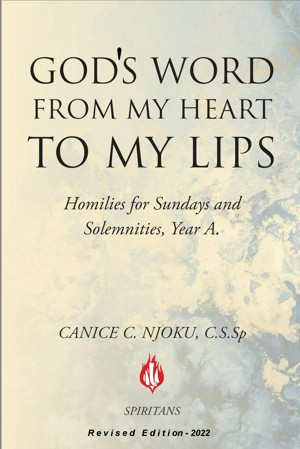
Podcast Episode: God’s Word Is A Viable Seed In Our Hearts(15th Sunday of Ordinary Time, Year A)

Pip: What does it take to make a seed grow? That question is older than farming, and it turns out the fifteenth Sunday of Ordinary Time has a very specific answer — one worth sitting with.

Mara: Today we’re looking at homilies on the Parable of the Sower, drawn from the Sunday readings for Year A, courtesy of Fr. Canice Njoku. Let’s start with what the Word of God actually does — and what gets in its way.

Mara: The central claim across these homilies is that the problem is never with the seed itself — it’s always with the receiver. That’s the tension the readings set up, and it’s the question the homilies press directly back onto the listener.

Pip: The Isaiah passage is where that claim gets its grounding. The homily sets it up this way: “As the rain and snow come down from the heavens without watering the earth…so my words do not return to me empty, without fulfilling its mission.”

Mara: That’s not a gentle encouragement — that’s a declaration of inevitability. The Word accomplishes what it sets out to do. If nothing changes in a person, the homily is clear: the seed is not the variable.

Pip: And the Parable of the Sower makes that concrete. The sower scatters seed everywhere — rocky ground, thorns, the path, good soil — without sorting in advance. The homily reads that indiscriminate spreading as a theological statement about universality: God withholds the Word from no one.

Mara: Right — and the homily is explicit that this signals something about salvation itself. God has no favorite, and the good news is meant for all nations. The parable isn’t a sorting mechanism; it’s an invitation that lands differently depending on what the listener brings to it.

Pip: Paul’s line from Romans adds another layer. Creation is waiting for the manifestation of God’s children — meaning what’s inside us is eventually going to show. If the Word is living in you, that’s what gets revealed.

Mara: The Spanish-language homily, “Homilía del Decimoquinto Domingo Tiempo Ordinario, Año A,” covers the same ground for a different audience — same readings, same core argument, extended to the Spanish-speaking community Fr. Canice serves in Puerto Rico and the Dominican Republic.

Pip: So the homily isn’t just saying “listen harder.” It’s saying the Word is meant to become one with you — the way food becomes flesh. Passive reception isn’t the goal.

Mara: The closing line from Paul ties it together: “Faith comes from hearing the message, and the message is heard through the Word of Christ.” Hearing isn’t the end of the process — it’s the beginning.


Pip: A seed that never fails, a receiver who always decides — that’s a framework that holds up well outside a Sunday homily.

Mara: Next time we’ll see what other territory these readings open up. The questions they raise don’t stay inside church walls.

Homilía del Decimoquinto Domingo Tiempo Ordinario, Año A

La Palabra de Dios es una Semilla Viable en Nuestro Corazón

Lectura: 1ra: Is 55:10-11; Sal: 64:10-14; 2da: Rom 8:18-23; Ev: Mt 13:1-25

Esta breve reflexión fue escrita por el Padre Canice Chukwuemeka Njoku, C.S.Sp., DMin., un sacerdote católico y miembro de la Congregación del Espíritu Santo (Espirítanos). Es un misionero en Puerto Rico. Es director del Santuario del Espíritu Santo, Dorado, y el Superior Mayor de la Congregación del Espíritu Santo (Espirítanos), Circunscripción de Puerto Rico y República Dominicana. El padre Canice es miembro de la Academia de Homilética (The Academy of Homiletics). Para más detalles y comentarios , se puede contactarlo al: canice_c_njoku@yahoo.com, canicechukwuemeka@gmail.com.

Encuentra otros libros en: https://www.smashwords.com/books/view/904854

(Donar @ATH Móvil: Canice Njoku – 7873146309)

(https://orcid.org/0000-0002-8452-8392)

Hoy, el decimoquinto domingo del tiempo ordinario, celebramos a Cristo que siembra la semilla de la palabra de Dios en nuestros corazones. A la luz de la profecía de Isaías y la parábola del sembrador de Cristo, la Iglesia nos insta a evaluar nuestra relación con la palabra de Dios. Por lo tanto, debemos preguntarnos hoy: ¿Qué ha logrado, o cambiado la palabra en mi vida?

Disponible Ahora al:

Smashwords: https://www.smashwords.com/books/view/1179509

Amazon: https://www.amazon.com/dp/B094YTH1YX?

En la primera lectura, Isaías compara la palabra de Dios con la lluvia y la nieve que cae sobre la tierra: “Como la lluvia y la nieve que descendía del cielo sin empapar la tierra… así que, mi palabra no volverá a mí vacías, sin cumplir su misión…” Esto es porque la palabra de Dios es activa y viable. Tiene la potencia máxima para rejuvenecer y nutrir nuestra vida. Como una espada de dos filos (Heb 4:12), absuelve y condena a uno. Por lo tanto, de cualquier manera, cumple su misión, porque: “La palabra de Dios es, Sí y Amén” (1 Co 1:20).

En la segunda lectura, Pablo hace una declaración muy importante: “La creación espera con impaciencia la manifestación de los hijos de Dios…” Esta manifestación pretende revelar lo que está dentro de nosotros. Por lo tanto, como vasos llenados de la palabra de Dios, se espera que emitamos buena fragancia cuando finalmente nos manifestamos.

Los que serán revelados son los frutos del Espíritu Santo a través de la palabra de Dios, y la unción que recibimos en Cristo. Esto significa que, como los hijos adoptivos de Dios que llevan su palabra, hay una gran expectativa de nosotros. Por lo tanto, el producto de esta expectativa debe ser positivo. Debe edificar, porque la semilla de la buena nueva en nosotros es viable.

En el Evangelio de hoy, a través la parábola del sembrador, Jesús habló personalmente a cada uno de nosotros. Si examinamos a nosotros mismos sinceramente a la luz de la parábola de hoy, convincentemente encontraremos nuestro lugar en ella. La difusión de las semillas por todas partes sin considerar la naturaleza de la tierra, y donde se caen es una indicación de la voluntad de Dios, a dar a toda la oportunidad de escuchar su palabra. Muestra la universalidad de la salvación, y un signo de que Dios no tiene favorito. Él desea que todas las naciones oyen la buena nueva y arrepientan (hechos 10:34).

Un punto es claro desde la primera lectura y el Evangelio de hoy. Esto es el hecho de que, la palabra de Dios es una semilla viable. En otras palabras, el problema no es con la semilla. Más bien, el problema es siempre con el receptor. Es decir, la actitud hacia la palabra de Dios.

Por desgracia, para algunos de nosotros, la palabra de Dios ha perdido su sentido y significado. Se ha convertido en una antigua historia repetida para las edades. ¡De todo modo, dejemos escucharla una vez más, y seguimos con nuestras vidas! Para otros, es un obstáculo en nuestro camino como, Pablo dijo: “…predicamos a Cristo crucificado (la palabra de Dios hecha carne), piedra de tropiezo para los judíos, y necedad para los gentiles” (1 Co 1:23). Gloria sea a Dios, porque, para muchos es todavía viva y nueva cada día.

La manera en que recibamos, valoramos y tratamos la palabra de Dios determina quiénes somos, y lo que logra en, y por nosotros. No está destinada a ser recibida y puesto en la cuarentena. Por el contrario, está destinada a ser vivido, y no es ser pasiva en nosotros. Por el contrario, está destinada a nutrir, y ser una con nosotros, como la comida forma carne, y se convierte uno con nuestros cuerpos mortales. Se supone que forma nuestra personalidad. Es decir, la manera en que vivimos, hablamos, caminamos y relacionamos. Así, como era uno con Dios quien lo envió (en el principio, Jn 1:1-4), así que, debe convertirse en uno con nosotros.

Por último, la palabra de Dios da forma a nuestra fe, y nuestra fe depende de ella. Por lo tanto, Pablo nos recuerda que: “Así que, la fe viene del oír, y el oír, por la palabra de Cristo” (Rom 10:17).

Que Dios nos ayude crecer y madurar en nuestra fe, a través de la palabra vivificante de Dios que oímos todos los días. Amén.

¡La paz sea con ustedes!

¡Maranatha!

https://www.youtube.com/watch?v=OGOX6elzL2k

Homily For The 15th Sunday Of Ordinary Time, Year A

God’s Word Is A Viable Seed In Our Hearts

Readings: 1st: Is 55, 10-11; Ps: 64, 10-14; 2nd: Rom 8, 18-23; Gos: Mt 13, 1-25

This brief reflection was written by Fr. Njoku Canice Chukwuemeka, C.S.Sp., DMin, a Catholic Priest and a member of the Congregation of the Holy Spirit (Spiritans). He is a missionary in Puerto Rico. He is Director of Santuario del Espiritu Santo, Dorado, and the Major Superior of the Congregation of the Holy Spirit (Spiritans), Circumscription of Puerto Rico and the Dominican Republic. Fr. Canice is a member of the Academy of Homiletics. For more details and comments, contact him atcanice_c_njoku@yahoo.com, canicechukwuemeka@gmail.com.

Find other books @: https://www.smashwords.com/books/view/893122

(Donate @ATH Mobil: Canice Njoku-7873146309)

(https://orcid.org/0000-0002-8452-8392)

Today, the fifteenth Sunday of ordinary time, we celebrate Christ, who sows the seed of God’s word in our hearts. In light of Isaiah’s prophecy and Christ’s parable of the Sower, the Church enjoins us to evaluate our relationship with the Word of God. So, we must ask ourselves today, what has the word of God achieved or changed in my life?

Available now on

Smashwords: https://www.smashwords.com/books/view/1179451

Amazon: https://www.amazon.com/dp/B094YSGTZF

In the first reading, Isaiah compares the Word of God to the rain and snow that falls on the ground: “As the rain and snow come down from the heavens without watering the earth…so my words do not return to me empty, without fulfilling its mission.” This is because the word of God is viable and active. It has the full potency to rejuvenate and nourish our life. As a two-edged sword (Heb 4:2), it acquits and convicts one. So, either way, it accomplishes its mission because: “The word of God is, Yes and Amen” (1 Cor 1, 20).

In the second reading, Paul makes a very important statement. “Creation eagerly awaits the manifestation of God’s sons.” This manifestation means to reveal what is within us. Therefore, as vessels filled with the Word of God, we are expected to emit good fragrance when we are eventually manifested.

What is to be revealed are the fruits of the Holy Spirit through the word of God and the anointing we received in Christ. As adopted children of God who bear his Word, we have great expectations. Hence, the product of this expectation should be positive. It must be edifying because the seed of the good news sown in us is viable.

In today’s gospel, Jesus employs the parable of the Sower to speak personally to each of us. If we sincerely examine ourselves in the light of today’s parable, we will convincingly find our place within it. The spreading of the seeds everywhere without considering the nature of the soil and where they fall indicates God’s willingness to allow everyone to hear his word. It shows the universality of Salvation and a sign that God has no favorite. He wishes that all nations hear the good news, repent and live (Acts 10:34).

One point is clear from both the first reading and today’s gospel. This is the fact that the word of God is a viable seed. In other words, the problem is not with the seed. Instead, the problem is always with the receiver. That is one’s attitude toward the word of God.

Unfortunately, God’s word has lost meaning and significance for some of us. It has become an old-fashioned story repeated for ages. Let us listen to it once more and continue with our lives! For others, it is an obstacle on our way, as Paul said: “…We proclaim Christ crucified (the Word of God Made flesh), a stumbling block to Jews and foolishness to Gentiles” (1 Cor 1:23). Glory is to God, for many, it is still alive, and new every day.

How we receive, value, and treat the word of God determines who we are and what it achieves in and for us. It is not meant to be received and quarantined. Instead, we have it to live it. It is not to be passive in us. Instead, it is meant to nourish and become one with us, just as food forms flesh and becomes one with our mortal bodies. It is supposed to shape our personality. That is how we live, speak, walk, and relate. So, as it was one with God who sent it (at the beginning, Jn 1:1-4), it is meant to become one with us today and always.

Finally, the word of God shapes our faith, and our faith depends on it. Hence, Paul reminds us, “Faith comes from hearing the message, and the message is heard through the Word of Christ.” (Rom 10:10 -17). 

May God help us grow and mature in our faith through His life-giving word we hear daily.  Amen.

Peace be with you all!

Maranatha!

https://www.youtube.com/watch?v=H88jnoBbPmY