Homily for the 20th Sunday of Ordinary Time, Year B

We Give You Thanks, O Lord For This Wonderful Gift

Readings: 1st: Pr 9, 1-9; Ps 33; 2nd: Eph 5, 15-20; Gos Jn 6, 51-58

This brief reflection was written by Fr. Njoku Canice Chukwuemeka, C.S.Sp. He is a Catholic Priest and a member of the Congregation of the Holy Spirit (Spiritans). He is a missionary in Puerto Rico. He is the Parish Priest of Parroquia la Resurrección del Senor, Canóvanas, and the Major Superior of the Congregation of the Holy Spirit (Spiritans), Circumscription of Puerto Rico and the Dominican Republic. He was the chancellor of the Diocese of Fajardo Humacao, Puerto Rico. Fr. Canice is a member of the Academy of Homiletics. For more details and comments contact him at canice_c_njoku@yahoo.com, canicechukwuemeka@gmail.com.

(Donate @ATH Móvil: Canice Njoku)

(https://orcid.org/0000-0002-8452-8392).

Today is the twentieth Sunday of ordinary time. For some weeks now, our readings, especially the gospel, have continued to tell us that Jesus is the bread of life. This is simply to remind us of the importance of the Holy Eucharist in our Christian life.

You may find and purchase it (print and eBook) at:
https://ppeditoresebooks.myshopify.com/products/god-s-word-from-my-heart-to-my-lips?

The Holy Mother Church teaches that: “The Eucharist is the efficacious sign and sublime cause of that communion in the divine life and, that unity of the people of God by which the Church is kept in being” (CCC 1325). Eucharist means thanksgiving. So, today filled with the Holy Spirit, we give thanks to God for this precious gift.

In our first reading today, God who himself is Wisdom, invites us to his banquet. However, only the humble can appreciate and take advantage of this invitation. Those who are wise only according to the standard of this world cannot understand this mystery. The Eucharist is a special banquet where Christ is both the giver and the gift. Also, He is both the priest and the sacrificial lamb.

In today’s gospel when Christ said: “I am the living bread come down from heaven, anyone who eats this bread will live forever…”, the Jews became enraged. The reason is simple. They were full of pride and lacked true wisdom. They could not comprehend what Christ meant. They refused to be humbled, in order to become wise in the ways of God.

At times, some of us act like the Jews of Jesus’ day. This is by assuming that we can analyze and comprehend this great mystery of Faith only with our limited human wisdom. So, like the Jews, some of us still wonder: “How could He give us His body and blood to eat and drink?” Is Christ really present in the Eucharist?

Hence, Paul warns us today: “Be careful about the sort of lives you live, like intelligent and not senseless people…do not be thoughtless, but recognize the will of the Lord…So that always and everywhere you are giving thanks to God…” Only intelligent and thoughtful people see and encounter Christ in the Holy Eucharist.

They are the ones who do not doubt that Christ is the living bread of life and is present in the Holy Eucharist. They respond to God’s invitation to have life and real wisdom. They know that it is the will of God that we should have life in its fullness. They know that this fullness of life is in Christ, the living bread of life.

Some of us might have “seemingly good reasons” for not responding positively to the Eucharistic banquet. However, the truth is that no reason is good enough for not responding to God’s invitation to share from his banquet and true wisdom. No reason is good enough not to accept the life that Jesus freely offers us through the Eucharist. So, let humble ourselves and us heed this very important call from God.

All we need to do is to work on those obstacles that prevent us from receiving the body and blood of Christ. If you still doubt, ask God to illuminate your mind so that you will doubt no more. If you have sinned, seek counsel and reconciliation with Christ through the Sacrament of Penitence. Once again today, the psalmist reminds us: “Taste and see that the Lord is good!”

Peace be with you!

Maranatha!

Homilía del Vigésimo Domingo del Tiempo Ordinario, Año B

Te Damos Gracias, Oh Señor, por este Maravilloso Regalo

Lectura:1ra: 1Pr, 9, 1-6; Sal 33; 2da Ef 5, 15-20;Ev: Jn 6, 51-59

Esta breve reflexión fue escrita por el Padre Canice Chukwuemeka Njoku, C.S.Sp. Es un sacerdote católico y  miembro de la Congregación del Espíritu Santo (Espirítanos). Es un misionero en Puerto Rico. Es el Párroco de la Parroquia la Resurrección del Señor, Canóvanas y el Superior Mayor la Congregación del Espíritu Santo (Espirítanos), Circunscripción de Puerto Rico y Republica Dominicana. Fue el Canciller de la Diócesis de Fajardo Humacao, Puerto Rico. El Padre Canice es miembro de la academia de homilética (The Academy of Homiletics). Para más detalles y comentarios se puede contactarlo al canice_c_njoku@yahoo.com, canicechukwuemeka@gmail.com

(Donar @ATH Móvil: Canice Njoku)

(https://orcid.org/0000-0002-8452-8392)

Hoy es el vigésimo Domingo del tiempo ordinario. Por algunas semanas, nuestras lecturas, especialmente, el Evangelio han continuado a decirnos que Jesús es el pan de la vida. Esto es simplemente para recordarnos la importancia de la Eucaristía en nuestra vida cristiana.

https://ppeditoresebooks.myshopify.com/collections/venta-digital/products/palabra-de-dios-desde-mi-corazon-1.

La Santa Madre Iglesia nos enseña que: “La Eucaristía significa y realiza la comunión de vida con Dios y la unidad del Pueblo de Dios por lo que la Iglesia es ella misma.” (CIC 1325). Eucaristía significa acción de gracias. Así que, hoy lleno del Espíritu Santo, damos gracias a Dios por este precioso regalo.

En nuestra primera lectura de hoy, Dios que es sabiduría, nos invita a su banquete. Sin embargo, sólo los humildes pueden apreciar y aprovechar esta invitación. Aquellos que son sabios sólo según el estándar de este mundo no pueden entender este misterio. La Eucaristía es un banquete especial donde Cristo es el dador y el don. Además, es el sacerdote y el cordero sacrificial.

En el Evangelio de hoy cuando Cristo dijo: “Yo soy el pan vivo que ha bajado del cielo, cualquiera que coma este pan vivirá para siempre,” los judíos se enfurecieron. La razón es simple. Estaban llenos de orgullo y faltaron verdadera sabiduría. No podían comprender lo que Cristo significaba. Se rehusaron a ser humillados, para llegar a ser sabios en los caminos de Dios.

A veces, algunos de nosotros actuamos como los judíos del día de Jesús. Esto es asumiendo que podemos analizar y comprender este gran misterio de la fe sólo con nuestra limitada sabiduría humana. Así que, como los judíos, algunos de nosotros todavía nos preguntamos: “¿Cómo puede éste darnos a comer su carne y su sangre de beber?” ¿Está Cristo realmente presente en la Eucaristía?

Por lo tanto, Pablo nos advierte hoy: “Tenga cuidado de portarse no como insensatos sino como prudentes…traten de entender cuál es la voluntad de Dios… Den continuamente gracias a Dios padre por todas las cosas.” Sólo personas inteligentes y reflexivas ven y encuentran a Cristo en la Sagrada Eucaristía.

Ellos son los que no dudan que Cristo es el pan vivo de la vida y está presente en la Santa Eucaristía. Responden a la invitación de Dios para tener vida y sabiduría real. Ellos saben que, es la voluntad de Dios que nos tenemos vida en su plenitud. Ellos saben que esta plenitud de vida es en Cristo, el pan vivo de la vida.

Algunos de nosotros podríamos tener “aparentemente buenas razones” por no responder positivamente al banquete eucarístico. Sin embargo, la verdad es que ninguna razón es suficientemente buena para no responder a la invitación de Dios para compartir de su banquete y sabiduría verdadera. Ninguna razón es suficientemente buena para no aceptar la vida que Jesús nos ofrece libremente a través de la Eucaristía. Así que, dejemos humillarnos y prestar atención a este llamado tan importante de Dios.

Todo lo que tenemos que hacer es trabajar en esos obstáculos que nos impiden recibir el cuerpo y la sangre de Cristo. Si aún dudas, pídele a Dios que ilumine tu mente para que no dudes más. Si has pecado, busca el Consejo y la reconciliación con Cristo a través del Sacramento de la penitencia. Una vez más hoy, el salmista nos recuerda: “Gustad y ved que el Señor es bueno.”

¡La paz sea con ustedes!

¡Maranatha!

Homily for the 19th Sunday of Ordinary Time, Year B

Christ is the Living Bread and Mystery of our Faith

Readings: 1st: 1 Kg 19, 4-8; Ps 33; 2nd: Eph 4, 30. 5, 2; Gos Jn 6, 41-51

This brief reflection was written by Fr. Njoku Canice Chukwuemeka, C.S.Sp. He is a Catholic Priest and a member of the Congregation of the Holy Spirit (Spiritans). He is a missionary in Puerto Rico. He is the Parish Priest of Parroquia la Resurrección del Senor, Canóvanas, and the Major Superior of the Congregation of the Holy Spirit (Spiritans), Circumscription of Puerto Rico and the Dominican Republic. He was the chancellor of the Diocese of Fajardo Humacao, Puerto Rico. Fr. Canice is a member of the Academy of Homiletics. For more details and comments contact him at canice_c_njoku@yahoo.com, canicechukwuemeka@gmail.com.

(Donate @ATH Móvil: Canice Njoku)

(https://orcid.org/0000-0002-8452-8392)

Today is the nineteenth Sunday of ordinary time. God continues to draw us to Himself to save, feed, and strengthen us on our journey. This Sunday’s readings provide us another opportunity to continue our reflection on the gift of the Holy Eucharist, the mystery of our faith, and the life of the world.

In today’s first reading, the same Elijah, who defeated Ahab, Jezebel, and Baal’s entire prophets, is afraid and running for his life. Elijah, who shut the heavens for three and half years, and later brought down fire and rain, is terrified and discouraged. He lost the hope of survival and thought that God had abandoned him.  

You may find and purchase it (print and eBook) at:
https://ppeditoresebooks.myshopify.com/products/god-s-word-from-my-heart-to-my-lips?

This reading is fascinating and encouraging in many ways. This is because many of us are in the same boat right now with Elijah. I have often heard people say to me: “I am afraid and tired of this life.” “I am alone in my struggle.” “I do not think God still hears my prayers,” even, “I feel like dying because it is too much for me to bear.”

Such moments in life that provoke and force us to make such confessions and tough ones. We are almost at our breaking or zero points. Like Elijah, some of us are on the run from different uncertainties of this life. We are saying or acting: “Lord, I have heard enough. Take my life!” So, we can appreciate Elijah’s predicament. However, like Elijah, when we think that all hope is lost, God will surely intervene to nourish and strengthen us.

In the second reading, Paul reminds us that as children of God, we bear the mark of the Holy Spirit. This is simply to say that God never leaves us alone in the valley or desert of this life. Through the Holy Spirit, he accompanies us daily. So, rather than making the Holy Spirit sad through our sinful actions, we must obey, trust, and walk with Him.

The Holy Spirit leads us to Christ, the living bread who nourishes and equally strengthens us for our journey. So, Paul teaches us how to maintain this relationship with the Holy Spirit. “Never have grudges against others, or lose your temper, or raise your voice to anybody, or call each other names, forgive each other as readily as God forgave you in Christ.”

In today’s gospel, like Elijah, Jesus confronted his obstacles. The Pharisees would not believe in Him, nor would they let him have his peace. Instead, they looked for means to discredit Christ and his work. However, Christ did not give up. Instead, he remained focused. He insisted: “I am the living bread, which has come down from heaven. Anyone who eats this bread will live forever, and the bread I give is my flesh for the life of the world.”

The good news today is that Christ draws us to himself every day through the Eucharistic to nourish and strengthen us for our journey. He is the living bread that satisfies our spiritual hunger. He equally fills us with His Spirit, who directs us on the right path on our journey. So today, God is saying to us as he spoke to Elijah in the desert, “arise, eat, drink,” and continue your journey with new hope, zeal, and a new spirit.

Finally, let us take advantage of this generous gift that God had given us through the Holy Eucharist to enrich our lives. We must do what the psalmist tells us today: “Taste and see that the Lord is good.” He is the living bread of life. He is the Mystery of our faith and the life of the world.

Peace be with you all!

Maranatha!

Homilía del Decimo Noveno Domingo del Tiempo Ordinario, Año B

Cristo es el Pan Vivo y el Misterio de nuestra fe

Lecturas: 1ra: 1 Re, 19, 4-8; Sal 33; 2raEf 4, 30. 5,2; Ev: Jn 6, 41-51

Esta breve reflexión fue escrita por el Padre Canice Chukwuemeka Njoku, C.S.Sp. Es un sacerdote católico y  miembro de la Congregación del Espíritu Santo (Espirítanos). Es un misionero en Puerto Rico. Es el Párroco de la Parroquia la Resurrección del Señor, Canóvanas y el Superior Mayor la Congregación del Espíritu Santo (Espirítanos), Circunscripción de Puerto Rico y Republica Dominicana. Fue el Canciller de la Diócesis de Fajardo Humacao, Puerto Rico. El Padre Canice es miembro de la academia de homilética (The Academy of Homiletics). Para más detalles y comentarios se puede contactarlo al canice_c_njoku@yahoo.com, canicechukwuemeka@gmail.com

(Donar @ATH Móvil: Canice Njoku)

(https://orcid.org/0000-0002-8452-8392)

Hoy es el decimonoveno Domingo del tiempo ordinario. Dios nos sigue trayendo a sí mismo para salvarnos, alimentarnos y fortalecernos en nuestro camino. Las lecturas de este domingo nos brindan otra oportunidad para continuar nuestra reflexión sobre el don de la Santa Eucaristía, el misterio de nuestra fe y la vida del mundo.

https://ppeditoresebooks.myshopify.com/collections/venta-digital/products/palabra-de-dios-desde-mi-corazon-1

En la primera lectura de hoy, el mismo Elías que derrotó a Acab, Jezabel y sus profetas enteros de Baal tiene miedo y corre por su vida. El mismo Elías que cerró los cielos durante tres años y medio, y más tarde trajo el fuego y la lluvia está aterrorizado y desanimado. Toda esperanza de supervivencia se perdió y Dios parecía haberle abandonado.

Esta lectura es muy interesante y alentadora de muchas maneras. Esto se debe a que muchos de nosotros estamos en el mismo barco ahora mismo con Elías. Muchas veces, he oído a la gente decirme: “Tengo miedo y estoy cansada de esta vida”. “Estoy solo en mi lucha.” “No creo que Dios siga oyendo mis oraciones,” incluso, “me siento como morir porque, es demasiado para mí a soportar.”

Esos momentos en la vida que nos provocan y nos obligan a hacer tales confesiones son realmente duros. Estamos casi en nuestra ruptura o punto cero. Como Elías, algunos de nosotros estamos huyendo de diferentes incertidumbres de esta vida. Estamos diciendo o actuando: “Basta ya, Señor. Quítame la vida.” Así que, podemos apreciar el predicamento de Elías. Sin embargo, como Elías, cuando pensamos que toda esperanza está perdida, Dios seguramente intervendrá para nutrirnos y fortalecernos.

En la segunda lectura, Pablo nos recuerda que, como hijos de Dios, llevamos la marca del Espíritu Santo. Esto es simplemente, para decir que Dios nunca nos deja solos en el valle o desierto de esta vida. Más bien, a través del Espíritu Santo, nos acompaña diariamente. Así que, en lugar de hacer que el Espíritu Santo se ponga triste a través de nuestras malas acciones, debemos obedecer, confiar y caminar con Él.

El Espíritu Santo nos lleva a Cristo el pan vivo que nutre y nos fortalece igualmente para nuestro viaje. Entonces, Pablo nos enseña cómo mantener esta relación con el Espíritu Santo: “Destierren de ustedes la aspereza, la ira, la indignación, los insultos, la maledicencia y toda clase de maldad. Sean buenos y comprensivos, y perdónense los unos a los otros.”

En el Evangelio de hoy, como Elías, Jesús confronta sus propios obstáculos. Los fariseos no creerían en él ni le dejarían tener su paz. En cambio, buscaron medios para desacreditar a Cristo y su obra. Sin embargo, Cristo no se dio por vencido. En cambio, permaneció concentrado. Él insistió: “Yo soy el pan vivo, que ha bajado del cielo. Cualquiera que coma este pan vivirá para siempre, y el pan que yo doy es mi carne para la vida del mundo “.

La buena noticia de hoy, es que Cristo nos atrae cada día a través de la Eucaristía para nutrirnos y fortalecernos para nuestro viaje. Él es el pan vivo que satisface nuestra hambre espiritual. Igualmente nos llena de su espíritu que nos dirige en el camino correcto en nuestro viaje. Así que, hoy, Dios nos está diciendo como le dijo a Elías en el desierto: “Levántate, come, bebe,” y continúa tu viaje con una nueva esperanza, un nuevo celo y espíritu.

Por último, aprovechemos este generoso regalo que Dios nos ha dado a través de la Santa Eucaristía para enriquecer nuestras vidas. Debemos hacer lo que el salmista nos dice hoy: “Prueben y vean que el Señor es bueno”. Él es realmente el pan vivo de la vida. Él es el misterio de nuestra fe y de la vida del mundo.

¡La paz sea con ustedes!

¡Maranatha!

Homily for the 18th  Sunday of Ordinary Time, Year B

Christ is the Bread of Life from Heaven

Readings: 1st: Ex 16, 2-4; Ps 77; 2nd: Eph 4, 17. 20-24; Gos Jn 6, 24-35

This brief reflection was written by Fr. Njoku Canice Chukwuemeka, C.S.Sp. He is a Catholic Priest and a member of the Congregation of the Holy Spirit (Spiritans). He is a missionary in Puerto Rico. He is the Parish Priest of Parroquia la Resurrección del Senor, Canóvanas, and the Major Superior of the Congregation of the Holy Spirit (Spiritans), Circumscription of Puerto Rico and the Dominican Republic. He was the chancellor of the Diocese of Fajardo Humacao, Puerto Rico. Fr. Canice is a member of the Academy of Homiletics. For more details and comments contact him at canice_c_njoku@yahoo.com, canicechukwuemeka@gmail.com.

(Donar @ATH Móvil: Canice Njoku)

(https://orcid.org/0000-0002-8452-8392)

Today is the eighteenth Sunday of ordinary time. This Sunday, we rejoice because of the incredible nourishment that God gives us daily through Christ, the bread of life. As Christians, by receiving and putting on Christ, we undergo a spiritual revolution.

God’s Word from my heart to my lips – Ebook

Our life and satisfaction are no longer dependent only on material things but more on the spiritual. We need that spiritual nourishment, the bread of life that comes from heaven. So, Christ provides us the spiritual food for our journey through the Eucharist.

The first reading reminds us of the saying: “A hungry man is an angry man.” Due to hunger, the Israelites murmured and revolted against Moses, and consequently, against God. They doubted and put God to the test. They hastily forgot how good and merciful He had been to them and how he separated the Red Sea and defeated their enemies to save them.

However, God proved that He is a great provider. He feeds them to satisfaction. They complained, “we have no bread!” He sent them manna from heaven. They grumbled: “Now we eat only bread every day and no meat!” God rained meat on them like dust. They complained: “We are dying of thirst!” And, He gave them water from the Rock (Ex 17:6). 

In the gospel, Jesus read the minds of the people following him. He performed the miracle of the multiplication of bread and fish out of necessity. However, like the Israelites, his followers became obsessed with food. They were carried away by physical hunger. They came to search for their daily bread but failed to recognize that Christ was the bread of life.

An important lesson for us today is that when we pay too much attention to material things, we forfeit the spiritual meaning of life. So, our relationship with God and others must not be based solely on how much material things we can get from them.

Unfortunately, at times we act like the Israelites by murmuring against God. Imagine them preferring food and slavery to freedom. Like Esau, they were ready to sell their birthright for a plate of porridge (Gen 27, 29-34). For some of us, “God is good” only when things are okay. However, when we are faced with difficulties, we forget all his goodness.

Hence in our second reading, knowing that we are on a spiritual journey, Paul advised us: “You must give up your old way of life…which is corrupted by following illusory desires. Your mind must be renewed by a spiritual revolution.” Illusory desires prevent us from appreciating God’s goodness. They leave us with spiritual starvation.

Spiritual starvation is the root of all weaknesses. It is like a sickness that eats up the fabric of one’s organ. It leaves one with no immunity to fight back against the attack of the enemy. Instead, it exposes one to every kind of danger. So, to put on the new man means to protect and nourish our soul spiritually, especially when our physical body is weak and suffers.

You may find and purchase it (print and eBook) at:
https://ppeditoresebooks.myshopify.com/products/god-s-word-from-my-heart-to-my-lips?

Finally, the gospel and the church teach us that Christ is the bread of life. He is present in the Holy Eucharist. Each time we celebrate Him, we celebrate and receive life. He strengthened the Israelites in the desert when: “He gave them bread from heaven.” Hence, to support us for our spiritual journey on earth, Christ offers us himself at every Mass. We are indeed blessed as we pray at every Mass: “Blessed are those called to the Lord’s supper.”

Peace be with you!

Maranatha!!

Homilía del Decimoctavo Domingo del Tiempo Ordinario, Año B

Cristo es el pan de vida del cielo

Lecturas: 1ra: Ex 16:2-4; Sal 77; 2daEf 17:20-24; Ev: Jn 6:24-35

Esta breve reflexión fue escrita por el Padre Canice Chukwuemeka Njoku, C.S.Sp. Es un sacerdote católico y  miembro de la Congregación del Espíritu Santo (Espirítanos). Es un misionero en Puerto Rico. Es el Párroco de la Parroquia la Resurrección del Señor, Canóvanas y el Superior Mayor la Congregación del Espíritu Santo (Espirítanos), Circunscripción de Puerto Rico y Republica Dominicana. Fue el Canciller de la Diócesis de Fajardo Humacao, Puerto Rico. El Padre Canice es miembro de la academia de homilética (The Academy of Homiletics). Para más detalles y comentarios se puede contactarlo al canice_c_njoku@yahoo.com, canicechukwuemeka@gmail.com

(Donar @ATH Móvil: Canice Njoku)

(https://orcid.org/0000-0002-8452-8392)

Hoy es el decimoctavo Domingo del tiempo ordinario. Este domingo nos regocijamos por el gran alimento que Dios nos da diariamente a través de Cristo, el pan de la vida. Como cristianos, al recibir y vivir Cristo, nos sometemos a una revolución espiritual.

https://ppeditoresebooks.myshopify.com/collections/venta-digital/products/palabra-de-dios-desde-mi-corazon-1

Nuestra vida y satisfacción ya no dependen sólo de las cosas materiales, sino más bien de lo espiritual. Necesitamos ese alimento espiritual, el pan de la vida que baja del cielo. Por lo tanto, Cristo nos provee el alimento espiritual para nuestro viaje a través de la Eucaristía.

La primera lectura nos recuerda el dicho de que: “un hombre hambriento es un hombre enojado”. Debido al hambre, los israelitas se murmuraron y se rebelaron contra Moisés, y consecuentemente, contra Dios. Dudaron y pusieron a Dios a prueba. Se olvidaron fácilmente ha sido bondadoso y misericordioso a ellos y, cómo se separó el mar rojo y derrotó a sus enemigos para salvarlos.

Sin embargo, Dios probó que Él es un gran proveedor. Los alimenta a satisfacción. Se quejaron, “¡No tenemos pan!” Les mandó maná del cielo. Se quejaron: “Ahora sólo comemos pan todos los días y no carne!” Dios llovió carne sobre ellos como el polvo. Se quejaron: “Estamos muriendo de sed!” Y, los dio agua de la Piedra (Ex 17:6).

En el Evangelio, Jesús leyó la mente de la gente que lo seguía. Realizó el milagro de la multiplicación del pan por necesidad. Sin embargo, al igual que los israelitas, sus seguidores se obsesionaron con la comida. Fueron detraídos por el hambre física. Vinieron a buscar su pan de cada día, pero no reconocieron que Cristo era el pan de la vida.

Una lección importante para nosotros hoy es que cuando prestamos mucha atención a las cosas materiales, perdemos el sentido espiritual de la vida. Por lo tanto, nuestra relación con Dios y, de hecho, con a los demás no debe basarse únicamente en la cantidad de cosas materiales que somos capaces de obtener de ellos.

Por desgracia, a veces actuamos como los israelitas por murmurar contra Dios. Imagínense que prefieren la comida y la esclavitud a la libertad. Como Esaú, estaban listos para la venta de su derecho de nacimiento por un plato avena (Gen 27, 29-34). Para algunos de nosotros, “Dios es bueno” sólo cuando las cosas están bien. Sin embargo, cuando nos enfrentamos dificultades olvidamos toda su bondad.

Así que, en nuestra segunda lectura, sabiendo que estamos en un viaje espiritual, Pablo nos aconsejó: “deben renunciar a su viejo estilo de vida… que está corrompido por los deseos ilusorios. Tu mente debe ser renovada por una revolución espiritual.” Los deseos ilusorios nos impiden apreciar la bondad de Dios. Nos dejan con hambre espiritual.

El hambre espiritual es la raíz de todas las debilidades. Es como una enfermedad que devora el tejido de un órgano. Deja a uno sin inmunidad para luchar contra el ataque del enemigo. Más bien, expone uno a todo tipo de peligro. Por lo tanto, revestir con el hombre nuevo significa proteger y nutrir nuestra alma espiritualmente, incluso cuando nuestro cuerpo físico es débil y sufre.

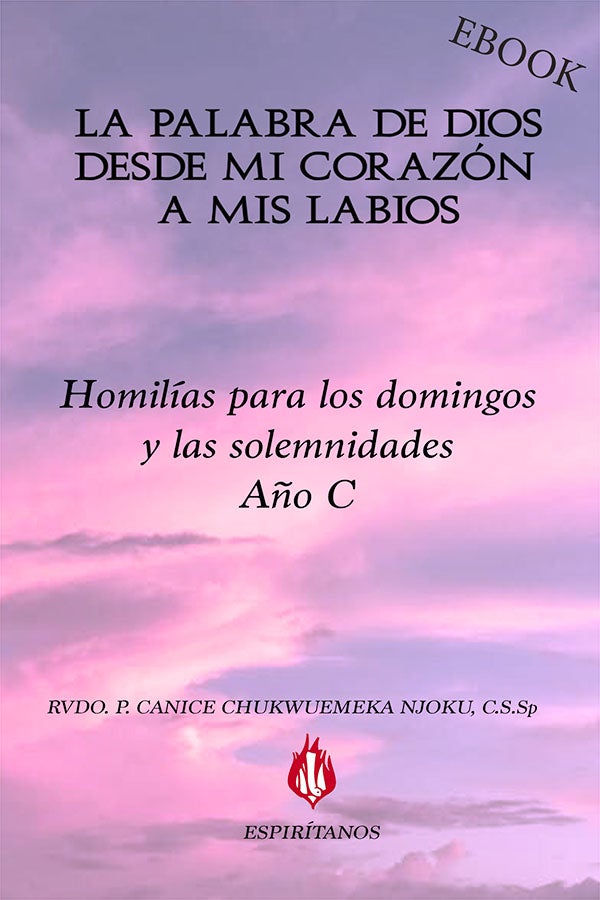
Palabra de Dios desde mi corazón

Finalmente, el Evangelio y la Iglesia nos enseñan que Cristo es el pan de la vida. Está presente en la Santa Eucaristía. Cada vez que lo celebramos, celebramos y recibimos vida. Fortaleció a los israelitas en el desierto cuando: “Les dio pan del cielo”. Por lo tanto, para fortalecernos para nuestro viaje espiritual en la tierra, Cristo nos ofrece a sí mismo en cada Misa. De hecho, somos bendecidos como oramos en cada Misa: “Dichosos los invitados a la cena del Señor.”

¡La paz sea con ustedes!

¡Maranata!

Homily for the 17th  Sunday of Ordinary Time, Year B

Christ Continues to Feed His People

Readings: 1st: 2 Kg 4, 42-44; Ps: 144; 2nd: Eph 4, 1-6; Gos: Jn 6, 1-15

This brief reflection was written by Fr. Njoku Canice Chukwuemeka, C.S.Sp. He is a Catholic Priest and a member of the Congregation of the Holy Spirit (Spiritans). He is a missionary in Puerto Rico. He is the Parish Priest of Parroquia la Resurrección del Senor, Canóvanas, and the Major Superior of the Congregation of the Holy Spirit (Spiritans), Circumscription of Puerto Rico and the Dominican Republic. He was the chancellor of the Diocese of Fajardo Humacao, Puerto Rico. Fr. Canice is a member of the Academy of Homiletics. For more details and comments contact him at canice_c_njoku@yahoo.com, canicechukwuemeka@gmail.com.

(Donar @ATH Móvil: Canice Njoku)

(https://orcid.org/0000-0002-8452-8392)

Today the seventeenth Sunday of ordinary time, we celebrate Christ, the new Elisha who feeds and unites us in him. Our first reading and the gospel are similar. Both narrate the miracles of the multiplication of bread motivated by compassion and generosity.

You may find and purchase it (print and eBook) at:
https://ppeditoresebooks.myshopify.com/products/god-s-word-from-my-heart-to-my-lips?

In our first reading, Elisha got a gift of food. However, noticing that the people were hungry and moved by compassion, he generously offered it. Through him, God miraculously multiplied the food. Thus, fulfilling his prophecy: “They will eat and have leftovers.”

In the second reading, Paul reminds us of the virtues that we need to live and survive together as a body of Christ. That is a community and family united by one faith, one baptism, and one spirit. These virtues include: “Charity, generosity, gentility, complete selflessness and patience towards one another.”

In the gospel, moved by compassion for his flock, Christ, “the new Elisha,” replicated Elisha’s miracle. He fed more than five thousand people with just five loaves of bread and two fish. He was sensitive to their situation and need. Christ cares both for our physical and spiritual needs. He feeds us with both His Word and the Holy Eucharist.

There are many important lessons we can learn from today’s readings especially from these miracles. The first is from the compassion and generosity of both Elisha and Jesus for their flocks. Compassion moved them to feed their people generously. Compassion is the basis of empathy and sympathy. We need it to understand what it means for others to be hungry, thirsty, sick, homeless, jobless, and lonely. We need them to be human.

The Second lesson is that God can transform something little into something extraordinary. So, we must not doubt God as the disciples did. This is because our God is a God of impossibilities. As Christ tells us: “With God all things are possible” (Mt 19: 26), and Paul affirms: “I can do all things through Christ who strengthens me” (Phil 4: 13).

The third lesson is the generosity of the little boy. He is a hero in Jesus’ miracle. He generously offered what he had, and his generosity became the motivation of a great miracle for his community. From two fish and five loaves, the community was blessed with more than twelve baskets of food. This shows that, at times, God works with what we have.

To be compassionate is to be like Christ. To be generous is to cooperate with Christ in his ministry. Christ sought his disciples and the community’s cooperation, and the little boy collaborated with what he had. He exhibited a fraternal spirit, and so changed the destiny of his community.

How do we respond to the needs of our community in times of need? The goods we bear, our talents, time, knowledge, and experience, including our faith, are values that we must place at the service of others.

A generous and compassionate attitude towards others can enrich the lives of many and our own life. When compassion and generosity embrace, great miracles happen for a community united by one faith, one spirit, and one baptism.

https://ppeditoresebooks.myshopify.com/products/god-s-word-from-my-heart-to-my-lips-ebook?_pos=1&_sid=13cc542e8&_ss=r

Finally, through his generosity and compassion, Christ continues to work miracles in our midst. He continues to feed and nourish us physically and spiritually at every Eucharistic celebration. So, with the psalmist, let us praise Christ: “You open wide your hand, O Lord, and grant our desires.”

Peace be with you!

Maranatha!

Homilía del Decimo Séptimo Domingo del Tiempo Ordinario, Año B

Cristo sigue alimentando a su pueblo

Lecturas: 1ra: 2Re 4, 42-44; Sal 144; 2da Ef 4, 1-6; Ev: Jn 6, 1-15

Esta breve reflexión fue escrita por el Padre Canice Chukwuemeka Njoku, C.S.Sp. Es un sacerdote católico y  miembro de la Congregación del Espíritu Santo (Espirítanos). Es un misionero en Puerto Rico. Es el Párroco de la Parroquia la Resurrección del Señor, Canóvanas y el Superior Mayor la Congregación del Espíritu Santo (Espirítanos), Circunscripción de Puerto Rico y Republica Dominicana. Fue el Canciller de la Diócesis de Fajardo Humacao, Puerto Rico. El Padre Canice es miembro de la academia de homilética (The Academy of Homiletics). Para más detalles y comentarios se puede contactarlo al canice_c_njoku@yahoo.com, canicechukwuemeka@gmail.com

(Donar @ATH Móvil: Canice Njoku)

(https://orcid.org/0000-0002-8452-8392)

Hoy el decimoséptimo Domingo del tiempo ordinario, celebramos a Cristo el nuevo Eliseo que alimenta, y nos une en sí mismo. Nuestra primera lectura y el Evangelio son similares. Ambos narran los milagros de la multiplicación del pan motivados por la compasión y la generosidad.

https://ppeditoresebooks.myshopify.com/collections/venta-digital/products/palabra-de-dios-desde-mi-corazon-1

En nuestra primera lectura, Eliseo recibió un regalo. Sin embargo, al ver que la gente estaba hambrienta y movida por la compasión, él generosamente se las ofreció. A través de él, Dios milagrosamente multiplicó la comida. Así, cumpliendo su profecía: “comerán y sobrará”.

En la segunda lectura, Pablo nos recuerda las virtudes que necesitamos para vivir y sobrevivir juntos como un cuerpo de Cristo. Es decir, una comunidad y una familia unida por una fe, un bautismo y un espíritu. Estas virtudes incluyen: “caridad, generosidad, mansedumbre, y paciencia hacia el otro”.

En el evangelio, movido por la compasión por su rebaño, Jesús, “el nuevo Eliseo”, repitió el milagro de Eliseo. Alimentó a más de cinco mil personas con sólo cinco panes y dos peces. Él era sensible a su situación y necesidad. Cristo se preocupa por nuestras necesidades físicas y espirituales. Él nos alimenta con su palabra, y la Sagrada Eucaristía.

Hay muchas lecciones importantes que podemos aprender de las lecturas de hoy y especialmente de los milagros. La primera es de la compasión y la generosidad de Eliseo y de Jesús por sus rebaños. La compasión los movió alimentar generosamente a su pueblo. La compasión es la base de la empatía y la simpatía. Lo necesitamos para entender lo que significa tener hambre y sed, estar enfermo, sin hogar, y desempleado. De hecho, la necesitamos para ser humanos.

La segunda lección es que Dios puede transformar algo pequeño en algo grande. Por lo tanto, no debemos dudar de Dios como lo hicieron los discípulos. Esto es por qué nuestro Dios es un Dios de imposibilidades. Como Cristo nos dice: “Con Dios todas las cosas son posibles” (Mt 19:26), y Pablo afirma: “Puedo hacer todas las cosas a través de Cristo que me fortalece” (Phil 4:13).

La tercera lección es la generosidad del muchacho. Es un héroe en el milagro de Jesús. Generosamente ofreció lo que tenía y su generosidad se convirtió en la motivación de un gran milagro para su comunidad. De dos peces y cinco panes la comunidad fue bendecida con más doce canastas de comida. Esto demuestra que a veces, Dios trabaja con lo que tenemos.

Ser compasivo es ser como Cristo. Ser generoso es cooperar con Cristo en su ministerio. Cristo buscó la cooperación de sus discípulos y de su comunidad, y el muchacho cooperó con lo que él tenía. Manifestó un espíritu fraterno y por eso, cambió el destino de su comunidad.

¿Cómo respondemos a las necesidades de nuestra comunidad en tiempos de necesidad? Los bienes que tenemos, nuestros talentos, tiempo, conocimiento, experiencia, incluyendo nuestra fe son valores que debemos poner al servicio de a los demás.

Una actitud generosa y compasiva hacia a los demás puede enriquecer la vida de muchos, así como nuestra propia vida. Cuando la compasión y la generosidad se abrazan, grandes milagros suceden para una comunidad unida por una fe, un espíritu y un bautismo.

https://ppeditoresebooks.myshopify.com/products/palabra-de-dios-desde-mi-corazon?_pos=3&_sid=d383aebfb&_ss=r

Finalmente, a través de su generosidad y compasión, Cristo continúa obrando milagros entre nosotros. Él nos sigue alimentando y nutriendo física y espiritualmente en cada celebración eucarística. Así que, con el salmista alabemos a Cristo: “Abres tu mano, oh Señor, y nos colmas con tus bienes.”

¡La paz sea con ustedes!

¡Maranatha!

Homily for the 16th  Sunday Of Ordinary Time, Year B

The Lord will Redeem, Reunify and Restore Us

Readings: 1stJer 23, 1-6; Ps:  23; 2ndEph 2, 13-18; Gos: Mk 6, 30-34

This brief reflection was written by Fr. Njoku Canice Chukwuemeka, C.S.Sp. He is a Catholic Priest and a member of the Congregation of the Holy Spirit (Spiritans). He is a missionary in Puerto Rico. He is the Parish Priest of Parroquia la Resurrección del Senor, Canóvanas, and the Major Superior of the Congregation of the Holy Spirit (Spiritans), Circumscription of Puerto Rico and the Dominican Republic. Fr. Canice is a member of the Academy of Homiletics. For more details and comments contact him at canice_c_njoku@yahoo.com, canicechukwuemeka@gmail.com.

(Donar @ATH Móvil: Canice Njoku)

(https://orcid.org/0000-0002-8452-8392)

Today is the sixteenth Sunday of ordinary time. This Sunday’s readings’ central theme is the redemption, reunification, and restoration of God’s people. So, this Sunday, the church invites us to celebrate Christ, the true king and compassionate shepherd who redeems and restores his people to the Father.

You may find and purchase it (print and eBook) at:
https://ppeditoresebooks.myshopify.com/products/god-s-word-from-my-heart-to-my-lips?

Our first reading is a messianic prophecy. That is, a prophecy about the coming of Christ, the messiah. The scattering of a people is a sign that something has gone wrong. It is a sign of bad leadership and system failure. So like sheep without a shepherd, the poor masses have to scatter in search of survival. This is the image we see all over the world today.

Hence, this first reading bears severe warming against all rulers, priests or pastors, parents, directors, governors, presidents, and indeed, anyone in a leadership position which, out of negligence and indifference, has allowed his people to go astray or suffer. The Lord says, “I will take care of you for your deeds!” This simply means that judgment is coming.

Second and most important, there is good news. It is a message of the hope for God’s people redemption and restoration. Christ is the righteous branch from the line of David. He is the true Davidic king who has come to find and save the lost people of God. In other words, this prophecy has been fulfilled in Christ.

He has already begun this redemptive work through his self-immolation. He will continue it until the end of time when he finally restores all things to His Father. Then, the end will come, when he hands over the kingdom to God the Father after he has destroyed all dominion, authority, and power (1 Cor 15: 24).

In the second reading, Paul reminds us that: “…You that used to be so far apart have been brought very close, by the blood of Christ.” This simply means that Christ is the fulfillment of the messianic prophecy. He is our peace and has broken down the barrier, which is used to keep us apart. Through his sacrifice, he has reunified us with God.

In the gospel, Christ also demonstrated that he is that promised Davidic king and good shepherd. He will not rest until our souls, and our land is completely healed and restored to his Father. This was why he had to terminate his vacation to attend to his people.

As a compassionate and wise king, Jesus knows our situation. He is doing something about it and will not rest until we are redeemed and restored to God. Christ does not keep quiet over our conditions. He sees and knows that negligent shepherds have abandoned us.

Thousands of lives have been lost through dangerous land and sea border crossings. Today’s global immigration problem is a sign of leadership and system failure. The human shepherds of our nations have all failed God and all of us. However, the good news is that God will restore us. He will repair the broken elements of our land.

https://ppeditoresebooks.myshopify.com/products/god-s-word-from-my-heart-to-my-lips-ebook?_pos=1&_sid=13cc542e8&_ss=r

This is a message of hope for all passing through all forms of political, social, and economic crisis. We simply need to obey Christ’s teachings and instructions to be redeemed and restored to his Father. Trusting Christ, our king and shepherd, let us always proclaim without ceasing: “The Lord is my shepherd. There is nothing I shall want!”

Peace be with you!

Maranatha!

Homilía del Decimo Sexto Domingo del Tiempo Ordinario, Año B

El Señor nos redimirá, reunificará y restaurará


Lecturas: 1ra: Jer 23: 1-6; Sal 23; 2da: Ef 2: 13-18; Ev: Mc 6: 30-34

Esta breve reflexión fue escrita por el Padre Canice Chukwuemeka Njoku, C.S.Sp. Es un sacerdote católico y  miembro de la Congregación del Espíritu Santo (Espirítanos). Es un misionero en Puerto Rico. Es el Párroco de la Parroquia la Resurrección del Señor, Canóvanas y el Superior Mayor la Congregación del Espíritu Santo (Espirítanos), Circunscripción de Puerto Rico y Republica Dominicana. El Padre Canice es miembro de la academia de homilética (The Academy of Homiletics). Para más detalles y comentarios se puede contactarlo al canice_c_njoku@yahoo.com, canicechukwuemeka@gmail.com

(Donar @ATH Móvil: Canice Njoku)

(https://orcid.org/0000-0002-8452-8392)

Hoy es el decimosexto Domingo del tiempo ordinario. Un tema muy importante y central a las lecturas de este domingo es, la redención, la reunificación y la restauración del pueblo de Dios. Así que, este domingo la Iglesia nos invita a celebrar a Cristo, el verdadero rey y pastor compasivo que redime y restaura su gente al Padre.

https://ppeditoresebooks.myshopify.com/collections/venta-digital/products/palabra-de-dios-desde-mi-corazon-1

Nuestra primera lectura es una profecía mesiánica. Es decir, una profecía sobre la venida de Cristo, el Mesías. La dispersión de un pueblo es una señal de que algo ha salido mal. Es un signo de mal liderazgo y fracaso del sistema. Así como ovejas sin un pastor las pobres masas tienen que dispersarse en busca de supervivencia. Esta es la imagen que vemos en todo el mundo hoy en día.

Por lo tanto, esta primera lectura tiene una seria advertencia contra todos los gobernantes, sacerdotes o pastores, padres, directores, gobernadores, presidentes y, de hecho, cualquier persona en posición de liderazgo que por negligencia e indiferencia ha permitido que su pueblo se descarriara y sufriera. El Señor dice, “¡Voy a ocuparme de ustedes, para castigar sus malas acciones! Esto simplemente significa que el juicio está llegando.

Segundo y lo más importante, hay buenas noticias. Es un mensaje de la esperanza de la redención y restauración del pueblo de Dios (los remanentes de Israel). Cristo es la rama virtuosa de la línea de David. Él es el verdadero rey que ha venido a buscar y salvar al pueblo perdido de Dios. En otras palabras, esta profecía ha sido cumplida en Cristo.

Él ya ha comenzado esta obra redentora a través de su auto-inmolación. Él la continuará hasta el fin de los tiempos, cuando finalmente le devolverá todas las cosas a su padre. “Entonces vendrá el fin, cuando él entregue el reino a Dios el Padre, luego de destruir todo dominio, autoridad y poder” (1 Cor 15:24).

En la segunda lectura, Pablo nos recuerda que: “… Ustedes que antes estaban tan separados han sido traídos muy cerca, por la sangre de Cristo.” Esto simplemente significa que Cristo es el cumplimiento de la profecía mesiánica. Él es nuestra paz y ha derribado la barrera que solía mantenernos separados. A través de su sacrificio, nos ha reunificado con Dios.

En el Evangelio, también Cristo demostró que él es ese mesías prometido y el buen pastor. No descansará hasta que nuestras almas y tierra sean completamente sanadas y restauradas a su Padre. Así que, tuvo que terminar sus vacaciones para atender a su pueblo.

Como un rey compasivo y sabio, Jesús conoce nuestra situación. Él está haciendo algo al respecto y, no descansará hasta que estemos redimidos y restaurados a Dios. No guarda silencio sobre nuestras situaciones. Él ve y sabe que hemos sido abandonados por pastores negligentes.

Este es un mensaje de esperanza para todos los que pasan por diferentes formas de crisis política, social y económica. Simplemente necesitamos obedecer las enseñanzas e instrucciones de Cristo para ser redimidos y restaurados a su Padre. Confiando en Cristo nuestro rey y pastor, proclamemos sin cesar: “¡El Señor es mi pastor, nada me faltara!”

https://ppeditoresebooks.myshopify.com/products/palabra-de-dios-desde-mi-corazon?_pos=3&_sid=d383aebfb&_ss=r

Se han perdido miles de vidas a través de peligrosos cruces de las fronteras de la tierra y mar. El problema de inmigración de hoy en todo el mundo es un signo de fracaso de liderazgo y del sistema. Los pastores humanos de nuestras naciones han fallado a Dios y a todos nosotros. Sin embargo, la buena noticia es que Dios nos restaurará. El reparará los elementos rotos de nuestra tierra.

¡La Paz sea con ustedes!

¡Maranata!