Homilía del Domingo de Pentecostés, Año A

Un Nuevo Pentecostés: ¡Ven Espiritu Santo, ven!

Lectura: 1ra: Hch 2: 1-11; Sal: 103: 24-34; 2da: 1Co 12: 3-7.12-12; Ev: Jn 20: 19-23

Esta breve reflexión fue escrita por el Padre Canice Chukwuemeka Njoku, C.S.Sp. Es un sacerdote católico y  miembro de la Congregación del Espíritu Santo (Espirítanos). Es un misionero en Puerto Rico. Es el Párroco de la Parroquia la Resurrección del Señor, Canóvanas y el Superior Mayor la Congregación del Espíritu Santo (Espirítanos), Circunscripción de Puerto Rico y Republica Dominicana. Fue el Canciller de la Diócesis de Fajardo Humacao, Puerto Rico. El Padre Canice es miembro de la academia de homilética (The Academy of Homiletics). Para más detalles y comentarios se puede contactarlo al:  canice_c_njoku@yahoo.com, canicechukwuemeka@gmail.com.

(https://orcid.org/0000-0002-8452-8392)

Hoy es el domingo de Pentecostés. Pentecostés es una fiesta que ocupa una posición muy importante y prominente en la historia y el calendario litúrgico de la iglesia. Esto es porque sirve como puente entre Pascua y tiempo ordinario del año.

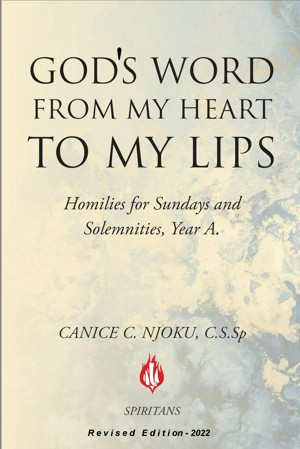
Disponible Ahora al:

Smashwords: https://www.smashwords.com/books/view/1179509

Amazon: https://www.amazon.com/dp/B094YTH1YX?

La primera lectura de este domingo narra la historia de cómo Cristo finalmente cumplió su promesa a sus discípulos, que obedecieron fielmente su mandato: “¡No dejan Jerusalén hasta que el abogado viene!” (Hch 1, 5). De la perspectiva de esta lectura, por lo tanto, la celebración de hoy es una recompensa por el fiel obediencia y constancia en la oración.

Es importante tener en cuenta que uno de los mejores aspectos de esta fiesta que es muy incomprendido y abusado es el don de lengua. Es importante que prestamos atención a las enseñanzas de Pablo sobre el tema de regalos y lenguas en 1 Co 12 y 14. Es un don gratuito de Dios y no viene a través de aprender y practicar.

Quienquiera habla lenguas falsas es tanto blasfemando contra Dios y cometiendo sacrilegio. Es decir, el pecado contra el Espíritu Santo. Este don fue dado a los Apóstoles para ayudarlos difundir el Evangelio a diferentes personas que se reunieron de todas las Naciones para escucharlos: “Ahora eran hombres devotos que viven en Jerusalén… cada uno desconcertado para oir estos hombres hablando en su propia lengua las maravillas de Dios.” No fue dado a ellos para aumentar su ego, o para sus propios intereses personales o egoísmo. En cambio, fue dado a ellos con el fin de edificar la iglesia y para transmitir el mensaje de la vida eterna a otros.

En la segunda lectura de hoy, Pablo hace una declaración muy importante: “nadie puede decir ‘Jesús es Señor’ a menos que está bajo la influencia del Espíritu Santo.” Lo que esto significa es que es Dios mismo que nos permite a través de los dones que hemos recibido hoy para reconocer el señorío de Cristo. Reconociendo el señorío de Cristo era una tarea difícil para Satanás porque, el Espiritu Santo lo dejó.

Lo obvio es que cuando Pablo usa la frase “Jesús es el Señor”, él no simplemente refiriéndose a la declaración literaria del señorío de Cristo. Lo que él significa es, que Jesús es el Señor de la vida. Para lograr esto, se necesita la convicción del Espíritu Santo.

Decir que Jesús es el Señor es vivirlo, y para tenerlo realmente como el Señor vivo. Sólo aquellos que están guiados por el Espíritu Santo verdaderamente son hijos de Dios (Rom 8, 14). Es el espíritu que recibimos hoy, que nos ayuda proclamar el señorío de Cristo: “Ustedes han recibido el espíritu de la filiación, y por él, clamamos Abba Padre. El Espíritu da testimonio con nuestro espíritu que somos hijos de Dios”(Rom 8, 15-16).

En el Evangelio de hoy vemos el Dios trinitario en la acción, cada uno haciendo y cumpliendo su acción, y aún unidos. Funcionaron como si fueran involucrados en una carrera de relevos, donde cada uno entregó la batuta a otro. Sin embargo, a pesar de ello, ninguno de ellos fue pasiva en cualquier momento. Jesús dice, “como el padre me envió así yo lo voy a enviar, reciben el Espíritu Santo”.

El Espíritu Santo que recibimos hoy viene en ninguna manera a reemplazar a Cristo. Más bien, él ha venido a ayudarnos a alcanzar lo que él ayudó a Cristo alcanzar. Por lo tanto, el mismo Espíritu nos da el poder para testificar al señorío de Cristo. Es un nuevo Pentecostés, por eso imploremos al Señor: “Envía tu espíritu Seño, y renueva la faz de la tierra. 

¡La paz sea con ustedes!

¡Maranatha!
https://www.youtube.com/watch?v=OGOX6elzL2k

Homily For Pentecost Sunday, Year A

A New Pentecost: Come Holy Spirit, come!

Readings: 1st: Acts 2: 1-11; Ps 103: 24-34; 2nd: 1Cor 12: 3-7.12-12; Gos: Jn 20: 19-23

This brief reflection was written by Fr. Njoku Canice Chukwuemeka, C.S.Sp. He is a Catholic Priest and a member of the Congregation of the Holy Spirit (Spiritans). He is a missionary in Puerto Rico. He is the Parish Priest of Parroquia la Resurrección del Senor, Canóvanas, and the Major Superior of the Congregation of the Holy Spirit (Spiritans), Circumscription of Puerto Rico and the Dominican Republic. He was the chancellor of the Diocese of Fajardo Humacao, Puerto Rico. Fr. Canice is a member of the Academy of Homiletics. For more details and comments contact him at:t: canice_c_njoku@yahoo.com, canicechukwuemeka@gmail.com

(https://orcid.org/0000-0002-8452-8392)

Today is Pentecost Sunday. Pentecost is a feast which occupies a very important and prominent position in the Church’s history and liturgical calendar. This is because it serves as the bridge between Easter Season and Ordinary Time of the year.

Available now on

Smashwords: https://www.smashwords.com/books/view/1179451

Amazon: https://www.amazon.com/dp/B094YSGTZF

The first reading of this Sunday tells the story of how Christ eventually fulfilled his promise to his disciples, who faithfully obeyed his command: “Do not leave Jerusalem until the advocate comes!” (Acts 1, 5). From the perspective of this reading, therefore, today’s celebration is a reward for faithful obedience and steadfastness in prayer.

It is important to note that one of the greatest aspects of this feast that is grossly misunderstood and abused is the gift of tongue. It is important that we grasp Paul’s teachings on the issue of gifts and speaking in tongues in 1 Cor 12 and 14. It is a gratuitous gift from God and does not come through learning and practicing.

 Anyone who speaks false tongues is both blaspheming against God and committing sacrilege. That is, sin against the Holy Spirit. This gift was given to the apostles to aid them spread the good news to different people who gathered from all nations to listen to them: “Now there were devout men living in Jerusalem…each one bewildered to hear these men speaking his own language about the marvels of God.” It was not given to them to boost their ego, or for their own personal or selfish interest. Instead, it was given to them in order to edify the church and to transmit the message of eternal life on to others.

In the second reading of today, Paul makes a very important statement: “No one can say ‘Jesus is Lord’ unless he is under the influence of the Holy Spirit.” What this means is that it is God himself that enables us through the gifts we have received today in order to recognize the lordship of Christ. Recognizing the lordship of Christ was a difficult task for Satan because, the Holy left him.

The obvious fact is that when Paul uses the phrase “say Jesus is Lord”, he is not simply referring to the literary pronouncement of the lordship of Christ. Rather, he means is, making Jesus the Lord of one’s life. To achieve this, one needs the conviction of the Holy Spirit.

To say Jesus is Lord is to live it, and to actually have him as the lord of one’s live. Only those who are being led by the Holy Spirit are truly sons and daughters of God (Rom 8, 14). It is the Spirit that we receive today, that will therefore prompt us to proclaim the lordship of Christ: “You received the spirit of sonship, and by him, we cry Abba Father. The spirit testifies with our spirit that we are God’s children” (Rom 8, 15-16).

In today’s gospel, we see the Trinitarian God in action, each doing and completing His action and yet united. They operated as though they were involved in a relay race, where each handed over the baton to the other. However, in spite of this, none of them was passive at any moment. Jesus says, “as the Father sent me so I am sending you, receive the Holy Spirit.”

The Holy Spirit we received today has in no way come to replace Christ. Rather, He has come to help us achieve what he helped Christ achieve. Therefore, the same Spirit empowers us to move out in order to testify to the lordship of Christ. It is a new Pentecost, so we implore the Lord: “Send forth your spirit Lord, and renew the face of the earth.

Peace be with you all!

Maranatha!

https://www.youtube.com/watch?v=H88jnoBbPmY

Homilía del Séptimo Domingo (Ascensión del Señor), Año C

Cristo Sube En Gloria

Lecturas: 1ra: Hch 1:1-11; Sal: 46:2-3. 6-7, 8-9; 2da: Ef 1:17-23; Ev: Lc 24:46-53

Esta breve reflexión fue escrita por el Padre Canice Chukwuemeka Njoku, C.S.Sp. Es un sacerdote católico y  miembro de la Congregación del Espíritu Santo (Espirítanos). Es un misionero en Puerto Rico. Es el Párroco de la Parroquia la Resurrección del Señor, Canóvanas y el Superior Mayor la Congregación del Espíritu Santo (Espirítanos), Circunscripción de Puerto Rico y Republica Dominicana. Fue el Canciller de la Diócesis de Fajardo Humacao, Puerto Rico. El Padre Canice es miembro de la academia de homilética (The Academy of Homiletics). Para más detalles y comentarios se puede contactarlo all:  canice_c_njoku@yahoo.com, canicechukwuemeka@gmail.com.

(https://orcid.org/0000-0002-8452-8392)

“Todos los pueblos aplauden sus manos, claman a Dios con gritos de gozo… Dios sube con gritos de gozo y el Señor sube con la trompeta.” En este séptimo Domingo de Pascua, celebramos la solemnidad de la ascensión. Es una solemnidad importante que marca el regreso de Jesús al padre. Junto con la resurrección, es una manifestación de la victoria de Cristo.

Disponible Ahora al:

Smashwords: https://www.smashwords.com/books/view/1179509

Amazon: https://www.amazon.com/dp/B094YTH1YX?

La ascensión es una solemnidad que sustenta la esperanza de los cristianos de que un día estaremos con Cristo. El Catecismo de la Iglesia Católica enseña que: “… Jesucristo la cabeza de la Iglesia nos precede en el glorioso reino de su padre, para que nosotros los miembros de su cuerpo podamos vivir con la esperanza de estar un día con él para siempre ” (665-667).

Nuestra primera lectura de Hechos de los apóstoles relata los acontecimientos de los últimos momentos y el encuentro de Cristo con sus apóstoles antes de su ascenso al cielo. Aquí, Cristo da una instrucción muy importante a sus apóstoles: “No salgan de Jerusalén, pero esperen allí lo que el padre ha prometido”. Cristo alienta a su discípulo a permanecer fiel.

Lo más importante, él les recuerda que su éxito dependerá de su capacidad de caminar con el Espíritu Santo. Estas instrucciones también son para nosotros. Igualmente nos recuerda que antes de empezar cualquier proyecto, debemos encomendarnos a la guía y al consejo del Espíritu Santo.

En la segunda lectura, Pablo ora pidiéndole a Dios que nos envíe el Espíritu Santo: “Que el Dios de nuestro Señor Jesucristo les dé el espíritu de sabiduría y percepción de lo que se revela, para que les traiga todo el conocimiento de él.” Esta debe ser nuestra oración y deseo todos los días de nuestra vida. Debemos invitar al Espíritu Santo a tomar control de toda nuestra misión.

Debemos invitarlo a alumbrar los puntos oscuros de nuestras vidas como Pablo oro: “Que el Espiritu Santo ilumine los ojos de sus mentes para que pueda ver la esperanza que su llamado tiene para usted…” Debemos pedirle que dirige nos para que lo sigamos.

En el Evangelio de hoy, Jesús sabía que sus apóstoles necesitaban ayuda para triunfar. Así que les instruyó: “Permanezcan en la ciudad, hasta que se visten con el poder de lo alto”. Debemos buscar este poder si tenemos que hacer algún impacto positivo en nuestro mundo.

Por lo tanto, debemos prestar atención a lo que Jesús nos está diciendo en el Evangelio de hoy. Como un maestro experimentado, él conoce el terreno que estamos a punto de caminar. Sabe lo delicados que son los corazones de los hombres de nuestra edad. Él sabe lo difícil que es nuestra tarea y lo que se necesita para tener éxito. Él sabe que sólo el Espíritu Santo nos puede ayudar.

Por lo tanto, la ascensión marca el comienzo del cumplimiento de la promesa de Cristo a nosotros. Así que, mientras que celebramos la solemnidad de la ascensión hoy, Jesús nos recuerda que, independientemente de nuestro conocimiento y capacidad humana, necesitamos una ayuda divina para triunfar. Esta ayuda divina vendrá del Espíritu Santo a quien debemos prestar atención todo el tiempo.

Así que, mientras que celebramos la ascensión de Cristo hoy y esperamos el cumplimiento de su promesa el domingo de Pentecostés, oremos: “Envía tu espíritu, oh Señor, y renueva la faz de la tierra.”

¡La paz sea con ustedes!

¡Maranata!

https://www.youtube.com/watch?v=OGOX6elzL2k

Homily For The 7th Sunday Of Easter (Ascension), Year A

Christ Goes up in Glory

Readings: 1st: Acts 1:1-11; Ps: 46; 2nd: Eph 1:17-23; Gos: Lk 24:46-53

This brief reflection was written by Fr. Njoku Canice Chukwuemeka, C.S.Sp. He is a Catholic Priest and a member of the Congregation of the Holy Spirit (Spiritans). He is a missionary in Puerto Rico. He is the Parish Priest of Parroquia la Resurrección del Senor, Canóvanas, and the Major Superior of the Congregation of the Holy Spirit (Spiritans), Circumscription of Puerto Rico and the Dominican Republic. He was the chancellor of the Diocese of Fajardo Humacao, Puerto Rico. Fr. Canice is a member of the Academy of Homiletics. For more details and comments contact him atcanice_c_njoku@yahoo.com, canicechukwuemeka@gmail.com

(https://orcid.org/0000-0002-8452-8392)

“All peoples clap your hands, cry to God with joy. God shouts joyfully, and the Lord goes up with a trumpet blast.” On this seventh Sunday of Easter, we celebrate the solemnity of Ascension. It is an important solemnity that marks the return of Jesus to the Father. Together with the Resurrection, it is a manifestation of the victory of Christ.

Available now on

Smashwords: https://www.smashwords.com/books/view/1179451

Amazon: https://www.amazon.com/dp/B094YSGTZF

Ascension is a solemnity that sustains the hope of Christians that one day we shall be where Christ is. The Catechism of the Catholic Church teaches that: “Jesus Christ, the head of the Church, precedes us into His Father’s glorious kingdom, so that we, the members of his body, may live in the hope of one day being with him forever.” (665-667).

The first reading from Acts of the Apostles recounts the events of Christ’s moment on earth with his apostles before his ascension into heaven. Christ instructs his Apostles here: “Do not leave Jerusalem, but wait there for what the Father has promised.” Christ encourages his disciple to remain faithful. Most importantly, he reminds them that their success will depend on their ability to walk with the Holy Spirit. These instructions are also meant for us too. It reminds us that before we set out for any business or project, we must commend ourselves to the guidance and counsel of the Holy Spirit.

In the second reading, Paul prays to ask God to send us the Holy Spirit: “May the God of our Lord Jesus Christ give you the Spirit of wisdom and perception of what is revealed, to bring you the full knowledge of him.” This must be our prayer and wish every day of our life. We must invite the Holy Spirit to take control of our entire mission. We must invite him to lighten the dark spots of our lives as Paul prays: “May he enlighten the eyes of your minds so that you can see the hope his call holds for you.” We must ask him to lead the way so that we follow him. This is because his ways and counsels are right. 

In today’s gospel, Jesus knew that his apostles needed help to succeed. So he instructed them: “…Stay in the city until you are clothed with the power from on high.”  We must seek this power if we must make any positive impact on our world. Therefore, we must pay attention to what Jesus tells us in today’s gospel. As an experienced master, He knows the terrain we are about to walk. He knows how delicate the hearts of men of our age are. He knows how challenging our task is and what it takes to be successful. He knows that only the Holy Spirit can help us.

Therefore, Ascension marks the beginning of the fulfillment of Christ’s promise to us. So, as we celebrate the solemnity of Ascension today, Jesus reminds us that irrespective of our knowledge and human capabilities, we need divine help in order to succeed. This divine help will come from the Holy Spirit, to whom we must always pay attention.

So, as we celebrate the Ascension of Christ today and expect the fulfillment of His promise on Pentecost Sunday, let us pray: “Sent forth your spirit, O Lord, and renew the face of the earth.”

Peace be with you!

Maranatha!

https://www.youtube.com/watch?v=H88jnoBbPmY

Homily For The 6th Sunday Of Easter, Year A

The Spirit Of Christ Confirms Us

Readings: 1st: Acts 8: 5-8. 14-17; Ps 65, 1-7. 16. 20; 2nd: 1Pt 3, 15-18; Gos: Jn 14: 15-23    

This brief reflection was written by Fr. Njoku Canice Chukwuemeka, C.S.Sp. He is a Catholic Priest and a member of the Congregation of the Holy Spirit (Spiritans). He is a missionary in Puerto Rico. He is the Parish Priest of Parroquia la Resurrección del Senor, Canóvanas, and the Major Superior of the Congregation of the Holy Spirit (Spiritans), Circumscription of Puerto Rico and the Dominican Republic. Fr. Canice is a member of the Academy of Homiletics. For more details and comments contact him at canice_c_njoku@yahoo.com or canicechukwuemeka@gmail.com.

(https://orcid.org/0000-0002-8452-8392)

Today is the sixth Sunday of Easter. As we approach the feast of Pentecost, the Church invites us to celebrate the coming of the Advocate. She calls us to celebrate the Spirit of truth, which strengthens us in the proclamation of the good news. The message we bear is not false. Instead, it comes from the Advocate.

Available now on

Smashwords: https://www.smashwords.com/books/view/1179451

Amazon: https://www.amazon.com/dp/B094YSGTZF

Our first reading is a continuation of the frantic efforts of the disciples of Christ to bear testimony to the risen Lord. Through their efforts, the Samaritans received their Sacraments of Baptism and Confirmation. Peter performed his episcopal function on this day by laying hands upon the new converts.

Since Philip baptized these new converts, why did he not confirm them? Why was it necessary for Peter and John to travel that long distance to lay hands on (or confirm) the new converts already baptized by Philip? An understanding of our Catholic Catechism is fundamental here.

What Philip did by inviting Peter (the chief Shepherd of the Apostles) was in line with the Church’s teaching on Confirmation: “The ordinary minister of the Sacrament of Confirmation is the bishop. If the need arises, He may grant the faculty to priests. However, he should confer it himself, mindful that the celebration of Confirmation has been temporarily separated from baptism. For this reason, Bishops are the successors of the apostles” (CCC 1313).

The Samaritans needed the Holy Spirit as much as we do today because it is the Holy Spirit that strengthens and makes one a true soldier of Christ (CCC1303-4). He helps us to bear witness to the truth without fear: “You have not received the Spirit of timidity, but the Spirit of sonship. The Spirit bears witness that we are God’s Children” (Rom 8, 15-16). This same Spirit resurrected Christ and gives life to our mortal body (Rom 8: 11). As the principal agent of evangelization, He confirms the truth we preach.

In the second reading, Peter encouraged us to have reverence for Christ. Also, he admonished us to treat others with respect, even those who despise the gospel we preach. Hence, he reminds us of the animating power of the Holy Spirit even in the life of Christ: “In the body, he was put to death; in the spirit, he was raised to life.” The same spirit that raised Jesus sustains us in the truth. This means that once the Spirit of God comes upon us, we become active for Christ because: “What gives life is the spirit of God (John 6, 63).

As we are a couple of weeks from Pentecost, Jesus promises us the Holy Spirit, the Advocate in today’s gospel. However, He gives a condition for receiving the Advocate: “If you love me, you will keep my commandments.” When we do this, he adds: “I shall ask the Father, and he will give you another Advocate to be with you forever, that spirit of truth…I will not leave you, orphans.”

What is this commandment that we must keep receiving the Spirit of truth? It is: “Go into the whole world and preach the good news to all creation (Mk 16: 15). It is also a command to love both God and our neighbor (Luke 10, 25-27). When we do these, we are certainly preaching the good news of truth. The advocate will come to strengthen us in the way of truth. He will also come to confirm that, indeed, we are sons of God. So, let us pray: Come, O Holy Spirit, and renew the face of the earth, alleluia.

Peace be with you all!

Maranatha!

https://www.youtube.com/watch?v=H88jnoBbPmY

Homilía del Sexto Domingo de Pascua, Año A

El Espiritu De Cristo Nos Confirma

Lecturas: 1ra: Hechos 8: 5-8. 14-17; Sal: 65, 1-7. 16. 20; 2da: 1 Ped 3, 15-18; Ev: Jn 14: 15-23 

Esta breve reflexión fue escrita por el Padre Canice Chukwuemeka Njoku, C.S.Sp. Es un sacerdote católico y  miembro de la Congregación del Espíritu Santo (Espirítanos). Es un misionero en Puerto Rico. Es el Párroco de la Parroquia la Resurrección del Señor, Canóvanas y el Superior Mayor la Congregación del Espíritu Santo (Espirítanos), Circunscripción de Puerto Rico y Republica Dominicana. El Padre Canice es miembro de la academia de homilética (The Academy of Homiletics). Para más detalles y comentarios se puede contactarlo al canice_c_njoku@yahoo.com, canicechukwuemeka@gmail.com

(https://orcid.org/0000-0002-84528392)

Hoy es el sexto domingo de Pascua. Al acercarse la fiesta de Pentecostés, la Iglesia nos invita a celebrar la llegada del abogado. Ella nos llama a celebrar el espíritu de la verdad que nos fortalece en la proclamación de las buenas noticias. El mensaje que llevamos no es falso, más bien, proviene del abogado.

Disponible Ahora al:

Smashwords: https://www.smashwords.com/books/view/1179509

Amazon: https://www.amazon.com/dp/B094YTH1YX?

La primera lectura es una continuación de los frenéticos esfuerzos de los discípulos de Cristo para dar testimonio al Señor resucitado. A través de sus esfuerzos, los Samaritanos recibieron sus sacramentos de bautismo y confirmación. En este día, Pedro realiza su función episcopal por imponer las manos sobre los nuevos conversos. Felipe ya había bautizado a estos nuevos conversos, ¿por qué él no los confirmó? ¿Por qué era necesario que Pedro y Juan viajar esa distancia, para imponer las manos, (o confirmar) los nuevos conversos ya bautizados por Felipe? La comprensión de nuestro Catecismo Católico es muy importante aquí.

Lo que Felipe hizo por invitar a Pedro (el pastor principal de los apóstoles), fuera en consonancia con la doctrina de la iglesia sobre la confirmación: “El ministro ordinario del sacramento de la confirmación es el obispo. Si surge la necesidad, él puede conceder la facultad a los sacerdotes, aunque es apropiado que él lo confiere a sí mismo teniendo en cuenta que la celebración de la confirmación ha sido separada temporalmente de bautismo por ello. Los Obispos son los sucesores de los apóstoles”(CIC 1312).

Los Samaritanos necesitan el Espíritu Santo tanto como lo necesitamos hoy, porque es el Espíritu Santo que fortalece y hace a uno un verdadero soldado de Cristo (CIC1303-5). Él nos ayuda a dar testimonio de la verdad sin temor: “No han recibido el espíritu de timidez, sino el espíritu de la filiación.” El espíritu testimonia que somos hijos de Dios (Ro 8, 15-16). Es este mismo espíritu que resucitó a Cristo, que da vida a nuestro cuerpo mortal (Ro 8:11). Como el principal agente de evangelización, se confirma la verdad que predicamos.

En la segunda lectura, Pedro nos animó a tener reverencia a Cristo. Además, amonestó a tratar con respeto, incluso aquellos que desprecian el evangelio que predicamos. Por lo tanto, él nos recuerda el poder de la animación del Espíritu Santo en la vida de Cristo: “En el cuerpo fue puesto a la muerte, en el espíritu resucitó a la vida.” Es el mismo espíritu que levantó a Jesús que nos sostiene en la verdad. Esto significa que una vez que el espíritu de Dios venga sobre nosotros, nos convertimos activas para Cristo, porque: “lo que le da vida es el espíritu de Dios (Juan 6, 63).

Como hace falta un par de semanas de Pentecostés, en el Evangelio de hoy, Jesús nos promete el Espíritu Santo, el defensor. Sin embargo, se da una condición para recibir el Espiritu Santo, nuestro abogado: “Si me aman guardaran mis mandamientos.” Cuando hacemos esto, Cristo añade: “voy a pedir al padre y les dará otro abogado que estará con ustedes para siempre, ese espíritu de la verdad. Yo no les dejaré a huérfanos.”

¿Qué es este mandamiento que debemos tener para recibir el espíritu de verdad? Es: “vayan al todo mundo y predican la buena nueva a toda la creación (Mc 16:15). Además, es un mandamiento de amar a Dios y a nuestro prójimo (Lucas 10, 25-27). Cuando hacemos esto, sin duda nos estamos predicando la buena noticia de verdad. El abogado acudirá y nos fortalece en el camino de verdad. También él vendrá a confirmar que, de verdad, somos hijos de Dios. Por lo tanto, oremos: Ven, Espíritu Santo, y renueva la faz de la tierra, Aleluya.

¡La paz sea con ustedes!

¡Maranatha!

https://www.youtube.com/watch?v=OGOX6elzL2k


Homily For The 5th Sunday Of Easter, Year A

We are the royal and priestly people

Readings: 1st: Acts 6: 1-7; Ps 32: 1-2. 4-5. 18-19; 2nd: 1 Pt 2: 4-9; Gos Jn 14: 1-12)

This brief reflection was written by Fr. Njoku Canice Chukwuemeka, C.S.Sp. He is a Catholic Priest and a member of the Congregation of the Holy Spirit (Spiritans). He is a missionary in Puerto Rico. He is the Parish Priest of Parroquia la Resurrección del Senor, Canóvanas, and the Major Superior of the Congregation of the Holy Spirit (Spiritans), Circumscription of Puerto Rico and the Dominican Republic. Fr. Canice is a member of the Academy of Homiletics. For more details and comments contact him at canice_c_njoku@yahoo.com or canicechukwuemeka@gmail.com.

(https://orcid.org/0000-0002-8452-8392)

On this 5th Sunday of Easter, the Church reminds us of whom we are: “The chosen race and the royal priesthood, who would be and reign with Christ. Today we have gathered to exercise our royal priesthood by offering a spiritual sacrifice as Christ did.

Available now on

Smashwords: https://www.smashwords.com/books/view/1179451

Amazon: https://www.amazon.com/dp/B094YSGTZF

In today’s first reading, the drama that unfolded led to the election of seven deacons to take care of the social needs of the believers. We can learn the following lessons from this reading. First, we must not neglect or take our communities’ social or material needs for granted. If left unattended, they could undermine the work of God.

Second, we must balance our spiritual and material needs because both are important. Third, we must not forget who we are or neglect our primary calling. Peter rightly noted that the mundane should not distract us from our mission and vocation: “It would not be right for us to neglect the word of God to give out food. We will hand over this duty and devote ourselves to prayer and the service of the word of God.”

The spiritual will undoubtedly suffer if we pay too much attention to material needs. We cannot do everything by ourselves. We must let others play their role by helping us. Finally, we must be wise and prayerful in selecting ministers for God’s mission. They must be “men of good reputation, filled with the Holy Spirit and wisdom.”

In the second reading, Peter reminds us of who we indeed are: “A chosen race, a royal priesthood, a consecrated nation, a people set apart to sing the praises of God.” Here, Peter highlights our participation in the priesthood of Christ through the “common or general priest priesthood.” This is undoubtedly by our baptism (CCC1268). Baptism configures us to become “priests.”

Thus, in this pastoral letter, Peter highlights the efficacy of the “Sacraments of Christian Initiation (Baptism, Eucharist, and Confirmation) on us as believers. Through this, he reminds us of our priestly and royal heritage. He equally calls us to live it out in a proper manner. In order words, if we set ourselves close to Christ, our chief priest, we shall live up to expectations. That is, by offering acceptable sacrifices to God. Through this, we become pleasing to God and a spiritual house for God.

In today’s gospel, Jesus assures us of a place in his kingdom: “Let not your hearts be troubled. There are many rooms in my father’s house, so where I am, you may be too.” This indicates that by baptism, we are indeed children of God. This is why he considers us worthy of being where he will be.

Unfortunately, many of us do not know who we are or believe there is a beautiful place prepared for us by Christ. This is also the reason many of us cannot maximize our priestly and royal potential. As priests and people of royal descent, we must assert ourselves positively. It takes faith to do this.

Therefore, let us ask God the Father of our Lord Jesus Christ to help us live as members of the royal priesthood. Also, during this glorious and gracious season of Easter, let us: “Rejoice in the Lord” for what God has done for us. Alleluia, alleluia!

Peace be with you all!

Maranatha!

https://www.youtube.com/watch?v=H88jnoBbPmY

Homilia del Quinto Domingo de Pascua, Año A

Somos un pueblo real, y sacerdotal

Lectura: 1raHechos 6:1-7; 2da: 1 Ped 2:4-9; Sal: 32; Ev Jn 14:1-12

Esta breve reflexión fue escrita por el Padre Canice Chukwuemeka Njoku, C.S.Sp. Es un sacerdote católico y  miembro de la Congregación del Espíritu Santo (Espirítanos). Es un misionero en Puerto Rico. Es el Párroco de la Parroquia la Resurrección del Señor, Canóvanas y el Superior Mayor la Congregación del Espíritu Santo (Espirítanos), Circunscripción de Puerto Rico y Republica Dominicana. El Padre Canice es miembro de la academia de homilética (The Academy of Homiletics). Para más detalles y comentarios se puede contactarlo al canice_c_njoku@yahoo.com, canicechukwuemeka@gmail.com

(https://orcid.org/0000-0002-84528392)

En este quinto domingo de Pascua, de una manera especial, la Iglesia nos recuerda quien somos: “un pueblo elegido y del sacerdocio real, que reinara con Cristo. Hoy hemos reunido para ejercer nuestro ministerio sacerdotal, por ofrecer un sacrificio espiritual como Cristo lo hizo.

Disponible Ahora al:

Smashwords: https://www.smashwords.com/books/view/1179509

Amazon: https://www.amazon.com/dp/B094YTH1YX?

En la primera lectura de hoy, el drama que se desarrollaba resultó a la elección de siete diáconos para cuidar las necesidades sociales de los creyentes. Podemos aprender las siguientes lecciones de esta lectura. En primer lugar, no debemos descuidar o tomar las necesidades materiales o sociales de nuestras comunidades por sentado. Si no las atendamos, podrían impedir la obra de Dios.

En segundo lugar, debemos balancear ambos nuestras necesidades espiritual y material, porque ambos son importantes. En tercer lugar, no debemos olvidar quiénes somos ni descuidar nuestro llamado principal. Lo mundano no debería distraernos de nuestra misión y vocación como Pedro observó con razón: “No sería correcto que descuidar la palabra de Dios para repartir comida… vamos a entregar este deber y dedicarnos a la oración y al servicio de la palabra de Dios.”

Si prestamos demasiada atención a las necesidades material, las necesidades espirituales sin duda sufrirán. No podemos hacer todo por nosotros mismos. Debemos dejar que otros desempeñar su papel para ayudarnos. Por último, debemos ser sabios y orante en la selección de ministros para la misión de Dios: “Deben ser hombres de buena reputación, llenado del Espíritu Santo y de sabiduría”.

En la segunda lectura, Pedro nos recuerda lo que realmente somos: “un pueblo escogido, real sacerdocio, una nación consagrada, un pueblo situado aparte para cantar las alabanzas de Dios…” Aquí, Pedro destaca nuestra participación en el sacerdocio de Cristo mediante el “sacerdocio común o general”. Esto es sin duda en virtud de nuestro bautismo (CIC1268). Bautismo nos configura para ser “sacerdotes.”

Así, en esta carta pastoral, Pedro destaca la eficacia de los “sacramentos de iniciación cristiana (Bautismo, Eucaristía y Confirmación) en nosotros como creyentes. A través de estos, él nos recuerda nuestra herencia sacerdotal y real. Igualmente nos llama a vivir de una manera que es apropiada. En palabras de orden, si nos fijamos en Cristo nuestro sumo sacerdote, viviremos a la expectativa. Es decir, a ofrecer sacrificios aceptables a Dios. A través de este, llegaremos a ser aceptables a Dios, también convertiremos en una casa espiritual de Dios.

En el Evangelio de hoy Jesús nos asegura un lugar en su reino: “Que no el corazón se turbe… hay muchas habitaciones en casa de mi padre…donde estoy, allí ustedes estarán.” Esto es una clara indicación que, en virtud de nuestro bautismo somos verdaderamente hijos de Dios. Por esta razón, Cristo nos considera dignos de estar donde él está.

Por desgracia, muchos de nosotros no saben quiénes somos, o creen que hay un hermoso lugar que está preparado para nosotros por Cristo. También, por esta razón muchos de nosotros no pueden maximizar nuestro potencial. Como sacerdotes debemos afirmarnos positivamente, y necesitamos fe para que esto sea posible.

Por lo tanto, debemos pedirle a Dios, el padre de nuestro Señor Jesucristo que nos ayude a vivir como miembros del real sacerdocio. También, durante esta temporada gloriosa y misericordioso de Pascua: “Regocijemos en el Señor” para lo que Dios ha hecho por nosotros. ¡Alleluia!

¡La paz sea con ustedes!

¡Maranatha!

https://www.youtube.com/watch?v=OGOX6elzL2k


Homily For The 4th Sunday Of Easter (Good Shepherd), Year A

Christ Our Good Shepherd Cares For Us

Readings: 1st: Acts 2: 14.36-41; Ps 22: 1-6; 2nd: 1Pt 2: 22-25; Gos Jn 10: 1-10)  

This brief reflection was written by Fr. Njoku Canice Chukwuemeka, C.S.Sp. He is a Catholic Priest and a member of the Congregation of the Holy Spirit (Spiritans). He is a missionary in Puerto Rico. He is the Parish Priest of Parroquia la Resurrección del Senor, Canóvanas, and the Major Superior of the Congregation of the Holy Spirit (Spiritans), Circumscription of Puerto Rico and the Dominican Republic. Fr. Canice is a member of the Academy of Homiletics. For more details and comments contact him at canice_c_njoku@yahoo.com or canicechukwuemeka@gmail.com.

(https://orcid.org/0000-0002-8452-8392)

On this fourth Sunday of Easter, the church celebrates Christ the Good Shepherd. We continue to rejoice because He is the one that leads us through the difficult paths of life.

Available now on

Smashwords: https://www.smashwords.com/books/view/1179451

Amazon: https://www.amazon.com/dp/B094YSGTZF

In the first reading, Peter, the head of the Apostles, played his pastoral role very well. By the power of the Holy Spirit, he spoke on behalf of the rest. Of course, his speech was a great success. This is because it led to the most significant conversion of souls ever recorded in the history of humankind in a single. That is, three thousand converts!

The lesson here is quite simple. A shepherd who prepares himself and works with the Holy Spirit will become a powerful instrument of conversion in God’s hands. God knew that Peter was prepared and capable, so he gave him a great harvest of souls.

Also, in his pastoral letter from our second reading today, Peter further reminds us that to be a good shepherd, one must endure ordeals as Christ did for the sake of his flock. He was not selfish or neglected his duty. Instead, he persisted and gave everything for the good of his flock: “Christ suffered for you and left an example for you to follow. He was bearing our faults in his own body on the cross.”

These are the qualities of a good shepherd. The good shepherd offers everything for the sake of his flock. He does not believe in half measures. For him, it is “Aut optimuim, aut nihil” (it is either all or nothing). We must imitate Christ, the good shepherd who dared the devil to save us. We must say like Christ, “I will.” Lord, let me take care of the sick, the orphans, the weak, the poor, the marginalized, and the oppressed. Lord, let me fight for their course. Let me be their light, hope, pride, and shepherd.

As good shepherds, each one of us has a responsibility towards someone. We must not abandon this responsibility to the detriment of our flock. Today’s celebration reminds us that we ought to be contrasted to “mundane shepherds” of our time who exploit their flock.

In the gospel, Jesus points out more qualities of the good shepherd: “The one who enters through the gate is the good shepherd of the flock. He sheep hear his voice. He calls his sheep and leads them. The sheep follow because he knows his voice.” Jesus teaches us that we must build a good relationship with our flock based on love, trust, and mutual respect.

We also must make Christ the shepherd of our souls. This means listening to his voice through the scriptures, the teachings of the Church’s Magisterium, and the church’s traditions. We must listen to him to be truly the sheep of the Lord’s flock. He never fails. He knows the path we walk every day. He knows when to place us on his shoulders, to take us by the hand like his little children.

We shall hear and recognize his voice when we come closer to him. Whereas moving away from him endangers our life. He beckons us: “Come unto me all you (my sheep) who are weary and burdened, and I will give you rest” (Matt 1, 28). So, let us make the risen Christ our shepherd because, if we do: “there is nothing we shall want, and indeed, goodness and mercy shall follow us all the days of our life (Ps 23, 1.6). Alleluia, alleluia!

Peace be with you all!

Maranatha!

https://www.youtube.com/watch?v=H88jnoBbPmY

Homilía del Cuarto (Buen Pastor)Domingo de Pascua, Año A

Cristo Nuestro Buen Pastor, Nos Cuida

Lecturas: 1ra: Hch 2: 14.36-41; Sal: 22: 1-6; 2da: 1Ped 2: 22-25; Ev: Jn 10: 1-10)

Esta breve reflexión fue escrita por el Padre Canice Chukwuemeka Njoku, C.S.Sp. Es un sacerdote católico y  miembro de la Congregación del Espíritu Santo (Espirítanos). Es un misionero en Puerto Rico. Es el Párroco de la Parroquia la Resurrección del Señor, Canóvanas y el Superior Mayor la Congregación del Espíritu Santo (Espirítanos), Circunscripción de Puerto Rico y Republica Dominicana. El Padre Canice es miembro de la academia de homilética (The Academy of Homiletics). Para más detalles y comentarios se puede contactarlo al canice_c_njoku@yahoo.com, canicechukwuemeka@gmail.com

(https://orcid.org/0000-0002-84528392)

En este cuarto domingo de Pascua, la Iglesia celebra a Cristo el buen pastor. Seguimos regocijando porque, él es el que nos conduce a través de los momentos difíciles de la vida.

Disponible Ahora al:

Smashwords: https://www.smashwords.com/books/view/1179509

Amazon: https://www.amazon.com/dp/B094YTH1YX?

En la primera lectura de hoy, Pedro el pastor principal entre los “pastores apostólicos”, jugó su papel pastoral muy bien. A través del poder del Espíritu Santo, fue capaz de hablar en nombre de los demás. Por supuesto, su discurso fue un gran éxito. Esto es porque, su predicación resultó a la mayor conversión de las almas jamás registrado en la historia de la humanidad en una sola ocasión. ¡Es decir, tres mil personas!

La lección aquí es bastante simple. Un pastor que prepara y copera con el Espíritu Santo sin duda se convertirá en un poderoso instrumento de conversión en las manos de Dios. Dios sabía que Pedro era preparado y capaz, así que se lo dio una gran cosecha de las almas.

Asimismo, en su carta pastoral en nuestra segunda lectura de hoy, Pedro nos recuerda el hecho de que, para ser un buen pastor, uno debe soportar sufrimientos como Cristo lo hizo por el bien de su rebaño. No era egoísta, o abandonó su deber. En cambio, sufrió y dio todo por el bien de su rebaño: “Cristo sufrió por ustedes y dejó un ejemplo para seguir… Él estaba teniendo nuestras faltas en su propio cuerpo en la cruz…”

Estas son las pruebas y cualidades de un buen pastor. Ofreció todo por el bien de su rebaño. Él no cree en dar poco. Para él, es, todo, o nada. Debemos imitar a Cristo el buen pastor que se atrevió el demonio para salvarnos. Hay que decir como Cristo, “lo haré”. Señor, ayúdame cuidar los enfermos, los huérfanos, los débiles, los pobres, los marginados y los oprimidos. Señor, quiero luchar por su curso. Quiero ser su luz, su esperanza, su orgullo y su pastor.

Como buenos pastores, cada uno de nosotros tiene una responsabilidad hacia alguien. No debemos abandonar esta responsabilidad en detrimento de nuestro rebaño. La celebración de hoy nos recuerda que debemos ser contrastes a los “pastores mundanos” de nuestro tiempo que explotan a su rebaño.

En el Evangelio, Jesús señala más cualidades de un buen pastor: “El que entra por la puerta, es el buen pastor del rebaño… las ovejas oyen su voz…Se llama sus propias ovejas y las lleva…las ovejas lo siguen porque conocen su voz. ” Lo que Jesús nos enseña aquí es que, necesitamos construir una buena relación con nuestro rebaño, una relación basada en amor, confianza y respeto mutuo.

También, debemos hacer a Cristo el pastor de nuestra alma. Esto significa simplemente escuchando su voz en las escrituras, en las enseñanzas del Magisterio de la iglesia y en las tradiciones de la iglesia. Para ser verdaderamente las ovejas del rebaño del Señor, debemos escuchar a él. Él nunca falla. Él sabe el camino que andamos todos los días. Él sabe cuándo tiene que colocarnos encima de su hombro, y cuando nos llevaría de la mano como sus hijos.

Si le acercamos, podremos escuchar y reconocer su voz. Considerando que, moviéndose lejos de él pone en peligro nuestra vida. Él nos invita: “Vengan a mí todos ustedes (mis ovejas) que están cansados y agobiados y yo les dará descanso” (Mat 1, 28). Por lo tanto, dejemos a hacer el Cristo resucitado nuestro Pastor porque, si lo hacemos: “Nada nos faltará, y ciertamente, su bondad y su misericordia nos acompañará todos los días de nuestra vida (Sal 23:1.6). Alleluia.

¡La paz sea con ustedes!

¡Maranatha!

https://www.youtube.com/watch?v=OGOX6elzL2k


