Homily For The 12th Sunday Of Ordinary Time, Year A

Christ Our Lord, Is With Us

Readings: 1stJer 20, 10-13; Ps: 68; 2ndRom 5, 12-15; Gos: Mt 10, 26-33

This brief reflection was written by Fr. Njoku Canice Chukwuemeka, C.S.Sp. He is a Catholic Priest and a member of the Congregation of the Holy Spirit (Spiritans). He is a missionary in Puerto Rico. He is the Parish Priest of Parroquia la Resurrección del Senor, Canóvanas, and the Major Superior of the Congregation of the Holy Spirit (Spiritans), Circumscription of Puerto Rico and the Dominican Republic. He was the chancellor of the Diocese of Fajardo Humacao, Puerto Rico. Fr. Canice is a member of the Academy of Homiletics. For more details and comments contact him at: canice_c_njoku@yahoo.com, canicechukwuemeka@gmail.com

(https://orcid.org/0000-0002-8452-8392)

On this twelfth Sunday of ordinary time, we celebrate Christ, Our Lord, who is always with us. He continues to deliver us from all that threatens and makes life difficult. This includes persecution, sins, and death.
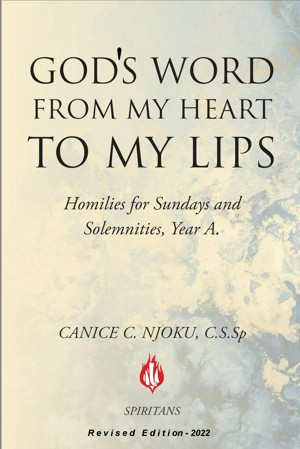
Available now on

Smashwords: https://www.smashwords.com/books/view/1179451

Amazon: https://www.amazon.com/dp/B094YSGTZF

In the first reading, God delivered the prophet Jeremiah from the deadly plots and hands of evil men. Our world is full of threats against the righteous and innocent. Today, hardly would a day passes without one hearing news of terror. This is the cause of great fear and inquietude for many, especially those whose trust is solely in this world rather than God.

However, for those who, like the prophet, realize that the Lord is on their side, God will surely not disappoint them. As a mighty hero, He will indeed act. The threats and gravity of these terrors might appear overwhelming.  However, they are certainly not greater than what God has handled in the history of humanity.

Today’s second reading has a lot in common with the first. First, while the prophet was innocent of all the accusations and threats against him, humanity inherited death through the sin of disobedience of her progenitors (Adam and Eve). Similarly, while God delivered the innocent prophet Jeremiah from the plots and terrors of his enemies, in the second, Paul recounts how Christ delivered humanity from the terrors and shackles of death.

Thus, Paul draws our attention to a very important aspect of our salvific history. This is especially concerning the relationship between sin and death; and, of course, the relationship between the consequences of Adam’s disobedience and Christ’s obedience. While Adam’s disobedience and sin brought death, Christ’s obedience brought us life.

This is the summary of what Christ did for us. Through his sacrificial death and obedience to his father’s will, He dissipated the terrors threatening our lives and restore our peace. Thus, He delivered us from damnation due to the sin and the fall of Adam and Eve.

In the gospel, Jesus encourages us: “Do not be afraid, for everything that is now covered will be uncovered.” This includes the plans of the evil ones who constantly threaten to persecute and destroy the just.  It suffices to note that Christ knows that fear and the threat of death can paralyze one. As the Lord of the living and the dead, He knows that physical death is not the end. Instead, it is a transition to eternity. Hence, he further exhorts us: “Do not be afraid of those who can kill the body but cannot kill the soul. Rather, fear him who can destroy both body and soul in hell fire.”

In these comforting and assuring words of Christ, rest our hope and future as Christians. ”Every hair on your head has been counted. So, there is no need to be afraid!” They indicate that the Lord is on our side. He is ready and capable of delivering us from sin’s consequences and harmful effects and all the threats we face daily.

Finally, all we need to do to merit the protection Christ promised us today is to be on his side by trusting him. This calls for being just and innocent in our ways and actions. It means being true Christians. Of course, it also means submitting entirely to Christ.

Peace be with you!

Maranatha!

https://www.youtube.com/watch?v=H88jnoBbPmY

Homilía del Duodécimo Domingo del Tiempo Ordinario, Año A

Cristo Nuestro Señor, Está Con Nosotros

Lecturas: 1ra: Jer 20, 10-13; Sal 68; 2nd: Rom 5, 12-15; Ev: Mt 10, 26-33

Esta breve reflexión fue escrita por el Padre Canice Chukwuemeka Njoku, C.S.Sp. Es un sacerdote católico y  miembro de la Congregación del Espíritu Santo (Espirítanos). Es un misionero en Puerto Rico. Es el Párroco de la Parroquia la Resurrección del Señor, Canóvanas y el Superior Mayor la Congregación del Espíritu Santo (Espirítanos), Circunscripción de Puerto Rico y Republica Dominicana. Era el Canciller de la Diócesis de Fajardo Humacao, Puerto Rico. El Padre Canice es miembro de la academia de homilética (The Academy of Homiletics). Para más detalles y comentarios se puede contactarlo all: 

canice_c_njoku@yahoo.com, canicechukwuemeka@gmail.com.

(https://orcid.org/0000-0002-8452-8392)

En este duodécimo Domingo del tiempo ordinario, celebramos a Cristo nuestro Señor que siempre está con nosotros. El sigue liberándonos de todo lo que nos amenaza y hace la vida difícil para nosotros. Esto incluye las persecuciones, los pecados y la muerte.

Disponible Ahora al:

Smashwords: https://www.smashwords.com/books/view/1179509

Amazon: https://www.amazon.com/dp/B094YTH1YX?

En la primera lectura, Dios libera al profeta Jeremías de las parcelas mortales y de las manos de los hombres malvados. Nuestro mundo está lleno de amenazas contra los justos e inocentes. Hoy en día, apenas que un día pasa sin oír una noticia aterrorizante. Esto es la causa de gran temor y la inquietud de muchos, especialmente, para aquellos cuya confianza esta únicamente en este mundo, en lugar de estar Dios.

Sin embargo, para aquellos como el Profeta, que dan cuenta de que el Señor está de su lado, sin duda, sin Dios no los defraudará. Como un poderoso héroe, seguramente actuará. Las amenazas y la gravedad de estos terrores podrían parecer abrumadoras. Sin embargo, ciertamente no son más de lo que Dios ha manejado en la historia de la humanidad.

Hoy, la segunda lectura tiene mucho en común con la primera. En primer lugar, mientras que el profeta era inocente de las acusaciones y amenazas contra él, la humanidad heredó muerte mediante del pecado de desobediencia de sus progenitores (Adán y Eva). Del similar modo, mientras que Dios libró al inocente profeta Jeremías de las persecuciones y terrores de sus enemigos, Pablo relata cómo Cristo rescató a la humanidad de los terrores y grilletes de la muerte.

Así que, Pablo llama la atención sobre un aspecto bien importante de nuestra historia salvífica. Esto es, sobre todo, con respecto a la relación entre el pecado y la muerte; y la relación entre las consecuencias de la desobediencia de Adán, y de la obediencia de Cristo. Mientras que el pecado de la desobediencia de Adán nos trajo muerte, la obediencia de Cristo nos trajo vida.

Este es el resumen de lo que Cristo hizo para nosotros. A través de su muerte expiatoria y su obediencia a la voluntad de su padre, él disipa los terrores que amenazan nuestra vida, y restaura nuestra paz. Así que, nos libró de la condenación por el pecado, y la caída de Adán y Eva.

En el Evangelio, Jesús nos exhorta: “¡No tengan miedo, todo lo que está cubierto ahora será descubierto!” Esto incluye, los planes de los malvados que siempre amenazan, y tratan destruir a los justos. Basta de notar que, Cristo sabe que el miedo y la amenaza de muerte pueden paralizan a uno.

Como el Señor de los vivos y los muertos, él sabe que la muerte física no es el final. Por el contrario, es una transición a la eternidad. Por lo tanto, nos exhorta más: ¡No tengan miedo de aquellos que pueden matar el cuerpo, pero no pueden matar el alma! ¡Más bien, temen a aquel que puede destruir tanto el cuerpo y el alma en infierno!”

En estas palabras consoladoras de Cristo, resta nuestra esperanza y nuestro futuro como cristianos: ¡Cada pelo de su cabeza ha sido contado! ¡Por lo tanto, no hay que tener miedo!” Ellas simplemente indican, que el Señor nuestro Dios, está de nuestro lado. Él está listo y capaz a rescatarnos de tantos las consecuencias y efectos dañinos del pecado, así como, de todas las amenazas que enfrentamos en nuestra vida diaria.

Por último, todo lo que necesitamos hacer para merecer esa protección que Cristo nos prometió hoy es simplemente estar a su lado, y confiar en Él. Esto, exige ser justo e inocente en nuestros caminos y acciones. Significa, ser verdaderos cristianos. Por supuesto, también significa someter totalmente a Cristo.

¡La paz este con ustedes!

¡Maranatha!

https://www.youtube.com/watch?v=OGOX6elzL2k

Homily For The 11th Sunday of Ordinary Time, Year A

Called to be the People and Disciples of God

Readings: 1st: Ex 19, 2-6a; Ps: 99, 2. 3. 5; 2nd: Rom 5, 6-11; Gos: Mt 9, 36—10, 8

This brief reflection was written by Fr. Njoku Canice Chukwuemeka, C.S.Sp. He is a Catholic Priest and a member of the Congregation of the Holy Spirit (Spiritans). He is a missionary in Puerto Rico. He is the Parish Priest of Parroquia la Resurrección del Senor, Canóvanas, and the Major Superior of the Congregation of the Holy Spirit (Spiritans), Circumscription of Puerto Rico and the Dominican Republic. He was the chancellor of the Diocese of Fajardo Humacao, Puerto Rico. Fr. Canice is a member of the Academy of Homiletics. For more details and comments contact him at: canice_c_njoku@yahoo.com, canicechukwuemeka@gmail.com

(https://orcid.org/0000-0002-8452-8392)

On this eleventh Sunday of ordinary time, the Church reminds us of our call by God. This call can be understood in two ways; first, through God’s covenant with Israel. God chose and called us to be his people. Second, through Jesus Christ the new covenant, God called us to be his disciples. So, God made us his people and reconciled us in Christ Jesus. God called us, each by name, to be a people consecrated to him.

Available now on

Smashwords: https://www.smashwords.com/books/view/1179451

Amazon: https://www.amazon.com/dp/B094YSGTZF

In today’s first reading, we see the first part of our call. This reading tells us about one of the most famous covenants of God with his people in the Old Testament, the Sinai Covenant. Through it, God made Israel his people and offers to guide them toward a great destiny, and his people offer obedience.

If the people are faithful to their promise, they will forever be the sacred people, God’s possession. If they fail due to their human destiny, God will not abandon them but will continue to search for them. This is God’s way of acting. Although we fail, God never abandons us. Therefore, the saying is wise: “To err is human; to forgive divine.”

As humans, we always fail in our part of our covenant with God. Like the Israelites in the Old Testament, we are quick to say, “All that the Lord has spoken we will do!” (Exodus 19:8). We are quick to say yes, we believe and will be faithful to our covenant. However, most times, we fail. Despite this, God never abandons us. He continues to be faithful to his covenant.

In today’s second reading, Paul reminds us of how God continues to be faithful to us through his only Son, Jesus Christ, for our salvation: “What proves that God loves us is that Christ died for us while we were still sinners.” Through the sacrifice of Christ, we are constantly reconciled with God. So, God never abandons us because he chose and called us to be his people.

The second aspect of our calling is to be Christ’s disciples in a world quickly losing life’s meaning, in a world where many feel abandoned, helpless, and hopeless. This call and mission were born from mercy and compassion for a dejected and abandoned world. Hence, today’s gospel tells us, “At the sight of the crowds, Jesus’ heart was moved with pity for them because they were troubled and abandoned, like sheep without a shepherd.”

Therefore, as Christians, each of us has a unique call. By virtue of our baptism, God chose and called each of us by our new name, as he called his twelve apostles today, to help our abandoned world. This is a special call and invitation to lift and save our dejected world from ruins. It is a call to be faithful shepherds to one another. As God and his Son continue to show us mercy and compassion, we must also show mercy to one another, especially to those who have failed or erred in one way or the other.

Finally, our call had a unique purpose and message. Today, Christ sent his disciples with specific instructions. “Do not go into pagan territory or enter a Samaritan town. Go rather to the lost sheep of the house of Israel. As you go, make this proclamation: ‘The kingdom of heaven is at hand.’ Cure the sick, raise the dead, cleanse lepers, and drive out demons.”

Is Christ discriminating? No! Indeed, Christ came to save the world. However, our call and mission must start from somewhere. We must start this mission with ourselves. It must begin in our homes, families, and communities (mission ad intra). Later, the mission can be extended (ad extra) to others. Through this, Christ reminds us that Charity begins at home. This is important because we must first become God’s people before becoming God’s disciples.

So, my dear brothers and sisters, let us pray to God to keep us faithful to his call to be his people and disciples.

Peace be with you!

Maranatha!

https://www.youtube.com/watch?v=H88jnoBbPmY

Homilía del Undécimo Domingo del Tiempo Ordinario, Año A

Llamados a ser el Pueblo y Discípulos de Dios

Lecturas: 1ra: Ex 19, 2-6a; Sal: 99, 2. 3. 5; 2da: Rom 5, 6-11; Ev: Mt 9, 36—10, 8

Esta breve reflexión fue escrita por el Padre Canice Chukwuemeka Njoku, C.S.Sp. Es un sacerdote católico y  miembro de la Congregación del Espíritu Santo (Espirítanos). Es un misionero en Puerto Rico. Es el Párroco de la Parroquia la Resurrección del Señor, Canóvanas y el Superior Mayor la Congregación del Espíritu Santo (Espirítanos), Circunscripción de Puerto Rico y Republica Dominicana. Era el Canciller de la Diócesis de Fajardo Humacao, Puerto Rico. El Padre Canice es miembro de la academia de homilética (The Academy of Homiletics). Para más detalles y comentarios se puede contactarlo all: 

canice_c_njoku@yahoo.com, canicechukwuemeka@gmail.com.

(https://orcid.org/0000-0002-8452-8392)

En este domingo, la madre iglesia nos recuerda de nuestra llamada por Dios. Esta llamada se puede entender de dos maneras. Primero, a través de la antigua alianza con Israel, a ser su pueblo. Secundo, atreves de Jesucristo la nueva alianza, Dios nos llamó a ser sus discípulos.

Disponible Ahora al:

Smashwords: https://www.smashwords.com/books/view/1179509

Amazon: https://www.amazon.com/dp/B094YTH1YX?

En la primera lectura de hoy, nos vemos la primera parte de nuestra llamada. Esta lectura nos habla de una de la más famosa alianza de Dios con su pueblo, la alianza de Sinaí. A través de ella, Dios hizo Israel su pueblo y ofrece guiarlo hacia un destino grande, y su pueblo ofrece obediencia.

Si el pueblo es fiel a su promesa, será para siempre el pueblo sagrado, la posesión de Dios. Si fracasa en su destino, humano, Dios no lo abandonará, sino que lo seguirá buscando. Esta es la forma de actuar de Dios porque ama a su pueblo. Aunque le fallamos, nunca nos abandona. Por eso, es sabio el dicho: “Es humano fracasar, es divino el perdonar.”

Como humanos, fallamos en nuestra parte de nuestra alianza con Dios. Sin embargo, como los israelitas, nos apresuramos a decir: “¡Todo lo que el Señor ha dicho, haremos!” (Éxodo 19:8). Tenemos prisa a decir sí, creemos y seremos fieles a Dios. Sin embargo, de muchas maneras fallamos. A pesar de esto, Dios nunca nos abandona. Él sigue siendo fiel a la alianza.

En la segunda lectura de hoy, Pablo nos recuerda cómo Dios continúa siendo fiel a nosotros a través del sacrificio de su Hijo, Jesucristo, para nuestra salvación: “Y la prueba de que Dios nos ama está en que Cristo murió por nosotros, cuando aún éramos pecadores.” A través del sacrificio de Cristo, somos constantemente reconciliados con Dios.

El segundo aspecto de nuestro llamado es ser discípulos en un mundo que pierde rápidamente el significado de la vida, en un mundo donde muchos se sienten abandonados, impotentes y sin esperanza. Este llamado y misión nacieron de la misericordia y la compasión por un mundo desamparado. Por eso el evangelio de hoy nos dice: “al ver Jesús a las multitudes, se compadecía de ellas, porque estaban extenuadas y desamparadas, como ovejas sin pastor.”

Por lo tanto, como cristianos, cada uno de nosotros tiene un llamado único. En virtud de nuestro bautismo, Dios escogió y llamó a cada uno de nosotros su nuevo nombre, para ayudar a nuestro mundo desamparado. Este es un llamado especial a levantar y salvar nuestro mundo en ruinas. Es un llamado a ser verdaderos hermanos a unos a otros. A medida que Dios y su Hijo continúan mostrándonos misericordia y compasión, también debemos mostrar misericordia a unos a otros especialmente a aquellos que frascaron de una manera u otra.

Finalmente, nuestra llamada tiene un propósito y un mensaje único. Hoy, Cristo envió a sus discípulos con instrucciones específicas. “No vayan a tierra de paganos ni entren en ciudades de samaritanos. Vayan más bien en busca de las ovejas perdidas de la casa de Israel.

¿Está discriminando Cristo? ¡No! De hecho, Cristo vino a salvar al mundo. Sin embargo, nuestro llamado y misión debe comenzar desde algún lugar. Debemos comenzar esta misión con nosotros mismos, en nuestros hogares, familias y comunidades (misión ad intra). Luego, podemos extenderla a otros (misión ad extra). A través de esto, Cristo nos recuerda que la caridad comienza desde el hogar. Esto es importante porque primero debemos ser el pueblo de Dios antes de ser discípulos de Dios.

Por eso, queridos hermanos, oremos a Dios para que nos mantenga fieles a su llamado a ser su pueblo y discípulos.

¡La paz sea con ustedes!

¡Maranata!

https://www.youtube.com/watch?v=OGOX6elzL2k

Homily For The Solemnity Of The Body and Blood Of Christ – Corpus Christi, Year A

God Abides with Us, Through the Holy Eucharist

Readings: 1st: Deu 8: 2-3.14-16; Ps 147; 2nd: 2Cor 20: 16-17; Gos: Jn 6: 51-58

This brief reflection was written by Fr. Njoku Canice Chukwuemeka, C.S.Sp. He is a Catholic Priest and a member of the Congregation of the Holy Spirit (Spiritans). He is a missionary in Puerto Rico. He is the Parish Priest of Parroquia la Resurrección del Senor, Canóvanas, and the Major Superior of the Congregation of the Holy Spirit (Spiritans), Circumscription of Puerto Rico and the Dominican Republic. He was the chancellor of the Diocese of Fajardo Humacao, Puerto Rico. Fr. Canice is a member of the Academy of Homiletics. For more details and comments contact him at: canice_c_njoku@yahoo.com, canicechukwuemeka@gmail.com

(https://orcid.org/0000-0002-8452-8392)

Today, we celebrate the solemnity of the Body and Blood of Christ or “Corpus Christi.” It originated in France in the mid-thirteenth century and was extended to the whole Church by Pope Urban IV in 1264. This feast focuses on two manifestations: the Holy Eucharist as the body of Christ and the Church as the body of Christ.

Available now on

Smashwords: https://www.smashwords.com/books/view/1179451

Amazon: https://www.amazon.com/dp/B094YSGTZF

In the study of Human Nutrition, the following statements are very factual: “You are what you eat” and “good food nourishes the body.” While the physical food we eat nourishes the body, spiritual food nourishes our soul, prepares, and preserves it for eternity. The Eucharist, as the body and blood of Christ, not only makes the soul fit to dwell in a healthy body but also makes it fit to appear before God.

In the first reading, Moses reminded his brethren of how God took good care of them by nourishing and sustaining them in the desert: “He humbled and fed you with manna. Do not forget the Lord your God, who brought you water and fed you with manna in this dry place.” Through this, God demonstrated his love and ability to sustain His chosen people physically and spiritually. In our time, God has given us the Eucharist for our spiritual nourishment. Hence, the Holy Eucharist is the “Sacrament of universal salvation.”

In the second reading, Paul reminds us of the church’s unity through sharing in the one Body and Blood of Christ. During the Eucharistic celebration, people, communities, races, and nations are united as they share in the Body and Blood of Christ. Hence, at every Mass, our attention is called to the Real Presence of Christ in the Eucharist.

In today’s gospel, Christ succinctly proclaimed: “I am the living bread. The bread that I shall give is my flesh…if you do not eat the flesh of the Son of Man and drink his blood, you will not have life in you.” It was on account of this truth that some of his disciples deserted him thinking: “This saying is hard…!” (Jn. 6:61). Also, the Romans (ca. 64-313 AD) accused Christians of cannibalism. Christ said His body is real food, and his blood is true wine. Though it is a typology of the Manna that the Israelites ate in the desert (and still died), it is different because, as Christ says: “Whoever eats the body and drinks the blood of the Son of Man will never die.”

Hence, the Eucharist sustains our spiritual life, while our human food and the Manna that the Israelites eat sustain our physical and mortal life. It gives us the grace to feel forgiven and to be ready to forgive others. We go to Mass not because we are worthy. Instead, these come through the Eucharist because we always need God’s love and mercy.

The Eucharist affects the life of our Christian communities. It is from it that we receive our identity and mission as a church. Providentially, God made it available to us in order to nourish us on our spiritual journey. Hence, when administered to the sick, it is called “viaticum (food for the journey). Through it, God continues to abide with us.

Finally, the secondary focus of this solemnity is on the Body of Christ as it is present in the Church. The Church is called the Body of Christ because of the intimate communion which Jesus shares with his disciples. Christ expressed this unity by using the metaphor of a body, in which Himself is the head. This image helps to keep in focus both the unity and the diversity of the Church. So, during any Eucharistic celebration, Christ makes himself available, draws us closer to himself, and unites us with one another.

Peace be with you all!

Maranatha!

https://www.youtube.com/watch?v=H88jnoBbPmY

Homilía para la Solemnidad del Cuerpo y Sangre de Cristo – Corpus Christi, Año A

Dios Permanece Con Nosotros, A Por La Santa Eucaristía

Lecturas: 1ra: Deu8: 2-3.14-16; Sal:147; 2da: 2Co 20: 16-17; Ev: Jn 6: 51-58

Esta breve reflexión fue escrita por el Padre Canice Chukwuemeka Njoku, C.S.Sp. Es un sacerdote católico y  miembro de la Congregación del Espíritu Santo (Espirítanos). Es un misionero en Puerto Rico. Es el Párroco de la Parroquia la Resurrección del Señor, Canóvanas y el Superior Mayor la Congregación del Espíritu Santo (Espirítanos), Circunscripción de Puerto Rico y Republica Dominicana. Era el Canciller de la Diócesis de Fajardo Humacao, Puerto Rico. El Padre Canice es miembro de la academia de homilética (The Academy of Homiletics). Para más detalles y comentarios se puede contactarlo all: 

canice_c_njoku@yahoo.com, canicechukwuemeka@gmail.com.

(https://orcid.org/0000-0002-8452-8392)

Hoy celebramos la solemnidad del cuerpo y sangre de Cristo o “Corpus Christi.” Se comenzó en Francia en la mitad del siglo dúo trece, y fue extendido a la iglesia entera por el Papa Urbano IV en 1264. Esta fiesta, se enfoca en dos manifestaciones. Primera, en la Santa Eucaristía como el cuerpo y la sangre de Cristo. Segunda, en la Iglesia como el cuerpo de Cristo.

Disponible Ahora al:

Smashwords: https://www.smashwords.com/books/view/1179509

Amazon: https://www.amazon.com/dp/B094YTH1YX?

En el estudio de la nutrición humana, los siguientes dichos son verdades: “eres lo que comes”, y una buena comida nutre el cuerpo. Mientras que la comida física que comemos nutre el cuerpo, la comida espiritual nutre nuestra alma, la prepara y preserva para la eternidad. La Santa Eucaristía, como el cuerpo y la sangre de Cristo no solo hace el alma cabe de morar en sano cuerpo, sino que también lo hace caber de aparecer en antes Dios.

 En la primera lectura, Moisés recuerda sus hermanos de como Dios los cuidaba por nutrir y sostenerlos en el desierto: “les Humilló… les alimentó con el maná… No olviden al Señor su Dios, que en este lugar sin agua les trajo agua y les alimentó con maná…” Por esto, Dios demostró su amor y su capacidad a sostener su pueblo elegido físicamente y espiritualmente. En nuestro tiempo, Dios nos ha dado la Eucaristía para nuestro alimento espiritual. Por lo tanto, la Eucaristía es el “Sacramento de la salvación universal”.

En la segunda lectura, Pablo nos recuerda la unidad de la iglesia a través de compartir en un solo cuerpo y sangre de Cristo. Durante la celebración eucarística, personas, comunidades, razas y naciones están unidas ya que comparten en el cuerpo y sangre de Cristo. Por lo tanto, en cada Misa se llama nuestra atención a la presencia real de Cristo en la Eucaristía.

En el Evangelio de hoy, Cristo sucintamente proclamó: “Yo soy el pan de vida. El pan que Yo les daré es mi carne… Si no comen la carne del hijo del hombre y beben su sangre; no tendrán vida en ustedes.” Fue a causa de esta verdad que algunos de sus discípulos le abandonada pensando: ¡este dicho es duro…! (Jn 6:61). Además, los romanos (ca. 64-313 D.C.) acusaron los cristianos de canibalismo. Como dijo Cristo, su cuerpo es verdadera comida, y su sangre verdadero vino. Aunque es una tipología del maná que los israelitas comieron en el desierto (y todavía murieron), es diferente porque como Cristo dice: “Quien come el cuerpo y bebe la sangre del hijo del hombre nunca morirá.”

Por lo tanto, la Eucaristía sostiene nuestra vida espiritual, mientras que la comida humana y el maná que los israelitas comieron, sostiene nuestra vida física y mortal. Nos da la gracia de sentirse perdonado y estar dispuesta a perdonar a los demás. Vamos a Misa, no porque seamos dignos. Más bien, porque siempre estamos en necesidad de la misericordia y amor de Dios. Éstos vienen a través de la Eucaristía.

La Eucaristía afecta la vida de nuestras comunidades cristianas. Es a través de la Eucaristía que recibimos nuestra identidad y misión como iglesia. Providencialmente, Dios la hizo disponible a nosotros para alimentarnos en nuestro viaje espiritual. Por lo tanto, cuando se administra a los enfermos, se llama “viáticos (comida para el viaje). A través de ella, Dios sigue a permanecer con nosotros.

Finalmente, el foco secundario de esta solemnidad está en el cuerpo de Cristo presente en la iglesia. La iglesia es llamada el cuerpo de Cristo debido a la íntima comunión que Jesús comparte con sus discípulos. Cristo expresó esta unidad mediante el uso de la metáfora del cuerpo, en la que él mismo es la cabeza. Esta imagen ayuda a mantener en foco a la unidad y la diversidad de la iglesia. Así que, durante cualquier celebración eucarística, Cristo se hace disponible a nosotros, nos atrae a sí mismo y nos une uno con el otro.

¡La paz sea con ustedes!

¡Maranatha!

https://www.youtube.com/watch?v=OGOX6elzL2k

Homily For Holy Trinity Sunday, Year A 

Glory Be To The Father, To The Son And To the Holy Spirit, Amen!

Readings: 1st: Ex 34, 4-6.8-9; Ps. (Dan 3, 52-56); 2nd: 2Cor 13: 11-13; Gos Jn 3: 16-18

This brief reflection was written by Fr. Njoku Canice Chukwuemeka, C.S.Sp. He is a Catholic Priest and a member of the Congregation of the Holy Spirit (Spiritans). He is a missionary in Puerto Rico. He is the Parish Priest of Parroquia la Resurrección del Senor, Canóvanas, and the Major Superior of the Congregation of the Holy Spirit (Spiritans), Circumscription of Puerto Rico and the Dominican Republic. He was the chancellor of the Diocese of Fajardo Humacao, Puerto Rico. Fr. Canice is a member of the Academy of Homiletics. For more details and comments contact him at: canice_c_njoku@yahoo.com, canicechukwuemeka@gmail.com

(https://orcid.org/0000-0002-8452-8392)

Today, just a week after Pentecost, the holy mother church celebrates the solemnity of the Most Holy Trinity. Today’s celebration is a song of praise to God, who has called us to share in this mystery. Two concise prayers and blessings include: “May the grace of our Lord Jesus Christ, the love of God, and the fellowship of the Holy Spirit be with you,” and “May the Almighty God bless you the Father, the Son, and the Holy Spirit.

Available now on

Smashwords: https://www.smashwords.com/books/view/1179451

Amazon: https://www.amazon.com/dp/B094YSGTZF

These are called trinitarian formulas. In these, the Trinitarian God unites to perform the function for which they are being consulted. Paul knew this and so constantly employed this formula in concluding most of his letters (1 Cor, 16, 23; 2Cor 13, 14; Gal 6, 18; Phil 4, 2).

The first question that comes to mind at the first encounter with the doctrine of the Trinity is: “Three Persons in One God, how could that be? Indeed, it should provoke such a question. However, this question becomes meaningful if only one could humble oneself and ask the Holy Spirit to enlighten him through the church.

Hence, the Church teaches that:“The Trinity is One. We do not confess three Gods, but one God in three persons, the consubstantial Trinity. The divine persons do not share one divinity among themselves, but each is entirely God. The divine persons are distinct from one another. God is one but not solitary. Father, Son, Holy Spirit are not simply names designating modalities of the divine being, for they are distinct from one another” (CCC253-255, p.82-83).

In the first reading, we see the obedience and humility of Moses before God. This humility won him the favor of God. Here also, God proved that he is indeed a Father. This is because, although He was not happy with the ways of his people, He relented his anger. So, because of the prayer of Moses, he forgave them.

 In the second reading, Paul encourages us to “be united and live in peace.” He concluded with his usual benediction: “The grace of the Lord Jesus, the love of God, and the fellowship of the Holy Spirit be with you all.” In this, Paul shows great interest in the unity of the Christian community.

In order words, by invoking the Trinitarian fellowship on them, he wishes that they emulate it and be united in heart and soul as the Most Holy Trinity. A divided family lacks the fellowship of the Trinitarian God and needs to give it a chance.

Today’s gospel is very popular: “God sent his son so that through him the world might be saved.” This sending is one way through which we share in the Trinitarian Community. They keep coming to us to unite and make us be like them. They continue to seek fellowship with us because they wish that we be united as they are.

Human words cannot perfectly explain this divine reality and mystery of the Trinity. So, no terminology or formulation is adequate to communicate it. We need God’s enlightenment and grace to comprehend the trinitarian mystery and theology. Nevertheless, the Christian faith is trinitarian, and every Christian needs to partake fully in this mystery.

Finally, the Trinity is not an abstract theological concept. Instead, it is a reality that is to be believed and lived. The Trinity is someone to whom we pray, but it is also a community, the communion of three in one, the family in whose image we build up our human community. In appreciation of this fellowship and communion, let us praise the Most Holy Trinity:“Glory be to the Father, and the Son, and to the Holy Spirit. Amen!

Peace be with you all!

Maranatha!

https://www.youtube.com/watch?v=H88jnoBbPmY

Homilía del Domingo de la Santisima Trinidad, Año A

Gloria al Padre, al Hijo, y al Espiritu Santo ¡Amén!

Lecturas: 1ra: Ex 34, 4-6.8-9; Sal. (Dan 3, 52-56); 2da: 2Cor 13: 11-13; Ev: Jn 3: 16-18

Esta breve reflexión fue escrita por el Padre Canice Chukwuemeka Njoku, C.S.Sp. Es un sacerdote católico y  miembro de la Congregación del Espíritu Santo (Espirítanos). Es un misionero en Puerto Rico. Es el Párroco de la Parroquia la Resurrección del Señor, Canóvanas y el Superior Mayor la Congregación del Espíritu Santo (Espirítanos), Circunscripción de Puerto Rico y Republica Dominicana. Fue el Canciller de la Diócesis de Fajardo Humacao, Puerto Rico. El Padre Canice es miembro de la academia de homilética (The Academy of Homiletics). Para más detalles y comentarios se puede contactarlo al:  canice_c_njoku@yahoo.com, canicechukwuemeka@gmail.com.

(https://orcid.org/0000-0002-8452-8392)

Hoy, una semana después de Pentecostés, la Santa Madre Iglesia celebra la solemnidad de la Santísima Trinidad. Nuestra celebración hoy es una canción de alabanza a Dios que nos ha llamado participar en este misterio. Dos de las más concisa oraciones y bendiciones incluyen:“La gracia de nuestro Señor Jesucristo, el amor de Dios y la comunión del Espíritu Santo sean con vosotros;” y “Que el Dios Todopoderoso le bendiga, Padre, Hijo y el Espíritu Santo. ¡Amen!

Disponible Ahora al:

Smashwords: https://www.smashwords.com/books/view/1179509

Amazon: https://www.amazon.com/dp/B094YTH1YX?

Se llaman fórmulas trinitarias. En estos, el Dios trinitario se unen para realizar la función para que se consultan. Pablo sabía esto y así, constantemente emplea esta fórmula para concluir la mayoría de sus cartas (1 Co, 16, 23; 2 Co 13, 14; Gal 6, 18; Filipenses 4, 2).

La primera pregunta que viene a la mente en el primer encuentro con la doctrina de la Trinidad es: ¿Tres personas en un Dios?, ¿cómo podría ser? De hecho, debe provocar una pregunta. Sin embargo, esta pregunta se convierte en significativa si solamente uno podría humillar sí mismo, y pedir al Espíritu Santo que lo ilumine a través de la iglesia.

Por lo tanto, la Iglesia enseña que: “La Trinidad es una. No confesamos tres dioses sino un solo Dios en tres personas, la Trinidad consubstancial. Las personas divinas no comparten una divinidad entre sí, pero cada uno de ellos es Dios todo y entero… Las personas divinas son realmente distintas entre sí. Dios es único, pero no solitario. Padre, hijo, Espíritu Santo no son simplemente nombres que designa las modalidades del ser divino, pues son realmente distintos entre sí” (CIC 253-255, p.82-83).

En la primera lectura vemos la obediencia y la humildad de Moisés delante de Dios. Esta humildad lo ganó el favor de Dios. Aquí también, Dios demostró que él es un padre. Esto es porque, aunque él no era feliz con las acciones y manera de la vida de su pueblo Israel, se cedió su ira. Por lo tanto, debido a la oración de Moisés, él los perdonó.

En la segunda lectura, Pablo nos anima a “permanecer unida y vivir en paz”. Concluyó con su bendición característica: “La gracia del Nuestro Señor Jesús, el amor de Dios y la comunión del Espíritu Santo este con todos ustedes.”En este sentido, Pablo muestra un gran interés en la unidad de la comunidad cristiana.

En palabras de orden, invocando la comunión trinitaria, él desea que lo emulamos y estar unidos en el cuerpo y el alma como la Santísima Trinidad. Una familia dividida hace falta la comunión del Dios trinitario y necesita dar esa comunión una oportunidad.

El Evangelio de hoy es muy popular: “Dios envió a su hijo para que por medio de él podría salvar el mundo”. Este envío es una manera a través de cual compartimos en la comunidad trinitaria. Siguen llegando a nosotros, nos unen y nos hacen ser como ellos. Siguen a buscar comunión con nosotros, porque desean que seamos unidos como ellos son.

Palabras humanas no pueden explicar perfectamente esta realidad divina y el misterio de la Trinidad. Así, terminología o formulación no es adecuada para comunicarlo. Todo lo que necesitamos es la iluminación de Dios y su gracia, para poder comprender el misterio trinitario y su teología. Sin embargo, la fe cristiana es trinitaria, sobre todo, y es muy importante para todos los cristianos a participar plenamente en este misterio.

Finalmente, la Trinidad no es un concepto teológico abstracto, en cambio, es una realidad que debe ser creído y vivido. La Trinidad es alguien a quien oramos, pero también es una comunidad, la comunión de tres en uno, la familia en cuya imagen podemos construir nuestra propia comunidad humana. En la apreciación de esta fraternidad y comunión, demos alabanza a la Santísima Trinidad: Gloria al padre, y al hijo, y al Espíritu Santo. ¡Amén!

La paz sea con ustedes ¡

Maranatha

https://www.youtube.com/watch?v=OGOX6elzL2k

Homilía del Domingo de Pentecostés, Año A

Un Nuevo Pentecostés: ¡Ven Espiritu Santo, ven!

Lectura: 1ra: Hch 2: 1-11; Sal: 103: 24-34; 2da: 1Co 12: 3-7.12-12; Ev: Jn 20: 19-23

Esta breve reflexión fue escrita por el Padre Canice Chukwuemeka Njoku, C.S.Sp. Es un sacerdote católico y  miembro de la Congregación del Espíritu Santo (Espirítanos). Es un misionero en Puerto Rico. Es el Párroco de la Parroquia la Resurrección del Señor, Canóvanas y el Superior Mayor la Congregación del Espíritu Santo (Espirítanos), Circunscripción de Puerto Rico y Republica Dominicana. Fue el Canciller de la Diócesis de Fajardo Humacao, Puerto Rico. El Padre Canice es miembro de la academia de homilética (The Academy of Homiletics). Para más detalles y comentarios se puede contactarlo al:  canice_c_njoku@yahoo.com, canicechukwuemeka@gmail.com.

(https://orcid.org/0000-0002-8452-8392)

Hoy es el domingo de Pentecostés. Pentecostés es una fiesta que ocupa una posición muy importante y prominente en la historia y el calendario litúrgico de la iglesia. Esto es porque sirve como puente entre Pascua y tiempo ordinario del año.

Disponible Ahora al:

Smashwords: https://www.smashwords.com/books/view/1179509

Amazon: https://www.amazon.com/dp/B094YTH1YX?

La primera lectura de este domingo narra la historia de cómo Cristo finalmente cumplió su promesa a sus discípulos, que obedecieron fielmente su mandato: “¡No dejan Jerusalén hasta que el abogado viene!” (Hch 1, 5). De la perspectiva de esta lectura, por lo tanto, la celebración de hoy es una recompensa por el fiel obediencia y constancia en la oración.

Es importante tener en cuenta que uno de los mejores aspectos de esta fiesta que es muy incomprendido y abusado es el don de lengua. Es importante que prestamos atención a las enseñanzas de Pablo sobre el tema de regalos y lenguas en 1 Co 12 y 14. Es un don gratuito de Dios y no viene a través de aprender y practicar.

Quienquiera habla lenguas falsas es tanto blasfemando contra Dios y cometiendo sacrilegio. Es decir, el pecado contra el Espíritu Santo. Este don fue dado a los Apóstoles para ayudarlos difundir el Evangelio a diferentes personas que se reunieron de todas las Naciones para escucharlos: “Ahora eran hombres devotos que viven en Jerusalén… cada uno desconcertado para oir estos hombres hablando en su propia lengua las maravillas de Dios.” No fue dado a ellos para aumentar su ego, o para sus propios intereses personales o egoísmo. En cambio, fue dado a ellos con el fin de edificar la iglesia y para transmitir el mensaje de la vida eterna a otros.

En la segunda lectura de hoy, Pablo hace una declaración muy importante: “nadie puede decir ‘Jesús es Señor’ a menos que está bajo la influencia del Espíritu Santo.” Lo que esto significa es que es Dios mismo que nos permite a través de los dones que hemos recibido hoy para reconocer el señorío de Cristo. Reconociendo el señorío de Cristo era una tarea difícil para Satanás porque, el Espiritu Santo lo dejó.

Lo obvio es que cuando Pablo usa la frase “Jesús es el Señor”, él no simplemente refiriéndose a la declaración literaria del señorío de Cristo. Lo que él significa es, que Jesús es el Señor de la vida. Para lograr esto, se necesita la convicción del Espíritu Santo.

Decir que Jesús es el Señor es vivirlo, y para tenerlo realmente como el Señor vivo. Sólo aquellos que están guiados por el Espíritu Santo verdaderamente son hijos de Dios (Rom 8, 14). Es el espíritu que recibimos hoy, que nos ayuda proclamar el señorío de Cristo: “Ustedes han recibido el espíritu de la filiación, y por él, clamamos Abba Padre. El Espíritu da testimonio con nuestro espíritu que somos hijos de Dios”(Rom 8, 15-16).

En el Evangelio de hoy vemos el Dios trinitario en la acción, cada uno haciendo y cumpliendo su acción, y aún unidos. Funcionaron como si fueran involucrados en una carrera de relevos, donde cada uno entregó la batuta a otro. Sin embargo, a pesar de ello, ninguno de ellos fue pasiva en cualquier momento. Jesús dice, “como el padre me envió así yo lo voy a enviar, reciben el Espíritu Santo”.

El Espíritu Santo que recibimos hoy viene en ninguna manera a reemplazar a Cristo. Más bien, él ha venido a ayudarnos a alcanzar lo que él ayudó a Cristo alcanzar. Por lo tanto, el mismo Espíritu nos da el poder para testificar al señorío de Cristo. Es un nuevo Pentecostés, por eso imploremos al Señor: “Envía tu espíritu Seño, y renueva la faz de la tierra. 

¡La paz sea con ustedes!

¡Maranatha!

https://www.youtube.com/watch?v=OGOX6elzL2k

Homily For Pentecost Sunday, Year A

A New Pentecost: Come Holy Spirit, come!

Readings: 1st: Acts 2: 1-11; Ps 103: 24-34; 2nd: 1Cor 12: 3-7.12-12; Gos: Jn 20: 19-23

This brief reflection was written by Fr. Njoku Canice Chukwuemeka, C.S.Sp. He is a Catholic Priest and a member of the Congregation of the Holy Spirit (Spiritans). He is a missionary in Puerto Rico. He is the Parish Priest of Parroquia la Resurrección del Senor, Canóvanas, and the Major Superior of the Congregation of the Holy Spirit (Spiritans), Circumscription of Puerto Rico and the Dominican Republic. He was the chancellor of the Diocese of Fajardo Humacao, Puerto Rico. Fr. Canice is a member of the Academy of Homiletics. For more details and comments contact him at:t: canice_c_njoku@yahoo.com, canicechukwuemeka@gmail.com

(https://orcid.org/0000-0002-8452-8392)

Today is Pentecost Sunday. Pentecost is a feast which occupies a very important and prominent position in the Church’s history and liturgical calendar. This is because it serves as the bridge between Easter Season and Ordinary Time of the year.

Available now on

Smashwords: https://www.smashwords.com/books/view/1179451

Amazon: https://www.amazon.com/dp/B094YSGTZF

The first reading of this Sunday tells the story of how Christ eventually fulfilled his promise to his disciples, who faithfully obeyed his command: “Do not leave Jerusalem until the advocate comes!” (Acts 1, 5). From the perspective of this reading, therefore, today’s celebration is a reward for faithful obedience and steadfastness in prayer.

It is important to note that one of the greatest aspects of this feast that is grossly misunderstood and abused is the gift of tongue. It is important that we grasp Paul’s teachings on the issue of gifts and speaking in tongues in 1 Cor 12 and 14. It is a gratuitous gift from God and does not come through learning and practicing.

 Anyone who speaks false tongues is both blaspheming against God and committing sacrilege. That is, sin against the Holy Spirit. This gift was given to the apostles to aid them spread the good news to different people who gathered from all nations to listen to them: “Now there were devout men living in Jerusalem…each one bewildered to hear these men speaking his own language about the marvels of God.” It was not given to them to boost their ego, or for their own personal or selfish interest. Instead, it was given to them in order to edify the church and to transmit the message of eternal life on to others.

In the second reading of today, Paul makes a very important statement: “No one can say ‘Jesus is Lord’ unless he is under the influence of the Holy Spirit.” What this means is that it is God himself that enables us through the gifts we have received today in order to recognize the lordship of Christ. Recognizing the lordship of Christ was a difficult task for Satan because, the Holy left him.

The obvious fact is that when Paul uses the phrase “say Jesus is Lord”, he is not simply referring to the literary pronouncement of the lordship of Christ. Rather, he means is, making Jesus the Lord of one’s life. To achieve this, one needs the conviction of the Holy Spirit.

To say Jesus is Lord is to live it, and to actually have him as the lord of one’s live. Only those who are being led by the Holy Spirit are truly sons and daughters of God (Rom 8, 14). It is the Spirit that we receive today, that will therefore prompt us to proclaim the lordship of Christ: “You received the spirit of sonship, and by him, we cry Abba Father. The spirit testifies with our spirit that we are God’s children” (Rom 8, 15-16).

In today’s gospel, we see the Trinitarian God in action, each doing and completing His action and yet united. They operated as though they were involved in a relay race, where each handed over the baton to the other. However, in spite of this, none of them was passive at any moment. Jesus says, “as the Father sent me so I am sending you, receive the Holy Spirit.”

The Holy Spirit we received today has in no way come to replace Christ. Rather, He has come to help us achieve what he helped Christ achieve. Therefore, the same Spirit empowers us to move out in order to testify to the lordship of Christ. It is a new Pentecost, so we implore the Lord: “Send forth your spirit Lord, and renew the face of the earth.

Peace be with you all!

Maranatha!

https://www.youtube.com/watch?v=H88jnoBbPmY


