Homilía del Décimo Sexto Domingo del Tiempo Ordinario, Año C

Prestando atención a Cristo Nuestro Huésped

Lecturas: 1ra: Ge 18, 1-10; Sal: 14, 2-5; 2da: Col 1, 24-28; Ev: Lc 10, 38-42

Esta breve reflexión fue escrita por el Padre Canice Chukwuemeka Njoku, C.S.Sp. Es un sacerdote católico y  miembro de la Congregación del Espíritu Santo (Espirítanos). Es un misionero en Puerto Rico. Es el Párroco de la Parroquia la Resurrección del Señor, Canóvanas y el Superior Mayor la Congregación del Espíritu Santo (Espirítanos), Circunscripción de Puerto Rico y Republica Dominicana. Era el Canciller de la Diócesis de Fajardo Humacao, Puerto Rico. El Padre Canice es miembro de la academia de homilética (The Academy of Homiletics). Para más detalles y comentarios se puede contactarlo all: 

canice_c_njoku@yahoo.com, canicechukwuemeka@gmail.com.

(https://orcid.org/0000-0002-8452-8392)

En este decimosexto domingo del tiempo ordinario acogemos a Cristo nuestro amigo y huésped. Hoy, la iglesia nos recuerda la importancia de la hospitalidad. Es una virtud cristiana y nuestro deber hacia los demás. Ella también, nos recuerda la necesidad de prestar atención a Cristo nuestro huésped. Lo más importante, nos aconseja no prestar más atención a las cosas materiales que a las cosas espirituales.

https://ppeditoresebooks.com/products/homilias-c-palabra-de-dios?

En la primera lectura, Abraham muestra su hospitalidad y acogió tres extraños en su casa. Por suerte para él, los extranjeros eran mensajeros de Dios. No sólo los recibió bajo su techo, se tomó el cuidado de sus necesidades materiales y también prestó atención a su mensaje e instrucción. Por lo tanto, a través de su hospitalidad, expresó su espiritualidad. Por esto, Dios decidió recompensar y bendecir a su hogar.

Sin embargo, debemos tener cuidado de no interpretar este episodio como estrictamente transaccional. Es decir: Dios le prometió a Abraham un hijo porque él era generoso. O, que Dios sólo es bueno con nosotros porque somos buenos con El. En la medida en que Dios quiere que seamos hospitalarios, Su amor y bendiciones por nosotros es incondicional e inigualable.

Claro, Dios puede decidir recompensarnos por hacer algo bueno, pero no es amable con nosotros sólo por lo que hacemos por él, o por lo que le ofrecemos. Por lo tanto, tenemos que ser buenos y hospitalarios, porque es correcto y justo, y no sólo porque estamos esperando una recompensa de Dios o de cualquier otra persona.

En nuestra segunda lectura, Pablo nos recuerda que, Cristo es el misterio oculto que Dios ha revelado a nuestro mundo. Por supuesto, este misterio es nuestro huésped y “la esperanza de nuestra gloria” Recibir y aceptar este misterio como lo hizo Pablo, es el primer paso para establecer un fuerte y una sólida relación con Dios.

El Evangelio de hoy nos presenta un pequeño desafío. Este desafío está en la respuesta de Jesús a Marta, muchas cosas te preocupan…siendo así que una sola es necesaria. María escogió la mejor parte y nadie se la quitará”. Hay una fuerte tendencia a pensar que Cristo estaba en contra de cuidar las necesidades materiales de nuestros huéspedes.

https://api.neonemails.com/emails/content/uhCdQs-DxLyWSwuFIvR7IHRFoOjmB1ujv8IGPCvRVmY

Sin embargo, es simplemente una llamada a poner nuestras prioridades en lo correcto. Quizás, Jesús sintió que no era suficiente para Marta acoger o recibirle en su casa. Se debería también poner más atención a lo que Él tenía que decir. Una parte bien importante de la hospitalidad es prestar atención a las personas. A veces, lo que las personas necesitan de nosotros no son cosas materiales, pero, nuestra atención.

Hoy en día, es obvio que muchos cristianos han perdido sus prioridades en la vida. Esto es a pesar de que trabajamos mucho en la casa de Dios. Por lo tanto, hay un refrán que dice: “Uno tiene tiempo para el trabajo de Dios, pero no tiene tiempo para Dios, el dueño del trabajo. “Hoy, mucho de nosotros cristianos están tan distraídos con muchas actividades sociales y materiales (incluso en la iglesia y en nuestros hogares) que apenas tenemos tiempo para ninguna reflexión espiritual.

En muchos de nuestros hogares se presta atención a todas otras cosas, pero poca o ninguna atención para el crecimiento espiritual de los miembros de nuestras familias. Tenemos tiempo para actividades sociales, pero poco o ningún tiempo para orar juntos o estudiar juntos la palabra de Dios.

https://ppeditoresebooks.com/products/homilias-c-palabra-de-dios-ebook?_pos=8&_sid=1ef404b62&_ss=r

Tenemos que consolidar nuestra relación con Cristo, por estar cerca de Él como una familia, prestando atención a lo que el Señor quiere decirnos. Cristo necesita nuestra atención, porque tiene algo nuevo qué enseñarnos cada día. Él quiere pasar un momento agradable con nosotros cada día en nuestra familia. Él quiere que vivamos en su presencia todo el tiempo. Así que, el salmista nos recuerda hoy que: “¡El justo vivirá en la presencia del Señor!” 

¡La paz sea con ustedes!

¡Maranatha!

Homily For The 15th Sunday Of Ordinary Time, Year C

God Is Close To Us In His Word and in Our Neighbor

Readings: 1st: Dt 30, 10-14; Ps: 68; 2nd: Col 6, 1, 15-20 Gos: Lk 10, 25-37

This brief reflection was written by Fr. Njoku Canice Chukwuemeka, C.S.Sp. He is a Catholic Priest and a member of the Congregation of the Holy Spirit (Spiritans). He is a missionary in Puerto Rico. He is the Parish Priest of Parroquia la Resurrección del Senor, Canóvanas, and the Major Superior of the Congregation of the Holy Spirit (Spiritans), Circumscription of Puerto Rico and the Dominican Republic. He was the chancellor of the Diocese of Fajardo Humacao, Puerto Rico. Fr. Canice is a member of the Academy of Homiletics. For more details and comments contact him at: canice_c_njoku@yahoo.com, canicechukwuemeka@gmail.com

(https://orcid.org/0000-0002-8452-8392)

Today, the 15th Sunday of Ordinary Time, we celebrate the God who is close to us, in His word and our neighbor. As the image of the unseen God and the Good Samaritan, Christ is close to us in all life circumstances. So, the church urges us to acknowledge the presence of God both in his word and in our neighbors.

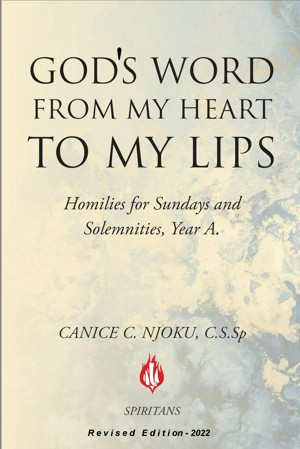
https://ppeditoresebooks.com/collections/venta-en-papel/products/homilies-c-god-s-word-from-my-heart-to-my-lips

Our first reading is part of the farewell message and final instruction of Moses to his people. This message underscores the importance of abiding with God through his Word. That is, living according to His commandments in the scriptures. Through this reading, Moses reminds us that God is alive, active, and ever close to us in his word, “For this Law is not beyond your strength or your reach.”

Therefore, we must seek Him in the scriptures by asking the Holy Spirit to enlighten the eyes of our minds (Eph 1:18). We are also called to obey and live by the word because it is the source of life. God has fully revealed himself to us in his Word, and only those who make frantic efforts will find him. Hence, today’s psalm admonishes us: “Seek the Lord, and your hearts will revive.” The easiest way to be intimate with God is by living his Word.

In the second reading, Paul also reminds us of how close God is to us. Through His son Jesus Christ (“the invisible image of the unseen Father”), God came to dwell among us. God spoke his word, and he became real among us. So, Paul reminds us that God decided to dwell with us through Jesus Christ in other to reconcile us with himself.

https://api.neonemails.com/emails/content/uhCdQs-DxLyWSwuFIvR7IHRFoOjmB1ujv8IGPCvRVmY=

In the gospel, Jesus directed the young man to the scriptures. By doing this, Jesus tries to let him understand that we can find God in his Word, which is close to him. Therefore, to love God is to love his word. He further buttressed this by telling the story of the Good Samaritan. The word of God is personified in the Good Samaritan in today’s gospel. The word of God is Jesus himself, who speaks to us, and Jesus who is ever close to us like the Good Samaritan.

Today’s gospel also presents to us another way through which God is close to us. That is, in our neighbor. As a humble master, he is always available to us in simple ways and things. He is close to us in the scriptures, poor, just, pious, marginalized, sick, and weak. Like the Good Samaritan, if we search for God in these, we will find Him. The good Samaritan saw God in the victim and so was moved to help him.

https://ppeditoresebooks.com/products/homilies-c-god-s-word-from-my-heart-to-my-lips-ebook?_pos=3&_sid=de180b38d&_ss=r

The Good Samaritan represents those who seek Christ in the weak, wounded, and needy. He represents those who are mindful of their neighbors and the wounded. Also, he represents Christ, who is always quick to come to our help when we are weak, despised, and abandoned. He is ever ready to help us recover from our injuries. He is so close to taking care of and healing us. Hence, the Psalmist asks, “What great nation has its gods so close to it as the Lord, our God?” (Dt 4:7).

Peace be with you!

Maranatha!

Homilía del Décimo Quinto Domingo del Tiempo Ordinario, Año C

Dios está con Nosotros en su Palabra y en nuestro Prójimo

Lecturas: 1ra: Dt 30, 10-14; Sal: 68; 2da: Col 6, 1, 15-20 Ev: Lc 10, 25-37

Esta breve reflexión fue escrita por el Padre Canice Chukwuemeka Njoku, C.S.Sp. Es un sacerdote católico y  miembro de la Congregación del Espíritu Santo (Espirítanos). Es un misionero en Puerto Rico. Es el Párroco de la Parroquia la Resurrección del Señor, Canóvanas y el Superior Mayor la Congregación del Espíritu Santo (Espirítanos), Circunscripción de Puerto Rico y Republica Dominicana. Era el Canciller de la Diócesis de Fajardo Humacao, Puerto Rico. El Padre Canice es miembro de la academia de homilética (The Academy of Homiletics). Para más detalles y comentarios se puede contactarlo all: 

canice_c_njoku@yahoo.com, canicechukwuemeka@gmail.com.

(https://orcid.org/0000-0002-8452-8392)

En este décimo quinto domingo del tiempo ordinario celebramos a Dios que está cerca de nosotros en su palabra y en nuestro prójimo. Como la imagen del Dios invisible y el buen samaritano, Cristo está cerca de nosotros en todas las circunstancias de la vida. Por lo tanto, la Iglesia nos urge a reconocer la presencia de Dios tanto en su palabra y en nuestro prójimo.

https://ppeditoresebooks.com/products/homilias-c-palabra-de-dios?

La primera lectura es parte del mensaje de la despedida e instrucción final de Moisés a su pueblo. Este mensaje subraya la importancia de permanecer con Dios a través de su palabra. Es decir, vivir según sus mandamientos en la sagrada escritura. A través de esta lectura, Moisés nos recuerda que Dios está vivo, activo, y siempre cerca de nosotros en su palabra: “La palabra está muy cerca de ustedes, en su boca, y en su corazón, para que la practiquen.”

Por lo tanto, debemos buscarlo en las escrituras, pidiendo al Espíritu Santo que ilumine los ojos de nuestra mente (Ef 1:18). También, estamos llamados a obedecer y vivir según la palabra de Dios porque, es la fuente de la vida. Dios plenamente nos ha revelado a sí mismo en su palabra, y sólo aquellos que hacen esfuerzos frenéticos lo encontrarán. Así que, el salmo responsorial de hoy nos amonesta: “Busquen al Señor, y vivirán.” Lo más fácil lugar de encontrar a Dios es en su palabra. También, lo más fácil manera de tener intimidad con Él es, vivir según su Palabra.

En la segunda lectura, también, Pablo nos recuerda cuán cerca Dios está de nosotros. A través de su hijo, Jesucristo (“la imagen invisible del Padre que no se ha visto”), Dios vino a morar entre nosotros. Dios habló su Palabra, y se convirtió visible entre nosotros. Así que, Pablo llama la atención sobre el hecho de que, Dios decidió morar con nosotros a través de Jesucristo. El propósito es para reconciliarnos con su mismo a través de Jesucristo. Además, como el cuerpo de Cristo, la iglesia es la presencia visible de Cristo con nosotros.

https://api.neonemails.com/emails/content/uhCdQs-DxLyWSwuFIvR7IHRFoOjmB1ujv8IGPCvRVmY

En el Evangelio, Jesús dirigió al doctor de la ley a las escrituras. Haciendo esto, Jesús trata de hacerle comprender que Dios se encuentra en su palabra. Amar a Dios, por lo tanto, es amar su palabra. Jesús reforzó esto por contar la historia del buen samaritano. La Palabra de Dios es personificada en el buen samaritano en el Evangelio de hoy. La palabra de Dios es Jesús mismo quien nos habla. Primero, como el buen samaritano, Jesús está siempre cerca de nosotros, ayudándonos en nuestra fragilidad y levantándonos de nuestros caídos.

El Evangelio de hoy también nos presenta otro lado de cómo Dios está cerca de nosotros. Es decir, en nuestro prójimo. Como un humilde maestro, Él siempre se hace presente a nosotros en cosas y formas sencillas. Está cerca de nosotros en las escrituras, en los pobres, en los justos, en los piadosos, en los marginados, en los enfermos y en los débiles. Como el buen samaritano, si buscamos a Dios en estos, lo vamos a encontrar. El buen samaritano vio y encontró a Dios en la víctima de los ladrones y malvados, y se conmovió a ayudarle.

https://ppeditoresebooks.com/products/homilias-c-palabra-de-dios-ebook?_pos=8&_sid=1ef404b62&_ss=r

El buen samaritano representa a aquellos que buscan a Cristo en los débiles, heridos y los pobres. Cristo es un buen samaritano por excelencia. Él está disponible para venir a nuestra ayuda cuando estamos débiles, despreciados y abandonados. Él está siempre listo para ayudarnos a recuperarnos de nuestras heridas, y está cerca para cuidar y sanarnos. Por lo tanto, el salmista pregunta: “… ¿Qué nación tan grande tiene sus dioses tan cerca de ella como el Señor, nuestro Dios…? ” (Dt 4:7).

¡La paz sea con ustedes!

¡Maranatha!

Homily For The 14th Sunday of Ordinary Time, Year C

Instruments Of Christ’s Peace

 Readings: 1st: Is 66:10-14; Ps: 65:1-7. 16. 20; 2nd: Gal 6:14-18 Gos: Lk 10:1-12. 17-20

This brief reflection was written by Fr. Njoku Canice Chukwuemeka, C.S.Sp. He is a Catholic Priest and a member of the Congregation of the Holy Spirit (Spiritans). He is a missionary in Puerto Rico. He is the Parish Priest of Parroquia la Resurrección del Senor, Canóvanas, and the Major Superior of the Congregation of the Holy Spirit (Spiritans), Circumscription of Puerto Rico and the Dominican Republic. He was the chancellor of the Diocese of Fajardo Humacao, Puerto Rico. Fr. Canice is a member of the Academy of Homiletics. For more details and comments contact him atcanice_c_njoku@yahoo.com, canicechukwuemeka@gmail.com

(https://orcid.org/0000-0002-8452-8392)

“Nothing is lost by peace…Jesus brings us peace and leaves us peace” (Pius XII). On this fourteenth Sunday of Ordinary Time, the Church draws our attention to the need and importance of peace in our world. She also reminds us that Christ is the source of our peace.

https://ppeditoresebooks.com/collections/venta-en-papel/products/homilies-c-god-s-word-from-my-heart-to-my-lips

One of humankind’s natural desires is to live a peaceful life. Ordinarily, one would expect humanity to enjoy more peace and harmony with all the scientific discoveries and inventions in our world. Unfortunately, it has not been so. This is because peace comes from God. So, it must be appreciated, nurtured, and preserved.

In the first reading of today, God in his infinite goodness offers us peace: “Now towards her I send overflowing peace like a river.” When we allow this peace to flow into our hearts and guide our lives, we become fulfilled, satisfied, and our communities and the entire world become a wonderful place. Therefore God calls us to be messengers, instruments, and agents of this peace. It must flow from and through us to others.

Unfortunately, most of us today have lost the mark. This is by assuming that peace comes from material or physical wealth, how many cars, houses, clothes, or how much money one has in their account. According to Jürgen Moltmann, “Peace is the blessed joy of a successful life. It is the fullness of life in the presence of the living God. It is the fullness of life in the mutual love of human beings. It is the fullness of life in the community of creation with all other creatures.” This can only flow from Jesus Christ, the prince of peace.

https://api.neonemails.com/emails/content/uhCdQs-DxLyWSwuFIvR7IHRFoOjmB1ujv8IGPCvRVmY=

In the second reading, Paul prays, “Peace and mercy to all who follow this rule, who form the Israel of God.”  This means that peace comes to our hearts, homes, communities, societies, and world when we work in harmony with the will of God. It comes to all who bear the marks of Christ as Paul did. So, we must make room for peace so that our joy may be complete in Jesus Christ.

Today’s gospel acclamation is a prayer from Paul: “May the peace of Christ reign in your hearts!” The absence of peace in any heart, family, community, society, or nation leaves it devastated. Peace advances our communities. Any community that welcomes peace welcomes an opportunity for both spiritual and material prosperity.

In today’s gospel, Jesus equips us with the message we must bring to our world: “Peace be with this house.” It is a gift we must offer to our world. Jesus knows very well that this is what our world needs most, and he is ever ready to let us have it. With the peace that Christ offers us, we must be prepared to transform our world from a culture of war and hatred to a culture of peace. He invites us to be instruments of his peace. What we must bring to our world is the good news of the peace of our Lord Jesus Christ.

https://ppeditoresebooks.com/products/homilies-c-god-s-word-from-my-heart-to-my-lips-ebook?_pos=3&_sid=de180b38d&_ss=r

Finally, peace is precious and golden. Like joy, it is contagious. If we have peace, it must affect others positively. Therefore, like Francis of Assisi, let us pray: “Lord, make me an instrument of your peace, where there is hatred, let me sow love; where there is injury, pardon; where there is doubt, faith; where there is despair, hope; where there is darkness, light; and where there is sadness, joy.”

Peace be with you all!

Maranatha!

Homilía del Décimo Cuatro Domingo del Tiempo Ordinario, Año C

Instrumentos de la Paz de Jeuscristo

Lecturas: 1ra: Is 66, 10-14; Sal: 65; 2da: Ga 6, 14-18; Ev: Lc 10, 1-12

Esta breve reflexión fue escrita por el Padre Canice Chukwuemeka Njoku, C.S.Sp. Es un sacerdote católico y  miembro de la Congregación del Espíritu Santo (Espirítanos). Es un misionero en Puerto Rico. Es el Párroco de la Parroquia la Resurrección del Señor, Canóvanas y el Superior Mayor la Congregación del Espíritu Santo (Espirítanos), Circunscripción de Puerto Rico y Republica Dominicana. Era el Canciller de la Diócesis de Fajardo Humacao, Puerto Rico. El Padre Canice es miembro de la academia de homilética (The Academy of Homiletics). Para más detalles y comentarios se puede contactarlo all: 

canice_c_njoku@yahoo.com, canicechukwuemeka@gmail.com.

(https://orcid.org/0000-0002-8452-8392)

“Nada se pierde por la paz…Jesús nos trae paz, y nos deja la paz” (Pío XII). En este décimo cuarto domingo, la iglesia llama nuestra atención a la necesidad e importancia de paz en nuestro mundo. También, nos recuerda que Cristo es la fuente de nuestra paz.

https://ppeditoresebooks.com/products/homilias-c-palabra-de-dios?

Uno de los más importantes deseos de la humanidad es, vivir una vida pacífica. Normalmente uno esperaría que, con todos los descubrimientos e invenciones científicas en nuestro mundo, que la humanidad gozara más paz y armonía. Por desgracia, no ha sido así. Esto es porque la paz viene de Dios. Así que, debe ser apreciada, nutrida y conservada.

En la primera lectura de hoy, Dios en su infinita bondad nos ofrece paz: “Ahora, yo haré correr hacia ella la paz como un río.” Si permitamos que esta paz fluya en nuestros corazones y guie nuestras vidas, estaremos satisfechos. Nuestras comunidades y el mundo entero convertirán en un lugar maravilloso. Por lo tanto, estamos llamados a ser mensajeros, agentes e instrumentos de paz. Se debe fluir desde, y a través de nosotros a los demás.

Por desgracia, la mayoría de nosotros hoy en día ha perdido la marca. Esto es, por asumir que la paz viene de cosas materiales o de las riquezas físicas. Es decir, cuántos carros, casas, cuántas ropas, o incluso la cantidad de dinero que uno tiene en su cuenta. Según Jürgen Moltmann: “La paz es la bendita alegría de una vida exitosa. Es la plenitud de la vida en la presencia del Dios vivo. Es la plenitud de la vida en el amor mutuo de los seres humanos. Es la plenitud de la vida en la comunidad de la creación con todas las otras criaturas.” Hermanos, esta paz solo puede fluir de Jesucristo el príncipe de paz.

En la segunda lectura, Pablo ora por la paz y misericordia a todos los que siguen la voluntad de Dios: “Paz y misericordia a todos los que siguen esta regla, que forman el Israel de Dios.” Esto significa que logramos paz en nuestros corazones, hogares, comunidades, sociedades y mundo, sólo cuando caminamos según la voluntad de Dios. Así que, debemos hacer espacio para la paz, para que nuestra alegría sea completa en Jesucristo.

https://api.neonemails.com/emails/content/uhCdQs-DxLyWSwuFIvR7IHRFoOjmB1ujv8IGPCvRVmY=

La aclamación del Evangelio de hoy también es una oración de Pablo: “¡Que la paz de Cristo reine en sus corazones!” La ausencia de paz en cualquier corazón, familia, comunidad, sociedad o nación la deja devastada. Paz avanza nuestras comunidades. Cualquier familia y comunidad que acoge y vive en paz, acoge la oportunidad para prosperar tanto espiritual y materialmente.

En el Evangelio de hoy Jesús nos equipa con el mensaje que debemos llevar a nuestro mundo:    “Que la paz reine en esta casa.” Es un regalo que debemos ofrecer a nuestro mundo. Jesús sabe muy bien que es la que nuestro mundo necesita más. Por eso, Él está siempre dispuesto a darnos la paz. Con la paz que Cristo nos ofrece, podemos transformar nuestro mundo de la cultura de guerra, del odio y de indiferencia, a una cultura de paz. Él nos invita a ser instrumentos de su paz y armonía. Lo que debemos llevar a nuestro mundo es la buena noticia de paz de nuestro Señor Jesucristo.

https://ppeditoresebooks.com/products/homilias-c-palabra-de-dios-ebook?_pos=8&_sid=1ef404b62&_ss=r

Finalmente, paz es preciosa y dorado. Como alegría, paz es contagiosa. Si la tenemos, podemos afectar a los demás positivamente. Por lo tanto, como San Francisco de Asís, oremos al Señor: “Hazme un instrumento de tu paz, donde haya odio, lleve yo tu amor; donde haya injuria, tu perdón; donde haya duda, fe en ti; donde haya desesperación, la esperanza; donde haya tinieblas, la luz; y donde haya tristeza, la alegría.”

¡La paz sea con ustedes!

¡Maranatha!

Homilía del décimo Tecer Domingo del Tiempo Ordinario, Año C

!Sacrifique sus bueyes por la cause de Cristo! 
Lecturas: 1ra: I Re 19, 16-21; Sal: 15, 1-2. 5. 7-11; 2da: Gal 5, 1.13-18; Ev: Lc 9, 51-62

Esta breve reflexión fue escrita por el Padre Canice Chukwuemeka Njoku, C.S.Sp. Es un sacerdote católico y  miembro de la Congregación del Espíritu Santo (Espirítanos). Es un misionero en Puerto Rico. Es el Párroco de la Parroquia la Resurrección del Señor, Canóvanas y el Superior Mayor la Congregación del Espíritu Santo (Espirítanos), Circunscripción de Puerto Rico y Republica Dominicana. Era el Canciller de la Diócesis de Fajardo Humacao, Puerto Rico. El Padre Canice es miembro de la academia de homilética (The Academy of Homiletics). Para más detalles y comentarios se puede contactarlo all: 

canice_c_njoku@yahoo.com, canicechukwuemeka@gmail.com.

(https://orcid.org/0000-0002-8452-8392)

Hoy es el décimo tercero domingo del tiempo ordinario. En este domingo, la Iglesia nos llama a ser totalmente comprometidos a Cristo. Sin “mirar hacia atrás,” debemos libremente “sacrificar” todas las distracciones y obstáculos que nos impiden a servir al Señor bien.

https://ppeditoresebooks.com/products/homilias-c-palabra-de-dios?

En la primera lectura, la llamada de Eliseo y su respuesta fue un evento espectacular. Eliseo demostró un compromiso total a su llamada. El sacrificio de sus bueyes, los besos a su padre, y la despedida de sus compañeros, fueron gestos simbólicos que él aceptó su llamada liberalmente. Fueron señales de su sumisión total a la voluntad de Dios contra su propia voluntad. También, fueron indicaciones que él amó a Dios más que su negocio, y su propia vida.

El sacrificio de sus bueyes es muy importante para nosotros hoy. “El sacrifico y abandonó todo” lo que podría haber convertido en un gran obstáculo para su decisión de servir a Dios en el futuro. También, venció la tentación de ocultar o guardarlos. Esta fue una fuerte prueba de su compromiso a Dios. ¿Qué hemos sacrificado, y cuál es nuestra prueba de ello? 

En la segunda lectura, Pablo nos recuerda la libertad que tenemos en Cristo. Esta libertad es para un propósito. Nos libera de las cosas que nos esclavizan para ser comprometidos a él. No es libertad para entregarse en vanos actos. No es la libertad que conduce al libertinaje. En cambio, es la libertad de seguir y servir al Señor. Esta libertad nos une a Cristo. Es una libertad que nos permite a someter y entregarnos plenamente a Cristo, nuestro salvador.

El Evangelio nos lleva al apogeo de este compromiso total al Señor. Cristo supo y vio la debilidad de los jóvenes que deseaban a seguirlo. Él sabía sus luchas, distracciones, y sus obstáculos. Como muchos de nosotros, tenían “tantas excusas genuinas”. Querían seguirle a Cristo, pero no quieren hacer el sacrificio necesario ni comprometerse a su misión.

https://api.neonemails.com/emails/content/uhCdQs-DxLyWSwuFIvR7IHRFoOjmB1ujv8IGPCvRVmY=

Viendo su situación, Cristo les dijo: “El que empuña el arado y mira hacia atrás, no sirve para el Reino de Dios”. “Mirando hacia atrás” en este contexto tiene graves consecuencias para nuestro viaje y vida cristiana. Fue la misma acción que convirtió la esposa de Lot a una estatua de sal (Gen 19:26), y Judas Iscariote a un traidor.

Uno de los más grandes obstáculos que tenemos hoy como cristianos es, que “nuestros bueyes” todavía están vivos y todavía los alimentamos diariamente. Aunque somos cristianos profesos, nuestros bueyes todavía están escondidos en algún lugar de nuestra vida. Se incluyen, viejos hábitos y pensamientos, miedos de futuro y materialismo. Debemos “sacrificarlos” como signo de nuestro compromiso total a Cristo o, nuestra atención se mantendrá dividida porque: “No puedes servirle a Dios y mormón al mismo tiempo” (Lc 16:13).

Por lo tanto, este domingo y, en este año dedicado a la misión, la Iglesia nos llama a ser totalmente comprometidos a Cristo. Como Eliseo, debemos “sacrificar y evitar” todo que no nos permiten a responded plenamente a nuestra llamada. Se los hacen difícil a comprometernos a Cristo.

https://ppeditoresebooks.com/products/homilias-c-palabra-de-dios-ebook?_pos=8&_sid=1ef404b62&_ss=r

Finalmente, si logramos a sacrificarlos, así que, podemos decirle a Cristo orgullosamente: “Señor, tú eres mi porción y mi copa” (Sal 16:5). Entonces, el Señor nos mostrará el camino de la vida eterna

¡La paz sea con ustedes!

¡Maranatha!

Homily For The 13th Sunday of Ordinary Time, Year C

Sacrifice your Oxen for the Sake of Christ!

Readings: 1st: I Kg 19, 16-21; Ps: 15, 1-2. 5. 7-11; 2nd: Gal 5, 1.13-18 Gos: Lk 9, 51-62

This brief reflection was written by Fr. Njoku Canice Chukwuemeka, C.S.Sp. He is a Catholic Priest and a member of the Congregation of the Holy Spirit (Spiritans). He is a missionary in Puerto Rico. He is the Parish Priest of Parroquia la Resurrección del Senor, Canóvanas, and the Major Superior of the Congregation of the Holy Spirit (Spiritans), Circumscription of Puerto Rico and the Dominican Republic. He was the chancellor of the Diocese of Fajardo Humacao, Puerto Rico. Fr. Canice is a member of the Academy of Homiletics. For more details and comments contact him at: canice_c_njoku@yahoo.com, canicechukwuemeka@gmail.com

(https://orcid.org/0000-0002-8452-8392)

Today is the thirteenth Sunday of ordinary time. This Sunday, the church calls us to be fully committed to Christ. Without “Looking back,” we must freely “slaughter” all the forces, distractions, and obstacles that prevent us from serving the Lord.

https://ppeditoresebooks.com/collections/venta-en-papel/products/homilies-c-god-s-word-from-my-heart-to-my-lips

In the first reading, the call of Elisha and his response was a dramatic event. Elisha demonstrated a total commitment to his call. The slaughtering of his oxen, the kissing of his father, and the bidding of farewell to his men were symbolic gestures that he had freely accepted his call. It was a sign of total submission to the will of God over his own will. It was also an indication that he loved God more than his business and his own life.

The slaughtering of his oxen is very significant for us today. He “killed and abandoned everything” that could have become an obstacle to his decision to serve God in the future. Also, he overcame the temptation to keep them. This was the proof of his total commitment to God. What have we sacrificed, and what is our evidence of it?

In the second reading, Paul reminds us of the freedom we have in Christ. This freedom is for a purpose. It liberates us from the things that enslave us in order to be committed to Christ. It is not freedom to indulge in vain acts. It is not freedom to become inactive. Instead, it is the freedom to follow and serve the Lord. This freedom binds us to Christ. It is a freedom that permits us to surrender all to Jesus Christ, our savior.

The gospel brings us to the apogee of this total commitment to the Lord. Christ knew and saw the weakness of the young men who wished to follow him. He knew their struggles, as well as their distractions. Like some of us, they had “genuine intentions and excuses”. They wanted to follow Christ, yet they were not ready to make the necessary sacrifice.

https://api.neonemails.com/emails/content/uhCdQs-DxLyWSwuFIvR7IHRFoOjmB1ujv8IGPCvRVmY=

So, seeing their predicament, Christ addressed them: “No one who sets a hand to the plow and looks to what was left behind is fit for the kingdom of God.” “Looking back” in this context has grave consequences for our Christian life and journey. It turned Lot’s wife into a pillar of salt (Gen 19:26) and Judas Iscariot into a traitor. It represents all unnecessary attachments. It does not permit us to make God’s call through his Son Jesus Christ, a permanent experience in our lives.

One of the most significant obstacles we have today as Christians are that “our oxen” are still alive.  Although professed Christians, our oxen are still hidden somewhere in the fabrics of our life. They represent old habits and mundane things to which we are firmly attached. We must “slaughter” them as a sign of our total commitment to Jesus Christ or, our attention will remain divided because: “You cannot serve God and Marmon at the same time” (Lk 16:13).

https://ppeditoresebooks.com/products/homilies-c-god-s-word-from-my-heart-to-my-lips-ebook?_pos=3&_sid=de180b38d&_ss=r

So, this Sunday, the church calls us to be fully committed to Christ. Like Elisha, we must “slaughter all the forces, obstacles, and vices such as selfishness, materialism, immorality, and old bad habits. These make it hard for us to be committed to Christ. If we succeed in sacrificing them, we can confidently say: “O Lord, you are my portion and cup.” Then, the Lord will show us the part of life.

Peace be with you all!

Maranatha!

Homily For The Solemnity Of The Body and Blood Of Christ – Corpus Christi, Año C

Oh, Sacrament Most Holy, Oh Sacrament Divine

Readings:1st: Gen 14:18-20; Ps: 109:1-4; 2nd: I Cor 11:23-26; Gos: Lk 9:11-17

This brief reflection was written by Fr. Njoku Canice Chukwuemeka, C.S.Sp. He is a Catholic Priest and a member of the Congregation of the Holy Spirit (Spiritans). He is a missionary in Puerto Rico. He is the Parish Priest of Parroquia la Resurrección del Senor, Canóvanas, and the Major Superior of the Congregation of the Holy Spirit (Spiritans), Circumscription of Puerto Rico and the Dominican Republic. He was the chancellor of the Diocese of Fajardo Humacao, Puerto Rico. Fr. Canice is a member of the Academy of Homiletics. For more details and comments contact him atcanice_c_njoku@yahoo.com, canicechukwuemeka@gmail.com

(https://orcid.org/0000-0002-8452-8392)

The solemnity of the Body and Blood of Christ (Corpus Christi), which the Church celebrates today, reminds us all of the beautiful gifts of God to us through Jesus Christ in the Blessed Sacrament. While the primary focus of this solemnity is on the spiritual nourishment that Christ gives us, its secondary focus is on the Body of Christ, which is the Church.

https://ppeditoresebooks.com/collections/venta-en-papel/products/homilies-c-god-s-word-from-my-heart-to-my-lips

The Body and Blood of Christ (the Eucharist) is the most excellent gift ever given to us by Christ. It also shows how much God loves and cares for both our temporal and spiritual welfare. Therefore, what we celebrate today is the sacramental presence of Christ in his Church.

Today, virtually all the readings touched on one issue – giving or offering something. The first reading succinctly tells us that “Abram offered Melchizedek a tithe of everything.” He did not give it to receive something in return. Instead, he did it out of his own free will.

Of course, Melchizedek blessed him and offered thanks to God on his behalf with bread and wine. These were offerings of one’s self in the form of material items. Abram is a specialist in self-donation (cf. Gen 22:1-18).

Today as ever before, Christ offers himself sacramentally to us. This is simply a way of expressing his unconditional love for us. He commands us: “Do this in memory of me!” Hence the church teaches us: “The command of Jesus to repeat his actions and words until he comes does not only ask us to remember Jesus and what he did. It is directed at the liturgical celebration, by the apostles and their successors, of the memorial of Christ (CCC 1341).

https://api.neonemails.com/emails/content/uhCdQs-DxLyWSwuFIvR7IHRFoOjmB1ujv8IGPCvRVmY=

So, when we re-live the experience, we truly eat His Body and drink His Blood. Also, at another level, “Do this in memory of me” positions us to be ready to offer ourselves ultimately and for the salvation of others as Christ did for our salvation. So, when we re-live this experience, we are nourished spiritually to offer ourselves too to and for others.

In the gospel, Jesus says to Andrew and his colleagues, “Give them something to eat!” Today also, Christ is asking us to offer something. We, fed with the Body and Blood of Christ, are not being asked to give what we do not have. However, the truth is that although we live in a “highly religious world,” many are yet to receive the Body and Blood of Christ.

So, when we draw them closer to Christ, we bring them to the banquet table of Christ, who feeds and nourishes them with His body and blood. Therefore, we must be hospitable enough to help the weak, the spiritually hungry, and the thirsty to participate in the great feast of the Body and Blood of Christ.

Finally, Christ offers us his body and blood, real food and drink, which is the mystery and core of our faith. In the Holy Eucharist, Christ draws us closer to himself. Christ is present with us in the Holy Eucharist as the head of the Church.

https://ppeditoresebooks.com/products/homilies-c-god-s-word-from-my-heart-to-my-lips-ebook?_pos=3&_sid=de180b38d&_ss=r

So, today’s celebration provides us an opportunity to thank and adore Christ present in the Most Holy Sacrament. So, let us adore Christ saying, “O Sacrament Most Holy, O Sacrament divine all praises and all thanksgiving be unto you.” Amen.

Peace be with you all!

Maranatha!

Homilía para la Solemnidad del Cuerpo y Sangre de Cristo – Corpus Christi, Año C

Toda alabanza y honor sea al Santísimo Sacramento

Lectura:1ra: Gen 14:18-20; Sal: 109:1-4; 2da: I Co 11:23-26; Ev: Lc 9:11-17

Esta breve reflexión fue escrita por el Padre Canice Chukwuemeka Njoku, C.S.Sp. Es un sacerdote católico y  miembro de la Congregación del Espíritu Santo (Espirítanos). Es un misionero en Puerto Rico. Es el Párroco de la Parroquia la Resurrección del Señor, Canóvanas y el Superior Mayor la Congregación del Espíritu Santo (Espirítanos), Circunscripción de Puerto Rico y Republica Dominicana. Era el Canciller de la Diócesis de Fajardo Humacao, Puerto Rico. El Padre Canice es miembro de la academia de homilética (The Academy of Homiletics). Para más detalles y comentarios se puede contactarlo all: 

canice_c_njoku@yahoo.com, canicechukwuemeka@gmail.com.

(https://orcid.org/0000-0002-8452-8392)

La solemnidad del cuerpo y la sangre de Cristo (Corpus Christi), que la Iglesia celebra hoy nos recuerda el maravilloso regalo de Dios a nosotros por Jesucristo en el Santísimo Sacramento. Mientras que el foco principal de esta solemnidad es el alimento espiritual que Cristo nos da, su foco secundario está en el cuerpo de Cristo que es la iglesia.

https://ppeditoresebooks.com/products/homilias-c-palabra-de-dios?

La Eucaristía, es el más excelente regalo que Dios nos ha dado por Cristo. También, se muestra cuánto Dios ama y cuida nuestro bienestar corporal y espiritual. Por lo tanto, celebramos la presencia sacramental de Cristo en su iglesia.

Hoy, prácticamente todas las lecturas tocan un mismo tema – dar u ofrecer algo. La primera lectura nos dice que: “Abram ofreció a Melquisedec un diezmo de todo.” Él no lo dio con la intención de recibir algo en cambio, sino, por su libre y plena voluntad.

Por eso, Melquisedec le bendijo, y con pan y vino le ofreció gracias a Dios a favor de Abram. Estas eran ofrendas de uno mismo en forma de objetos materiales. De hecho, Abram es un especialista en darse a los demás como lo vemos también en Gen 22: 1-18.

Hoy, como siempre, Cristo nos ofrece si mismo sacramentalmente de comer y beber como una manera de expresar su amor incondicional para nosotros. Él nos manda: “¡Hagan esto en conmemoración mía!” Por lo tanto, la Iglesia nos enseña: “El orden de Jesús de repetir sus acciones y palabras hasta que él venga, no sólo nos pide recordar a Jesús y lo que hizo. Está dirigida a la celebración litúrgica por los apóstoles y sus sucesores del memorial de Cristo” (CCC 1341).

https://api.neonemails.com/emails/content/uhCdQs-DxLyWSwuFIvR7IHRFoOjmB1ujv8IGPCvRVmY=

Por lo tanto, en cada celebración, revivimos la misma experiencia. Realmente, comemos su cuerpo y bebemos su sangre. También, en otro nivel, “Hagan esto en conmemoración mía,” nos posiciona a estar listos a ofrecernos completamente por la salvación de los demás como Cristo lo hizo para nuestra propia salvación. Por lo tanto, cuando vivimos esta experiencia, estamos alimentados espiritualmente para que podemos ofrecernos también a los demás.

En el Evangelio de hoy, Jesús le dijo a Andrés y sus compañeros: “Denles ustedes de comer” Así mismo, Cristo nos pide ofrecer algo. Para nosotros, que hemos sido alimentados con el cuerpo y sangre de Cristo nos pide dar lo que tenemos. Aunque, vivimos en un mundo muy religioso, sin embargo, hay muchos que todavía no han sido alimentado por el cuerpo y la sangre de Cristo.

Si los ayudamos acercarse a Cristo, participaran en la mesa del banquete, donde Cristo los alimentará y nutrirá con su cuerpo y su sangre. Así que, no corresponde a ser lo suficientemente acogedores para ayudar a los débiles, los que están espiritualmente hambrientos y sedientos a poder participar en la gran fiesta del cuerpo y la sangre de Cristo.

Finalmente, hoy lo que Cristo nos ofrece es su verdadero cuerpo y sangre, verdadera comida y verdadera bebida. Esta es el misterio y núcleo de nuestra fe en Cristo. En la Santa Eucaristía, Cristo nos tarea a sí mismo. Cristo está presente con nosotros en la Sagrada Eucaristía como la cabeza de la iglesia.

https://ppeditoresebooks.com/products/homilias-c-palabra-de-dios-ebook?_pos=8&_sid=1ef404b62&_ss=r

Así que, la celebración de hoy nos ofrece la oportunidad de agradecer y adorarle a Cristo presente en el Santísimo Sacramento. Por eso, adoremos a Cristo diciendo: “Oh santísimo sacramento, oh divino sacramento, a ti sea todo honor y alabanza. Amen.

¡La paz sea con ustedes!

¡Maranatha!

Homily For Holy Trinity Sunday, Year C

The Most Holy Trinity, Our Model of Unity

Readings: (1st: Prov 8, 22-33; Ps: 8, 4-9; 2nd: Rom 5, 1-5 Gos: Jn 16, 12-15)

This brief reflection was written by Fr. Njoku Canice Chukwuemeka, C.S.Sp. He is a Catholic Priest and a member of the Congregation of the Holy Spirit (Spiritans). He is a missionary in Puerto Rico. He is the Parish Priest of Parroquia la Resurrección del Senor, Canóvanas, and the Major Superior of the Congregation of the Holy Spirit (Spiritans), Circumscription of Puerto Rico and the Dominican Republic. He was the chancellor of the Diocese of Fajardo Humacao, Puerto Rico. Fr. Canice is a member of the Academy of Homiletics. For more details and comments contact him at: canice_c_njoku@yahoo.com, canicechukwuemeka@gmail.com

(https://orcid.org/0000-0002-8452-8392)

Today we celebrate one of the greatest mysteries of our Christian faith, the Holy Trinity. This celebration reminds us that the Father, the Son, and the Holy Spirit are working together. They are never separated, though, each one of them is a distinct divine person. There is a unity of essence and relation within the three divine persons.

https://ppeditoresebooks.com/collections/venta-en-papel/products/homilies-c-god-s-word-from-my-heart-to-my-lips

No amount of philosophical debate or scientific research can fully explain it. It is a mystery and can best be appreciated only with the “eyes of faith.” As a dogma, “it is an article of faith revealed by God, which the Magisterium of the Church presents as necessary to be believed…” Hence, Paul’s prayer becomes important today: “May the Lord enlighten the eyes of your minds…” (Eph 1, 18).

In our first reading, Moses reminds us of the beautiful and mysterious nature of the works of God. In order words, it takes a loving and mysterious God to accomplish such a wonderful and mysterious salvation task. Hence, he encourages us to strengthen our faith in God by simply obeying his commandments.

In the second reading, though without offering any systematic teaching on the Holy Trinity, Paul presents the three divine persons in their concrete forms and actions: “Led by the Spirit, we are sons of God…And we are heirs with Christ.” It is the same spirit that proceeds from both the Father and the Son that helps us to call God Abba Father. 

In today’s gospel, Christ himself revealed the mystery of the three divine persons to us. He revealed this with a mandate: “Go and make disciples of all nations, baptizing them in the name of the Father and of the Son and the Holy Spirit.” This is the Trinitarian formula.  So, any sincere prayer offered in the name of the Holy Trinity bears a mark of excellence.

Today, the church reminds us that the three divine persons are not divided in their actions of grace. Instead, they work and walk together. They have the same mission, which is the salvation of the world. The Father sent the Son to redeem the world (Jn 1, 1-3). And the Father and the Son sent us the Holy Spirit as our Counselor and Advocate (Act 1, 8. 2). None of them have absolute dominance over a particular period. This is because, despite being three distinct persons, they have one essence. They are eternally one and united.

https://api.neonemails.com/emails/content/uhCdQs-DxLyWSwuFIvR7IHRFoOjmB1ujv8IGPCvRVmY=

So, the prayer of Christ to the father: “May they be one, as we are One” (Jn 17:22), is a prayer that arises from Trinitarian love. Therefore, the whole church and each family that forms the universal Church is a sacrament of the Trinity. As such, it must be characterized by love and unity.

Therefore, what we celebrate today is a model for our unity. We have many lessons to learn from the Holy Trinity. The most important is that we can live and work together as one family of God, like the Holy Trinity. This is because we bore the same image of God and were baptized by the same Spirit of God whose mark we bear (Eph 4, 30). So, despite our personalities and differences, unity is possible and a fundamental option.

Hence, today’s celebration has much to teach us about unity in our relationships, friendships, marriages, families, and communities. It also reminds us that despite our different talents, gifts, social, and economic levels, we can live and work together for our salvation and the salvation of the world.

https://ppeditoresebooks.com/products/homilies-c-god-s-word-from-my-heart-to-my-lips-ebook?_pos=3&_sid=de180b38d&_ss=r

Finally, the Holy Trinity’s celebration reminds us that our different personalities will become our strengths rather than our weakness or the cause of our disintegration if we remain united. For their love and unity, let us praise the Most Holy Trinity: Glory be to the Father and the Son and the Holy Spirit, Amen.

Peace be with you!

Maranatha!