Homily For The 23rd Sunday Of Ordinary Time, Year A

Promoting Reconciliation Through Dialogue And Mutual Love

Readings: 1st: Ez 33, 7-9; Ps 94, 1-2.6-9; 2nd: Rom 13, 8-10; Gos: Mt 18, 15-20

This brief reflection was written by Fr. Njoku Canice Chukwuemeka, C.S.Sp. He is a Catholic Priest and a member of the Congregation of the Holy Spirit (Spiritans). He is a missionary in Puerto Rico. He is the Parish Priest of Parroquia la Resurrección del Senor, Canóvanas, and the Major Superior of the Congregation of the Holy Spirit (Spiritans), Circumscription of Puerto Rico and the Dominican Republic. He was the chancellor of the Diocese of Fajardo Humacao, Puerto Rico. Fr. Canice is a member of the Academy of Homiletics. For more details and comments contact him at: canice_c_njoku@yahoo.com, canicechukwuemeka@gmail.com

(https://orcid.org/0000-0002-8452-8392)

Today, the twenty-third Sunday of ordinary time, the holy mother church reminds us of our responsibility towards one another and our society. Most importantly, she reminds us that dialogue and mutual love is the best method to promote reconciliation.
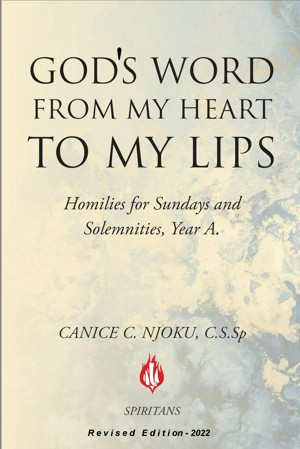
Available now on

Smashwords: https://www.smashwords.com/books/view/1179451

Amazon: https://www.amazon.com/dp/B094YSGTZF

In the first reading, God reminds us, through Prophet Ezekiel, that we are responsible for one another. This is especially true regarding counseling and warning others of the consequences of their actions in order to save them. It takes love to warn, counsel or advice someone. So, we are to do this with love.

To say that we have a responsibility towards others is also to say that it has a consequence for us too. Therefore, the Lord says: “I will hold you responsible.” We must speak out, counsel, and even warn our brothers and sisters, children, friends, and relatives when they miss their path. Being indifferent to the decay (especially moral, cultural, and spiritual) in our family, society, or community could be detrimental in the future. So, the onus lies on us to be our brother’s keeper. This is what God is saying.

Unfortunately, today while things go wrong, some of us prefer to keep quiet, join the majority, or pretend nothing is wrong. We must make ourselves heard. This is because the indifference or silence we display today might haunt us tomorrow. However, we must be mindful that God says: “I do not delight in the death of a sinner…let him repent and live” (Ezek 18, 23). So, whatever action we take must be to correct, rebuild, and bring back the one on the wrong path.

In the second reading, Paul hits the nail right on the head: “Avoid getting into debt, except the debt of mutual love.” We must take note of the adjective “mutual” with which Paul qualified love. The quality of this love is not just a mere selfish feeling or desire to satisfy oneself. Instead, it is that which thinks and cares about the good and welfare of the other.

It can ultimately be known through the actions it prompts in us. This means it must be a relational love that cares, love that is ready to give, and love that reasons. It is mutual love because it takes and shares responsibility. It counsels, accepts good counsel, corrects, and accepts corrections. It is generous and helps the other see clearly. It is love at its best in 1 Cor 13. It is simple, responsive, and responsible.

In the gospel, Jesus gives us the principles of reconciliation. This means that conflicts are inevitable. They must come and are inevitable in relationships, families, and communities. However, the question is how do we resolve them amicably? It is important to note that dialogue is at the center of Jesus’ principle. Ability to counsel and talk over issues, to see things from the perspective of others, or to empathize with others.

Hence, Christ gives us a three-dimensional principle of reconciliation. First, we must sit down and dialogue one on one and face-to-face. Then, seek the mediation of a good friend, and finally, seek the mediation of our community or family. As Christians, how do we resolve our problems today? Take a pound of flesh from the other, or go straight to the court of law? We must note the three basic steps that Christ gives us today.

Unfortunately, today, we neglect all these basic steps and go straight to: “treat him like a tax collector.” Before this, if necessary, we must make all efforts to reconcile with others through dialogue. Dialogue fosters mutual respect for the other; it saves us a lot of energy, time, and the cost of lawsuits. Finally, it fosters mutual love and restores relationships. When we dialogue and agree, God, seals it with a great amen.

Peace be with you all!

Maranatha!

https://www.youtube.com/watch?v=H88jnoBbPmY

Homilia del Vigésimo Tercero Domingo del Tiempo Ordinario, Ano A

Promoviendo Reconciliación a través de Diálogo Y Amor Mutuo 

Lecturas: 1raEz 33, 7-9; Sal: 94, 1-2.6-9; 2daRom 13, 8-10; Ev: Mt 18, 15-20

Esta breve reflexión fue escrita por el Padre Canice Chukwuemeka Njoku, C.S.Sp. Es un sacerdote católico y  miembro de la Congregación del Espíritu Santo (Espirítanos). Es un misionero en Puerto Rico. Es el Párroco de la Parroquia la Resurrección del Señor, Canóvanas y el Superior Mayor la Congregación del Espíritu Santo (Espirítanos), Circunscripción de Puerto Rico y Republica Dominicana. Era el Canciller de la Diócesis de Fajardo Humacao, Puerto Rico. El Padre Canice es miembro de la academia de homilética (The Academy of Homiletics). Para más detalles y comentarios se puede contactarlo all: 

canice_c_njoku@yahoo.com, canicechukwuemeka@gmail.com.

(https://orcid.org/0000-0002-8452-8392)

Hoy, el vigésimo tercer domingo del tiempo ordinario, la Iglesia nos recuerda nuestra responsabilidad hacia a los demás, y a nuestra sociedad. Lo más importante, se nos recuerda que el diálogo y el amor mutuo son el mejor método para promover la reconciliación.

Disponible Ahora al:

Smashwords: https://www.smashwords.com/books/view/1179509

Amazon: https://www.amazon.com/dp/B094YTH1YX?

En la primera lectura, Dios nos recuerda a través del profeta Ezequiel, que tenemos una responsabilidad hacia unos con otros. Esto es especialmente, con respecto a aconsejar y advertir a otros de las consecuencias de sus acciones para salvarlas. Se necesita amor para advertir o aconsejar a alguien. Por lo tanto, debamos hacer esto con amor.

Decir que tenemos una responsabilidad hacia a los demás, es también decir que viene con su propia consecuencia para nosotros. Por lo tanto, el Señor dice: “yo te haré responsable, te pediré a ti cuenta de su vida.” Así que, es nuestro deber hablar, aconsejar, e incluso advertir a nuestros hermanos, amigos y parientes cuando están perdiendo su camino. Ser indiferente a la decadencia (moral, cultural y espiritual) en nuestra familia, sociedad o comunidad podría ser en nuestro propio detrimento en el futuro. Entonces, la responsabilidad recae en nosotros para ser el guardián de nuestro hermano. Esto es lo que Dios quiere decir.

Por desgracia, hoy, mientras que las cosas van mal, algunos de nosotros prefieren guardar en silencio, unirse a la mayoría, o pretender que todo está bien. Debemos hacerse oír. Esto es porque, la indiferencia o el silencio que mostramos hoy nos puede atormentar mañana. Sin embargo, debemos ser conscientes de que Dios dice: “No quiero la muerte del malvado… quiero que se abandone su mala conducta y que viva” (Ez 18, 23). Así que, cualquier acción que debemos tomar, debe ser para corregir, y traer de vuelta el malvado.

En la segunda lectura, Pablo golpea el clavo en la cabeza: “Evitan meterse en deuda, excepto la deuda del amor mutuo.” Debemos tomar nota del adjetivo, “mutuo” con lo que Pablo calificó el amor. La calidad de este amor no es sólo un mero sentimiento egoísta o deseo de satisfacerse. Más bien, es lo que piensa y se preocupa por el bien del otro.

Básicamente, puede ser conocido a través de las acciones que nos incita. Esto simplemente significa, que debe ser un amor relacional que se preocupa, el amor que está listo para dar, y el amor que razona. Es amor mutuo porque, toma y comparte la responsabilidad. Aconseja y acepta buenos consejos. Corrige, y acepta correcciones. Es generoso, y ayuda al otro ver claramente. Es amor en su mejor en 1 Co 13. Es simplemente, responsivo y responsable.

En el Evangelio, Jesús nos da los principios de la reconciliación. Esto significa que los conflictos son inevitables, deben venir. Son inevitables en las relaciones, en las familias y en las comunidades. Sin embargo, la pregunta es ¿cómo resolverlas amistosamente? Es importante notar que en el centro del principio de Jesús está el diálogo. La capacidad para aconsejar y hablar sobre temas, para ver las cosas desde la perspectiva de otros o, la capacidad de empatía con los demás.

Por lo tanto, Cristo nos da un principio tridimensional de la reconciliación. Primero, debemos sentarnos y dialogar uno con el otro, y cara a cara. Entonces, busca la mediación de un buen amigo, y finalmente, busca la mediación de nuestra comunidad o familia. Como cristianos, ¿cómo resolvemos nuestros problemas? ¿Tomar una libra de carne del otro, o ir directamente a la corte? Debemos tomar nota de los tres pasos básicos que Cristo nos da hoy.

Por desgracia, descuidamos todos estos pasos básicos y vamos directamente a: “Tratarlo como a un recaudador de impuestos o un pagano.” Antes de esto, (si es necesario), debemos hacer todos los esfuerzos para reconciliarnos con a los demás a través del diálogo. El diálogo promueve el respeto mutuo por el otro, nos ahorra mucha energía y tiempo. Finalmente, promueve el amor mutuo y restablece las relaciones. Cuando dialogamos y estamos de acuerdo, Dios lo sella con un gran Amén.

¡La paz sea con ustedes!

¡Maranatha!

https://www.youtube.com/watch?v=OGOX6elzL2k

Homilía del Vigésimo Segundo Domingo del Tiempo Ordinario, Año A

Sumisión Total Y Conformidad A Cristo

Lecturas: 1ra: Je 20, 7-9; Sal: 63; 2da: Rom 12, 1-2; Ev: Mt 16, 21-27

Esta breve reflexión fue escrita por el Padre Canice Chukwuemeka Njoku, C.S.Sp. Es un sacerdote católico y  miembro de la Congregación del Espíritu Santo (Espirítanos). Es un misionero en Puerto Rico. Es el Párroco de la Parroquia la Resurrección del Señor, Canóvanas y el Superior Mayor la Congregación del Espíritu Santo (Espirítanos), Circunscripción de Puerto Rico y Republica Dominicana. Era el Canciller de la Diócesis de Fajardo Humacao, Puerto Rico. El Padre Canice es miembro de la academia de homilética (The Academy of Homiletics). Para más detalles y comentarios se puede contactarlo all: 

canice_c_njoku@yahoo.com, canicechukwuemeka@gmail.com.

(https://orcid.org/0000-0002-8452-8392)

Hoy, el vigésimo segundo domingo del tiempo ordinario, la iglesia, nos alienta a superar todas las reticencias y obstáculos para ofrecernos completamente a Cristo. Por lo tanto, todas las lecturas de este domingo se inclinan hacia la sumisión total y conformidad a Cristo.

Disponible Ahora al:

Smashwords: https://www.smashwords.com/books/view/1179509

Amazon: https://www.amazon.com/dp/B094YTH1YX?

En la primera lectura, Jeremías se lamentó: “Señor, me has seducido;” fuiste más fuerte que yo y me venciste.” Simplemente se quejó de la dureza de su misión. “¡Señor no me dijiste que iba a ser tan difícil como esto!” Por supuesto, al principio de su llamado, él resistió a Dios, al hacer excusas: “Señor Dios, verdaderamente no sé cómo hablar. Yo sólo soy un niño.” Sin embargo, Dios insistió que él lo ha escogido desde el vientre de su madre. (Jer 1:4-10).

La resistencia, la sumisión y la prueba de Jeremías, nos dice que nada puede impedir la misión de Dios, ni siquiera nuestra resistencia. Esto es especialmente cuando sus manos están sobre uno. Aunque, Jeremías se resistía, eventualmente se sometió a Dios: “…y me he dejado seducir.” Se conformó con la voluntad de Dios, y ya no estaba a cargo de sí mismo. Más bien, la palabra de Dios ardía como fuego en él, que ya no podía resistir la predicación.

Después de someterse a Dios, eventualmente, el Jeremías que era muy tímido, y no sabía cómo hablar, se transformó. ¡Hay mucho misterio en Dios! Asumimos que nuestra misión debe ser fácil en todo momento. Por desgracia, no es siempre así. Fidelidad a Dios a veces, nos trae pruebas, decepciones e incluso sufrimientos. A veces, nos permite experimentar terribles dolores. Sin embargo, a pesar de todo esto, se nos protege y bendice.

En la segunda lectura, Pablo empleó el lenguaje de la gracia, más que de la ley para implorarnos: “Ofrezcan ustedes como un sacrificio vivo (u ofrenda viva), santo y agradable a Dios.” Aquí, Pablo nos llama a someternos completamente a Dios sin resistencia y reserva. Presentar nuestros cuerpos es someter nuestras facultades, y la totalidad de nuestro ser. Es la rendición total a Dios. Esta rendición total, es esencial para una vida de rectitud, gozo, paz y victoria en Cristo.

Por supuesto, ofrecerse completamente significa aceptar todo lo que viene con ello. En su segunda llamada hoy, Pablo insiste en que debemos ajustarnos a Cristo, más que a este mundo. Es sólo cuando nos hemos ofrecido completamente a Dios, para que podamos ajustarnos a Cristo. La conformidad con Cristo significa vivir como Cristo.

Significa, participar en su vida y muerte, con nuestros ojos fijos en su gloria. Significa que Cristo ahora vive y trabaja en nosotros a través del Espíritu Santo (Gal 2, 20). Esto fue lo que hicieron los santos gloriosos. Ellos sometieron, y se ajustaron a Cristo participando en su vida, muerte y resurrección. Ahora, se participan en su gloria.

En el Evangelio de hoy, vemos la ironía de la vida. El mismo Pedro que proclamaba que Cristo es el Mesías la semana pasada, hoy es reprendido como “Satanás”. Cristo simplemente lo reprendió por ser un obstáculo a su misión. Esto demuestra que, aunque, Pedro profesaba que Cristo es el Mesías (como Dios se lo reveló), sin embargo, él no ha comprendido plenamente la naturaleza de la misión de Cristo.

Todavía lo ve sólo desde la perspectiva de la realeza y la gloria. Por supuesto, estaba ansioso por participar en estos. Esto también nos enseña que, todos somos vulnerables a cometer errores y a caer, no importa cuán espirituales seamos. Por lo tanto, esto nos requiere tomar en serio, la amonestación de Pablo que: “Si alguien piensa que está firme, tenga cuidado de no caer” (1Co 10:12).

Pedro no podía entender por qué Cristo debería estar hablando de esta manera. Sin embargo, el llamado de Dios no sólo se trata, y participa en su gloria, sino que también participar primero en su sufrimiento. Esto es lo que Cristo hizo. Que él se ofreció como un sacrificio vivo, significa que él sometió todo sin reticencia para nuestra salvación. Sin embargo, Pedro no se ha dado cuenta de la necesidad de la muerte de Cristo, “que es más conveniente que un hombre muera por el pueblo, y no que toda la nación perezca” (Jn 11:50).

¡La paz sea con ustedes!

¡Maranatha!

https://www.youtube.com/watch?v=OGOX6elzL2k

Homily For The 22nd Sunday Of Ordinary Time, Year A

Total Submission And Conformity To Christ

Readings: 1st: Jer 20, 7-9; Ps 63; 2nd: Rom 12, 1-2; Gos: Mt 16, 21-27

This brief reflection was written by Fr. Njoku Canice Chukwuemeka, C.S.Sp. He is a Catholic Priest and a member of the Congregation of the Holy Spirit (Spiritans). He is a missionary in Puerto Rico. He is the Parish Priest of Parroquia la Resurrección del Senor, Canóvanas, and the Major Superior of the Congregation of the Holy Spirit (Spiritans), Circumscription of Puerto Rico and the Dominican Republic. He was the chancellor of the Diocese of Fajardo Humacao, Puerto Rico. Fr. Canice is a member of the Academy of Homiletics. For more details and comments contact him atcanice_c_njoku@yahoo.com, canicechukwuemeka@gmail.com

(https://orcid.org/0000-0002-8452-8392)

Today, the twenty-second Sunday of ordinary times, the church encourages us to overcome all reluctance and obstacles and to surrender ourselves to Christ completely. Hence, all the readings of this Sunday lean towards total submission and conformity to Christ.

Available now on

Smashwords: https://www.smashwords.com/books/view/1179451

Amazon: https://www.amazon.com/dp/B094YSGTZF

In the first reading, Jeremiah lamented: “Lord, you have seduced me; you have overpowered me.” He complained about the toughness of his mission. Lord God, you did not tell me it was this difficult! Of course, at the beginning of his call, he resisted God, making excuses: “Lord God, truly I do not know how to speak. I am only a boy.” However, God insisted that He had chosen him even from his mother’s womb. (Jer 1:4-10).

Jeremiah’s resistance, submission, and ordeal tell us that nothing can prevent the mission of God, not even our resistance. This is especially when his hands are upon one. Though Jeremiah resisted, he eventually submitted to God: “And I have let myself be seduced.” He conformed to God’s will and was no longer in charge of himself. Instead, the word of God burned like fire in him, and he could no longer resist preaching it.

After submitting to God, Jeremiah, who was very timid and did not know how to speak, became transformed. There is much mystery in God! We over assume that our mission must be easy at all times. Unfortunately, it is not always so. Faithfulness to God sometimes brings us trials, disappointments, and even sufferings. At times, he allows us to experience horrific pains. However, despite all these, He shields and blesses us.

In the second reading, Paul employed the language of grace rather than law to implore us: “Offer yourselves as a living sacrifice, holy and acceptable to God. Here, Paul calls us to submit to God without resistance and reservation. To present our bodies is to submit our faculties and the totality of our being. It is total surrender to God. This total surrender is essential to a life of righteousness, joy, peace, and victory in Christ.

Of course, to offer oneself entirely means accepting all that comes with it. In his second call today, Paul insists that we must conform to Christ rather than to this world. When we offer ourselves entirely to God, we can conform to Christ. Conformity to Christ means living like Christ.

It means participating in his life and death with our eyes fixed on his glory. It means that Christ now lives and works in us through the Holy Spirit (Gal 2, 20). This was what the glorious saints did. They submitted and conformed to Christ by participating in his life, death, and resurrection. Now, they participate in His glory.

In today’s gospel, we see the irony of life. The same Peter who proclaimed that Christ was the messiah last week is today rebuked as “Satan.” Christ rebuked him for being an obstacle to his mission. This shows that though Peter professed that Christ is the Messiah (as God revealed it to him), he has not fully understood the nature of Christ’s mission.

He still sees it only from the perspective of royalty and glory. Of course, he was eager to participate in these. This also teaches us that we are all vulnerable to making mistakes and falling, no matter how spiritual we are. So, we must take the admonition of Paul seriously: “Let him who thinks he stands, take heed lest he falls” (1Cor 10:12).

Peter could not understand why Christ should be talking this way. However, God’s call is not only about participating in his glory but also participating first in his suffering. This is what Christ did. That He offered himself as a living sacrifice means that he submitted everything without reluctance for our salvation. However, Peter has not realized the necessity of Christ’s death: “it is better for one man to die for the people than to have the whole nation destroyed.” (Jn 11:50).

Peace be with you all!

Maranatha!

https://www.youtube.com/watch?v=H88jnoBbPmY

Homily For The 21st Sunday Of Ordinary Time, Year A

Recognizing Christ, The Son Of The Living God

Readings: 1st: Is 22, 19-23; Ps 137, 1-3.6. 8; 2nd: Rom 11, 33-36; Gos: Mt 16, 13-20

This brief reflection was written by Fr. Njoku Canice Chukwuemeka, C.S.Sp. He is a Catholic Priest and a member of the Congregation of the Holy Spirit (Spiritans). He is a missionary in Puerto Rico. He is the Parish Priest of Parroquia la Resurrección del Senor, Canóvanas, and the Major Superior of the Congregation of the Holy Spirit (Spiritans), Circumscription of Puerto Rico and the Dominican Republic. He was the chancellor of the Diocese of Fajardo Humacao, Puerto Rico. Fr. Canice is a member of the Academy of Homiletics. For more details and comments contact him atcanice_c_njoku@yahoo.com, canicechukwuemeka@gmail.com

(https://orcid.org/0000-0002-8452-8392)

On this twenty-first Sunday, the church enjoins us to recognize and reverence Christ. We can appreciate his greatness when we recognize who Christ is, as Peter did. However, this is only possible through the power of the Holy Spirit.

Available now on

Smashwords: https://www.smashwords.com/books/view/1179451

Amazon: https://www.amazon.com/dp/B094YSGTZF

In today’s first reading, God manifested his power as the sovereign Lord. He dethroned the proud and wicked Shebna and exalted the humble and faithful Eliakim. In this reading, Eliakim prefigures Christ, the messiah: He who has the key of David, He who opens and no one shuts and shuts, and no one opens” (Rev 3:7). Through his humility, God gave him all authority both in heaven and on earth. Christ delegated the same authority to Peter over his church through His solemn declaration, as we see in today’s gospel.

In the second reading, Paul exalts the greatness of God. He contemplates: “How rich are the depths of God, how impossible it to penetrate his motive or understand his methods, who could ever know the mind of God?” Indeed, as humans, we cannot fathom the wisdom and greatness of God. However, God reveals himself to those who love him and to whomever he chooses to reveal himself.

He reveals the depth of his mind to the one willing to go the extra mile with him and to the one who is docile to the Spirit of God. So, it is unsurprising that he revealed himself extraordinarily to his humble servants like Mary, Peter, Paul, and other apostles.

He reveals himself to those who seek him truthfully, honestly, and with a clear conscience. He has revealed himself fully to us in Jesus Christ. Hence, only those who allow the eyes of their mind to be illumined by the Holy Spirit can comprehend the depths of God’s motive.

Today’s gospel begins dramatically and interestingly. Jesus was aware of the confusion about his personality and mission. So, He decided to know what his disciples think about him: “Whom do people say I am? You, whom do you say I am?” From the response of some of them, it was obvious that they had no clear idea of who Christ was.

Peter came to their rescue. “You are the Christ, the son of the living God!” This answers the “messianic secret” (Mk 1: 43-35). How did Peter know this? Simple! God himself revealed it to him through the Holy Spirit, as Jesus affirmed.

The response of Peter provoked a fundamental declaration from Christ, similar to the one in our first reading. Christ gave Peter the keys as a sign of his apostolic and ministerial authority over the entire church of Christ. This became possible because he recognized Christ. So, Christ was not wrong in making him the head of his earthly church. He occupies this position today through the apostolic succession of the Popes.

If Christ were to ask us the same question today, “who do you say I am”? What would be our response? We cannot comprehend Christ’s identity unless we have an intimate relationship with him. Again, and most importantly, we cannot respond fully to this question unless we are docile to the Holy Spirit, who reveals the depth of God’s mind.

Finally, only believers who recognize who Christ is, have a special place in him. Therefore, our greatest desire every day should be, as Paul says, “To know Christ and the power of his resurrection and to share in his suffering by becoming like him in his death” (Phil 3:10).

Peace be with you all!

Maranatha!

https://www.youtube.com/watch?v=H88jnoBbPmY

Homilía del Vigesimo Primer Domingo del Tiempo Ordinario, Año A

Reconociendo A Cristo, el Hijo De Dios Vivo

Lecturas: 1raIs 22: 19-23; Sal: 137, 1-3.6. 8; 2da: Rom 11:33-36; Ev: Mt 16:13-20

Esta breve reflexión fue escrita por el Padre Canice Chukwuemeka Njoku, C.S.Sp. Es un sacerdote católico y  miembro de la Congregación del Espíritu Santo (Espirítanos). Es un misionero en Puerto Rico. Es el Párroco de la Parroquia la Resurrección del Señor, Canóvanas y el Superior Mayor la Congregación del Espíritu Santo (Espirítanos), Circunscripción de Puerto Rico y Republica Dominicana. Era el Canciller de la Diócesis de Fajardo Humacao, Puerto Rico. El Padre Canice es miembro de la academia de homilética (The Academy of Homiletics). Para más detalles y comentarios se puede contactarlo all: 

canice_c_njoku@yahoo.com, canicechukwuemeka@gmail.com.

(https://orcid.org/0000-0002-8452-8392)

En este vigésimo primer domingo, la Iglesia nos une para reconocer y reverenciar a Cristo. Es sólo cuando reconocemos quién es Cristo, como lo hizo Pedro, que podamos apreciar su grandeza. Sin embargo, esto sólo es posible a través del poder del Espíritu Santo.

Disponible Ahora al:

Smashwords: https://www.smashwords.com/books/view/1179509

Amazon: https://www.amazon.com/dp/B094YTH1YX?

En la primera lectura de hoy, Dios manifestó su poder como el Señor Soberano. Destronaba a los orgullosos y malvados Sebna, y exaltaba al humilde y fiel Eliakim. En esta lectura, Eliakim prefigura a Cristo, el Mesías: “El que tiene la llave de David, el que abre y nadie cierra, y se cierra y nadie se abre “(Ap 3:7). A través de su humildad, Dios le dio toda la autoridad tanto en el cielo como en la tierra. A su vez, a través de su declaración solemne, Cristo delegó la misma autoridad a Pedro sobre su iglesia en el Evangelio de hoy.

En la segunda lectura, Pablo exalta la grandeza de Dios. Él contempla: “¡Qué inmensa y rica es la sabiduría de Dios! ¿Que impenetrable son sus designios…Quien ha conocido jamás el pensamiento del Señor o ha llegado a ser su consejero?” Seguramente, como humanos, no podemos comprender la sabiduría y la grandeza de Dios. Sin embargo, Dios se revela a los que lo aman, y a quien él decida revelarse a sí mismo.

Él revela la profundidad de su mente a aquel que está dispuesto a ir más allá con él, y a aquel que es dócil al espíritu de Dios. Por lo tanto, no es de extrañar que él se reveló de una manera muy especial a sus siervos humildes como María, Pedro, Pablo y otros apóstoles.

Se revela a los que le buscan en la verdad, honestidad y con una conciencia clara. Él se ha revelado completamente a nosotros en Jesucristo. Por lo tanto, sólo aquellos que permiten que los ojos de su mente sean iluminados por el Espíritu Santo pueden comprender las profundidades del motivo de Dios.

El Evangelio de hoy comienza de una manera muy dramática e interesante. Jesús era consciente de la confusión sobre su personalidad y misión. Por lo tanto, él decidió saber lo que sus discípulos piensan de él: “¿Quién dice la gente que es el hijo del hombre?” ¿Y ustedes, quien dicen que soy? De la respuesta de algunos de ellos, era obvio que no tenían una idea clara de quién era Cristo.

Pedro vino a su rescate. “¡Tú eres el Mesías, el hijo del Dios vivo!” Esta es la respuesta al “secreto mesiánico” (MK 1:43-35). ¿Cómo lo supo Pedro? ¡Simple! Dios mismo lo reveló a él a través del Espíritu Santo como Jesús afirmó.

La respuesta de Pedro, provocó una declaración muy importante de Cristo, similar a la de nuestra primera lectura. Las llaves fueron dadas a Pedro como un signo de su autoridad apostólica y ministerial sobre toda la iglesia de Cristo. Esto se hizo posible porque reconoció a Cristo. Así que, Cristo no se equivocó haciéndole la cabeza de su iglesia terrenal. Esta es la posición que Pedro ocupa hasta hoy a través de la sucesión apostólica de los papas.

Si Cristo nos ponga la misma pregunta hoy, “¿quién dices que soy?” ¿Qué sería nuestra respuesta? No podemos comprender quién es Cristo a menos que tengamos una relación íntima con él. Una vez más, y lo más importante, no podemos responder plenamente a esta pregunta a menos que seamos dóciles al Espíritu Santo que nos revela la profundidad de la mente de Dios para nosotros.

 Finalmente, sólo los creyentes que reconocen quién es Cristo, tienen un lugar especial en él. Por lo tanto, nuestro mayor deseo cada día debe ser: “Conocer a Cristo, experimentar el poder que se manifestó en su resurrección, participar en sus sufrimientos y llegar a ser semejante a él en su muerte” (Phil 3:10).

¡La paz sea con ustedes!

¡Maranatha!

https://www.youtube.com/watch?v=OGOX6elzL2k


Homily For The 20th Sunday Of Ordinary Time, Year A

God’s Mercy reaches all Nations

Readings: 1st: Is 53, 1. 6-7; Ps 66, 2-3. 5-6; 2nd: Rom 11, 13-15. 29-32; Gos: Mt 15, 21-28

This brief reflection was written by Fr. Njoku Canice Chukwuemeka, C.S.Sp. He is a Catholic Priest and a member of the Congregation of the Holy Spirit (Spiritans). He is a missionary in Puerto Rico. He is the Parish Priest of Parroquia la Resurrección del Senor, Canóvanas, and the Major Superior of the Congregation of the Holy Spirit (Spiritans), Circumscription of Puerto Rico and the Dominican Republic. He was the chancellor of the Diocese of Fajardo Humacao, Puerto Rico. Fr. Canice is a member of the Academy of Homiletics. For more details and comments contact him at: canice_c_njoku@yahoo.com, canicechukwuemeka@gmail.com

(https://orcid.org/0000-0002-8452-8392)

On this twentieth Sunday of Ordinary Time, the Church draws our attention to God’s invitation and mercy to humanity. God’s invitation and mercy are without borders. This means that we all have equal opportunities to do it through our response of faith.

Available now on

Smashwords: https://www.smashwords.com/books/view/1179451

Amazon: https://www.amazon.com/dp/B094YSGTZF

In the first reading, God promises to bring all nations together. This is the expansion and extension of His salvation project toward all nations of the earth. First, this project began with, and was for Israel, “God’s firstborn” (Ex 2:22). Now, out of his mercy, God extends it to all other nations of the earth.

This demonstrates God’s mercy for all nations who will respond to his invitation through faith. So, God promises that He will bring even foreigners to his house: “These, I will bring to my holy mountain. I will make them joyful in my house.” However, this promise is based on one condition. “They have attached themselves to the Lord in order to love him and to serve him.”

In the second reading, Paul also strikes the same chord as Isaiah. It suffices to note that when Paul says, “Mercy to all,” he is not saying God will save everyone. Instead, His mercy is available to all those who will respond accordingly to his invitation. For “Whoever calls upon the name of the Lord shall be saved” (Acts 2: 21).

So, Paul demonstrates his confidence in God’s mercy. He insists that, although some have rejected God as Israel (the covenant people) did, God himself has not rejected or forgotten them. This is because “God never takes back his gifts or revokes his choice.” He is trustworthy and faithful to his word and promise.

Hence, Paul reminds us that God has not forgotten his chosen people even though they disobeyed Him. No, God does not give up on anyone, even those who rejected him. Instead, He continues to wait patiently for all. So, Paul warns us not to be proud or unmerciful to others because of the mercy we have received from Christ.

This is because our situation has nothing to do with merits. Instead, we are who we are through the mercy and kindness of God. Indeed, “it is by grace you have been saved, through faith, and this is not from yourselves, it is the gift of God” (Eph 2:8).

Today’s gospel goes further to illustrate the universality of God’s mercy. However, the fact that Jesus initially hesitated to listen to the woman perhaps could have been to test her faith. In order words, even though God is ready to show us mercy, he requires something from us: “faith as small as the mustard seed” (Mt 17: 20). An essential requirement for receiving this mercy is the amount of faith we demonstrate in Jesus Christ.  

The woman demonstrated her faith in Christ. Of course, Christ showed her mercy by healing her daughter. Her persistence is also worth emulating. Despite all odds and what looked like Jesus’ refusal to answer her, she did not give up. So, like this Canaanite woman, each one needs God’s mercy. We need to demonstrate our faith in Christ, and he will show us his mercy.

Today, Jesus is close to us. So, like this woman, we must cry to Him: “Son of David, take pity on me.”

Peace be with you all!

Maranatha!

https://www.youtube.com/watch?v=H88jnoBbPmY

Homilía del Vigésimo Domingo del Tiempo Ordinario, Año A

La Misericordia De Dios Alcance Todas Naciones  

Lecturas: 1raIs 53, 1. 6-7; Sal: 66; 2daRom 11, 13-15. 29-32; Ev: Mt 15, 21-28

Esta breve reflexión fue escrita por el Padre Canice Chukwuemeka Njoku, C.S.Sp. Es un sacerdote católico y  miembro de la Congregación del Espíritu Santo (Espirítanos). Es un misionero en Puerto Rico. Es el Párroco de la Parroquia la Resurrección del Señor, Canóvanas y el Superior Mayor la Congregación del Espíritu Santo (Espirítanos), Circunscripción de Puerto Rico y Republica Dominicana. Era el Canciller de la Diócesis de Fajardo Humacao, Puerto Rico. El Padre Canice es miembro de la academia de homilética (The Academy of Homiletics). Para más detalles y comentarios se puede contactarlo all: 

canice_c_njoku@yahoo.com, canicechukwuemeka@gmail.com.

(https://orcid.org/0000-0002-8452-8392)

En este vigésimo Domingo del tiempo ordinario, la iglesia llama nuestra atención a la invitación y misericordia de Dios a toda la humanidad. La invitación y la misericordia de Dios es sin fronteras. Esto significa que todos tenemos igualdad de oportunidades a través de nuestra respuesta de fe.

Disponible Ahora al:

Smashwords: https://www.smashwords.com/books/view/1179509

Amazon: https://www.amazon.com/dp/B094YTH1YX?

En la primera lectura, Dios promete unir a todas las naciones. Esta es la expansión y extensión de su proyecto de salvación hacia todas las naciones de la tierra. Primero, este proyecto comenzó con, y fue para Israel, “el primogénito de Dios” (Ex 2:22). Ahora, debido a su misericordia, Dios lo extiende a todas las demás naciones de la tierra.

Esta es una demostración de su misericordia para todas las naciones, que a través de la fe responderá a su invitación. Así que, Dios promete que él traerá incluso extranjeros a su casa: “Estos, traeré a mi montaña santa.” Voy a hacerlos felices en mi casa.” Sin embargo, esta promesa se basa en una condición. “Se han adherido al Señor, para amarlo, servirle y darle culto.”

En la segunda lectura, Pablo también toca el mismo acorde como hizo Isaías. Es suficiente notar que cuando Pablo dice: “misericordia a todos”, no está diciendo que Dios salvará a todos. Más bien, que su misericordia está a disposición de todos los que responderán en consecuencia a su invitación. Porque, “Quienquiera que invoca el nombre del Señor, será salvado” (Hch 2:21).

Así, Pablo demuestra su confianza en la misericordia de Dios. Insiste en que, aunque algunos han rechazado a Dios como lo hizo Israel (el pueblo de la alianza), Dios mismo no los rechazó ni los olvidó. Esto es porque, “Dios no se arrepiente de sus dones ni de su elección.” Él es verdadero y fiel a su palabra y promesa.

Por lo tanto, Pablo nos recuerda que Dios no ha olvidado a su pueblo elegido a pesar de que lo desobedecieron. No, Dios no renuncia a nadie, ni siquiera a los que lo rechazaron. Más bien, sigue esperando a todos. Pablo nos advierte que no debemos ser orgullosos o hacen faltan de misericordia a los demás por la misericordia que hemos recibido de Cristo.

Esto es porque nuestra situación no tiene nada que ver con los méritos. Más bien, somos quienes somos, a través de la misericordia y la bondad de Dios. De hecho, “Porque por gracia ustedes han sido salvados mediante la fe; esto no procede de ustedes, sino que es el regalo de Dios” (Ef 2:8).

El Evangelio de hoy va más allá para ilustrar la universalidad de la misericordia de Dios. Sin embargo, que Jesús estaba inicialmente indeciso a escuchar a la mujer, tal vez podría haber sido para poner a prueba su fe. En palabras de orden, a pesar del hecho de que Dios está listo para mostrarnos misericordia, él requiere algo de nosotros: “la fe tan pequeña como la semilla de mostaza” (Mt 17:20). Un requisito muy importante para recibir esta misericordia es la cantidad de fe que demostramos en Jesucristo.

 La de mujer de cananea demostró su fe en Cristo. Por supuesto, Cristo le mostró su misericordia por curar su hija. Su persistencia también vale la pena emular. A pesar de todas las probabilidades, y lo que parecía como el rechazo de Jesús a responder a ella, ella no se cansó o desanimado de pedirle a Cristo.

Así que, como esta mujer cananea, todos y cada uno de nosotros necesita la misericordia de Dios. Todo lo que necesitamos hacer es demostrar nuestra fe en Cristo y él nos mostrará su misericordia.

Hoy, Jesús está cerca de nosotros. Así que, como esta mujer, debemos clamar a Él: “Hijo de David, ten piedad de mí.”

¡La paz sea con ustedes!

¡Maranatha!¡La paz sea con ustedes!

¡Maranatha!

https://www.youtube.com/watch?v=OGOX6elzL2k


Homilía del Decimonoveno Domingo del Tiempo Ordinario, Año A

En Paciencia y Fe, Caminemos con el Señor

Lecturas: 1raI Re 19:9. 11-13; Sal: 84:9-14; 2daRom 9:1-5; Ev: Mt 14:22-33

Esta breve reflexión fue escrita por el Padre Canice Chukwuemeka Njoku, C.S.Sp. Es un sacerdote católico y  miembro de la Congregación del Espíritu Santo (Espirítanos). Es un misionero en Puerto Rico. Es el Párroco de la Parroquia la Resurrección del Señor, Canóvanas y el Superior Mayor la Congregación del Espíritu Santo (Espirítanos), Circunscripción de Puerto Rico y Republica Dominicana. Era el Canciller de la Diócesis de Fajardo Humacao, Puerto Rico. El Padre Canice es miembro de la academia de homilética (The Academy of Homiletics). Para más detalles y comentarios se puede contactarlo all: 

canice_c_njoku@yahoo.com, canicechukwuemeka@gmail.com.

(https://orcid.org/0000-0002-8452-8392)

De hecho, se necesita mucha paciencia para trabajar y caminar con Dios. Esto se debe a que, a veces, Dios actúa de una manera que puede volver loco a un ser humano promedio o a un cristiano. Si no perdemos la fe en esos momentos, Dios seguramente hará que todo sea perfecto en su tiempo señalado. Solo debemos confiar, obedecer, ser pacientes y no volvernos locos porque volvernos locos no resolverá ningún problema.

Disponible Ahora al:

Smashwords: https://www.smashwords.com/books/view/1179509

Amazon: https://www.amazon.com/dp/B094YTH1YX?

Lo vimos en la primera lectura de hoy. ¿Por qué Dios ordenaría a un hombre tan cansado, asustado y corriendo por su vida? “Sal de la cueva y quédate en el monte para ver al Señor, porque el Señor va a pasar”, con todo su ambiente duro, frío y ventoso. ¡Esto no es Justo! ¡Esto debe ser una locura! De acuerdo, el pobre hombre obedeció, sin embargo, tuvo que soportar estar parado en lo alto y ser golpeado por diferentes condiciones atmosféricas antes de la llegada de Dios.

¿Es esto todo lo que tienes que decirme después de todo lo que he soportado en manos de mis enemigos y esta desafiante condición atmosférica a la que has expuesto mi débil cuerpo? Muchas más preguntas de este tipo deben haber llenado la mente de Elías, quien quería que Dios le concediera el alivio de la muerte de sus muchos problemas. En cambio, recibió más problemas de Dios.

El punto es este. Encontramos a Dios donde menos esperamos encontrarlo. Él hace las cosas en sus términos y cuando más nos beneficiará. Desafortunadamente, no lo vemos así, especialmente cuando estamos cansados ​​y abrumados por las pruebas y tribulaciones de nuestra vida diaria.

Hermanos y hermanas, si somos lo suficientemente pacientes, Dios vendrá, pero vendrá en su propio tiempo y condiciones cuando y donde menos lo esperemos. Nunca falta a una cita. ¡Espera, mi querido amigo, espera, él vendrá! Aunque seas arrojado al frío y al viento, aunque tu carne arda, no tengas miedo de esperar, él vendrá, y cuando quieres venir, arreglará todas las cosas, y todo lo que te parezca una locura se aclarará.

En el evangelio de hoy, vemos que se repite un modelo similar. ¡Qué broma tan peligrosa y loca! No solo que los dejó solos en la barca y la tormenta; también, Cristo apareció de la nada, caminando sobre el mar como un fantasma. ¿Quién hace tal cosa: asustar a sus seres queridos hasta la muerte? Esto debe ser una locura, pero hizo estas locuras por la seguridad de sus amados discípulos. Llegó en al momento adecuado. Como su padre, nunca falta a una cita.

Incluso cuando nuestra fe en él se desvanece, su amor y protección por nosotros se fortalecen. Él les dijo: “Tranquilícense y no teman. Soy yo”. Una simple prueba me convencerá, pensó Pedro para sí mismo. Inmediatamente, pidió: “Señor, si eres tú, mándame ir a ti caminando sobre el agua”. Por supuesto, mi amigo respondió Cristo, “¡Ven!”

Ahora que Pedro ha entendido el significado de la locura, sale al mar y comienza a caminar hacia el maestro. Caminó sobre el mar como el maestro, pero le faltó el coraje del maestro. De repente, Pedro perdió la concentración, su fe mermó y el miedo primordial que los envolvió durante toda la noche se apoderó de él. Otra vez, el Señor intervino al grito, “¡Señor, sálvame!” Intervino porque nunca faltaba a una cita. Él siempre está ahí cuando más lo necesitamos, aunque parece que se retrasa.

Hoy, Pedro es un modelo típico de lo que nos sucede en nuestro caminar con el Señor. Empezamos fuertes y llenos de celo ante la llamada del Señor. Si nos enfocamos en él, nunca nos hundiremos. Comenzamos a resbalar y caer una vez que perdemos el enfoque y sentimos las fuerzas del mundo que nos rodea.

Entonces, pidamos a Dios que nos sostenga con paciencia y fortalezca nuestra fe para que podamos ser lo suficientemente fuertes para enfrentar las tormentas de esta vida.

¡La paz sea con todos ustedes!

¡Maranata!

https://www.youtube.com/watch?v=OGOX6elzL2k

Homily For The19th Sunday Of Ordinary Time, Year A

In Patience and Fath, let us Walk with the Lord

Readings: 1st: I Kg 19:9. 11-13; Ps 84:9-14; 2nd: Rom 9:1-5; Gos: Mt 14:22-33

This brief reflection was written by Fr. Njoku Canice Chukwuemeka, C.S.Sp. He is a Catholic Priest and a member of the Congregation of the Holy Spirit (Spiritans). He is a missionary in Puerto Rico. He is the Parish Priest of Parroquia la Resurrección del Senor, Canóvanas, and the Major Superior of the Congregation of the Holy Spirit (Spiritans), Circumscription of Puerto Rico and the Dominican Republic. He was the chancellor of the Diocese of Fajardo Humacao, Puerto Rico. Fr. Canice is a member of the Academy of Homiletics. For more details and comments contact him at: canice_c_njoku@yahoo.com, canicechukwuemeka@gmail.com

(https://orcid.org/0000-0002-8452-8392)

Indeed, it takes much patience to work and walk with God. This is because, at times, God acts in a way that can drive an average human being or Christian crazy. If we do not lose faith at such moments, God will surely make all thing perfect at his appointed time. All we need to do is trust, obey, be patient, and not go crazy because going crazy will not solve any problem.

Available now on

Smashwords: https://www.smashwords.com/books/view/1179451

Amazon: https://www.amazon.com/dp/B094YSGTZF

We saw this in today’s first reading. Why should God order such a tired man, scared and running for his life, “Go outside and stand on the mountain,” with all its harsh, cold, and windy environment? This must be crazy! Okay, the poor man obeyed, yet, he had to endure standing aloft and being battered by different atmospheric conditions before God’s arrival.

Is this all that you have to say after all that I have endured in the hands of my enemies and this challenging atmospheric condition you have exposed my weak body to? Many more such questions must have filled the mind of Elijah, who wanted God to grant him death relief from his many troubles. Instead, he got more troubles from God.

The point is this. We find God where we least expect to find him. He does things on his terms and when it will benefit us the most. Unfortunately, we do not see it this way, especially once we are tired and overwhelmed by the tests and trials of our daily life.

Brothers and sisters, if we are patient enough, God will come, but he will come at his own time and terms when and where we least expect him. He never misses an appointment. Wait, my dear friend, wait, he will come! Though you are cast out in the cold and wind, though your flesh burns, do not be wary of waiting, he will come, and when he comes, he will make all things right, and all that seems crazy to you will become clear.

In today’s gospel, we see a similar pattern repeat itself. What a dangerous and crazy joke that was! Not only that he also left them alone in the boat and storm; Christ appeared from nowhere, walking on the sea like a ghost. Who does such a thing – scare his beloved ones to death? This must be crazy, but he did this crazy stuff for the safety of his beloved disciples. He came at the right time. Like his father, he never misses an appointment.

Even when our faith in him fades, his love and protection for us become stronger. He said to them, “Take courage; it is I; do not be afraid.” One simple test will convince me, Peter thought to himself. Immediately, he requested, “Lord, if it is you, command me to come to you on the water.” Of course, my friend responded Christ, “Come!”

Now that Peter has understood the meaning of this craziness, he steps out on the sea and begins to walk towards the master. He walked on the sea like the master but lacked the courage of the master. Suddenly, Peter lost concentration, his faith dwindled, and the primordial fear that enveloped them throughout the night took control of him. Again, the Lord intervened at the scream, “Lord, save me!” He intervened because he never misses an appointment. He is always there when we need him most though it seems he delays.

Today, Peter is a typical model of what happens to us in our walk with the Lord. We start strong and full of zeal at the Lord’s call. If we focus on him, we will never sink. We begin to slip and fall once we lose focus and feel the forces of the world around us.

So, let us ask God to sustain us in patience and strengthen our faith that we might be strong enough to face the storms of this life.

Peace be with you all!

Maranatha!

https://www.youtube.com/watch?v=H88jnoBbPmY
