Homily for Palm/Passion Sunday, March 24, 2013

Humility in Suffering and Service
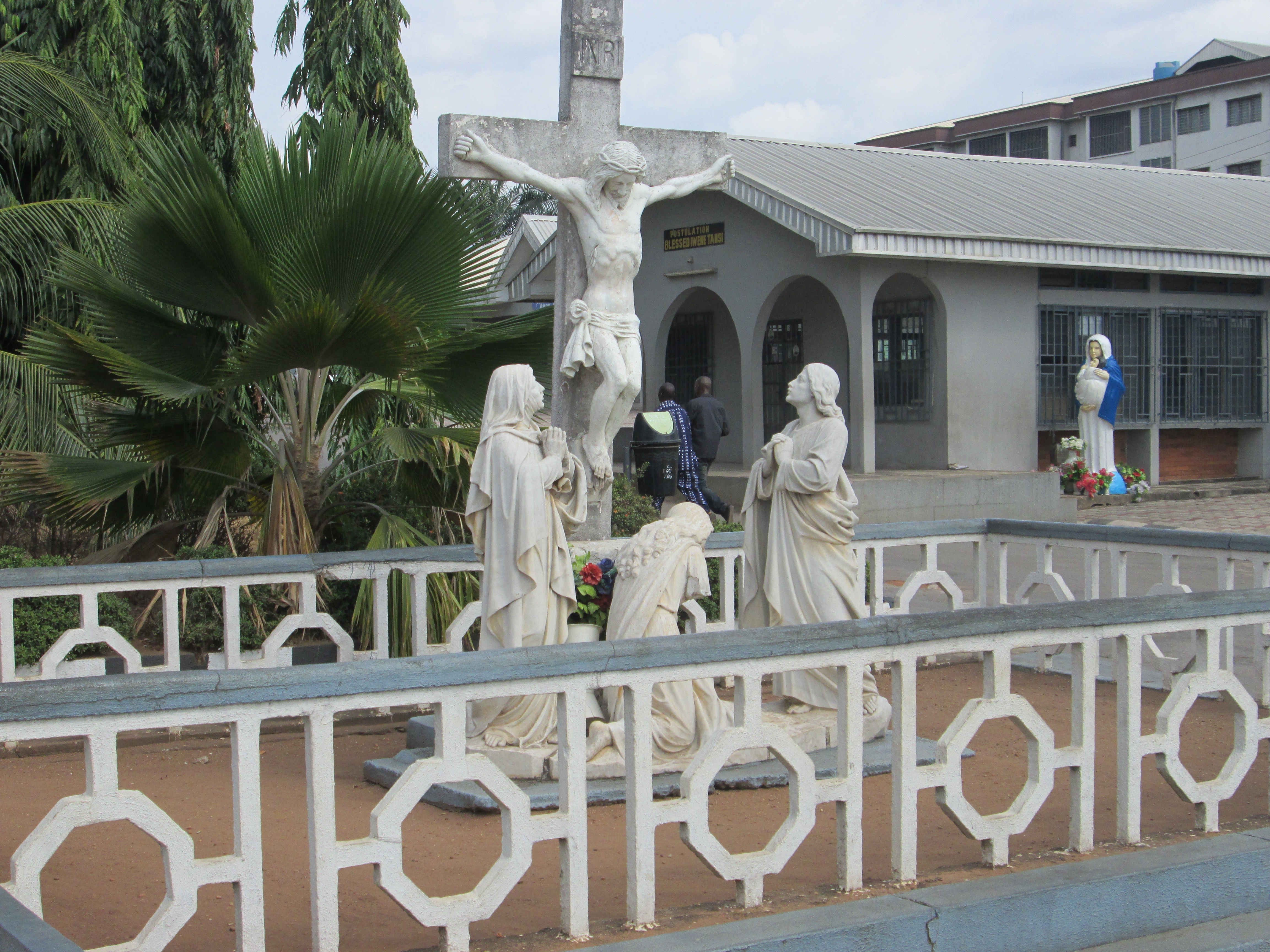
Image

(1st Reading – Ish 50:4-7; 2nd Reading- Phil 2:6-11: Ps.22, 8-9ff; Gospel-Lk 22:14-23:56)

This brief reflection was written by Rev. Fr. Njoku Canice Chukwuemeka, C.S.Sp. He is a Catholic Priest and a member of the Congregation Holy Ghost Fathers and Brothers, Province of Nigeria South East. He is currently the parochial vicar of Our Lady of Fatima Catholic Church Woliwo Onitsha, Anambra State, Nigeria. For more details contact him on:canice_c_njoku@yahoo.com, canicechukwuemeka@gmail.com or +23408063767512

The Church today celebrates Palm/Passion Sunday which is the last Sunday before Easter. While Palm Sunday signifies royalty and triumph, Passion Sunday signifies both suffering and love. Both of these however, portray humility in action. Hence today’s celebration has a double barreled-phase and also bears a dual meaning. While reflecting on the nature of today’s celebration one scenario came to my mind. I was quick to remember the activities of a particular specie of tiny rats in my village. These tiny creatures operate in the night and specialize in chopping or eating off part of someone’s toes or fingers. The remarkable thing about these creatures and their activities is that they play dual role. While they are biting and eating off part of one’s toe, they at the same time blow a gently breeze over the area, such that the victim rather than feel pain and wake up to chase them away, feels a soothing sensation that keeps him/her sleeping while they comfortably carry out their mission.

On this day in the church’s liturgical calendar, the Christian community begins the re-enacting of another phase of the Paschal Mystery of Jesus Christ (his Death, Burial and Resurrection) upon which the salvation of humanity is anchored. We re-enact the triumphant entry of Christ into Jerusalem as well as his passion. Hence it reminds us of the double-aged nature of our Christian lives and journey. We are celebrated today and persecuted tomorrow; loved today and hated tomorrow; praised today and castigated tomorrow. A very important lesson we are to learn from all these, is that life presents us with its different dimensions as it unfolds. The same people who cheer us up in good times shouting: “Hosanna! Hosanna!! Hosanna!!!” might equally be the same later on in life, to shout: “Crucify him! Crucify him!! Crucify!!!” This is the mystery and dialectics of life. Mystery because, at times understanding it is beyond our reach and imagination, and dialectical because these two aspects of life certainly help us to know truly who we really are and what we mean to people.

A look at today’s readings portrays the humility with which Christ approached these situations. In the first reading (Ish 50:4-7) taken from one of the “ebed Yahweh” (servant of Yahweh’s) songs, one finds the prefigured Christ humbly bearing his suffering without any resistance. Also in Paul’s letter to the Philippians (2:6-11), we see humility at its apogee. This is the kenosis or self-emptying of Christ: “though he was in the form of men he did not regard equality with God.” In the gospel (Lk 22:14-23:56), at supper he humbled himself to the point of accepting to eat at the same table with the one about to betray him. “…And yet behold the hand of the one who is to betray me is with me on table.” In spite of all these, he taught his disciples to humble themselves as he humbled himself before Pilate and the chief priests even till death.

In all of these we learn humility in all circumstances of life both in good and bad times. Christ was strong but humbly, he became weak. He taught us as Pope Francis I said during his installation Mass on Tuesday, March 19, 2013 that: “True power lies in service” and humility. During his triumphant entry he rode on a colt which symbolizes humility. In his suffering he abandoned himself to his enemies without resistance or striking back. Let us therefore pray at this Mass that the Almighty God may grant us the humility with which to follow Christ during this Holy Week. So that in the days beyond we might find the strength we need to live truly as Christ lived without losing our faith in God who truly cares and never abandons those who put their trust in him.

Peace be with you!

Maranatha!!

Homily for 5th Sunday of Lent (Liturgical Year C)

Image

Seeking New Life & Perfection In Christ

(Readings: 1st -Ish 43,16-21; 2nd-Phil 3, 8-14; Gosp – John 8, 1-11; Ps.125)

This brief reflection was written by Rev. Fr. Njoku Canice Chukwuemeka, C.S.Sp. He is a Catholic Priest and a member of the Congregation Holy Ghost Fathers and Brothers, Province of Nigeria South East. He is currently the parochial vicar of Our Lady of Fatima Catholic Church Woliwo Onitsha, Anambra State, Nigeria. For more details contact him on:canice_c_njoku@yahoo.com, canicechukwuemeka@gmail.com or +23408063767512

Gradually, we are drawing closer to the end of Lent and closer to Easter season. In order words, we are gradually moving away from the zone of hardship and suffering towards the zone of glory. Hence, virtually all of today’s readings give us hope, and paint a very bright future for us. In the first reading (Ish 43, 16-21), God tells us of the new things he is about to do amongst us. This means that in spite of the difficulties of this present moment and season, in no distance time the Lord will rise up to the occasion of our situation. Surely, he will because he tells us in Ps 30, 5 “that weeping may endure at night but joy comes in the morning.” So there is sure hope that we are approaching morning. Therefore, we must be positive about the future as we approach Easter because, what God promised he will do, he will surely do. This is why Paul himself decided to mortgage everything he owed and labored for, in order to gain the future glory and perfection revealed in Jesus’ resurrection power (Phil 3, 8-10). He understood the gimmicks of new life and its worth, and so, made this great sacrifice. He knew that “Nke iru ka” (What lies ahead is greater), as Haggai 2, 9 tell us that: “The glory of the latter shall be greater than that of the former.” Paul therefore, remained resolute in his faith even to the point of “reproducing Christ’s death” in himself.

Many of us are quite familiar with today’s Gospel reading from John 8, 1-11. The emphasis I wish to lay on this reading would not be much on the hypocritical activities of the Pharisees in relation to the crime of the adulterous woman. However, what is most important here is the fact that Jesus restored life to this woman. Not only did he save her from her antagonists, he gave her a new injunction, GO AND SIN NO MORE! What Jesus gave her was new life and the mandate to live it to the fullest. Should this woman continue in her old way of life what do we think would be her fate? Of course both physical and spiritual death! Daily in our journey of faith “many elements” like the Pharisees stand as obstacles to us. They often times make life very difficult for us, because they have taken very good hold of us they always stand as our “accusers” and “thorns in our flesh.” If you like, you can call them “the skeletons in our cupboards”. These skeletons remind us of our true selves and indict us of the wrongs of our past life. So, we are held captive and become almost perpetual victims. We often try to avoid them to live on, but because they are keeping close watch over us and ever ready to accuse us, we prefer to remain where we are least we are exposed. Do you have one? Jesus says to you today, they have no more powers over you again, but do not welcome them back again through sin! The truth is that when these skeletons encounter Christ, and we ourselves draw closer to him as the adulterous woman did, they are disarmed. Our life is transformed for good. We should be encouraged by these words of Jesus “neither do I condemn you, go and sin no more.” What more could be newer and more perfect than Jesus restoring us to new life?

 As we approach the glorious season of Easter, the Lord equally says to us “go and sin no more,” He promises us a better future if we heed his command. He promises us transformation and a place in his future glory if we remain faithful till the end. Therefore, we must constantly run to Jesus irrespective of our situation because, he is ever ready to acquit us of the charges the accuser brings against us. When we do this we can then shout out with great joy: “what marvels the Lord worked for us, indeed we were glad!”

Peace be with you!

Maranatha!!

Lenten Refrection

At This Juncture: Six Questions I Must Ask Myself!

This brief reflection was written by Rev. Fr. Njoku Canice Chukwuemeka, C.S.Sp. He is a Catholic Priest and a member of the Congregation Holy Ghost Fathers and Brothers, Province of Nigeria South East. He is currently the parochial vicar of Our Lady of Fatima Catholic Church Woliwo Onitsha, Anambra State, Nigeria. For more details contact him on:canice_c_njoku@yahoo.com, canicechukwuemeka@gmail.com or +23408063767512

For the past four weeks and a couple of days now we have been in the season of Lent. Let us therefore pause for a while and ask ourselves these very important questions.

1.     How far have I advanced in this journey?

In this, we reflect on where we were before the beginning of Lent, starting from Ash Wednesday to where we are now, the fourth week of Lent.

2.     Am I spiritually better or worse now?

Here we reflect on the spiritual progress we have made so far to know if we are truly advancing or static

3.     During this period have I forgiven anyone I owe forgiveness?

Let us do a critical examination of ourselves and conscience in order to find out those we are still holding captives in our hearts. Let us drop them at the foot of the stations, so that Christ may take care of them.

4.     Have I been Charitable enough towards anybody during this Period?

We ask ourselves this question in order to allow ourselves be God’s instrument and source of upliftment to the less privileged amongst us. If your answer is in the negative, there is still ample chance to do so. Take it now!

5.     Is there any bad habit or sin I have fasted from during this period?

Perhaps you are still struggling with a certain habit, this period intensify your prayer life and take advantage of the stations of the Cross, and Christ will grant you the grace with which he was able to go through those stations. As you go with him, drop the habit(s).

6.     Have I taken advantage of the sacrament of reconciliation this season?

Christ wishes to reconcile us to the father. That is why he left this wonderful sacrament for us. So, He bids us, “come let us settle the matter” through the sacrament of reconciliation.

Wishing you all more Strength, Peace, Love and Happiness during this Lent

Smile Jesus Loves You!


Homily for 4th Sunday of Lent (Liturgical Year C)

Reconciling With God Through Jesus Christ!

(Readings: Jos 5, 9-12; II Cor 5, 17-21; Luke 15, 1-3. 11-32; Ps.33, 2-7)

This brief reflection was written by Rev. Fr. Njoku Canice Chukwuemeka, C.S.Sp. He is a Catholic Priest and a member of the Congregation Holy Ghost Fathers and Brothers, Province of Nigeria South East. He is currently the parochial vicar of Our Lady of Fatima Catholic Church Woliwo Onitsha, Anambra State, Nigeria. For more details contact him on:canice_c_njoku@yahoo.com, canicechukwuemeka@gmail.com or +23408063767512 

Little did Utaka who deals on Stock Fish know he was heading for trouble when he decided to take a loan from a certain wealthy man in order to import Stock Fish from Norway. He was expected to pay back the loan on an agreed date or have all his belongings confiscated. Unfortunately for him, Sea Pirates attacked and wrecked the ship bearing his goods, and he lost all his goods. He came and explained everything to the wealthy man, and requested that he be given more time to pay his debt but the man refused to heed his plea. Shortly, but just before the said date the man took ill and was told that the only condition to be healed was to forgive those that have offended him. Meanwhile, Utaka was at the verge of committing suicide when the man wrote him this brief note: My dear, having realized the power of forgiveness, I have cancelled all the debts you owe me, please lets continue to be friends again and do pray for me!” This is God’s providence and how Jesus through his death on the cross reassures us that our “debt of sin” has been cancelled. The wealthy man’s sickness was God’s way of mediating grace to Utaka, just as Jesus’ death on the cross and the Sacraments he left for us are His ways of mediating grace and reconciling us to Himself.

Therefore this Sunday, the Church wants us to reflect on reconciliation and the mercy of God. She reminds us of the new life we ought to have due to Christ’s sacrifice, the basis of our being reconciled to God. In today’s 2nd reading (II Cor 5, 17-21), Paul tells us that we are “Christ’s product of reconciliation.” That Christ was the one who took the first initiative of having us reconciled to God. In order words, owing to sin, we were cut off from God and not even qualified to be called God’s children. Of course, biologically we are not God’s children but through the sacrifice of Christ we became His adopted children and a people washed clean of all defilements. So, none of us is a “grandchild of God”, because He has no grandchild. Instead, we are all equally children of the same father by virtue of this costly sacrifice and the water of baptism. We are therefore God’s direct work. In today’s gospel (Luke 15,1-3. 11-32), Jesus through the story of the prodigal son therefore reassures us of the readiness of God to welcome and restore us to our lost glory. Jesus himself demonstrated this by identifying with (us) sinners without himself sinning. He tells us: “I do not delight in the death of the sinner, rather let him repent and live” (Ezk 18, 32).” As a father, God yearns to have us back in spite of our sins. Thus he beckons on us: “come let us settle the matter, though your sin is as red as scarlet they will be white as snow…,” (Ish. 1,18ff).  

Therefore this season we must constantly re-evaluate our actions, ways and then in humility say like the prodigal son : “I have sinned against heaven and earth;” against you Father who for my sake allowed Jesus to die that I might be reconciled to you; of course, against you my brethrens, the Imago dei whom I offend every day. This is what Paul means when he appeals to us to be reconciled to God. He simply asks us to renounce our sins like the prodigal son, by casting away all shame and pride in order to make peace with God through Jesus who is the “Universal Sacrament of Salvation.” This Lent therefore, let us take advantage of the Sacrament of Reconciliation made available to us by God through Christ and administered by His Church in order to be reconciled to God. As a loving father, God instituted the sacraments that we might be reconciled to him. This is why he says to us: “Taste and see that the Lord is good” (Ps. 33,9), and only those who are truly reconciled to God through Jesus Christ can savour the sweet sensation of God’s love!


Peace be with you! 


Maranatha!!


Homily for 3rd Sunday of Lent (Liturgical Year C)

A Call To Repentance – One More Chance!

This brief reflection was written by Rev. Fr. Njoku Canice Chukwuemeka, C.S.Sp. He is a Catholic Priest and a member of the Congregation Holy Ghost Fathers and Brothers, Province of Nigeria South East. He is currently the parochial vicar of Our Lady of Fatima Catholic Church Woliwo Onitsha, Anambra State, Nigeria. For more details contact him on:canice_c_njoku@yahoo.com, canicechukwuemeka@gmail.com or +23408063767512

Biodun was a young lad sent to a very good and expensive school to study, but due to youthful exuberance, he neglected his studies for other trivial things on campus. Unfortunately, when his mates were being promoted he was asked to repeat due to his poor academic performance. When the news got to his father he threatened to withdraw Biodun from school for squandering his money. However, Biodun knowing that his father was a man of his words repented of his bad behavior, asked the father for forgiveness and promised to do better in the subsequent academic sessions. Although his father was a die-hard man, he mellowed down and gave him yet another chance to prove himself. Of course, he did prove himself by coming back home with better results. This third Sunday of Lent, the church provides us yet another moment of grace or ample opportunity to help us straighten our already soiled path along the journey of life, faith and salvation. The central theme of this Sunday therefore is REPENTANCE.  Most times, whenever this theme is featured either in the scriptures or elsewhere, most people usually associate it with something negative. On the contrary, it is not, because it is actually the stepping stone to a better life or salvation. In this case, it is one way through which as Sacrament in General, the grace of God is mediated.

In the gospel reading of today (Luke 13, 1-9), Jesus did not mince words in telling us that: “unless you repent you will perish”. I suppose you are already saying in your mind, this is too harsh to come from someone who claims to be compassionate and love. However, the question is, is there a better way of saying it? Paul writes in Rom 6, 23 that: “…but the wages of sin is death…” death not only of our physical body but also of our soul. So, when Jesus sounds like this, he does so because he actually cares for us. Not only does he warn us of the negative consequences of living a sinful life but, he wishes that we repent and begin to do better. So today, he calls us to reflect upon our lives as Biodun did, and to take a bold and positive step towards amending our way of life. This is in simple terms, a call to repentance for the many times we have failed not only God, but our fellow human beings; for the times we chose evil in place of good; for those moments we neglected the Jesus present in our neighbours by treating them with scorn. It is a call for repentance for those moments we have despaired and displayed remarkable lose or lack of faith in God.

This Sunday the good news is that we are yet given another moment of grace or opportunity by God through Christ to re-examine our ways, another opportunity to learn our lessons from the deeds of our predecessors and the consequences their actions brought upon them as Paul kindly reminds us in (1Cor 10, 1ff), and of course, another opportunity to call upon the Lord who is compassion and love (Ps. 102, 8). In other words, he is a patient God and ever ready to have us come back to him if only we can realize that we are at a cross road and turn around. All He requires from us therefore, is a commitment by calling on that name that he delights so much in, “I AM” or “ABBA” save me least I perish! If we call upon this compassionate and loving God, he will not only forgive us, but help us live a better life.

Compassion means to suffer with and also to love with (cum passio). Therefore, God’s compassion for us is always associated with his love for us. He knows how miserable our state is under the influence of sin which places us under a heavy burden of slavery as was the case with the Israelites in the first reading of today (Ex. 3, 1ff). So this Lent, as ever before, he extends his gesture and hand of love to us. He is aware of our deplorable state occasioned by different categories of sins and aware of our enslavement by habitual sins, even the sins of omission or commission. Jesus knows that repentance requires lots of courage and humility to embark upon. This is the reason he is ready to give us yet another opportunity to repent and, earnestly waits for us to cry out: “I AM” or “ABBA” save me least I perish!

Peace be with you!               

Maranatha!!

Feast of the Week: The Chair of St. Peter

 Whose Turn is it to Sit on this Chair?

This brief reflection was written by Rev. Fr.
Njoku Canice Chukwuemeka, C.S.Sp. He is a Catholic Priest and a member of the
Congregation Holy Ghost Fathers and Brothers, Province of Nigeria South East.
He is currently the parochial vicar of Our Lady of Fatima Catholic Church
Woliwo Onitsha, Anambra State, Nigeria. For more details contact him
on:canice_c_njoku@yahoo.com, canicechukwuemeka@gmail.com
or +23408063767512

Although the instruction given by the 2013 Liturgical Calendar for the celebration of Mass of the hours according to the General Roman Calendar – for Nigeria, states that: “The feast of the Chair of St. Peter, the Apostles, is not celebrated this year” (p. 32), we consider it necessary to write few words on the significance of this feast. This is especially, considering the recent misunderstanding of the news of the resignation of Pope Benedict XVI.

From the earliest times the Church at Rome celebrated on 18 January the memory of the day when the Apostle held his first service with the faithful of the Eternal City. This feast of the Chair of St. Peter is generally attributed to a long absence of the Apostle from Rome. Since then, February 22 in the calendar of the Catholic Church represents the day of the Feast of the Chair of St. Peter. This is the anniversary of its entry into a particular memory at the center of the particular mission entrusted by Jesus to Peter. The Roman Missal explains: “the symbol of the chair will emphasize the mission of teacher and pastor of Christ conferred upon Peter, which he formed in his person and in the successors, visible principle and foundation of unity of the Church”. The chair, literally, is the fixed seat of the supreme pontiff and the bishops, permanently placed in the mother church of the diocese (hence its name of “cathedral” after “cathedra” the chair) and is the symbol of the bishop and his ordinary Magisterium in the local church. The chair of St. Peter indicates his position in the apostolic college, established by the express will of Jesus, who assigned the task of “feeding” the flock, that is to lead the new People of God, the Church. The chair therefore is an office which has been occupied by several Popes, the latest being Pope Benedict XVI. He is the 264th successor of Peter, and the 265th pope of the Catholic Church.

The world woke up on Monday, 11 February, 2013 to embrace the shock, surprise and disappointment orchestrated by the news of the resignation of Pope Benedict XVI. This news of the Pope’s resignation has since been the talk of the town as a result of what many considered the “breaking of an age long tradition of the Roman Catholic Church.” History has it that some seven hundred and nineteen years ago a Pope resigned. The Pope in question is Pope Celestine V who resigned in 1294. Today, it has gone down in the annals of history that he is the 2nd pope to resign for a very good reason (Cf. Can 187). The reason this historic action looks and sounds bizarre to us is that we have not experienced it before. Rather than feeling disappointed concerning Benedict XVI’s resignation, we should hail him for teaching us that physically we will all go down someday; that we are different functionally and essentially; that the Church is the Church of Jesus Christ who instituted and sustains her; that without Benedict XVI, Christ will continue to take care of his Church. As shocking and as “unprecedented” as the news might seem to most of us, I think we really need to see the positive lessons his action teaches us in our modern world, especially, in African where leaders prefer to remain in power or on the throne until they rot away.

One very important truth that must not elude us all in this is the fact that Benedict XVI is going to resign from the office as the Pope on 28th February, 2013 but not from his Eternal Priesthood or even from the Holy Roman Catholic Church. Our Church is a Church in the modern world where there are endless possibilities and Pope Benedict’s resignation is only but one of such possibilities. It is a reality we must come to terms with if we must move forward as a Church. A very pertinent question that must be asked now is: Who is the next person to sit on this Chair?. This answer lies in the domain of the Holy Spirit and depends strongly on the prayers of the faithful. Let us pray: Oh Lord, here is your Church, watch over her whether we are asleep or are awake. Amen!

Lenten Reflection

A different Approach to Fasting this Lent

Beloved, fasts have a tendency to be oriented towards things like giving up food or television. But there are many other creative ways we can welcome Jesus’ healing touch this Lent. Here are suggestions you may want to consider

1.     Fast from Anger

Give your Family, friends and even your enemies an extra dose of love this season.

 2.  Fast From Judging Others

Before making judgments, recall how Jesus over looks our faults.

3.     Fast from Discouragements

Hold on to Jesus’ promise that He has a perfect plan for your life.

4.     Fast from Complaining

When you find you are about to complain, close your eyes and recall some of the little moments of joy Jesus has given you.

5.     Fast from Resentment or Bitterness

Work on forgiving those who may have hurt you.

6.     Fast from Spending Too Much Money

Try to reduce your spending by ten percent (10%), and give those savings to the poor and the needy.

7.     Spend Extra time for Personal Prayers

In place of excessive talking dedicate more time to mental and contemplative prayers.

Wishing you all Peace, Love and Happiness during this Lent

Smile Jesus Loves You!